On May 14, 2007, the United States Postal Service (USPS) implemented a significant rate adjustment that raised the price of a First-Class Mail single-piece letter from 39 cents to 41 cents. This period was historically significant because it introduced the "Forever Stamp" and shifted the mailing industry toward a "shape-based" pricing model that distinguished letters from large envelopes and parcels.
The 2007 USPS Rate Reclassification: A Turning Point in Postal History
The 2007 postal rate changes were not merely a standard price hike; they represented one of the most comprehensive structural overhauls in the history of the United States Postal Service. These changes were largely driven by the Postal Accountability and Enhancement Act (PAEA), which was signed into law in late 2006. This legislation provided the framework for how the USPS would set rates and manage its finances, leading to the May 14, 2007, implementation of New Rates and Fees.
The primary objective of the 2007 reclassification was to align postage costs more closely with the actual processing costs incurred by the USPS. Before this change, weight was the primary factor in determining the price of First-Class Mail. However, USPS data showed that the physical shape and "machinability" of a piece of mail often had a greater impact on handling costs than its weight alone. Consequently, 2007 marked the official move to shape-based pricing, which remains the standard in 2026.
Under this model, the USPS categorized mail into three distinct physical categories: letters, large envelopes (flats), and parcels. A one-ounce letter, a one-ounce flat, and a one-ounce parcel all began to carry different price tags because they required different types of sorting equipment and manual labor. This change had a profound impact on businesses and individuals who regularly mailed non-standard items.
Domestic First-Class Mail Rates in 2007
First-Class Mail is the most common service used by individual consumers for personal correspondence and bill payments. In 2007, the USPS adjusted these rates to account for inflation and the aforementioned processing costs. The most visible change was the two-cent increase for the first ounce of a standard letter.
Interestingly, while the price for the first ounce increased, the "additional ounce" rate actually decreased. In 2006, each additional ounce for a First-Class letter cost 24 cents. Starting May 14, 2007, the additional ounce rate was lowered to 17 cents. This meant that while a one-ounce letter became more expensive, a three-ounce letter actually became cheaper than it had been in 2006.
Postcards and Non-Machinable Surcharges
Postcard rates also saw an increase in 2007. The rate moved from 24 cents to 26 cents. To qualify for this rate, postcards had to meet specific size requirements: a minimum of 3.5 inches by 5 inches and a maximum of 4.25 inches by 6 inches. Anything larger than these dimensions was charged at the letter rate.
Furthermore, the USPS reinforced the "non-machinable surcharge." This applied to letters that could not be processed by automated equipment due to their physical characteristics, such as being too rigid, having clasps or strings, or being square-shaped rather than rectangular. In 2007, this surcharge was set at 17 cents per piece.
Comparative Table: 2006 vs. 2007 Postal Rates
The following table outlines the primary rate changes that took effect on May 14, 2007, compared to the previous rates established in January 2006.
| Mail Type & Weight | 2006 Rate (USD) | 2007 Rate (USD) | Percentage Change |
|---|---|---|---|
| First-Class Letter (1 oz) | $0.39 | $0.41 | +5.1% |
| First-Class Letter (2 oz) | $0.63 | $0.58 | -7.9% |
| First-Class Letter (3 oz) | $0.87 | $0.75 | -13.8% |
| Postcard | $0.24 | $0.26 | +8.3% |
| First-Class Flat (1 oz) | $0.39 | $0.80 | +105.1% |
| First-Class Parcel (1 oz) | $0.39 | $1.13 | +189.7% |
| Additional Ounce (First-Class) | $0.24 | $0.17 | -29.2% |
| Non-machinable Surcharge | $0.13 | $0.17 | +30.8% |
Shape-Based Pricing: Letters, Flats, and Parcels
The 2007 transition to shape-based pricing created three distinct pricing tiers for First-Class Mail. Understanding these definitions is essential for anyone analyzing historical mailing costs or verifying the postage on 2007-era archives.
Letters
To qualify for the standard "letter" rate ($0.41 for 1 oz), the piece had to be rectangular and meet the following dimensions:
- Minimum: 3.5 inches high, 5 inches long, and 0.007 inches thick.
- Maximum: 6.125 inches high, 11.5 inches long, and 0.25 inches thick.
- Weight limit: 3.5 ounces (anything heavier was classified as a flat).
Large Envelopes (Flats)
Items exceeding letter dimensions but remaining flexible were classified as "flats." In 2007, the starting price for a one-ounce flat jumped significantly to 80 cents. To be a flat, the item had to have at least one dimension larger than the letter maximums but not exceed 12 inches by 15 inches or 0.75 inches in thickness. If an envelope was rigid (like those containing cardboard or thick photos), it was automatically classified as a parcel, even if it met the size requirements for a flat.
Parcels
Parcels were defined as any mailpiece that was not a letter or a flat. This included boxes, tubes, or padded envelopes that were thicker than 0.75 inches. Because parcels require manual sorting or specialized machinery, the 2007 rate for a one-ounce parcel was set at $1.13. This massive increase from the previous 39-cent flat rate (for any one-ounce item) was intended to stop the USPS from losing money on small, bulky packages sent via First-Class Mail.
The Birth of the Forever Stamp
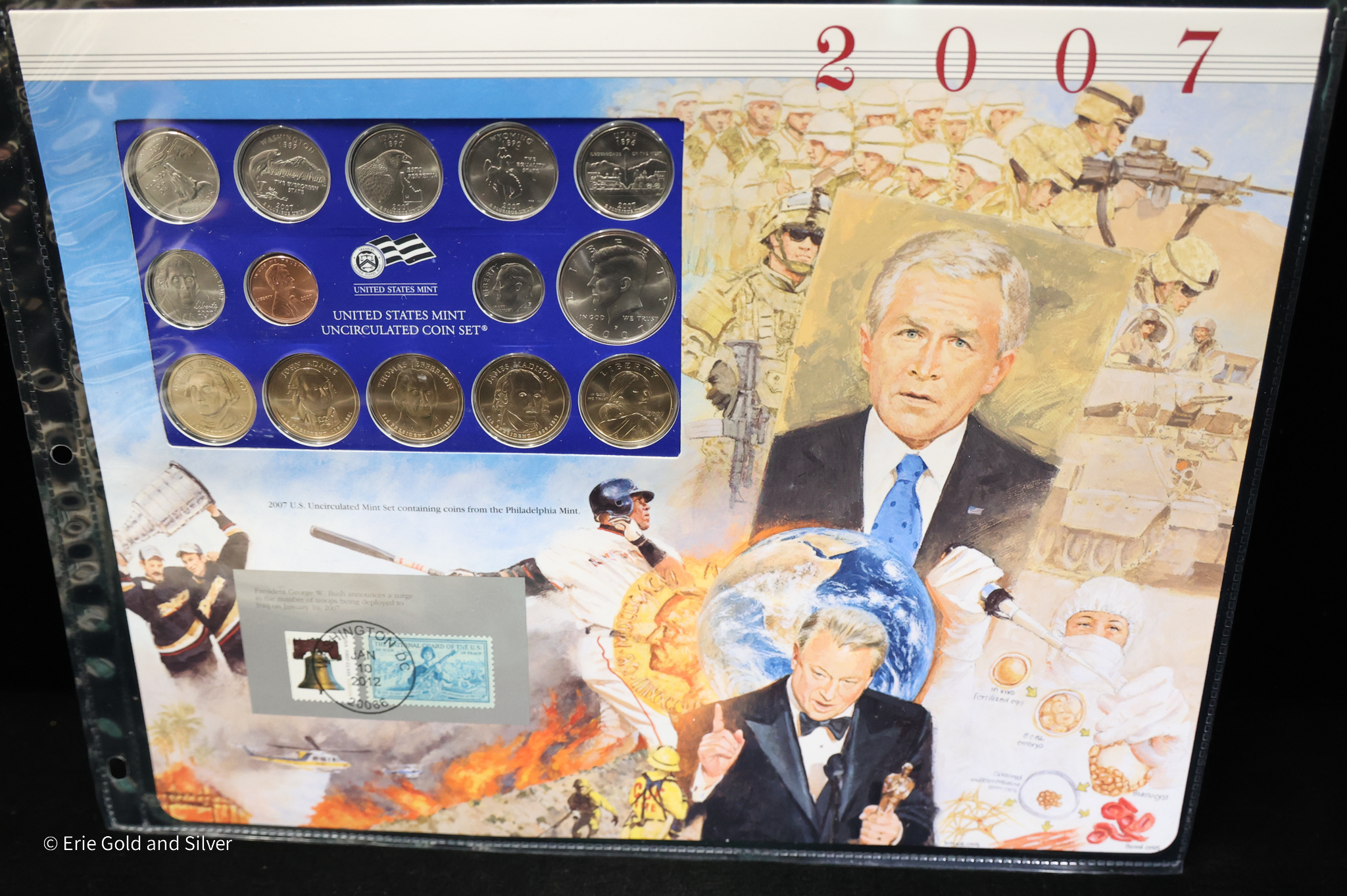
Perhaps the most enduring legacy of the 2007 postal rate change was the introduction of the "Forever Stamp." Released on April 12, 2007, just ahead of the May rate hike, the first Forever Stamp featured the Liberty Bell.
The concept was revolutionary for the American public: a stamp that would always be valid for the first ounce of First-Class Mail, regardless of future price increases. In 2007, these stamps were sold for 41 cents. Consumers who purchased them in bulk were able to "lock in" the 41-cent rate for all future mailings.
The USPS introduced the Forever Stamp to reduce the logistical burden of "makeup stamps" (the small 1-cent or 2-cent stamps people used to have to buy when rates increased). It also provided the USPS with an immediate influx of cash as consumers stockpiled the stamps. By 2026, the Forever Stamp has become the standard for all commemorative and definitive First-Class issues.
Priority Mail and Express Mail Changes
Beyond standard letters, 2007 saw adjustments to the "expedited" services. Priority Mail and Express Mail (now known as Priority Mail Express) rates were adjusted to be more competitive with private carriers like FedEx and UPS, while also accounting for rising fuel costs.
- Priority Mail: In 2007, the Flat Rate Envelope cost $4.60. The USPS also maintained its popular Flat Rate Box, which cost $8.95 regardless of weight (up to 70 lbs) or domestic destination. Regular Priority Mail remained zone-based, meaning the cost depended on how far the package traveled.
- Express Mail: This was the USPS's fastest service, offering overnight delivery to most locations. The 2007 rate for a half-pound Express Mail flat-rate envelope was $16.25.
- The International Shift: 2007 was also the year the USPS rebranded its international services. Names like "Airmail" and "Global Priority Mail" were replaced with "First-Class Mail International," "Priority Mail International," and "Express Mail International" to align with domestic branding.
Impact on Business and Marketing Mail
For businesses, 2007 was a year of rigorous adaptation. The shift to shape-based pricing meant that "Standard Mail" (now called Marketing Mail) became more expensive for catalogs and thick newsletters. Marketing professionals had to redesign their mailpieces to ensure they stayed within the "letter" dimensions to avoid the much higher "flat" rates.
The USPS also introduced incentives for "Full-Service Intelligent Mail" during this era, encouraging businesses to use more advanced barcodes. This allowed the USPS to track mail more accurately and reduce sorting errors. While the initial investment for businesses was high, it paved the way for the sophisticated digital tracking systems that are standard in 2026.
2007 Postal Rates FAQ
What was the price of a stamp in 2007?
The price of a standard First-Class Mail stamp was 39 cents from January 1 to May 13, 2007. On May 14, 2007, the price increased to 41 cents. This was also the year the first Forever Stamp was released, sold at the 41-cent rate.
Why did the cost of additional ounces go down in 2007?
The USPS lowered the additional ounce rate from 24 cents to 17 cents to balance the introduction of shape-based pricing. While the first ounce became more expensive, the USPS wanted to encourage the mailing of multi-page letters and documents that were still machine-readable, rather than having customers switch to electronic delivery for heavier documents.
What happened to "Airmail" in 2007?
The term "Airmail" was officially retired by the USPS in May 2007 for international shipping. It was replaced by First-Class Mail International. This was part of a broader effort to simplify the service names so that international and domestic products had consistent branding.
How much did it cost to mail a postcard in 2007?
The rate for a standard-sized postcard increased from 24 cents to 26 cents on May 14, 2007. Postcards that exceeded the maximum size of 4.25 by 6 inches were charged the full letter rate of 41 cents.
Was there a 2007 rate change for Media Mail?
Yes, Media Mail (formerly known as Book Rate) also saw an increase in 2007. The rate for a one-pound package of Media Mail rose to $2.13. Media Mail remained a cost-effective way to send books, sound recordings, and educational materials, though the USPS increased scrutiny to ensure items met the strict eligibility requirements.
Analyzing Historical Mailing Costs
When reviewing documents or financial records from 2007, it is vital to distinguish between mail sent before and after the May 14 cutoff. The 2007 rate hike was one of the most complex because of the shape-based pricing logic. A company sending out a thick "flat" envelope in April 2007 might have paid only 39 cents (if it was 1 oz), whereas sending that same envelope in June 2007 would have cost 80 cents—a more than 100% increase.
For collectors and historians, the 2007 Liberty Bell Forever Stamp remains a key artifact. It represents the successful implementation of a consumer-friendly policy that simplified the postal experience for millions of Americans. When analyzing the efficiency of the USPS during this era, the 2007 changes are often cited as the moment the Postal Service modernized its pricing to reflect the realities of automated logistics and the declining volume of standard first-class letters.