The Gross Vehicle Weight Rating (GVWR) for a 2005 Ford Escape typically ranges from 4,140 lbs to 4,880 lbs, depending on the engine size, drivetrain (FWD vs. 4WD), and whether it is a gasoline or Hybrid model. This figure represents the absolute maximum weight the vehicle can safely weigh when fully loaded.
What is GVWR and Why Does it Matter for Your 2005 Escape?
Gross Vehicle Weight Rating (GVWR) is a critical safety specification established by Ford engineers. It is not the weight of the vehicle itself, but rather the maximum allowable total mass of the vehicle when it is "at capacity." This includes the base weight of the car (curb weight), all occupants, cargo in the trunk or on the roof, a full tank of fuel, and the tongue weight of any trailer being towed.
Understanding the GVWR of your 2005 Ford Escape is essential for several reasons:
- Mechanical Integrity: The suspension, brakes, axles, and tires of the Escape are designed to handle up to a specific limit. Operating the vehicle consistently at or over its GVWR accelerates wear on the shocks, struts, and transmission.
- Braking Distance: As weight increases, the kinetic energy required to stop the vehicle grows exponentially. Exceeding the GVWR can lead to brake fade, where the pads and rotors overheat and lose their ability to provide friction, significantly increasing stopping distances.
- Handling and Stability: A vehicle loaded beyond its rating becomes top-heavy and sluggish. This affects the center of gravity, making the car more prone to rolling over during emergency maneuvers or losing traction in inclement weather.
- Legal and Insurance Compliance: In many jurisdictions, operating a vehicle over its GVWR is a safety violation. Furthermore, in the event of an accident, insurance companies may deny claims if it is determined that the vehicle was overloaded beyond the manufacturer's specifications.
In 2026, many 2005 Ford Escapes are approaching their third decade of service. It is more important than ever to respect these weight limits, as aged suspension components and frames may not handle stress as efficiently as they did when the vehicle was new.
Official 2005 Ford Escape GVWR Specifications by Trim
The 2005 model year was significant for the Ford Escape because it introduced the Hybrid variant and updated engine options, including the 2.3L Duratec inline-four. These mechanical differences resulted in varying weight ratings across the lineup.
The following table outlines the approximate GVWR for the various configurations of the 2005 Ford Escape.
| Engine Configuration | Drivetrain | Approx. GVWR (lbs) | Approx. Curb Weight (lbs) | Estimated Payload (lbs) |
|---|---|---|---|---|
| 2.3L I4 Gasoline | FWD | 4,140 | 3,175 | 965 |
| 2.3L I4 Gasoline | 4WD | 4,300 | 3,330 | 970 |
| 3.0L V6 Gasoline | FWD | 4,340 | 3,345 | 995 |
| 3.0L V6 Gasoline | 4WD | 4,480 | 3,505 | 975 |
| 2.3L I4 Hybrid | FWD | 4,680 | 3,620 | 1,060 |
| 2.3L I4 Hybrid | 4WD | 4,880 | 3,790 | 1,090 |
Note: These figures are general estimates based on standard equipment. Optional features like sunroofs, leather seating, and aftermarket modifications can increase curb weight and decrease available payload.
Gross Vehicle Weight vs. Curb Weight: Calculating Your Payload
A common point of confusion for 2005 Ford Escape owners is the difference between GVWR and curb weight. To manage your vehicle effectively, you must understand the relationship between these two numbers, which determines your Payload Capacity.
Curb Weight is the weight of the vehicle with all standard equipment and a full tank of fluids (fuel, oil, coolant), but without any passengers or cargo.
Payload is the actual amount of weight you can add to the vehicle. The formula is simple:
GVWR - Curb Weight = Payload Capacity
For example, if you drive a 2005 Ford Escape XLT with the 3.0L V6 and 4WD, your GVWR is 4,480 lbs. If the curb weight is approximately 3,500 lbs, your payload capacity is 980 lbs. This 980 lbs must cover the driver, three passengers, a dog, and all your camping gear. If you have four adult passengers averaging 200 lbs each, you have already used 800 lbs of your payload, leaving only 180 lbs for luggage.
In 2026, as these vehicles are often used for budget-conscious travel or as secondary utility vehicles, it is easy to forget that the Escape is a "compact" SUV. Overloading it during a move or a long road trip is a common mistake that can lead to tire blowouts or transmission overheating.
The Impact of the Hybrid Drivetrain on GVWR
The 2005 Ford Escape Hybrid was a pioneer in the SUV market. Because it carried a heavy NiMH (Nickel-Metal Hydride) battery pack and an electric motor system in addition to the gasoline engine, its weight dynamics differed significantly from the standard XLS or XLT trims.
You will notice in the specification table that the Hybrid has the highest GVWR in the 2005 lineup, reaching up to 4,880 lbs for the 4WD version. This high rating is necessary to compensate for the "dead weight" of the battery system. However, Ford also upgraded the suspension components on the Hybrid models to manage this extra mass.
When calculating the weight for a Hybrid, owners should be aware that the payload capacity is often slightly higher than the gas versions (often exceeding 1,000 lbs), but the vehicle's center of gravity is lower due to the battery placement. This makes the Hybrid feel more planted, but it also means that the tires are under constant high pressure even when the vehicle is empty. Always ensure you are using tires with the correct Load Index as specified by Ford for the Hybrid trim.
Towing Capacity and GCWR: Going Beyond the GVWR
If you plan to use your 2005 Ford Escape for towing, GVWR is only one part of the equation. You must also consider the Gross Combined Weight Rating (GCWR) and the specific towing capacity of your engine.
- 2.3L I4 Models: These are generally limited to a 1,500 lbs towing capacity.
- 3.0L V6 Models: When equipped with the Class II Trailer Tow Package, these can tow up to 3,500 lbs. Without the package, the limit is significantly lower.
- Hybrid Models: These are typically rated for 1,000 lbs.
The GCWR is the maximum allowable weight of the fully-loaded vehicle plus the fully-loaded trailer. It is vital to remember that any weight added to the trailer's tongue (the part that sits on the hitch) counts toward the Escape’s GVWR. Typically, tongue weight should be about 10-15% of the total trailer weight. If you are towing a 3,000 lbs boat, you are adding roughly 300-450 lbs to your vehicle's payload, which may leave very little room for passengers inside the car.
How to Find the GVWR on Your Specific Vehicle
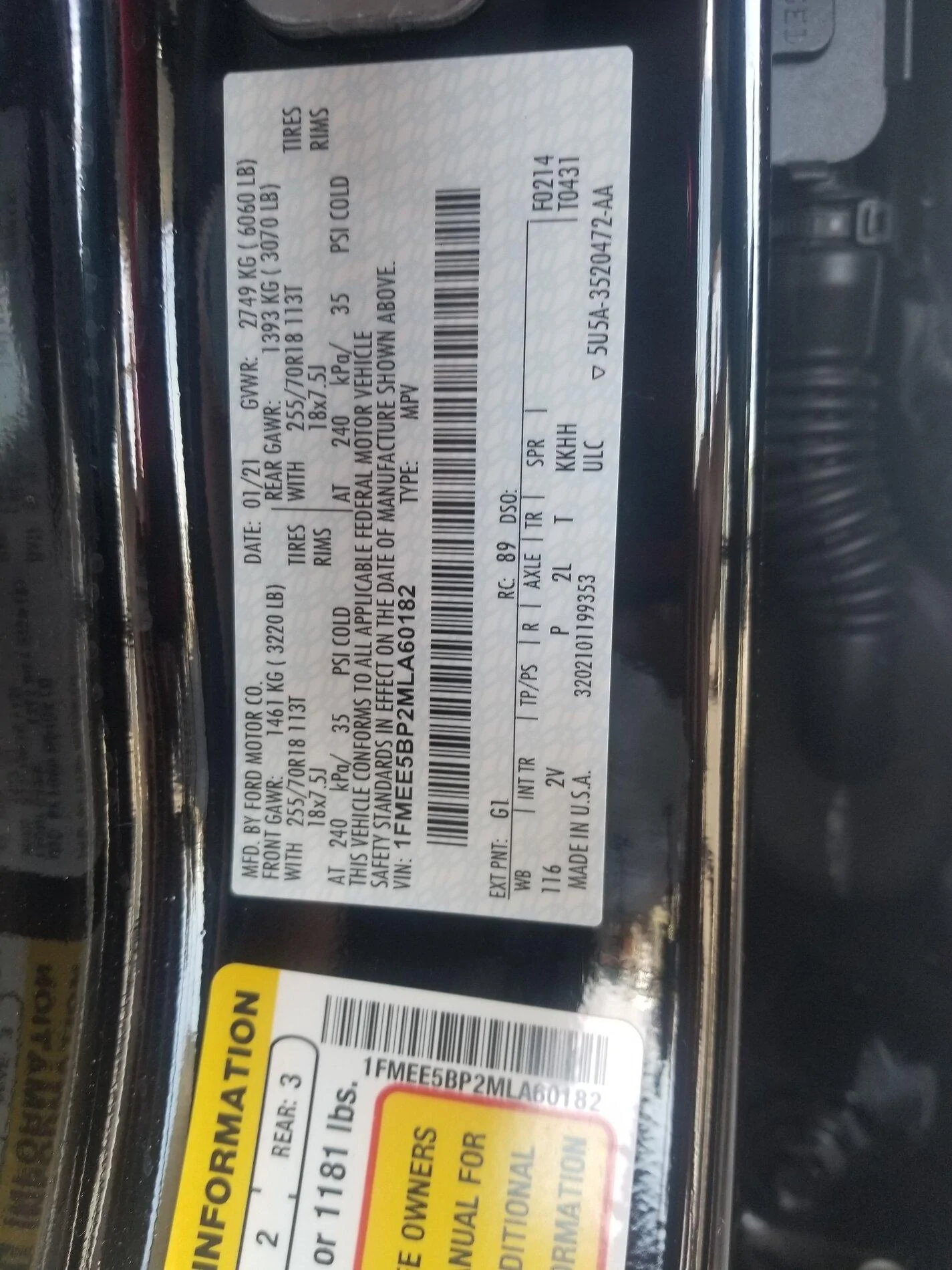
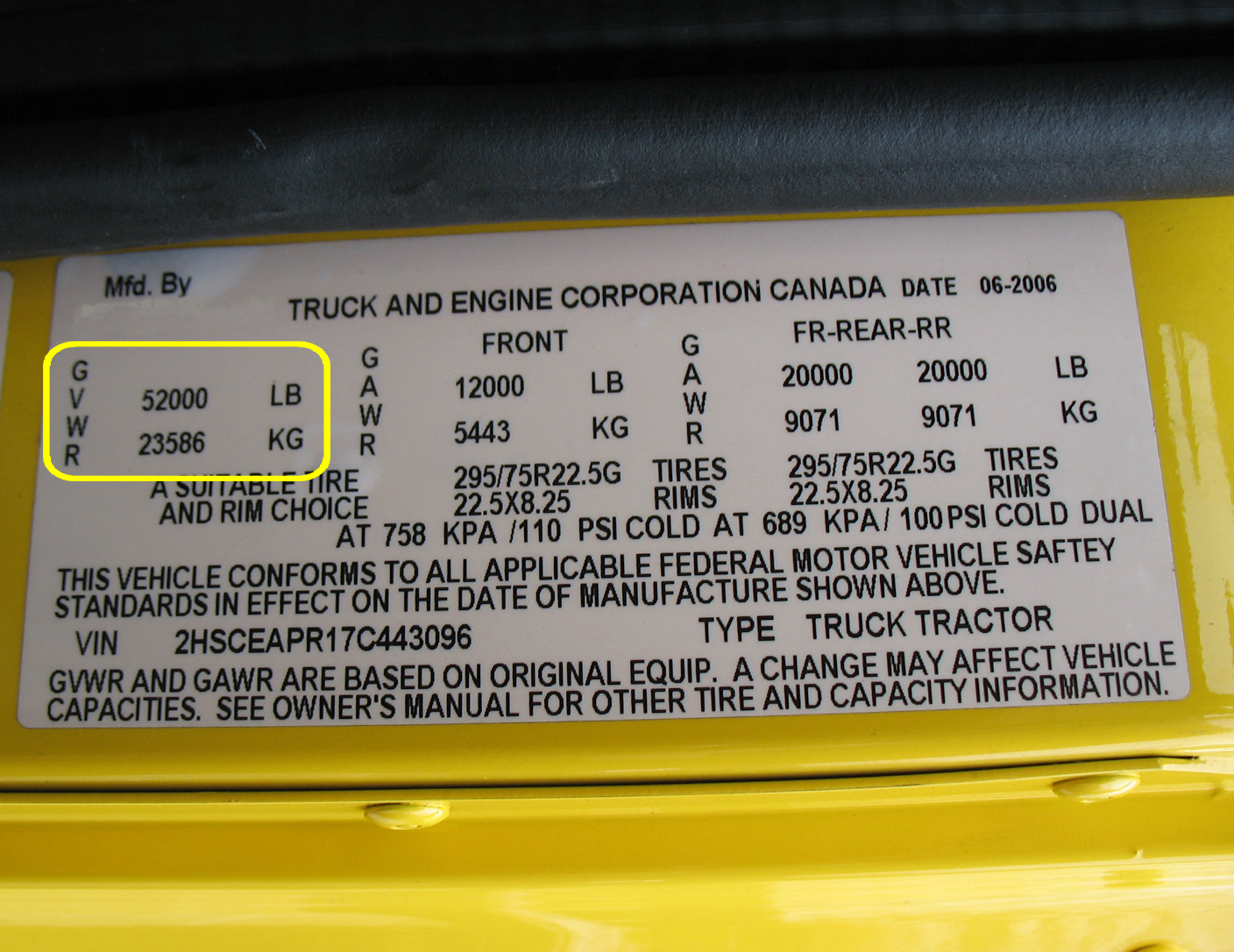
While general guides are helpful, the most accurate way to determine the GVWR for your specific 2005 Ford Escape is to check the Safety Compliance Certification Label.
This sticker is usually located on the driver’s side B-pillar (the door jamb area). It contains several key pieces of data:
- GVWR: The total maximum weight.
- GAWR (Gross Axle Weight Rating): The maximum weight allowed on the front and rear axles individually. This is important if you are carrying heavy cargo in the rear, as you can exceed the rear GAWR even if you are under the total GVWR.
- Tire Pressure: The recommended cold PSI for the tires to support the rated load.
- Paint and Trim Codes: Useful for repairs.
If the sticker is missing or unreadable due to age, you can often find this information by decoding your Vehicle Identification Number (VIN) through Ford’s official fleet or owner portals, though some of these older databases may be harder to access in 2026.
Risks of Exceeding the Gross Vehicle Weight Rating
Operating a 2005 Ford Escape beyond its 4,140–4,880 lbs limit poses immediate and long-term risks. Because the Escape is a unibody vehicle (unlike the body-on-frame Explorer), the chassis itself acts as a stressed member of the suspension.
Suspension Fatigue
Overloading puts excessive pressure on the coil springs and struts. In a vehicle from 2005, these components are likely already nearing the end of their lifespan. An overloaded vehicle may "bottom out" on small bumps, causing the metal components of the suspension to strike each other, which can lead to cracked bushings or bent control arms.
Tire Failure
Tires have a maximum load rating molded into the sidewall. If the total weight of the Escape exceeds the combined load rating of the four tires, the sidewalls will flex excessively. This generates heat, which can lead to a sudden delamination or blowout at highway speeds.
Transmission Overheating
The CD4E 4-speed automatic transmission found in many 2005 Escapes is known to be sensitive to heat. Carrying excessive weight—especially when driving up inclines—forces the torque converter to work harder, spiking the fluid temperature. Without an auxiliary transmission cooler, this can lead to premature transmission failure.
Braking Performance
The 2005 Escape uses front disc brakes and either rear drum or rear disc brakes depending on the trim. These systems are sized for the GVWR. Carrying extra weight increases the distance needed to stop and can cause the brake fluid to boil under heavy use, leading to a "spongy" pedal feel and potential brake failure.
Frequently Asked Questions (FAQs)
What is the GVWR for a 2005 Ford Escape XLT V6?
The GVWR for a 2005 Ford Escape XLT with the 3.0L V6 engine is 4,340 lbs for the Front-Wheel Drive (FWD) version and 4,480 lbs for the 4-Wheel Drive (4WD) version. These ratings ensure the vehicle can handle the heavier V6 engine and the optional 4WD system components while still providing a payload capacity of nearly 1,000 lbs.
Can I increase my GVWR by installing heavy-duty shocks?
No, you cannot legally or safely increase the GVWR of a vehicle by adding aftermarket parts like heavy-duty shocks, air springs, or leaf spring helpers. While these parts may help the vehicle sit level when loaded, the GVWR is determined by the weakest link in the chain—which could be the axle strength, the braking capacity, or the frame's structural integrity. The rating on the door sticker remains the legal limit regardless of modifications.
How does the 2005 Ford Escape GVWR compare to newer models?
The 2005 Ford Escape has a slightly lower GVWR than modern compact SUVs. For context, a 2024 or 2025 Ford Escape often has a GVWR ranging from 4,500 to 5,000 lbs. The increase in modern vehicles is largely due to more advanced high-strength steel and larger braking systems, though modern vehicles also tend to have higher curb weights due to increased safety technology and infotainment systems.
Does the GVWR include the weight of the trailer?
The GVWR does not include the full weight of the trailer, but it does include the trailer's tongue weight. The tongue weight is the downward force applied to the hitch ball. The combined weight of the vehicle and the entire trailer is regulated by the Gross Combined Weight Rating (GCWR), which is a separate and higher figure.
Is the GVWR the same for FWD and 4WD models?
No, 4WD models typically have a higher GVWR than FWD models. This is because the 4WD system (transfer case, driveshaft, rear differential) adds weight to the vehicle. To maintain a functional payload capacity similar to the FWD version, Ford increases the GVWR for 4WD configurations to account for the extra mechanical hardware.
Practical Recommendations for Managing Your Escape's Weight
To ensure your 2005 Ford Escape remains safe and reliable in 2026, follow these practical steps for weight management:
- Know Your Numbers: Take a photo of your door jamb sticker so you always have your GVWR and GAWR ratings on your phone.
- Weigh Your Gear: If you are planning a major trip, use a simple bathroom scale to weigh heavy bins or luggage. It is often surprising how quickly "small" items add up to several hundred pounds.
- Inspect Your Tires: Ensure your tires are inflated to the "Cold PSI" listed on the door sticker, especially before carrying a heavy load. Check the "Load Range" on the sidewall to ensure they meet the vehicle’s requirements.
- Distribute Weight Evenly: When loading cargo, place the heaviest items on the floor and as close to the center of the vehicle (between the axles) as possible. Avoid overloading a roof rack, as this drastically increases the risk of a rollover.
- Upgrade Maintenance for Heavy Use: If you frequently operate near the GVWR, shorten your maintenance intervals for brake inspections and transmission fluid changes.
By respecting the Gross Vehicle Weight Rating of your 2005 Ford Escape, you protect the longevity of the vehicle and, more importantly, the safety of everyone on the road.