In 2005, Alex Rodriguez delivered one of the most prolific offensive seasons in New York Yankees history, winning his second American League MVP award. He recorded a .321 batting average, 48 home runs, and 130 RBIs, officially breaking Joe DiMaggio’s 68-year-old franchise record for the most home runs in a single season by a right-handed batter.
The 2005 campaign stands as a pivotal moment in the career of Alex Rodriguez, often referred to as "A-Rod." Coming off a productive but scrutinized debut season in the Bronx in 2004, the pressure was immense for Rodriguez to justify his record-breaking contract and his transition from shortstop to third base. By the end of 2005, he had not only cemented his status as the premier player in the game but had also etched his name into the Yankees’ record books alongside legends like DiMaggio, Gehrig, and Ruth. As we evaluate these performances from the perspective of 2026, the sheer statistical dominance of his 2005 season remains a benchmark for modern power hitters.
Historical Context: A-Rod’s Second Act in the Bronx
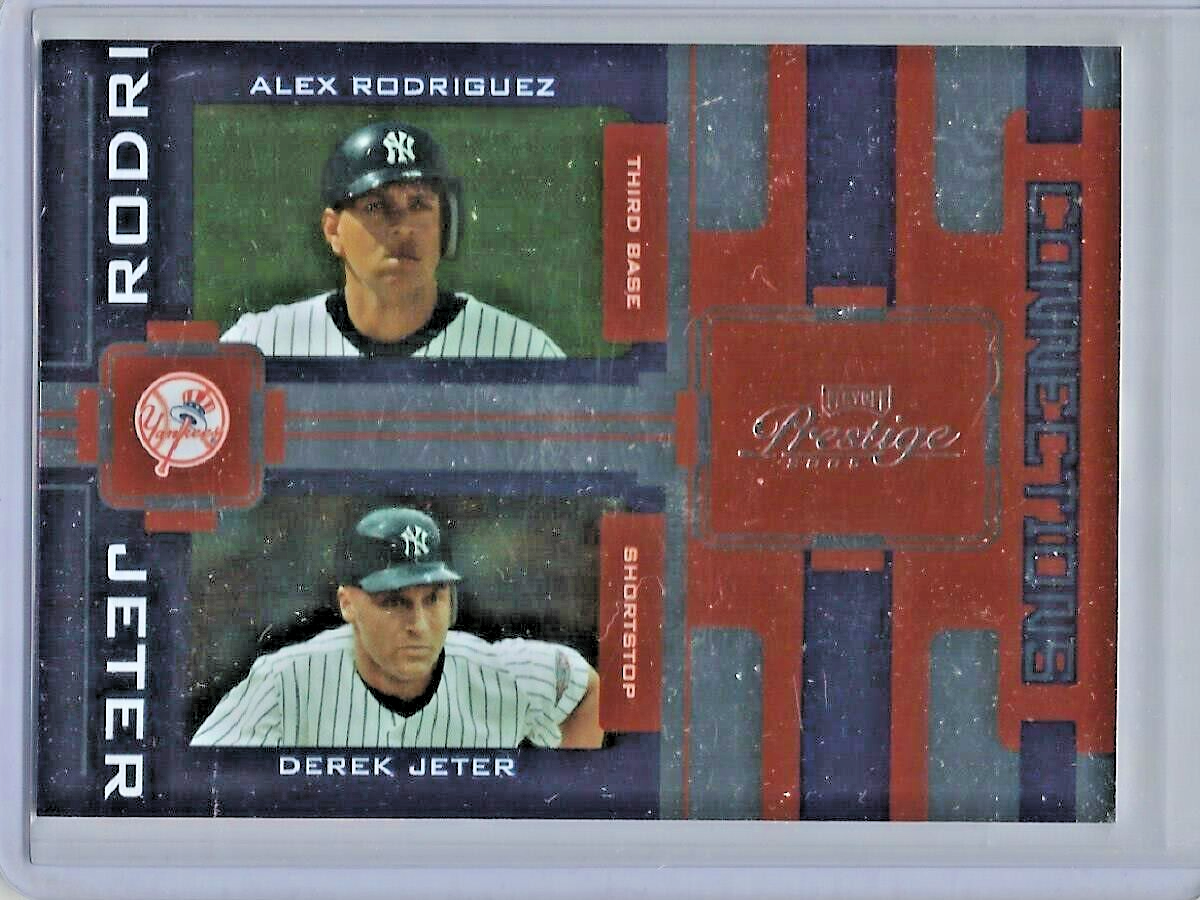
To understand the weight of the 2005 season, one must look at the circumstances surrounding Rodriguez’s arrival in New York. Traded from the Texas Rangers prior to the 2004 season, A-Rod famously agreed to move to third base to accommodate captain Derek Jeter. While his 2004 stats were elite (36 HR, 106 RBI), the Yankees' historic collapse in the ALCS against the Boston Red Sox left fans and media demanding more.
Entering 2005, Rodriguez was 29 years old and in his physical prime. The Yankees' lineup was a "Murderer's Row" of the 21st century, featuring Jeter, Gary Sheffield, Hideki Matsui, and Jorge Posada. This protection in the lineup ensured that pitchers could not easily pitch around Rodriguez, forcing them to engage with the most dangerous hitter in the American League. The result was a season defined by consistency, power, and high-leverage performance.
The Core Statistics: Breaking Down the 2005 MVP Numbers
The 2005 season saw Rodriguez lead the American League in several major statistical categories. His ability to combine a high batting average with league-leading power made him the most complete offensive threat in baseball.
Offensive Slash Line and Productivity
Rodriguez finished the season with a triple-slash line of .321/.421/.610. His .610 slugging percentage and 1.031 OPS (On-base Plus Slugging) both led the American League. These numbers were not just high for the era; they represented a level of efficiency that few right-handed hitters had ever achieved in the original Yankee Stadium, a park notoriously difficult for righties due to its deep left-center field known as "Death Valley."
Run Production and Power
- Home Runs: 48 (AL Leader)
- Runs Batted In: 130
- Runs Scored: 124 (AL Leader)
- Total Bases: 373
Rodriguez’s 48 home runs were particularly significant. Since the inception of the Yankees franchise, the team had been dominated by left-handed power (Babe Ruth, Lou Gehrig, Mickey Mantle, Roger Maris). For a right-handed hitter to lead the league while playing 81 games in the Bronx was a statistical anomaly that highlighted A-Rod’s exceptional "all-fields" power.
Breaking the DiMaggio Record: A Right-Handed Power Surge
The most discussed aspect of the 2005 season was Rodriguez’s pursuit of Joe DiMaggio’s franchise record. In 1937, "The Yankee Clipper" hit 46 home runs, a mark that stood for nearly seven decades as the gold standard for right-handed power in a Yankees uniform.
Rodriguez tied the record on September 26, 2005, against the Baltimore Orioles, and surpassed it on the final weekend of the season. Breaking a DiMaggio record is a rare feat in professional sports, as DiMaggio’s numbers are often considered sacred within the Yankees organization. The 48 home runs also placed Rodriguez in the elite company of players who had hit 40+ home runs for two different franchises (having previously done so with the Rangers and Mariners).
The significance of this record cannot be overstated. Unlike the "Short Porch" in right field that aided left-handed hitters like Reggie Jackson or Tino Martinez, the left-field dimensions at the old Yankee Stadium required immense strength and precise launch angles for right-handed hitters to clear the fences consistently. A-Rod’s ability to drive the ball to the opposite field and center field allowed him to bypass the disadvantages of his home park.
2005 Season Splits and Performance Trends
Analyzing the 2005 data reveals that Rodriguez was remarkably consistent throughout the year. He did not rely on one "hot month" to carry his stats; instead, he maintained a steady output that kept the Yankees in the hunt for the AL East title.
| Month | Games | Home Runs | RBIs | Batting Avg | OPS |
|---|---|---|---|---|---|
| April | 23 | 10 | 25 | .326 | 1.139 |
| May | 28 | 4 | 12 | .282 | .838 |
| June | 27 | 10 | 24 | .350 | 1.157 |
| July | 26 | 7 | 18 | .290 | .925 |
| August | 28 | 9 | 24 | .337 | 1.054 |
| September | 28 | 8 | 27 | .340 | 1.085 |
As shown in the table, Rodriguez bookended his season with massive production. His April performance set the tone, but his September surge was arguably more important. During the final month of the season, with the division race coming down to the wire against the Red Sox, A-Rod batted .340 with 27 RBIs, providing the necessary "clutch" hitting that his critics had previously claimed he lacked.
Comparing A-Rod vs. David Ortiz: The 2005 MVP Race
The 2005 American League MVP race is still debated by baseball historians today. It was a classic confrontation between two archetypes: the all-around superstar (Rodriguez) and the legendary designated hitter (David Ortiz).
David Ortiz of the Boston Red Sox finished the season with 47 home runs and a league-leading 148 RBIs. Ortiz was widely credited with several "walk-off" hits and was the emotional heartbeat of the Red Sox. However, the voting members of the BBWAA (Baseball Writers' Association of America) ultimately favored Rodriguez for several technical reasons:
- Defensive Value: Rodriguez played a demanding defensive position at third base, while Ortiz was a DH. In 2005, A-Rod’s defensive metrics were solid, providing the Yankees with value that Ortiz could not offer.
- Base Running: Rodriguez was a "five-tool" player. He stole 21 bases in 2005 and was one of the most efficient base runners in the league, scoring 124 runs.
- WAR (Wins Above Replacement): According to modern calculations, A-Rod’s WAR in 2005 was 9.4, whereas Ortiz’s was 5.2. This massive gap illustrates that while Ortiz was an incredible hitter, Rodriguez was a significantly more valuable overall player.
The final vote was close: Rodriguez received 331 points (including 16 first-place votes), while Ortiz received 307 points (11 first-place votes).
Impact on Yankees History and Future Legacy
Beyond the individual accolades, the 2005 season helped bridge the gap between the 1990s dynasty and the later 2009 championship team. Rodriguez became the first Yankee to win the MVP award since Don Mattingly in 1985, ending a 20-year drought for the franchise.
His performance in 2005 also solidified his trajectory toward the 600 and 700 home run milestones. While his later career would be complicated by admissions regarding performance-enhancing drugs, the statistical data from 2005 remains a primary reference point for what a peak-level athlete can achieve in the sport. The 48 home runs stood as the right-handed Yankee record until Aaron Judge eventually reset the standard in the 2020s.
Frequently Asked Questions
What record did A-Rod break in 2005?
In 2005, Alex Rodriguez broke the New York Yankees franchise record for the most home runs hit by a right-handed batter in a single season. He hit 48 home runs, surpassing the previous record of 46 set by Joe DiMaggio in 1937.
Did Alex Rodriguez win the MVP in 2005?
Yes, Alex Rodriguez won the 2005 American League MVP award. This was his second career MVP (the first was in 2003 with the Rangers) and his first with the Yankees. He narrowly defeated David Ortiz of the Boston Red Sox in the voting.
What was A-Rod's batting average during his 2005 record-breaking season?
Rodriguez finished the 2005 season with a .321 batting average. This high average, combined with his 48 home runs and .421 on-base percentage, made him one of the most efficient offensive players in the league that year.
How many RBIs did A-Rod have in 2005?
He recorded 130 runs batted in (RBIs) during the 2005 season. He also led the American League in runs scored with 124, demonstrating his importance as both a run-producer and a run-scorer for the Yankees.
Was A-Rod playing shortstop or third base in 2005?
In 2005, A-Rod was playing third base. He moved to the position upon joining the Yankees in 2004 because Derek Jeter was already the team’s established shortstop and captain. A-Rod played 161 games at third base during the 2005 season.
Advanced Metrics and Value Analysis
While traditional stats like HR and RBI tell much of the story, advanced metrics further highlight the dominance of A-Rod's 2005. His Adjusted OPS+ was 173, meaning he was 73% better than the average league hitter when accounting for ballpark factors. In the history of the Yankees, very few right-handed hitters have ever touched a 170 OPS+ in a full season.
Additionally, his "Win Probability Added" (WPA) was 5.8, indicating that his plate appearances significantly increased the Yankees' chances of winning games during high-leverage moments. For those researching the evolution of the game, Rodriguez's 2005 season serves as a case study in how a superstar can adapt to a new position and a high-pressure market without a dip in production.
Final Verification of the 2005 Performance
For fans and researchers looking to verify these figures, the official MLB archives and Baseball-Reference provide the most granular day-by-day logs. The 2005 season remains a high-water mark for Rodriguez's tenure in New York, representing a time when his physical tools and mental approach to the game were in perfect synchronization. Whether viewed through the lens of 2005 or 2026, the data confirms that A-Rod's performance was not just a great season for a Yankee, but one of the greatest seasons in the history of the sport.