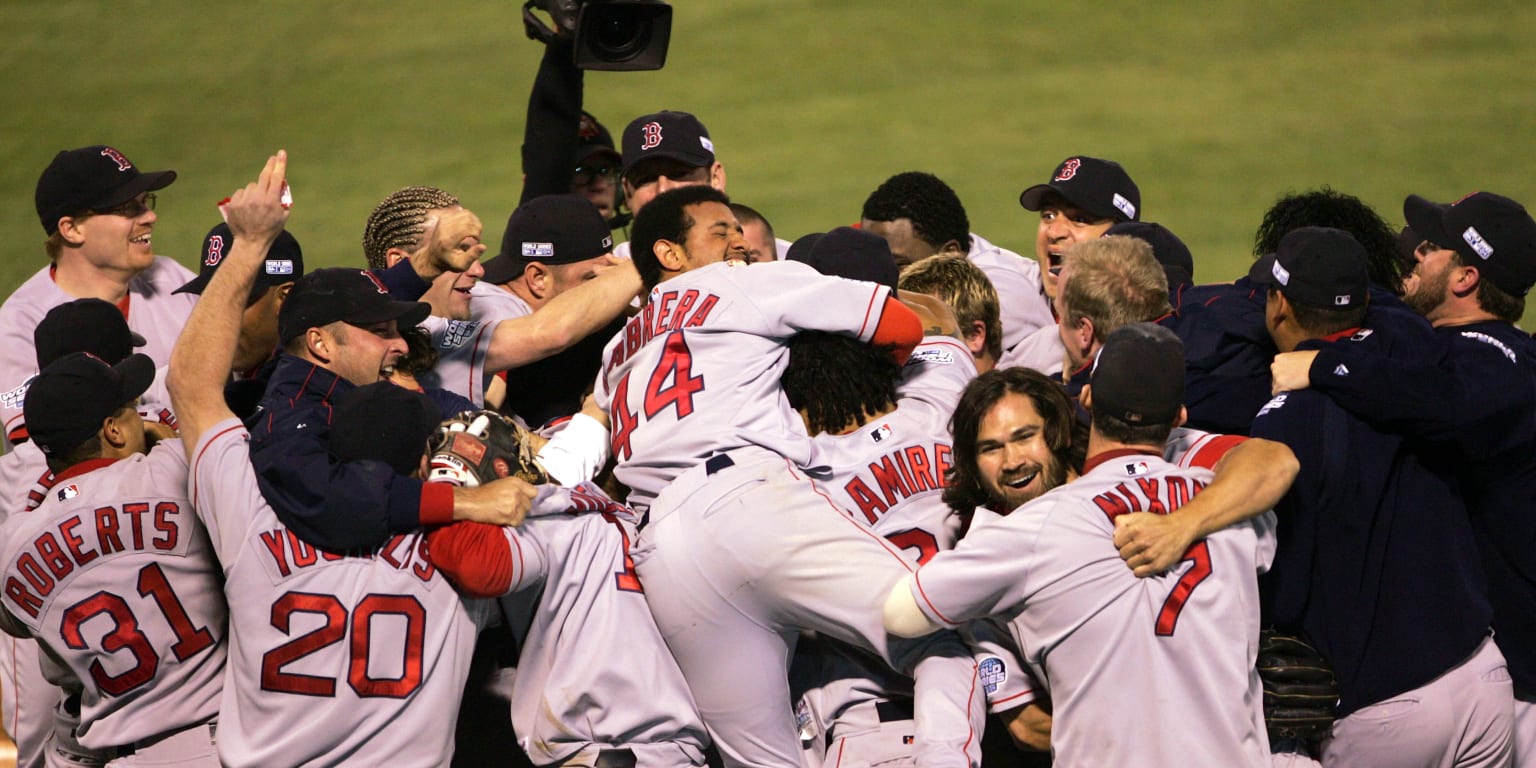
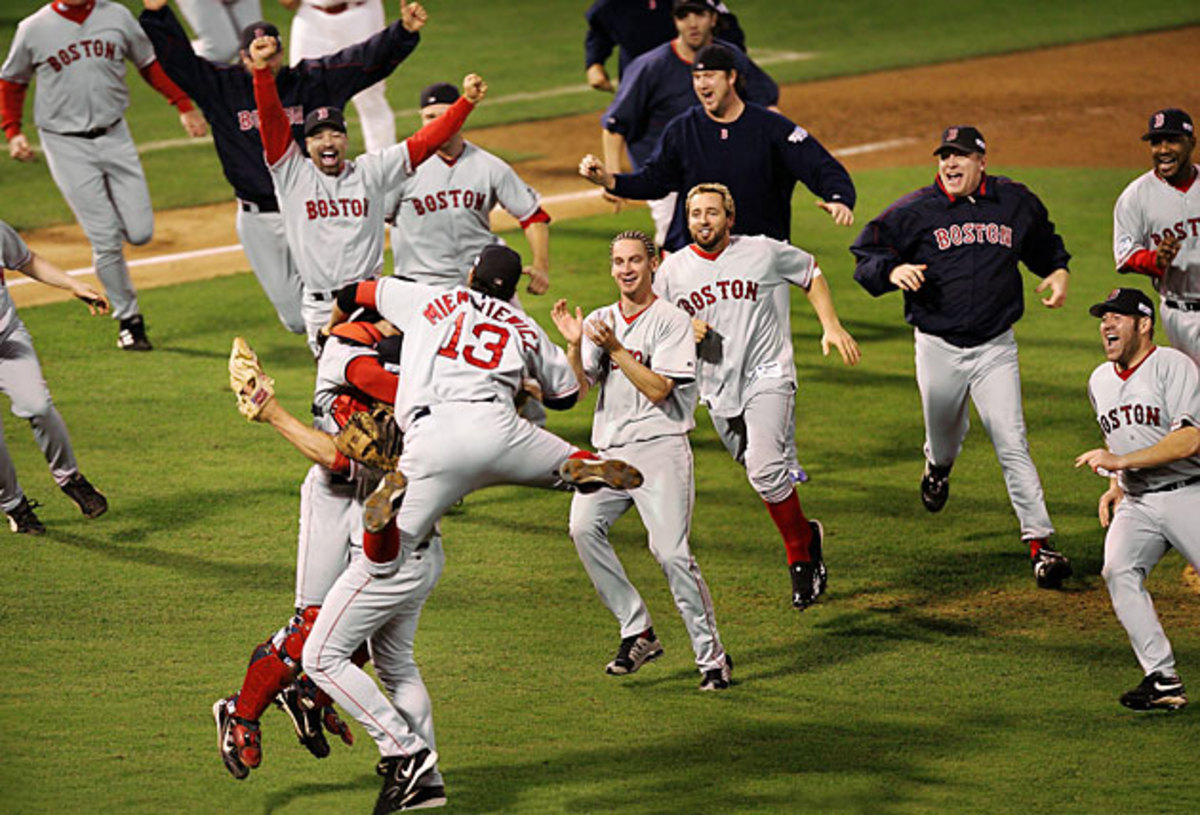
The 2004 Boston Red Sox achieved the impossible by becoming the first team in Major League Baseball history to overcome a 3-0 postseason series deficit. By defeating the New York Yankees in the American League Championship Series (ALCS) and subsequently sweeping the St. Louis Cardinals, they ended an 86-year championship drought and fundamentally altered the landscape of professional sports.
Building the "Idiots": Roster Construction and the Theo Epstein Era
By 2004, the Boston Red Sox were no longer just a team defined by the "Curse of the Bambino"; they were a laboratory for the burgeoning field of sabermetrics. General Manager Theo Epstein, then the youngest GM in baseball history, had spent two years refining a roster that valued On-Base Percentage (OBP) and plate discipline over traditional scouting tropes. However, the "untold" element of this roster was the intentional pivot toward clubhouse chemistry and defensive versatility.
The mid-season trade of franchise icon Nomar Garciaparra remains one of the most controversial yet effective moves in MLB history. On July 31, 2004, Epstein sent Garciaparra to the Chicago Cubs in a four-team deal that brought in shortstop Orlando Cabrera and first baseman Doug Mientkiewicz. While the city of Boston was in shock, the analytics suggested that Garciaparra’s declining range and the team’s porous infield defense were liabilities that even his bat could not offset.
This move did two things: it stabilized the defense for a pitching staff that relied on ground balls, and it cleared the way for the "Idiots" persona to emerge. Led by Kevin Millar, Johnny Damon, and David Ortiz, the team adopted a loose, irreverent attitude that served as a psychological shield against the mounting pressure of the 86-year title drought. In 2026, we look back at this as a masterclass in balancing "hard" data with "soft" human factors.
The Brink of Elimination: Analyzing the 0-3 Deficit
To understand the comeback, one must first acknowledge the absolute dominance of the New York Yankees in the first three games of the 2004 ALCS. After losing Games 1 and 2 in the Bronx, the Red Sox returned to Fenway Park only to be humiliated in Game 3 with a 19-8 blowout. At that moment, the statistical probability of a Boston comeback was effectively 0%.
The "untold" story of that night isn't found in the box score, but in the clubhouse after the game. Kevin Millar famously told anyone who would listen—including members of the media and the Yankees themselves—"Don't let us win tonight." This wasn't just bravado; it was a tactical recognition that the Yankees’ bullpen, while anchored by the legendary Mariano Rivera, was top-heavy. If Boston could force the Yankees into deep counts and exhaust their middle relief, the tide could turn.
The Anatomy of the Ninth Inning: Beyond the Steal
Every Red Sox fan knows about Dave Roberts’ steal in Game 4, but the technical execution of that moment involved high-level preparation that often goes unmentioned. Before Roberts even took the field as a pinch-runner, the Red Sox coaching staff had identified Mariano Rivera’s specific delivery "tell" when holding runners.
Roberts didn’t just run on instinct; he ran on a calculated window of 1.3 seconds—the time it took for Rivera to deliver the ball to home plate. When Roberts slid into second base, beating Jorge Posada’s throw by a fraction of a second, it wasn't just a momentum shift; it was the culmination of meticulous scouting.
Following the steal, Bill Mueller’s RBI single up the middle drove Roberts home, tying the game and forcing extra innings. This set the stage for David Ortiz’s walk-off home run in the 12th inning, a moment that began the shift from a tactical battle to a psychological war.
Statistical Shift: ALCS Games 1-3 vs. Games 4-7
| Metric | Games 1-3 (Yankees Dominance) | Games 4-7 (Red Sox Comeback) |
|---|---|---|
| Runs Scored (BOS) | 15 | 27 |
| Runs Scored (NYY) | 32 | 13 |
| Team ERA (BOS) | 9.67 | 3.12 |
| OPS (David Ortiz) | .725 | 1.350 |
| Bullpen High-Leverage Holds | 1 | 6 |
The Medical Miracle: Curt Schilling’s Sutured Ankle
Perhaps the most visceral image of the 2004 comeback is Curt Schilling’s "Bloody Sock" in Game 6. While critics at the time (and some skeptics even in 2026) questioned if the blood was real, the medical reality was a groundbreaking procedure performed by team doctor Bill Morgan.
Schilling was suffering from a ruptured tendon sheath in his right ankle, which caused the peroneal tendon to snap over the bone—an excruciatingly painful condition that made it impossible to push off the mound. Dr. Morgan performed a temporary "tack-down" procedure, suturing the skin directly to the deep tissue to create a mechanical wall that would keep the tendon in place.
This was not a standard medical practice; it was an experimental, high-stakes improvisation. In Game 6, Schilling pitched seven innings of one-run ball in the Bronx, stifling a Yankees lineup that had looked invincible just days prior. The "untold" aspect here is the sheer volume of local anesthetic required to keep Schilling functional, a feat of endurance that remains unparalleled in postseason history.
Breaking the Curse: The Psychological Collapse of the Yankees
By Game 7, the pressure had entirely shifted. The Yankees, a team built on the aura of inevitable victory, began to show cracks under the weight of potentially becoming the first team to blow a 3-0 lead. The Red Sox, conversely, were playing with "house money."
The decision to start Derek Lowe in Game 7 on just two days' rest was another calculated risk by manager Terry Francona. Lowe had been relegated to the bullpen earlier in the series, but his heavy sinker was deemed the perfect weapon for the Yankees’ aggressive hitters. Lowe delivered six innings of one-hit baseball.
The game was essentially decided in the early innings when David Ortiz hit a two-run homer in the first, followed by a Johnny Damon grand slam in the second. The Yankees' Yankee Stadium crowd, usually a cauldron of noise, fell into a stunned silence that persisted until the final out. The Red Sox won 10-3, completing the most improbable comeback in sports history.
The Aftermath: A World Series Sweep and a New Legacy
It is often forgotten that the 2004 Red Sox still had to play the World Series. They faced a 105-win St. Louis Cardinals team featuring Albert Pujols, Jim Edmonds, and Scott Rolen. However, the emotional peak of the ALCS had rendered the World Series almost a formality.
The Red Sox swept the Cardinals in four games. The final out, a ground ball from Edgar Renteria to pitcher Keith Foulke, ended 86 years of frustration. In the years since—now 22 years ago from our 2026 perspective—the "untold" story has transitioned into a foundational myth of New England culture. The win didn't just provide a trophy; it dismantled a regional identity built on failure and replaced it with a standard of perennial contention.
Frequently Asked Questions
Was the "Bloody Sock" actually blood or paint?
It was verified by multiple medical professionals and witnesses as actual blood. The blood resulted from the sutures in Curt Schilling's ankle tearing through the skin due to the intense mechanical stress of his pitching motion. The sock was eventually displayed in the National Baseball Hall of Fame.
Who was the MVP of the 2004 ALCS?
David Ortiz was named the ALCS MVP. He hit .387 with three home runs and 11 RBIs, including two walk-off hits in Games 4 and 5. His performance cemented his reputation as one of the greatest clutch hitters in the history of the sport.
How did the Red Sox change their strategy after Game 3?
The primary change was in bullpen usage and defensive positioning. Terry Francona began using Keith Foulke in higher-leverage situations earlier in games, and the team utilized advanced scouting reports to shift their infield defense against key Yankee power hitters like Gary Sheffield and Alex Rodriguez.
What happened to the 2004 Red Sox players afterward?
Many became legends in Boston. David Ortiz played until 2016 and was a first-ballot Hall of Famer. Theo Epstein went on to break another historic drought with the Chicago Cubs in 2016. Other players, like Kevin Millar and Johnny Damon, moved into media and remain prominent figures in baseball circles today.
Has any other MLB team come back from a 3-0 deficit since 2004?
As of 2026, the 2004 Boston Red Sox remain the only team in Major League Baseball history to successfully overcome a 3-0 series deficit to win a postseason series. While several teams have forced a Game 6 or 7, none have completed the comeback.
Recommended Actions for Fans and Historians
To truly appreciate the depth of the 2004 comeback, enthusiasts should look beyond the highlight reels. We recommend exploring the official MLB documentary Faith Rewarded, which provides unprecedented locker room access from that season. Additionally, reading Feeding the Monster by Seth Mnookin offers a deep dive into the front-office mechanics that made the roster possible. For those interested in the technical side of the game, reviewing the 2004 pitch-tracking data (available through advanced baseball databases) reveals how the Red Sox pitchers adjusted their approach to the Yankees' hitters between the first and second halves of the series.