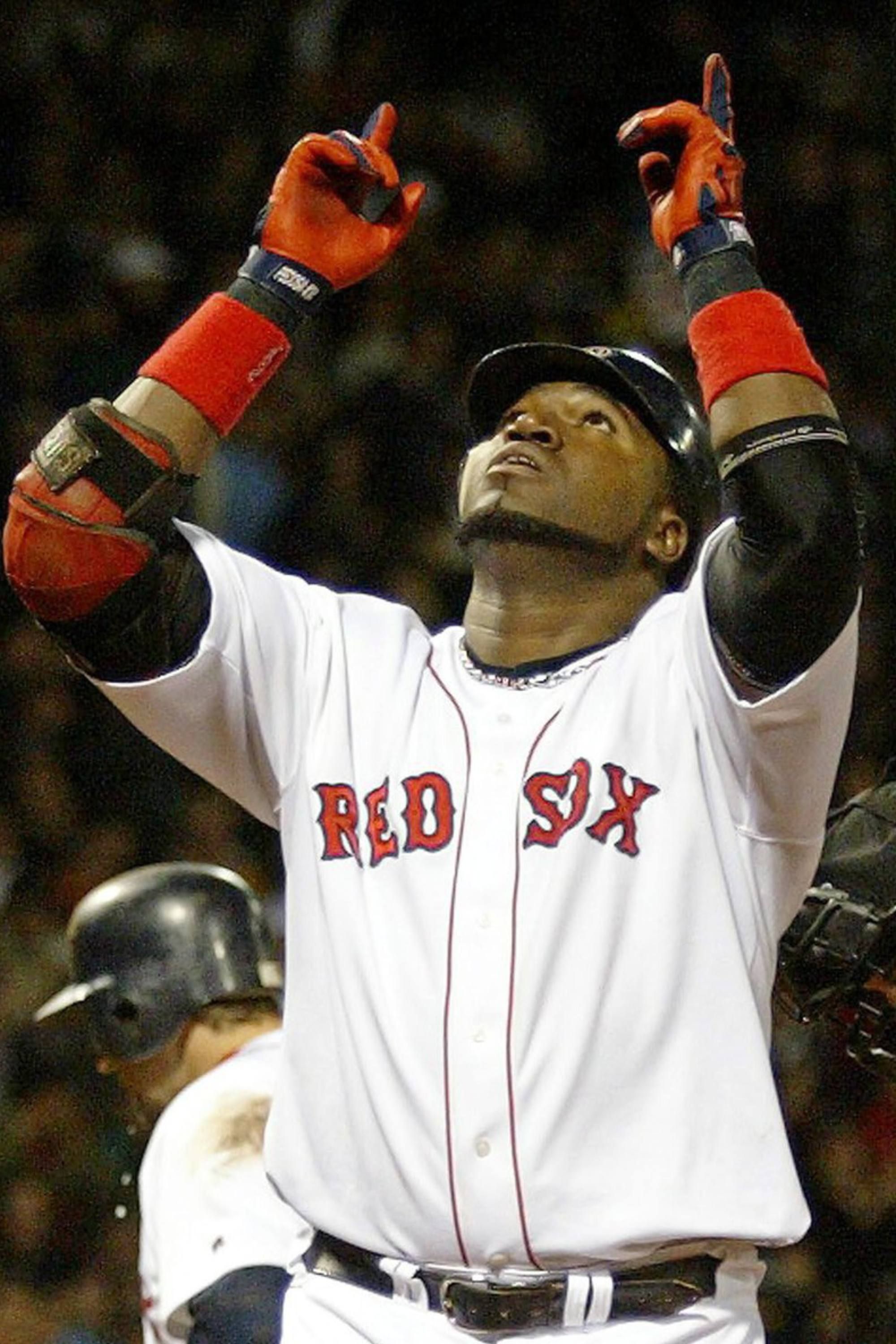
The 2004 Boston Red Sox pitching staff, led by Curt Schilling’s "Bloody Sock" heroics and Pedro Martinez’s veteran poise, was the structural foundation of the team’s first World Series title in 86 years. By combining experimental medical procedures with Derek Lowe’s unprecedented three-series clinching wins, this unit overcame a 3-0 ALCS deficit to finally "Reverse the Curse."
The Architecture of an Elite Rotation: Pedro, Curt, and the Power Shift
To understand the 2004 championship season, one must look back at the heartbreak of 2003. The decision to leave Pedro Martinez in during Game 7 of the 2003 ALCS defined the off-season. When the Red Sox acquired Curt Schilling from the Arizona Diamondbacks in late 2003, the organizational philosophy shifted from relying on a single ace to building a "co-ace" hierarchy. Schilling was brought in specifically to beat the New York Yankees, a task he had famously accomplished with Arizona in 2001.
Throughout the 2004 regular season, the dynamic between Martinez and Schilling was one of professional rivalry and mutual respect. Martinez, though no longer at his 1999-2000 peak, remained a master of deception and late-inning grit. Schilling, conversely, brought a power-pitcher’s mentality and an obsessive level of scouting preparation. Together, they formed a "one-two punch" that allowed the rest of the rotation—Tim Wakefield, Derek Lowe, and Bronson Arroyo—to slot into roles where they were over-qualified, creating a depth that few teams in the American League could match.
This rotation was not merely about talent; it was about psychological warfare. The presence of Schilling gave the Red Sox a vocal leader who publicly challenged the "Curse of the Bambino" narrative. While Pedro provided the emotional heart of the staff, Schilling provided the analytical shield, meticulously charting every pitch and forcing a culture of high-level accountability among the starters.
The Bloody Sock and Beyond: Curt Schilling’s Medical Miracle
The most celebrated individual story of the 2004 postseason is Curt Schilling’s right ankle. However, the technical reality of the "Bloody Sock" involves a medical procedure that was virtually "untold" in its risks at the time. Suffering from a ruptured tendon sheath in his right ankle, Schilling was effectively immobile heading into the ALCS. Under the direction of Red Sox team physician Dr. Bill Morgan, the medical staff performed an experimental procedure to suture the skin to the deep tissue, creating a "wall" to keep the peroneal tendon from snapping over the bone.
This procedure had never been performed on a professional athlete in such a high-stakes environment. In Game 6 of the ALCS against the Yankees, the sutures held, but the friction caused significant bleeding—the image of which became the enduring symbol of the season. The untold aspect of this performance was the sheer volume of local anesthetic required. Schilling was pitching with a foot that was almost entirely numb, relying on muscle memory and visual feedback from the catcher to locate his split-finger fastball.
Schilling’s ability to navigate seven innings in Game 6 allowed the Red Sox to force a Game 7. It also sent a message to the St. Louis Cardinals in the World Series: if the Boston staff was willing to undergo experimental surgery to stay on the mound, they were mentally unbeatable. Schilling repeated the performance in Game 2 of the World Series, further cementing the rotation’s legendary status.
The Unsung Hero: Derek Lowe’s Historic Postseason Trifecta
While Schilling and Martinez dominated the headlines, the 2004 championship would have been impossible without Derek Lowe. Lowe’s season was a rollercoaster; he struggled with consistency in the regular season and was even relegated to the bullpen at one point. However, Lowe achieved a feat that remains a statistical anomaly in Major League Baseball history: he was the winning pitcher in the clinching game of all three postseason series.
- ALDS Game 3: Lowe came out of the bullpen to shut down the Anaheim Angels in extra innings.
- ALCS Game 7: Starting on short rest in Yankee Stadium, Lowe pitched six innings of one-hit ball, silencing the New York crowd and completing the greatest comeback in sports history.
- World Series Game 4: Lowe pitched seven shutout innings against the St. Louis Cardinals, securing the sweep and the championship.
Lowe’s "sinker-ball" was the perfect antidote to the high-pressure environments of 2004. By forcing ground balls and keeping the ball in the park, he neutralized the power-hitting lineups of the Yankees and Cardinals. His contribution is often marginalized in retrospectives, but as of 2026, he remains the only pitcher to clinch three series in a single postseason through a combination of relief and starting appearances.
The Bullpen Identity: Keith Foulke and the Mechanics of the Final Out
If the starters provided the length, Keith Foulke provided the stability. Signed as a free agent before the 2004 season, Foulke was the quintessential "workhorse" closer. During the 2004 postseason, his workload was staggering. He appeared in 11 of the 14 games, throwing 257 pitches—an incredible volume for a modern reliever.
Foulke’s effectiveness relied on a "circle changeup" that looked identical to his fastball until the final ten feet. This pitch was particularly effective against the Yankees' left-handed heavy lineup. The "untold" story of Foulke’s season was the physical toll it took. By the time he threw the final out of the World Series—a soft toss to first base off the bat of Edgar Renteria—Foulke’s arm was essentially spent. He would never quite recapture that 2004 form in subsequent years, effectively "giving his arm" to the city of Boston for that single championship.
Supporting Foulke were specialists like Mike Myers, a left-handed submariner brought in specifically to face hitters like Hideki Matsui, and Alan Embree, whose high-velocity heat provided a necessary contrast to Foulke’s finesse. This bullpen was managed with surgical precision by Terry Francona, who ignored traditional "closer" roles to ensure the highest-leverage situations were met with the best possible matchups.
2004 Red Sox Pitching Statistics: A Season of Dominance
The following table highlights the regular-season contributions of the primary pitching staff that carried the team into October.
| Pitcher | Role | Wins-Losses | ERA | Strikeouts | Key Postseason Moment |
|---|---|---|---|---|---|
| Curt Schilling | Ace / Starter | 21-6 | 3.26 | 203 | The "Bloody Sock" Game 6 ALCS |
| Pedro Martinez | Ace / Starter | 16-9 | 3.90 | 227 | 7 Shutout Innings in WS Game 3 |
| Derek Lowe | Starter/Relief | 14-12 | 5.42 | 105 | Won all three clinching games |
| Tim Wakefield | Knuckleballer | 12-10 | 4.87 | 116 | Selfless extra-inning relief in ALCS |
| Bronson Arroyo | Starter | 10-9 | 4.03 | 142 | The "A-Rod Slap" play in ALCS |
| Keith Foulke | Closer | 32 Saves | 2.17 | 79 | Threw the final out of the World Series |
Sacrifice and the Knuckleball: Tim Wakefield’s Selfless Act
In the narrative of the 2004 championship, Tim Wakefield’s contribution is often framed through the lens of sacrifice. In Game 3 of the ALCS, the Red Sox were being humiliated by the Yankees in a 19-8 loss. The bullpen was exhausted, and the series looked over. Wakefield, who was scheduled to start Game 4, volunteered to come into the blowout to save the rest of the pitching staff.
He threw 3.1 innings of relief, effectively giving up his chance to start a game in the series so that the high-leverage relievers like Foulke and Embree could rest. This act of "taking one for the team" is credited by many in the clubhouse as the turning point of the ALCS. It allowed the Red Sox to enter Game 4 with a fully rested bullpen, which was essential for the extra-inning marathons that followed. Wakefield’s knuckleball, a pitch that relies on atmospheric conditions and "feel," was the literal bridge that allowed the Red Sox to cross from the brink of elimination to the start of their historic winning streak.
Strategic Evolution: Neutralizing the Cardinals' "MV3"
While the ALCS comeback is the most dramatic chapter, the pitching staff’s performance in the World Series against the St. Louis Cardinals was a masterclass in scouting. The Cardinals entered the series with one of the most feared lineups in baseball history, featuring Albert Pujols, Scott Rolen, and Jim Edmonds (known as the "MV3").
The Red Sox pitching staff held this trio to a combined .190 batting average during the four-game sweep. The strategy was simple but difficult to execute: heavy doses of "inside" fastballs followed by breaking stuff away. Pedro Martinez’s performance in Game 3 at Busch Stadium was particularly poignant; in his final start as a member of the Red Sox, he pitched seven shutout innings, proving he could still dominate on the world's biggest stage. The "untold" part of this series was how easily the Boston pitchers dismantled a 105-win team, making one of the best offenses in National League history look pedestrian.
Frequently Asked Questions
Who was the pitching coach for the 2004 Red Sox?
Dave Wallace served as the pitching coach during the 2004 season. He was instrumental in managing the egos of high-profile stars like Martinez and Schilling while helping Derek Lowe rediscover his sinker during the postseason. His calm demeanor was often cited as a stabilizing force during the chaotic ALCS comeback.
Did any pitcher win the World Series MVP in 2004?
No, the 2004 World Series MVP was awarded to outfielder Manny Ramirez. While the pitching was dominant, Ramirez’s .412 batting average and consistent RBI production made him the statistical choice. However, many fans and analysts believe Curt Schilling or Keith Foulke were equally deserving of the honor.
How many games did the Red Sox pitchers win in a row during that postseason?
After falling behind 3-0 in the ALCS, the Red Sox pitchers helped the team win eight consecutive games (the final four of the ALCS and all four of the World Series). This remains one of the most dominant stretches of postseason baseball ever recorded.
What happened to the "Bloody Sock" from the World Series?
The sock worn by Curt Schilling in Game 2 of the World Series was famously put up for auction. It was eventually sold in 2013 for over $92,000. It remains one of the most famous pieces of sports memorabilia, representing the physical sacrifice required to end the 86-year championship drought.
Why was Bronson Arroyo’s role in the ALCS controversial?
Bronson Arroyo is remembered for the "slap" play in Game 6 of the ALCS. While he was pitching, Alex Rodriguez hit a ground ball and slapped the ball out of Arroyo's glove as he attempted a tag. The initial ruling was an error, but after a huddle by the umpires, Rodriguez was called out for interference—a crucial moment that preserved the Red Sox lead.
Legacy of the 2004 Pitching Staff
The 2004 Boston Red Sox pitching staff remains a case study in how to build a championship-caliber rotation through a mix of veteran "aces," specialized relievers, and medical resilience. For modern fans and analysts in 2026, the 2004 season serves as a reminder that postseason success is often dictated as much by the training room and the scouting report as it is by raw talent on the mound. To truly appreciate the "untold story," one must look past the bloody sock and see a group of pitchers who were willing to sacrifice their future health and personal statistics for a singular, historic goal.