In the historical context of cinema, 2002 stands as a pivotal year that defined the modern era of the global blockbuster, the digital revolution, and the resurgence of specific genres. It was the year that proved superhero films could dominate the box office with Spider-Man, showcased the artistic potential of performance-capture technology in The Lord of the Rings: The Two Towers, and revitalized the movie musical through the Academy Award-winning Chicago.
The Birth of the Modern Superhero Era
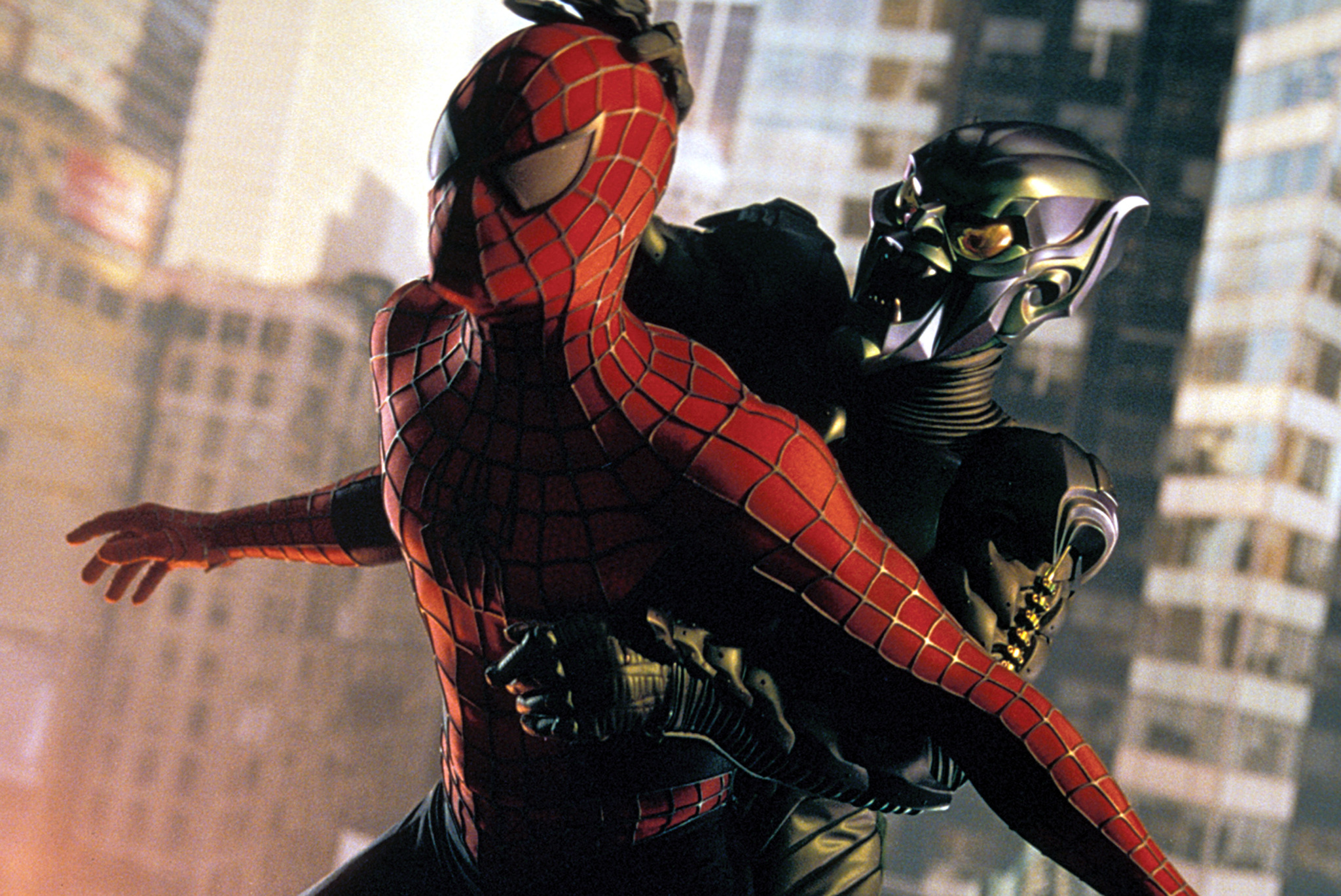
While films like X-Men (2000) and Blade (1998) had laid the groundwork, 2002 was the year the superhero genre truly claimed its throne at the center of popular culture. Sam Raimi’s Spider-Man was not just a commercial success; it was a cultural phenomenon that shattered industry expectations. On its opening weekend in May 2002, it became the first film in history to gross over $100 million in a single three-day weekend in the United States.
The success of Spider-Man was driven by a perfect synergy of nostalgic appeal, cutting-edge visual effects, and a grounded human narrative. Unlike the darker, more cynical comic book adaptations that had preceded it, Raimi’s vision embraced the bright colors and earnest emotional core of the source material. This approach provided a blueprint for the "Marvel formula" that would eventually lead to the creation of the Marvel Cinematic Universe (MCU). The film’s reliance on CGI to portray Peter Parker’s web-swinging through New York City also signaled to the industry that technology had finally reached a point where the most fantastical comic book feats could be rendered convincingly on screen.
Furthermore, the film's success influenced how studios viewed "tentpole" releases. It proved that a well-executed adaptation of a major IP could generate massive secondary revenue through merchandising, home video, and licensing. This realization shifted Hollywood’s focus toward high-budget, high-reward franchise filmmaking, a trend that remains the dominant strategy in 2026.
Digital Innovation and the Evolution of Middle-earth
If Spider-Man proved the commercial viability of digital effects, Peter Jackson’s The Lord of the Rings: The Two Towers proved their artistic and emotional depth. Released in December 2002, the second installment of the trilogy introduced the world to Gollum in his full, performance-captured glory. While digital characters had existed before (such as Jar Jar Binks in 1999), Gollum, portrayed by Andy Serkis, represented a quantum leap in technology and acting.
The team at Weta Digital developed sophisticated "subsurface scattering" techniques to mimic the way light penetrates human skin, giving Gollum a photorealistic quality that was unprecedented. More importantly, the integration of Serkis’s physical performance with the digital model allowed for a level of nuance and pathos that fundamentally changed the industry’s perception of "acting." This development opened the door for future mo-cap icons and revolutionized how creature-heavy films like Avatar and the Planet of the Apes reboot series were produced.
Simultaneously, George Lucas was pushing the boundaries of cinematography with Star Wars: Episode II – Attack of the Clones. It was the first major motion picture to be shot entirely on high-definition digital 24p cameras rather than traditional 35mm film. Although critics at the time debated the "look" of digital versus film, Lucas’s insistence on a digital workflow paved the way for the industry-wide transition to digital projection and cinematography, which would become the standard within a decade.
The Resurgence of the Movie Musical and Prestige Cinema
For decades, the movie musical was considered a "dead" genre in Hollywood, relegated to the occasional Disney animation. That changed in 2002 with the release of Chicago, directed by Rob Marshall. By framing the musical numbers as part of the characters' internal fantasies or stage performances, Marshall bypassed the "unrealistic" stigma of characters breaking into song in the middle of a scene.
Chicago went on to win the Academy Award for Best Picture, the first musical to do so since Oliver! in 1968. This victory signaled a shift in Academy tastes and proved that stylized, theatrical storytelling could still resonate with a modern audience. This era also saw the release of The Pianist, directed by Roman Polanski, which earned Adrien Brody a Best Actor Oscar. The film’s stark, unflinching look at the Holocaust reminded audiences of the power of historical drama.
Other notable prestige films from 2002 included:
- The Hours: A complex, multi-era narrative that secured Nicole Kidman a Best Actress Oscar for her portrayal of Virginia Woolf.
- Adaptation: A meta-narrative masterpiece by Charlie Kaufman and Spike Jonze that explored the limits of screenwriting and creativity.
- About Schmidt: A showcase for Jack Nicholson’s late-career dramatic range, emphasizing the shift toward character-driven indie-spirit films within major studios.
International Masterpieces and the New Horror Wave
2002 was an extraordinary year for international cinema, with several films achieving global crossover success that influenced filmmakers worldwide. From Brazil, Fernando Meirelles and Kátia Lund delivered City of God (Cidade de Deus). Its kinetic editing, non-linear narrative, and raw portrayal of life in the favelas of Rio de Janeiro made it an instant classic. Its influence on the "shaky-cam" aesthetic and hyper-stylized crime dramas can still be felt in 2026.
In the horror genre, 2002 marked the beginning of a significant transition. Danny Boyle’s 28 Days Later revitalized the zombie subgenre by introducing "fast" zombies and utilizing low-grade digital video to create a sense of immediate, documentary-style dread. This aesthetic choice influenced the "found footage" and gritty realism trends of the mid-2000s.
Meanwhile, in Asia, Hideo Nakata’s Ringu (1998) received a high-profile American remake in 2002 titled The Ring, directed by Gore Verbinski. The film's massive success sparked a decade-long obsession in Hollywood with remaking Japanese and South Korean horror films ("J-Horror"), bringing a more psychological, atmospheric approach to Western horror. Additionally, 2002 saw the international rise of Spirited Away, which, although released in Japan in 2001, gained significant traction in the West in 2002/2003, eventually winning the Academy Award for Best Animated Feature and cementing Hayao Miyazaki’s status as a global master of the medium.
2002 Box Office Performance and Commercial Impact
The financial landscape of 2002 was dominated by franchises and sequels, a precursor to the "IP-heavy" market of the 2020s. Below is a summary of the top-grossing films globally for the year.
| Film Title | Worldwide Gross (Approx. USD) | Primary Genre | Notable Achievement |
|---|---|---|---|
| The Lord of the Rings: The Two Towers | $926 Million | Fantasy / Epic | Revolutionary use of Mo-Cap (Gollum) |
| Harry Potter and the Chamber of Secrets | $879 Million | Fantasy / Family | Solidified the "Wizarding World" as a perennial hit |
| Spider-Man | $821 Million | Superhero | First $100M+ opening weekend in history |
| Star Wars: Episode II – Attack of the Clones | $640 Million | Sci-Fi / Space Opera | First major film shot entirely on digital video |
| Men in Black II | $441 Million | Sci-Fi / Comedy | Confirmed the era's reliance on high-budget sequels |
| Die Another Day | $431 Million | Action / Spy | Highest-grossing James Bond film to that date |
| Signs | $408 Million | Sci-Fi / Thriller | Solidified M. Night Shyamalan as a marquee director |
| Ice Age | $383 Million | Animation / Comedy | Established Blue Sky Studios as a major player |
| My Big Fat Greek Wedding | $368 Million | Rom-Com | Highest-grossing independent rom-com ever |
| Minority Report | $358 Million | Sci-Fi / Neo-Noir | Landmark collaboration between Spielberg and Cruise |
The Height of the DVD Era and Home Media Shifts
While the box office was booming, 2002 represented the "Golden Age" of the DVD. Physical media was at its peak, and studios were beginning to realize that the "second life" of a film on home video could be more profitable than its theatrical run.
The DVD format allowed for extensive "special features," such as director commentaries, making-of documentaries, and deleted scenes. This fostered a generation of cinephiles who were more educated about the technical aspects of filmmaking. Films that underperformed in theaters, such as the cult classic Donnie Darko (which gained its massive following primarily through 2002 home video sales), found salvation in this market.
This era also saw the beginning of the end for VHS. In 2002, DVD sales surpassed VHS rentals for the first time, signaling a definitive shift in consumer behavior. This transition forced retailers like Blockbuster to restructure their entire inventories, eventually leading to the digital distribution models we see today.
Frequently Asked Questions
Which film won the Oscar for Best Picture in 2002?
The film Chicago won the Academy Award for Best Picture at the 75th Academy Awards (held in March 2003, honoring films from 2002). It was a historic win, as it was the first musical to take the top prize in 34 years. The film was praised for its innovative direction by Rob Marshall and its powerhouse performances by Catherine Zeta-Jones, Renée Zellweger, and Richard Gere.
Was 2002 the year digital cameras replaced film?
2002 was the year the transition became undeniable, but it did not happen overnight. Star Wars: Episode II – Attack of the Clones was the high-profile catalyst, using Sony's CineAlta HDW-F900 cameras. While many directors, such as Steven Spielberg and Christopher Nolan, continued to champion 35mm and 70mm film, the efficiency and cost-savings of the digital workflow showcased in 2002 set the stage for the industry-wide adoption of digital cinematography that occurred throughout the late 2000s and early 2010s.
Why is Spider-Man (2002) considered so important to film history?
Spider-Man is considered a landmark because it proved that superhero movies had "quadrant-transcending" appeal—meaning they could attract children, adults, men, and women in equal measure. Its record-breaking $114.8 million opening weekend fundamentally changed how studios planned their summer release schedules, shifting the focus toward massive "event" openings. It also proved that Marvel characters (then licensed to different studios) were just as bankable as DC’s Batman or Superman.
What was the highest-grossing film of 2002?
The highest-grossing film of 2002 was The Lord of the Rings: The Two Towers, which earned over $926 million globally. It narrowly beat out Harry Potter and the Chamber of Secrets. The success of these two films cemented the early 2000s as a "golden age" for high-fantasy cinema, proving that audiences were willing to commit to long-form, serialized storytelling over several years.
How did 2002 affect the horror genre?
The year 2002 was a "reset" for horror. The success of The Ring introduced "J-Horror" tropes—ghostly pale children, cursed objects, and psychological tension—to the West, moving away from the "slasher" fatigue of the late 90s. Simultaneously, 28 Days Later reimagined the zombie as a product of viral infection rather than the supernatural, emphasizing speed and visceral realism, which would define the genre for the next two decades.
How to Explore the Legacy of 2002 Cinema
To truly understand the impact of 2002 on modern film, a curated viewing of the year's most influential titles is recommended. Start by watching Spider-Man and The Lord of the Rings: The Two Towers back-to-back to see the birth of modern VFX and performance capture. Follow this with City of God and 28 Days Later to observe how digital video and unconventional editing began to permeate even the most high-profile productions.
By analyzing these films, one can see the DNA of the 2026 cinematic landscape—where digital characters are indistinguishable from humans, superhero universes are the primary economic engine of Hollywood, and international stories are more accessible than ever via global streaming platforms. The year 2002 was not just a year of good movies; it was the year the blueprint for 21st-century entertainment was written.