The year 2001 stands as the most transformative and tragic period in the history of modern aviation. Driven by the unprecedented terrorist attacks of September 11 and the subsequent crash of American Airlines Flight 587, the year saw a fundamental shift in global flight security, aircraft engineering standards, and pilot training protocols that continue to define the industry in 2026.
The Convergence of Tragedy: An Overview of 2001 Aviation
To understand the 2001 plane crashes is to understand a year that broke the trajectory of aviation safety. While the industry had been becoming statistically safer for decades, 2001 introduced a combination of intentional malice and technical failure that forced a total re-evaluation of how humans interact with flight technology.
The primary search intent for "2001 plane crash" typically directs users toward two major events: the four hijacked flights on September 11 and the crash of American Airlines Flight 587 in Belle Harbor, Queens. However, 2001 also saw devastating accidents in Italy and over the Black Sea, each contributing unique lessons to the field of aviation safety. This article examines the technical causes, the investigative outcomes, and the long-term changes implemented in the 25 years following these events.
Note: This information is provided for historical and educational purposes. Aviation safety is governed by the International Civil Aviation Organization (ICAO) and national bodies like the FAA and NTSB. Always refer to official regulatory updates for current flight safety standards.
American Airlines Flight 587: The Technical Failure in Queens
On November 12, 2001, just two months after the September 11 attacks, American Airlines Flight 587 crashed shortly after takeoff from John F. Kennedy International Airport. The Airbus A300-600 was bound for Santo Domingo when it fell into the Belle Harbor neighborhood of Queens, killing all 260 people on board and five on the ground.
The Role of Wake Turbulence
Flight 587 took off behind a Japan Airlines Boeing 747. As the 747 climbed, it left behind "wake turbulence"—powerful vortices of air spinning off the wingtips. The A300 encountered these vortices, causing the aircraft to rock. While wake turbulence is a standard challenge for pilots, the response from the cockpit of Flight 587 became the focal point of the National Transportation Safety Board (NTSB) investigation.
Structural Failure of the Vertical Stabilizer
The investigation revealed that the first officer, who was flying the aircraft, attempted to counter the turbulence by making rapid, full-scale rudder inputs. In the A300-600, the rudder system was highly sensitive. The repeated "rudder reversals"—moving the rudder fully from one side to the other—created aerodynamic loads that far exceeded the "ultimate design loads" of the vertical stabilizer (the tail fin).
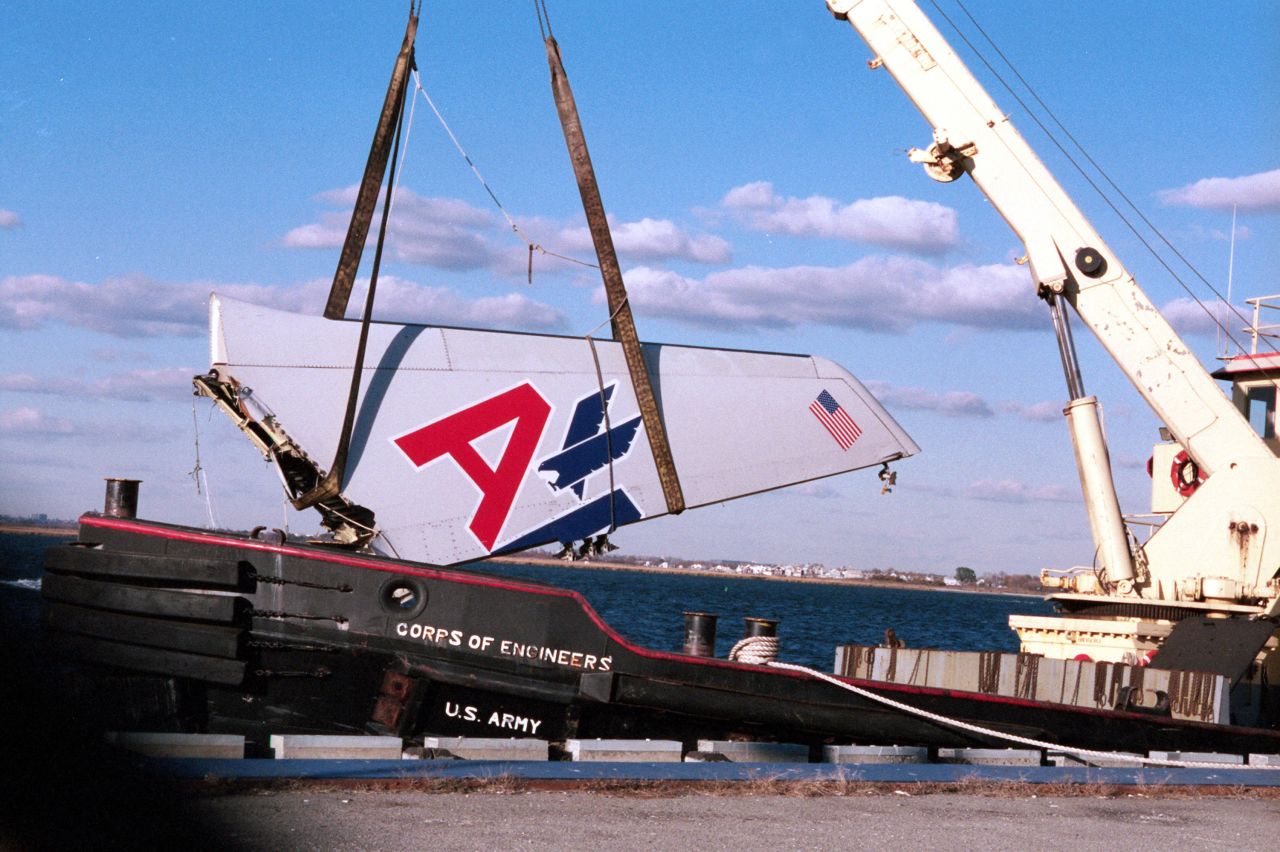
The stress was so immense that the entire vertical stabilizer snapped off the fuselage. Deprived of its tail, the aircraft became uncontrollable and plunged into the residential area below. This remains the second-deadliest aviation accident in United States history.
Changes to Pilot Training
The crash of Flight 587 led to a global overhaul of the Advanced Maneuver Training (AMT) programs. Before 2001, many pilots were taught that the "maneuvering speed" ($V_a$) of an aircraft meant they could make full control inputs without risk of structural damage. The NTSB clarified that this was a dangerous misconception: $V_a$ only protects against a single full input in one axis, not multiple, rapid reversals. Modern training now emphasizes "unusual attitude recovery" without overstressing the airframe.
The September 11 Hijackings: A Security Paradigm Shift
While often categorized as an act of terrorism rather than an "accident," the four crashes on September 11, 2001, represent the deadliest application of aviation as a weapon. The flights involved—American Airlines 11, United Airlines 175, American Airlines 77, and United Airlines 93—resulted in nearly 3,000 fatalities.
Technical and Tactical Impacts
The 9/11 crashes exposed a critical vulnerability in the "Common Strategy" used by flight crews during hijackings. Before 2001, the standard procedure was to cooperate with hijackers, land the plane, and negotiate. The events of 9/11 proved that the aircraft itself could be the weapon, leading to:
- Reinforced Cockpit Doors: Within years, every commercial airliner was fitted with hardened, bulletproof cockpit doors that remain locked throughout the flight.
- Creation of the TSA: In the United States, the Aviation and Transportation Security Act was passed in November 2001, federalizing airport security.
- Secondary Barriers: Many airlines in 2026 now use secondary wire mesh barriers to protect the cockpit when the primary door must be opened for crew needs.
The Linate Airport Disaster: Ground Safety Failures
On October 8, 2001, the deadliest accident in Italian aviation history occurred at Linate Airport in Milan. Scandinavian Airlines (SAS) Flight 686, an MD-87, collided on takeoff with a Cessna Citation CJ2 business jet that had taxied onto the active runway in thick fog.
Analysis of the Collision
The disaster killed 118 people. The investigation found a systemic failure in ground safety infrastructure. At the time of the crash:
- The airport's ground radar system was non-functional.
- Signage on the taxiways was confusing and did not meet international standards.
- The Cessna crew, unfamiliar with the airport, accidentally turned onto the "R5" taxiway, which led directly across the main runway, rather than the intended path.
This crash highlighted that aviation safety is not just about what happens in the air, but the management of the "ground environment." It led to the mandatory installation of Runway Status Lights (RWSL) and more rigorous ground movement safety management systems (SMS) globally.
Siberia Airlines Flight 1812: The Black Sea Shoot-down
On October 4, 2001, Siberia Airlines Flight 1812, a Tupolev Tu-154, exploded over the Black Sea while en route from Tel Aviv to Novosibirsk. All 78 people on board perished.
The investigation determined that the plane was accidentally shot down by a S-200 surface-to-air missile fired by the Ukrainian military during a training exercise in Crimea. The missile had missed its target drone and instead locked onto the passenger jet. This event underscored the extreme risks posed to civil aviation by military activity in nearby corridors, a theme that has unfortunately repeated in the decades since.
Comparative Summary of Major 2001 Aviation Events
The following table summarizes the primary crashes of 2001 that forced regulatory and technical changes.
| Date | Flight / Event | Primary Cause | Fatalities | Primary Safety Outcome |
|---|---|---|---|---|
| Sept 11, 2001 | Multiple (AA11, UA175, AA77, UA93) | Hijacking / Terrorism | ~2,977 | Hardened cockpit doors; TSA formation |
| Oct 4, 2001 | Siberia Airlines 1812 | Accidental Missile Strike | 78 | Stricter airspace management during drills |
| Oct 8, 2001 | Linate Airport Disaster | Runway Incursion (Fog) | 118 | Ground radar mandates; improved taxiway signs |
| Nov 12, 2001 | American Airlines 587 | Structural Failure (Pilot Input) | 265 | Overhaul of Rudder/Maneuvering Speed training |
| Nov 24, 2001 | Crossair Flight 3597 | Pilot Error (CFIT) | 24 | Enhanced Minimum Safe Altitude Warnings |
The Evolution of Flight Safety (2001–2026)
In the 25 years since these tragedies, the aviation industry has moved from a "reactive" safety culture to a "proactive" or "predictive" one. Looking back from 2026, several key advancements can be traced directly to the lessons of 2001.
Data-Driven Risk Management
The Flight Data Monitoring (FDM) systems of today are vastly more sophisticated than those in 2001. Airlines now use AI-driven analytics to scan thousands of hours of flight data to identify "near-misses" or technical anomalies before they lead to an accident. The rudder reversals seen in AA587 would be flagged today by automated systems long before a structural failure could occur.
Enhanced Pilot Psychographics
Modern aviation also places a higher emphasis on the psychological state of pilots and "Crew Resource Management" (CRM). The Crossair Flight 3597 crash in late 2001, where the pilot descended below the minimum safe altitude, highlighted the need for co-pilots to feel empowered to challenge a senior captain’s mistakes—a cornerstone of today’s cockpit culture.
Frequently Asked Questions
Was the crash of Flight 587 related to the 9/11 attacks?
No. While it occurred only two months later, the NTSB concluded that the crash was a purely accidental technical and operational failure. There was no evidence of sabotage or terrorism. The initial fear was high because of the timing, but the wreckage provided clear proof of structural failure due to aerodynamic loads.
What was the deadliest single-plane crash of 2001?
Excluding the 9/11 attacks as a coordinated event, American Airlines Flight 587 was the deadliest single-plane crash, with 265 total fatalities. If counting the 9/11 aircraft individually, American Airlines Flight 11 (which hit the North Tower) had the highest number of people on board who perished, followed by the others involved in the attacks.
Why did the tail fall off the plane in the AA587 crash?
The vertical stabilizer (tail) fell off because the first officer moved the rudder back and forth rapidly and to its full extent. This created "oscillatory loads" that exceeded the physical strength of the composite lugs attaching the tail to the fuselage. It was a lesson in the dangers of aggressive control inputs at high speeds.
How did 2001 change airport security for passengers?
The most immediate change was the requirement for all passengers to pass through standardized federal security checkpoints. This included the banning of small knives (which were used on 9/11), the eventual implementation of liquid restrictions, and the requirement for shoe removal (following the attempted "shoe bomber" incident in December 2001).
Is the Airbus A300 still flying today in 2026?
Most A300 aircraft have been retired from passenger service by 2026, though some remain in use as cargo freighters. Following the 2001 crash, Airbus modified the rudder system to provide more resistance at higher speeds, making it much harder for a pilot to accidentally induce the type of stress that destroyed Flight 587.
Moving Forward: Verifying Flight Safety Information
For those researching the 2001 plane crashes for academic or professional reasons, it is vital to utilize official accident reports. The legacy of 2001 is codified in these documents, which serve as the foundation for modern flight manuals.
Next Actions for Researchers:
- Access the NTSB Database: Review the full "AAR-04/04" report for the technical specifics of American Airlines 587.
- Consult ICAO Annex 17: This document outlines the international security standards that were fundamentally rewritten following the September 11 attacks.
- Monitor EASA and FAA Updates: For current regulations regarding rudder travel limiters and pilot training requirements (Part 121 training updates), visit the official websites of these regulatory bodies.
The tragedies of 2001 remain a solemn reminder of the necessity of vigilance in aviation. By studying these events, the industry ensures that the lessons learned from 2001 continue to protect the millions of passengers who take to the skies every day in 2026.