Nike’s journey from a trunk-based operation in Oregon to the world’s most dominant sportswear entity is a masterclass in branding, technical innovation, and aggressive marketing. As of 2026, the company continues to leverage its deep historical roots and "secret" design philosophies to maintain its multi-billion dollar lead in the global athletic market.
The Foundations of Blue Ribbon Sports
Before the world knew the "Swoosh," the company existed as Blue Ribbon Sports (BRS). Founded on January 25, 1964, by Phil Knight and Bill Bowerman, the venture began not as a manufacturer, but as a distributor for the Japanese shoemaker Onitsuka Tiger (now known as ASICS). Knight, a middle-distance runner at the University of Oregon, and Bowerman, his legendary coach, each invested $500 to kickstart the business.
In those early years, Knight sold shoes out of the trunk of his green Plymouth Valiant at track meets across the Pacific Northwest. This grassroots approach allowed the founders to gain immediate feedback from their target audience—athletes. By the time the partnership with Onitsuka Tiger soured in the early 1970s, BRS had the customer insights necessary to launch its own brand.
1. The $35 Logo Design
One of the most famous secrets in corporate history involves the Nike Swoosh. In 1971, Phil Knight hired Carolyn Davidson, a graphic design student at Portland State University, to create a logo that conveyed motion. Davidson submitted several designs, and Knight chose the Swoosh, famously stating, "I don't love it, but I think it will grow on me." He paid her exactly $35 for the work. However, Nike later recognized her contribution in 1983 by gifting her an undisclosed amount of Nike stock and a diamond-encrusted gold Swoosh ring.
2. The Name That Almost Wasn't
Phil Knight originally wanted to name the company "Dimension Six." It was Jeff Johnson, Nike's first full-time employee, who suggested the name Nike, inspired by the Greek winged goddess of victory. Johnson claimed the name came to him in a dream just hours before the paperwork was due. The simplicity and mythological resonance of the name eventually won Knight over, setting the stage for a brand identity that would transcend footwear.
3. Innovation from the Breakfast Table
Bill Bowerman was obsessed with making shoes lighter and more "grippy." In 1971, while watching his wife make waffles, he realized the pattern of the waffle iron could provide excellent traction without the weight of traditional metal spikes. He reportedly ruined the family waffle iron by pouring urethane into it, but the experiment led to the "Waffle Trainer," which debuted in 1974 and revolutionized the running world.
Strategic Breakthroughs and Marketing Secrets
Nike’s rise was not solely due to product quality; it was fueled by provocative marketing and strategic risks that often flew in the face of industry standards.
4. The "Just Do It" Dark Origin
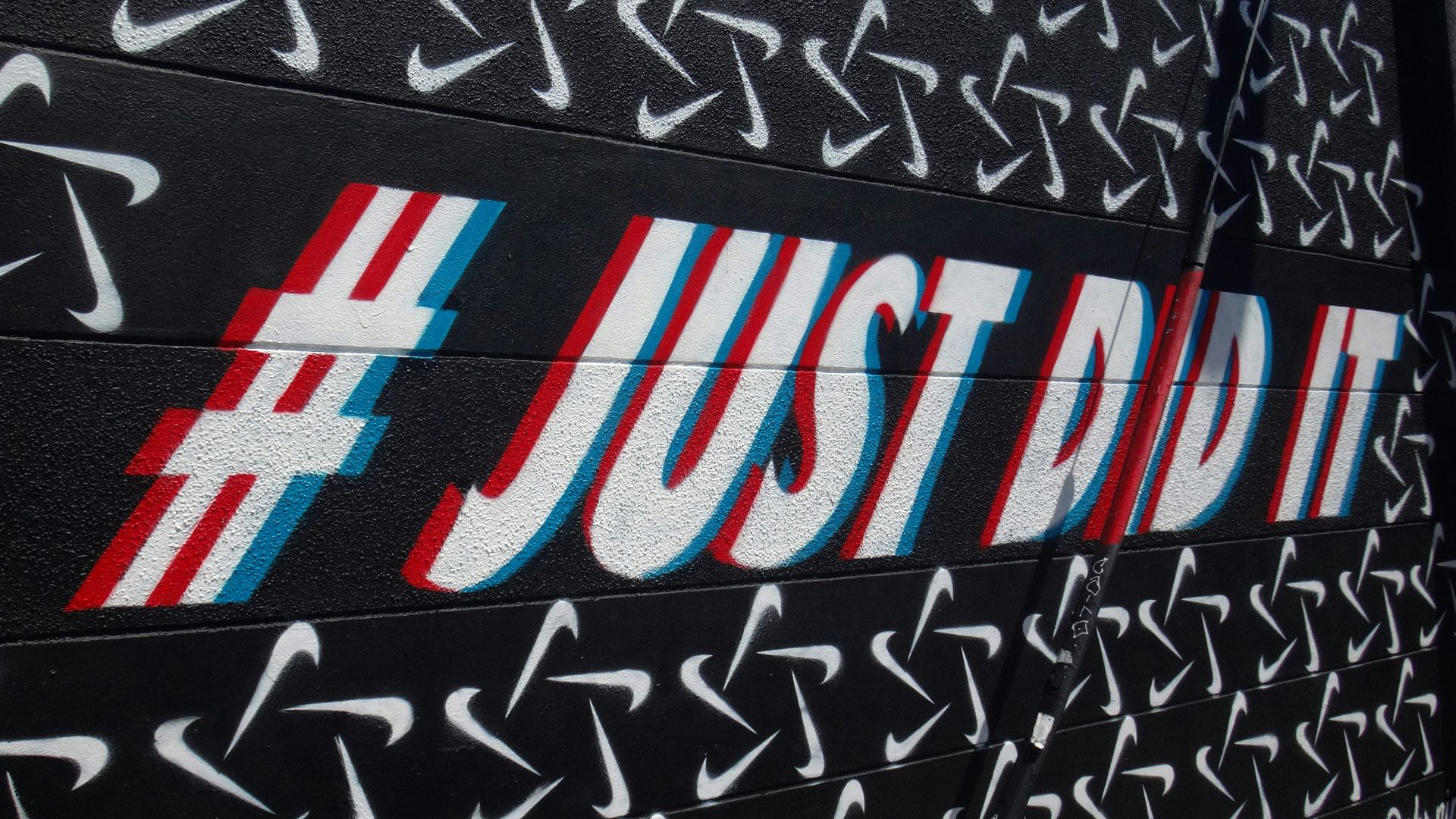
The iconic "Just Do It" slogan, introduced in 1988, has a surprisingly macabre inspiration. Dan Wieden, co-founder of the advertising agency Wieden+Kennedy, revealed that the phrase was inspired by the final words of convicted murderer Gary Gilmore, who reportedly said "Let’s do it" before his execution. Wieden tweaked it to "Just Do It" to provide a sense of universal motivation.
5. The Beatles Controversy
In 1987, Nike became the first company to use a Beatles song in a television commercial. The "Revolution" ad campaign was groundbreaking but led to a $15 million lawsuit from Apple Records (the Beatles' label). While the suit was eventually settled out of court, the campaign successfully positioned Nike as a brand that challenged the status quo.
6. The Jordan Gamble
In 1984, Nike signed a rookie named Michael Jordan. At the time, Jordan preferred Adidas, and Nike was still seen primarily as a running shoe company. The partnership birthed the Air Jordan line, which was so revolutionary that the NBA initially banned the original black-and-red sneakers for violating uniform "color" rules. Nike paid the $5,000-per-game fines, using the "banned" status as a brilliant marketing tool.
7. The First Professional Athlete
While Jordan is the most famous, the first professional athlete to sign with Nike was Romanian tennis player Ilie Năstase in 1972. This marked the company's first major foray into sports beyond track and field, establishing a blueprint for the multi-sport endorsement model Nike uses today.
Technical Specifications and Corporate Stats
Understanding Nike’s scale requires a look at the data that powers its operations. As we move through 2026, the company’s financial and logistical footprint remains unmatched in the apparel sector.
| Metric | Estimated Value (as of 2026 Context) | Significant Milestone |
|---|---|---|
| Annual Revenue | Over $54 Billion | Transition to direct-to-consumer (DTC) |
| Global Headcount | ~80,000+ Employees | Includes Nike, Jordan, and Converse |
| Market Valuation | ~$150B - $180B | Dominates S&P 500 apparel sector |
| Retail Footprint | 1,000+ Owned Stores | Focus on "Nike Live" digital concepts |
| R&D Investment | ~$450M+ Annually | Focus on the "Innovation Kitchen" |
8. The Innovation Kitchen
Located at Nike’s World Headquarters in Beaverton, Oregon, the "Innovation Kitchen" is a highly secretive R&D facility. It is where designers and bio-mechanists experiment with everything from self-lacing shoes (inspired by Back to the Future II) to the Alphafly carbon-plated marathon shoes. Most employees are barred from entering, and the facility is shielded from public view to protect intellectual property.
9. NASA Engineering in Your Sole
The "Air" in Nike shoes wasn't a marketing gimmick; it was a product of aerospace engineering. Former NASA engineer Marion Frank Rudy approached Nike with the idea of placing air-filled membranes in shoe soles to provide long-lasting cushioning. While other brands rejected the idea, Nike embraced it, launching the Air Tailman in 1978 and the visible Air Max in 1987.
10. The EKIN Program
Nike employs a specialized group of brand evangelists known as EKINs (Nike spelled backward). These individuals are experts in Nike history and technology, tasked with training retailers and athletes. To become an EKIN, many undergo a rigorous initiation that traditionally involves tattooing the Swoosh onto their ankle, demonstrating a level of brand loyalty rarely seen in corporate environments.
Environmental and Social Evolution
In the mid-2020s, Nike has shifted its focus toward sustainability and digital integration, responding to both consumer demand and global regulatory shifts.
11. Move to Zero Initiative
By 2026, Nike’s "Move to Zero" campaign has reached critical milestones. The company now diverts 99% of all footwear manufacturing waste from landfills. Additionally, many of their highest-volume products, such as the Flyknit line, are engineered to produce 60% less waste than traditional cut-and-sew methods.
12. The Re-use-A-Shoe Program
Launched in the early 1990s, this program remains one of the oldest corporate recycling initiatives. Nike collects worn-out athletic shoes (of any brand) and grinds them down into "Nike Grind" material. This material is then used to create playground surfaces, running tracks, and new Nike products.
13. Acquisition of Converse
In 2003, Nike acquired Converse for $305 million. This was a strategic masterstroke that allowed Nike to dominate the lifestyle and "retro" market through the Chuck Taylor All-Star brand while keeping the Nike brand focused on high-performance athletics.
14. Digital Transformation and the SNKRS App
Nike has aggressively moved away from wholesale partners like Foot Locker to focus on its own digital ecosystem. The SNKRS App has become a cultural phenomenon, using "drop" mechanics to create artificial scarcity and high demand for limited-edition releases, effectively controlling the secondary resale market.
Historical Curiosities and "Secrets"
15. The World’s Largest Nike Store
As of 2026, the Nike NYC "House of Innovation" on Fifth Avenue stands as a testament to the brand's retail future. Spanning over 68,000 square feet, it allows customers to customize shoes in real-time using speed-shop technology and instant digital checkout, blurring the line between online and physical shopping.
16. The "Moon Shoe" Rarity
The original Nike "Moon Shoe," designed by Bowerman for the 1972 Olympic Trials, is one of the most valuable sneakers in existence. Only about 12 pairs were made. In 2019, a pair sold at auction for $437,500, highlighting the transition of sneakers from athletic gear to high-value alternative assets.
17. Breaking2 and the Sub-Two-Hour Marathon
In 2017 and 2019, Nike funded the "Breaking2" project, an effort to break the two-hour marathon barrier. While Eliud Kipchoge’s successful 1:59:40 run in Vienna was not an official world record due to pacing conditions, the event served as a massive technical showcase for Nike’s Vaporfly technology, which has since been adopted by nearly every elite long-distance runner.
18. Ownership of the "Swoosh" Sound
Nike's branding is so pervasive that they have explored "sonic branding." The specific sound of a basketball swishing through a net or the "click" of a Nike shoe box opening is often meticulously curated in their media to trigger brand recognition without visual cues.
19. Phil Knight’s "Shoe Dog" Legacy
Phil Knight stepped down as chairman in 2016 but remains the Chairman Emeritus. His memoir, Shoe Dog, revealed that Nike was nearly bankrupt dozens of times in its first two decades. This culture of "living on the edge" remains part of the company's internal DNA, encouraging high-stakes innovation.
20. The Global Logistics Hub
The "Wings" logistics center in Belgium is one of the most advanced in the world, powered entirely by renewable energy (wind, solar, and geothermal). It serves as the heart of Nike's European operations, capable of processing thousands of orders per hour with minimal human intervention.
Frequently Asked Questions
Who owns the majority of Nike today?
As of 2026, the Knight family remains the largest shareholder through various trusts and the holding company Swoosh, LLC. Large institutional investors like Vanguard and BlackRock also hold significant stakes, but the voting power remains closely tied to the founders' legacy.
Where are most Nike products manufactured?
While designed in Oregon, the majority of Nike footwear is produced in Vietnam, Indonesia, and China. Nike has worked extensively over the last decade to improve labor transparency and factory conditions following the controversies of the 1990s, implementing the Code of Conduct and the Sustainable Manufacturing and Sourcing Index.
Is Nike still the leader in market share?
Yes, Nike consistently holds the top spot in the global athletic footwear market, typically commanding a share of 30% to 40% depending on the region. Their nearest competitors, Adidas and Puma, follow, but Nike's dominance in the North American basketball and running markets remains difficult to penetrate.
What is the most expensive Nike shoe ever sold?
While the "Moon Shoe" held the record for years, various collaborations, such as the Solid Gold OVO x Air Jordans (valued at $2 million) or the Kanye West "Grammy" Air Yeezy 1 prototypes ($1.8 million), have set new benchmarks in the auction and private sale markets.
Engaging with Nike’s Legacy Today
For consumers and investors looking to engage with Nike in 2026, the focus should be on their digital platforms and sustainability reports. The company has shifted from being a "product company" to a "data and service company." By downloading the Nike app or visiting a "House of Innovation" flagship, you can experience how the brand uses biometric data to recommend footwear.
If you are interested in the historical aspect, Phil Knight’s Shoe Dog remains the definitive text on the company’s early struggles. For those tracking the company’s future, monitoring their quarterly "Impact Reports" will provide the best insights into how they plan to navigate the challenges of climate change and shifting global trade routes.