A successful morning routine is a deliberate sequence of habits designed to optimize your cognitive function, physical energy, and emotional resilience for the hours ahead. By automating your first actions, you eliminate decision fatigue and regulate your circadian rhythm, ensuring a focused and high-energy transition from sleep to peak productivity.
Building a sustainable morning architecture in 2026 requires more than just waking up early; it necessitates a strategic approach to physiology and psychology. Modern lifestyles often demand rapid transitions into high-stress environments, making the first 60 to 90 minutes of your day the most critical period for long-term health and professional performance. The following twenty routine ideas are categorized by their primary impact—physiological, mental, and environmental—to help you construct a personalized system that fits your specific needs.
The Science of Morning Momentum
Before implementing specific habits, it is essential to understand why a morning routine functions as a "force multiplier" for your productivity. Research into human chronobiology indicates that our bodies operate on a 24-hour cycle regulated by light, temperature, and nutrient intake. When you align your morning actions with these biological signals, you minimize the "sleep inertia" that often plagues the first hour of wakefulness.
The primary goal of a morning routine is to manage two specific hormones: cortisol and adenosine. Cortisol naturally spikes in the morning to help you wake up; a well-structured routine leverages this peak to drive focus. Conversely, adenosine, the chemical responsible for sleep pressure, must be fully cleared from your system to prevent a mid-morning crash. By choosing easy, repeatable actions, you create a psychological "win" early in the day, reinforcing a sense of agency that carries through complex tasks.
Physiological Foundations for Energy
The most effective morning routines prioritize biological "rebooting" to ensure the body is physically prepared for the day's demands.
1. Immediate Hydration with Electrolytes
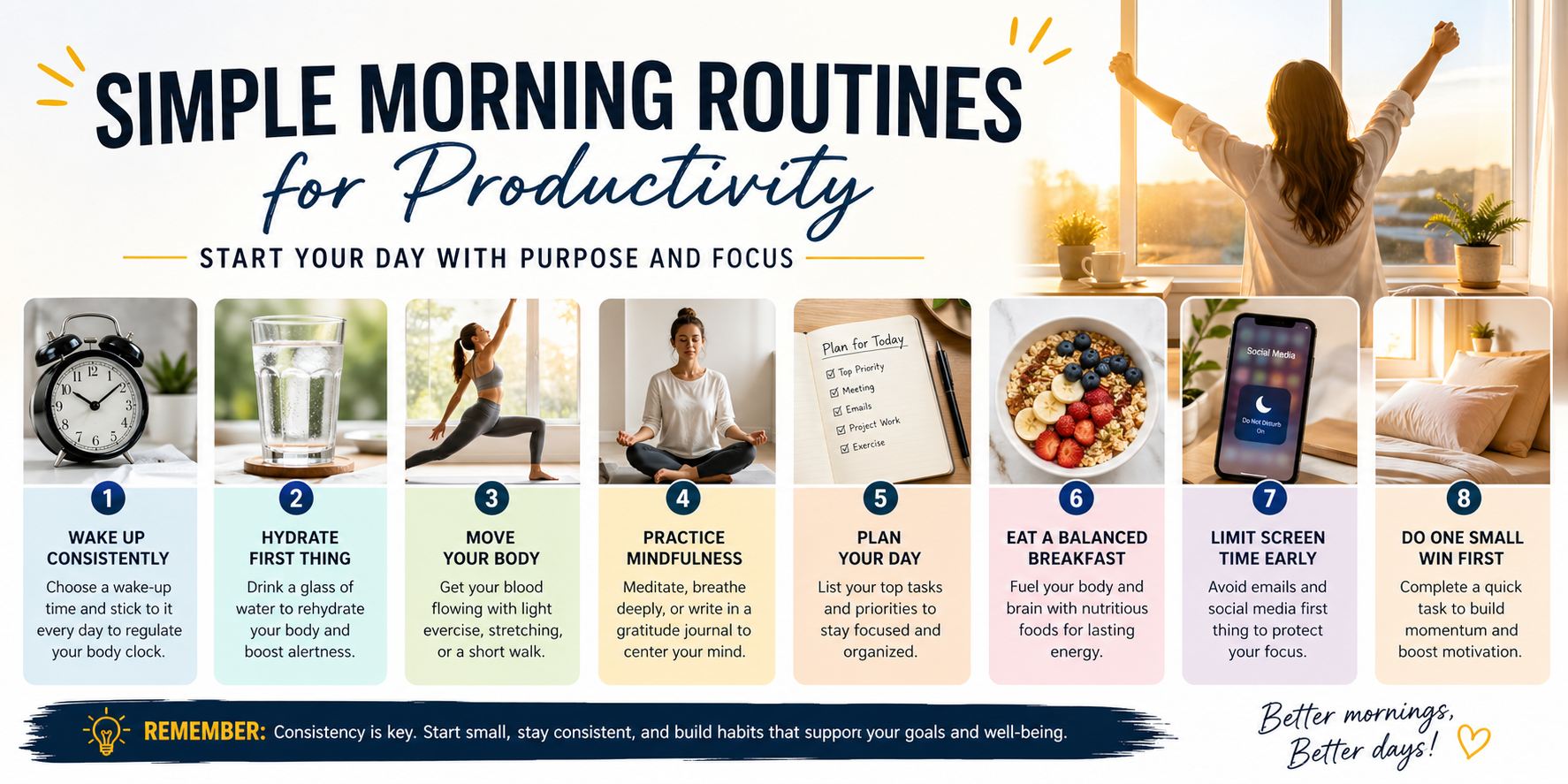
During seven to eight hours of sleep, the body loses a significant amount of water through respiration and perspiration. Starting your day with 16 to 20 ounces of water is non-negotiable. For an added boost, incorporate a pinch of high-quality sea salt or an electrolyte powder. This aids in cellular hydration and helps stabilize blood pressure, which can be slightly lower upon waking.
2. View Natural Sunlight
Exposure to bright, natural light within the first 30 minutes of waking is the single most effective way to regulate your circadian clock. Sunlight triggers the suppression of melatonin and the timely release of cortisol. According to the Sleep Foundation, this morning light exposure also sets a "timer" for melatonin production later in the evening, improving sleep quality for the following night.
3. Delay Caffeine Consumption
While the urge to reach for coffee immediately is strong, waiting 60 to 90 minutes after waking allows your body to naturally clear residual adenosine. This delay helps prevent the common 2:00 PM energy crash and ensures that the caffeine binds more effectively to your receptors once your natural alertness begins to plateau.
4. Cold Exposure (The 30-Second Rule)
You do not need a full ice bath to reap the benefits of cold therapy. Finishing your shower with 30 to 60 seconds of cold water triggers a significant release of norepinephrine and dopamine. This provides a sharp increase in mental clarity and metabolic rate that can last for several hours.
5. Dynamic Stretching or Yoga
Gentle movement helps lubricate the joints and increase blood flow to the muscles. Unlike static stretching, dynamic movements like "cat-cow" or "sun salutations" prepare the nervous system for activity. This is particularly important for those who transition directly to a desk or a sedentary commute.
Cognitive and Emotional Priming
Once the body is awake, the next phase of a routine should focus on clearing mental clutter and establishing a proactive mindset.
6. The "No-Screen" Buffer
The first 30 minutes of your day should be a "digital-free zone." Checking emails or social media immediately forces your brain into a reactive state, responding to other people's priorities rather than your own. This buffer allows your brain to transition from the theta/alpha wave states of sleep into the beta waves required for active focus.
7. Morning Brain Dump (Journaling)
Spend five minutes writing down whatever is on your mind. This process, often called "Morning Pages," helps offload anxieties and stray thoughts onto paper. By externalizing these distractions, you free up "cognitive RAM" for the deep work tasks that lie ahead.
8. Define the "Big Three"
Instead of a long, overwhelming to-do list, identify the three most important tasks you must accomplish today. Focus on the "Lead Domino"—the one task that, if completed, makes everything else easier or unnecessary. This creates a clear roadmap and prevents decision fatigue later in the morning.
9. Guided Meditation or Breathwork
Even five minutes of focused breathing can lower your resting heart rate and improve your "heart rate variability" (HRV). Practices like Box Breathing or Physiological Sighs (double inhale, long exhale) help balance the autonomic nervous system, moving you out of "fight or flight" and into a state of calm alertness.
10. Visualization of the Day
Take 60 seconds to mentally rehearse your day. Imagine yourself navigating your most difficult meeting with composure or finishing your workout with energy. This neurological priming makes the actual execution of these tasks feel more familiar and less daunting.
Nutritional and Environmental Optimization
The environment you inhabit and the fuel you provide your body dictate the longevity of your morning energy.
11. High-Protein Breakfast
If you choose to eat breakfast, prioritize protein (30-40 grams) over simple carbohydrates. Protein-rich meals help stabilize blood glucose levels, preventing the insulin spikes and subsequent crashes associated with sugary cereals or pastries. This provides steady energy and improves satiety throughout the morning.
12. Make the Bed
This may seem trivial, but making your bed is a symbolic "first win." It creates an immediate sense of order in your environment. As Navy SEAL Admiral William H. McRaven famously noted, completing this first task provides a small sense of pride and encourages you to do another task, and another.
13. Listen to Educational Audio
Utilize the time spent on "automatic" tasks (like brushing teeth or commuting) to listen to a podcast or audiobook. This turns "dead time" into an opportunity for growth, ensuring you start the day with new ideas rather than mindless noise.
14. Tidy One Small Surface
Spend two minutes clearing off your desk or the kitchen counter. Physical clutter often manifests as mental clutter. By maintaining a clean primary workspace, you reduce visual distractions that can pull you away from your deep work.
15. Habit Stacking
The easiest way to ensure a routine sticks is "habit stacking," a concept popularized by James Clear. Attach a new habit to an existing one (e.g., "After I pour my water, I will take my vitamins"). This leverages existing neural pathways to make the new routine feel automatic.
Comparison of Morning Routine Impacts
The following table compares different categories of morning routines based on the time required and the primary benefit they provide.
| Routine Category | Time Required | Primary Benefit | Complexity |
|---|---|---|---|
| Hydration/Nutrition | 2–10 Minutes | Metabolic activation and sustained energy | Low |
| Physical Movement | 5–20 Minutes | Reduced stiffness and increased blood flow | Medium |
| Mental Priming | 5–15 Minutes | Clarity, focus, and reduced anxiety | Medium |
| Environmental | 2–5 Minutes | Reduced stress and increased organization | Low |
| Biological/Light | 10–30 Minutes | Circadian alignment and mood regulation | Low |
Implementation Strategies for Long-Term Success
The most common mistake people make is trying to implement all twenty ideas at once. This leads to burnout and abandonment of the routine within a week. To succeed in 2026, you must view your morning routine as an evolving architecture.
Start with the "Core Four": Hydration, Sunlight, Movement, and a No-Screen Buffer. These four habits address the fundamental biological requirements for alertness. Once these are solidified (usually after 14 to 21 days), you can begin layering in cognitive habits like journaling or priority setting.
Another critical factor is the "Night-Before" preparation. A morning routine actually begins the previous evening. Laying out your clothes, prepping your water bottle, and deciding on your "Big Three" tasks before you go to sleep significantly reduces the friction of starting your routine the next morning. If the barriers to entry are low, the likelihood of execution is high.
Troubleshooting Common Obstacles
If you find yourself hitting the snooze button, move your alarm clock or phone to the opposite side of the room. This forces physical movement to deactivate the alarm, which is often enough to break the cycle of sleep inertia. If you are short on time, use the "Two-Minute Version" of your routine. Instead of 20 minutes of yoga, do two minutes. The goal is to maintain the habit of the routine, even if the duration is shortened.
H3: How long should a morning routine be?
A morning routine does not have to be hours long to be effective. Research suggests that even a 15-minute sequence can provide significant psychological and physiological benefits. The key is consistency over duration; a 10-minute routine followed daily is superior to a 60-minute routine performed only once a week.
H3: Is it better to exercise before or after breakfast?
For most people, performing light to moderate exercise before breakfast can improve insulin sensitivity and fat oxidation. However, if your goal is high-intensity performance or muscle gain, a small protein-rich snack before your workout may be beneficial. The most important factor is personal preference and how your body responds to fasted vs. fed movement.
H3: Should I check my phone if it's for work?
Ideally, no. Even work-related notifications trigger a "reactive" brain state. If your job requires you to be "on-call," try to handle only the most urgent notifications and then step away for 15 minutes of your own routine. Protecting your cognitive sovereignty for even a short window can significantly reduce daily stress levels.
H3: What if I am a "Night Owl" by nature?
Chronotypes are real, and not everyone is naturally inclined to be a "5 AM club" member. If you are a night owl, your morning routine is perhaps even more important. It serves as a tool to bridge the gap between your natural sleep cycle and the demands of a standard work day. Focus heavily on light exposure and hydration to "force" the wake-up signal to your brain.
The Path Forward: Customizing Your Morning Architecture
Your morning routine is a personal experiment. In 2026, the abundance of digital distractions makes a disciplined start more valuable than ever. The goal of these twenty ideas is not to fill your morning with "busy work," but to create a launchpad for a productive and fulfilling day.
Start small by selecting two physiological habits and one cognitive habit from the list above. Track how these changes affect your energy levels at 11:00 AM and your focus during your first major task of the day. Over time, you will refine a sequence that feels less like a chore and more like an essential prerequisite for your best performance. Remember that the "perfect" routine is the one you actually do. Focus on the small wins, and the momentum will naturally follow.