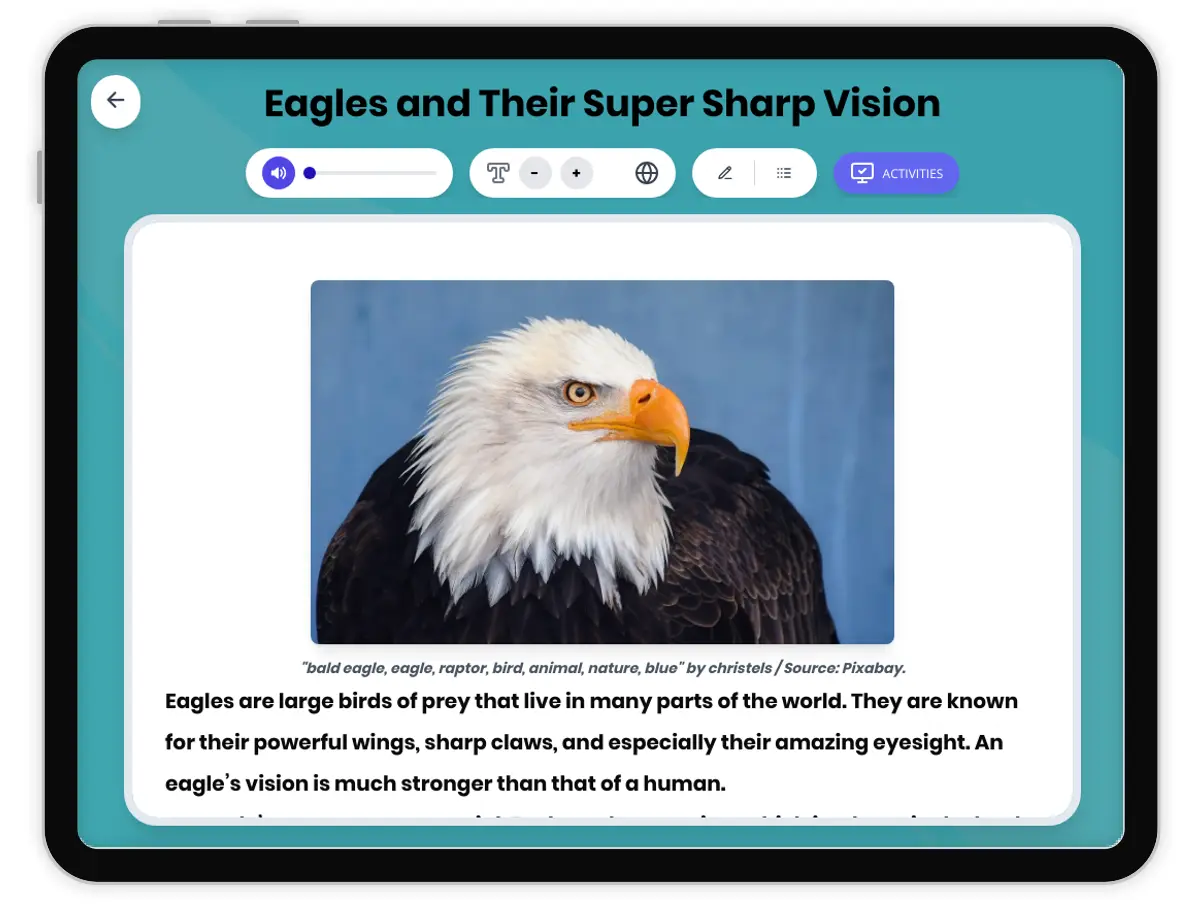
Eagle vision is significantly more powerful than human sight, typically ranging from 20/4 to 20/5, meaning an eagle can see at 20 feet what a human with perfect vision can only see at 4 or 5 feet. This extraordinary acuity, combined with their calculated hunting efficiency, defines them as nature's most formidable aerial predators.
The term "cold-blooded" is often colloquially applied to eagles, not as a biological classification—since birds are endothermic (warm-blooded)—but as a testament to their ruthless, high-precision hunting tactics. As of 2026, researchers continue to study the avian eye as the gold standard for optical evolution, revealing a biological machine designed for one primary purpose: the detection and interception of prey from extreme distances.
The Biological Mechanics of Eagle Vision
To understand how an eagle operates with such lethal precision, one must look at the physical architecture of the eye. An eagle’s eyes are massive relative to its head size, occupying roughly 50% of its cranial space. In contrast, human eyes account for a tiny fraction of our skull volume. This size allows for a larger retinal surface area and more light-gathering capability.
The density of photoreceptors—the cells that detect light—is the primary driver of their visual sharpness. While a human retina contains about 200,000 cones per square millimeter in the central fovea, an eagle’s retina can house up to 1,000,000 cones per square millimeter. This five-fold increase in density creates a high-resolution image that allows the bird to distinguish minute movements of a rabbit or fish from over two miles away.
Furthermore, eagles possess two foveae (the area of sharpest vision) in each eye, whereas humans have only one. The "deep fovea" acts as a telephoto lens, providing a magnified view of a narrow field ahead, while the "shallow fovea" allows for side-view detection. This dual-foveal system gives eagles the ability to maintain a wide situational awareness while simultaneously focusing on a specific target with microscopic detail.
Resolving the "Cold-Blooded" Paradox
In popular media and historical descriptions, eagles are frequently labeled "cold-blooded" predators. From a strictly biological perspective, this is a misnomer. Eagles are birds, meaning they are endothermic organisms with high metabolic rates and internal temperature regulation. However, the use of "cold-blooded" in the context of "20 20 cold blooded unveiling the sharp vision of eagles predators" refers to their behavioral clinicality.
The "cold-blooded" moniker stems from three specific predatory traits:
- Stoic Economy of Motion: An eagle can sit motionless for hours, using its superior vision to scan the horizon. When it finally moves, it does so with a calculated burst of energy that rarely misses its mark.
- Sensory Detachment: Unlike mammalian predators that may exhibit social play or emotional complexity during a hunt, the eagle operates like a biological computer, calculating wind speed, refraction (when fishing), and prey velocity with zero wasted effort.
- Lethal Efficiency: The raptor’s grip strength, often exceeding 400 psi in species like the Harpy Eagle, ensures that the transition from detection to "the kill" is swift and absolute.
By 2026, ornithological studies have increasingly focused on the neurological "coldness" of these birds—the way their brains prioritize visual data processing over almost all other stimuli during the hunt.
Comparative Analysis: Avian Vision vs. Other Predators
To grasp the magnitude of the eagle’s visual superiority, it is helpful to compare its optical specifications with those of other high-performing predators and humans.
| Feature | Golden Eagle | Great Horned Owl | Human (Average) |
|---|---|---|---|
| Visual Acuity | 20/4 to 20/5 | 20/50 (Day) / 20/10 (Night) | 20/20 |
| Field of View | 340 Degrees | 110 Degrees | 180 Degrees |
| Color Perception | Pentachromatic (incl. UV) | Monochromatic/Dichromatic | Trichromatic (RGB) |
| Foveae per Eye | 2 (Deep & Shallow) | 1 | 1 |
| Primary Advantage | Long-range detail/Magnification | Low-light sensitivity | Generalist flexibility |
As shown in the table, the eagle’s field of view is nearly panoramic, allowing it to see almost entirely behind its head without moving. This is a critical defensive and offensive adaptation. While an owl dominates the night through light sensitivity, the eagle dominates the day through sheer resolution and the ability to perceive ultraviolet light, which helps it track the urine trails of rodents on the ground.
The Role of the Pecten and the Nictitating Membrane
Two specialized structures contribute to the eagle's "cold-blooded" visual dominance: the pecten oculi and the nictitating membrane.
The pecten is a comb-like structure of blood vessels located inside the eye. Because a high density of blood vessels on the retina would interfere with vision, the pecten serves as an internal radiator and nutrient delivery system, keeping the eye nourished and oxygenated without blocking the path of light. This allows the eagle's eyes to maintain peak performance during high-speed dives (stoops) where metabolic demands are extreme.
The nictitating membrane, or "third eyelid," is a translucent layer that sweeps across the eye horizontally. During a hunt, this membrane acts as a protective goggle. When an eagle dives at speeds approaching 100-150 mph, the membrane keeps the eye moist and protects it from debris and wind shear while still allowing the bird to see its target. This mechanical protection ensures that the "sharp vision" remains uninterrupted at the moment of impact.
Evolutionary Advantages of Avian Visual Acuity
The sharp vision of eagles is not merely a biological curiosity; it is a necessary adaptation for their niche as apex predators. In the open plains or over vast bodies of water, the ability to spot a meal before the meal spots the predator is the difference between survival and starvation.
Eagles have evolved to see into the ultraviolet spectrum, a capability humans lack. This "UV vision" allows them to see the world in a way that highlights organic matter. Many small mammals leave scent trails of urine and feces that reflect UV light. To an eagle, these trails appear as glowing neon paths through the grass, leading directly to the prey’s burrow. This turns the landscape into a map of high-probability targets, further reinforcing their reputation as calculating, "cold-blooded" hunters.
Furthermore, the placement of the eyes—tilted forward at a 30-degree angle—optimizes binocular vision. This provides the depth perception necessary for the "final inch" of the hunt, where the eagle must precisely time the extension of its talons to snag a moving target.
Modern Applications and Biomimicry
As of 2026, the study of eagle vision has moved beyond pure biology into the realm of technical engineering and biomimicry. Engineers are using the structure of the eagle's deep fovea to design more efficient drone sensors and satellite imaging systems.
By mimicking the "dual-foveal" approach, modern surveillance systems can now maintain a wide-angle view of a city or battlefield while simultaneously using a high-resolution "sub-sensor" to track a specific vehicle or individual. The "cold-blooded" efficiency of the eagle is being digitized, allowing for autonomous systems that can process visual data with the same prioritization and clarity found in nature’s raptors.
Frequently Asked Questions
Can an eagle see in total darkness?
No, eagles are diurnal hunters and do not possess the high density of rod cells required for night vision. While they can see better in twilight than humans due to their large pupils, they are significantly outperformed by nocturnal predators like owls in low-light conditions.
Is an eagle's vision really 20/20?
Actually, 20/20 is a baseline for "normal" human vision. An eagle's vision is much better, often cited as 20/4 or 20/5. This means they see with the same clarity at 20 feet as we would need to be at 4 or 5 feet to achieve. They are roughly 4 to 8 times sharper than a healthy human.
Why are eagles called "cold-blooded" if they are birds?
The term is used metaphorically to describe their predatory nature. Biologically, they are warm-blooded (endothermic). The "cold-blooded" description refers to their calculated, ruthless, and highly efficient hunting style, which mirrors the perceived detachment of reptilian predators.
How far can an eagle see a rabbit?
Under clear conditions, an eagle can spot a moving rabbit from approximately 2 to 3 miles away. Their ability to distinguish the rabbit from the surrounding brush is due to their high cone density and the magnification provided by their deep fovea.
Do eagles see more colors than humans?
Yes. Humans are trichromatic, meaning we have three types of color-detecting cones (red, green, and blue). Eagles are pentachromatic; they have four types of cones plus specialized filters, allowing them to see a broader range of colors and the ultraviolet spectrum.
Understanding the Apex Perspective
To truly appreciate the "cold-blooded" unveiling of the eagle's sharp vision, one must view it as the ultimate intersection of physics and biology. These birds do not just "see" the world; they analyze it through a high-definition filter designed to highlight vulnerability and opportunity.
If you are interested in observing these traits in the wild, the best next action is to invest in high-quality optics—specifically binoculars with a wide objective lens (42mm or higher) to mimic the light-gathering capabilities of the raptor eye. By 2026, bird-watching technology has advanced to include "augmented reality" field guides that can help you identify these predators at the very edge of human visual range, allowing you to witness their sharp vision and calculated hunting tactics firsthand.