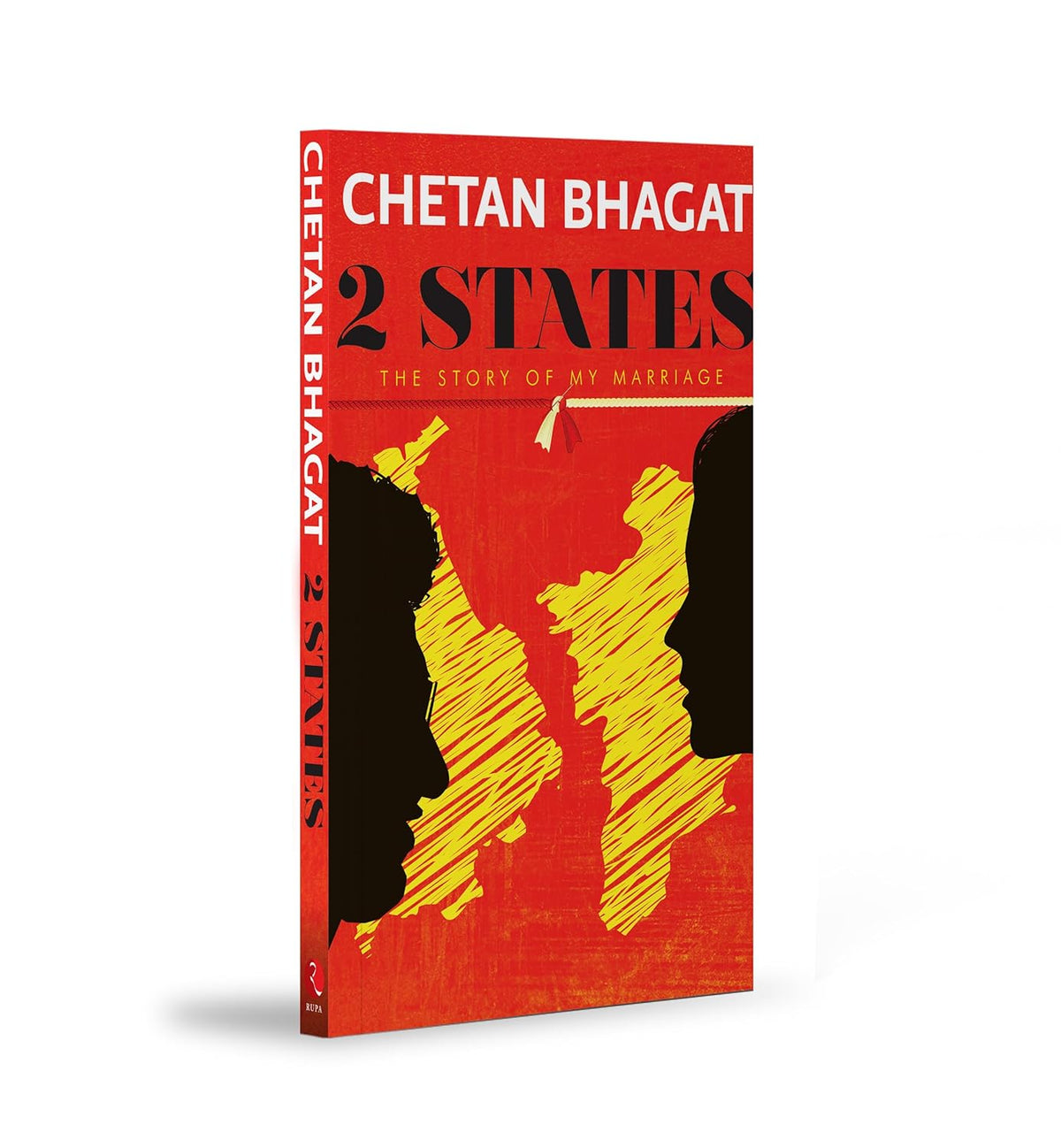
2 States: The Story of My Marriage is a semi-autobiographical novel by Chetan Bhagat that chronicles the journey of a Punjabi boy and a Tamilian girl fighting to convince their culturally distinct families to support their union. Published in 2009, it remains a definitive exploration of inter-community marriage dynamics in contemporary India.
In the landscape of modern Indian literature, few books have captured the intersection of romance and cultural friction as effectively as Chetan Bhagat’s 2 States: The Story of My Marriage. While the title suggests a simple romance, the narrative serves as a sociological mirror, reflecting the deep-seated prejudices and eventual reconciliations that define the Indian middle-class experience. As we look at the book’s legacy in 2026, nearly 17 years after its initial release, its themes of regional identity, parental approval, and the "Great Indian Wedding" remain surprisingly relevant, even as the country's social fabric continues to evolve.
The Narrative Core: A Journey from IIM to the Mandap
The story follows Krish Malhotra, a boisterous but well-meaning Punjabi boy from Delhi, and Ananya Swaminathan, a brilliant and composed Tamil Brahmin girl from Chennai. The two meet at the prestigious Indian Institute of Management (IIM) Ahmedabad. Their romance blossoms in the high-pressure environment of one of India's most elite academic institutions, but the real conflict begins after graduation.
Unlike Western romance novels, where the primary obstacle is usually internal or romantic in nature, Bhagat positions the "villains" of the story as the parents. The central thesis of the book is that in India, love is not enough. For a marriage to succeed, the boy must love the girl, the girl must love the boy, the boy's family must love the girl, the girl's family must love the boy, and—most crucially—the two families must love each other.
The plot is structured as a series of diplomatic missions. Krish travels to Chennai to win over Ananya’s conservative parents, navigating the complexities of Carnatic music and South Indian traditions. Conversely, Ananya must face the loud, flamboyant, and often judgmental environment of a Punjabi household in Delhi. This back-and-forth travelogue provides the humor and the heart of the story, as both protagonists attempt to bridge a gap that is more than just geographical.
Semi-Autobiographical Origins and the "Real Love Story"
One of the primary reasons for the book’s enduring popularity is its grounding in reality. Chetan Bhagat has openly stated that 2 States is based on his own marriage to his wife, Anusha Bhagat. This autobiographical element adds a layer of authenticity to the dialogue and the specific cultural clashes described.
The "Real Love Story" subtitle is not just a marketing gimmick; it reflects the author's personal struggle with inter-state marriage. In 2026, readers still find resonance in the fact that the hurdles depicted—such as the "Fairness" obsession in some communities or the "Academic Elitism" in others—are rooted in real lived experiences. By sharing his own vulnerabilities through the character of Krish, Bhagat humanized the struggle of an entire generation of Indians who were transitioning from traditional arranged marriages to "love-cum-arranged" unions.
Cultural Tropes and Social Commentary
Bhagat uses satire to expose the stereotypes held by North and South Indians. Through Krish’s mother, Kavita, we see the stereotypical Punjabi view of South Indians as "Madrasis" who are overly frugal and obsessed with education. Through Ananya’s parents, we see the perception of North Indians as loud, unrefined, and obsessed with material wealth and dowry.
However, the book goes deeper than surface-level jokes. It explores:
- The Weight of Parental Expectation: The emotional blackmail and the sense of duty that Indian children feel toward their parents.
- Regional Identity: How language and food serve as both barriers and bridges between communities.
- Gender Dynamics: Ananya is portrayed as a strong, career-oriented woman who refuses to compromise her dignity, reflecting the changing aspirations of Indian women in the 2000s.
- Economic Class: While the families are from different states, they share a common "middle-class" aspiration, which eventually serves as the ground for their reconciliation.
Literary Style and the "Bhagat Formula"
Chetan Bhagat is often credited—and sometimes criticized—for his "common man" English. His prose is simple, direct, and devoid of complex metaphors. In 2 States, this style works to his advantage, making the book accessible to millions of first-time readers in India.
The "Bhagat Formula" involves a mix of humor, relatable settings (like IIM or corporate offices), and a central social issue. In 2 States, the pacing is brisk, and the narrative is divided into clear segments that reflect the couple's progress. This accessibility helped democratize Indian publishing, leading to a surge in commercial fiction that focused on the everyday lives of young Indians rather than the post-colonial themes favored by earlier literary giants.
Comparing the Cultural Representation
The following table highlights the contrasting cultural elements that Bhagat uses to drive the conflict and eventual resolution in the story:
| Feature | The Punjabi Perspective (Delhi) | The Tamil Brahmin Perspective (Chennai) |
|---|---|---|
| Primary Values | Hospitality, flamboyance, and material success. | Intellectualism, tradition, and simplicity. |
| Food Culture | Butter Chicken, Parathas, and heavy spices. | Sambhar, Curd Rice, and Filter Coffee. |
| Wedding Ideals | Loud music (Dhol), alcohol, and grand displays. | Early morning rituals, Carnatic music, and religious sanctity. |
| Parental Archtype | The overbearing, emotional, and protective mother. | The stern, disciplined, and culturally rooted father. |
| Perception of "The Other" | Viewed as boring, dark-skinned, or overly studious. | Viewed as uncultured, aggressive, or loud. |
The 2014 Film Adaptation and Its Legacy
The book’s impact was significantly amplified by its 2014 film adaptation, directed by Abhishek Varman and produced by Karan Johar and Sajid Nadiadwala. Starring Alia Bhatt as Ananya and Arjun Kapoor as Krish, the film was a massive commercial success and brought the story to an even wider audience.
While the film stayed largely faithful to the book, it added a visual richness to the cultural contrasts—juxtaposing the vibrant colors of a Punjabi wedding with the serene, sun-drenched temples of Chennai. The soundtrack, composed by Shankar-Ehsaan-Loy, became an anthem for inter-cultural couples across India. In 2026, the film is still cited as one of the best adaptations of Bhagat's work, largely because the casting captured the chemistry required to make the "real love story" believable.
Critical Reception and Long-term Impact
Critically, 2 States received mixed reviews. Literary critics often pointed toward its simplified language and reliance on stereotypes. However, from a social perspective, the book was a trailblazer. It gave voice to a "silent" struggle faced by thousands of couples in urban India.
Before 2 States, inter-community marriage was often treated in literature either as a tragedy or a revolutionary political act. Bhagat treated it as a domestic comedy-drama, making the struggle feel more relatable and less daunting. By 2026, the book has sold millions of copies and has been translated into multiple regional languages, cementing its place as a cornerstone of Indian popular culture.
Prerequisites for Navigating an Inter-State Marriage
Drawing from the themes of the book, several practical "steps" are often identified by readers who find themselves in similar situations. These are not just plot points but reflections of real-world social navigation:
- Academic/Professional Stability: In the book, Krish and Ananya's IIM degrees provide them with a level of autonomy that makes their parents eventually listen.
- Cultural Immersion: Both protagonists make an active effort to learn the language or customs of the other’s family, showing respect rather than just demanding acceptance.
- Patience over Rebellion: Instead of eloping, the couple chooses the harder path of winning over the parents, which Bhagat argues is the only way to ensure long-term family harmony in the Indian context.
Frequently Asked Questions
Is "2 States" based on a completely true story?
Yes, it is semi-autobiographical. Chetan Bhagat, a Punjabi, met his wife Anusha, a Tamilian, while studying at IIM Ahmedabad. Many of the incidents in the book, including the resistance from their respective families, are based on their real-life experiences during the 1990s.
What is the main conflict in the book?
The main conflict is not between the lovers, but between their families. The story focuses on the "third stage" of Indian marriage: getting the two sets of parents to overcome their regional prejudices and agree to the union.
How does the book portray the role of the mother in Indian households?
The book places a significant emphasis on the mothers of both the bride and the groom. Krish’s mother represents the emotional and often manipulative aspect of maternal love, while Ananya’s mother represents the cultural pride and artistic sensibilities of the South. The reconciliation between the two mothers is a pivotal moment in the narrative.
Why is the book titled "2 States"?
The title refers to the two different Indian states the protagonists come from—Punjab and Tamil Nadu. It symbolizes the geographical and cultural distance that the characters must bridge to be together.
Has the relevance of "2 States" decreased by 2026?
While inter-state marriages are more common in 2026, the underlying cultural stereotypes and the importance of parental approval in Indian society remain significant. The book continues to serve as a relatable guide for young couples navigating the complexities of traditional families in a modern world.
Final Recommendation for Readers and Couples
If you are a student of contemporary Indian culture or someone currently navigating the complexities of an inter-community relationship, 2 States: The Story of My Marriage remains an essential read. Its strength lies not in its literary complexity, but in its emotional honesty and its humorous take on serious social barriers.
To fully appreciate the narrative, one should read the original text before watching the film adaptation. Pay close attention to the internal monologues of Krish, as they offer insights into the psychological toll of balancing modern love with traditional filial duty. For couples in similar situations, the book serves as a reminder that persistence, cultural empathy, and a sense of humor are the most effective tools for bridging the gap between "two states."