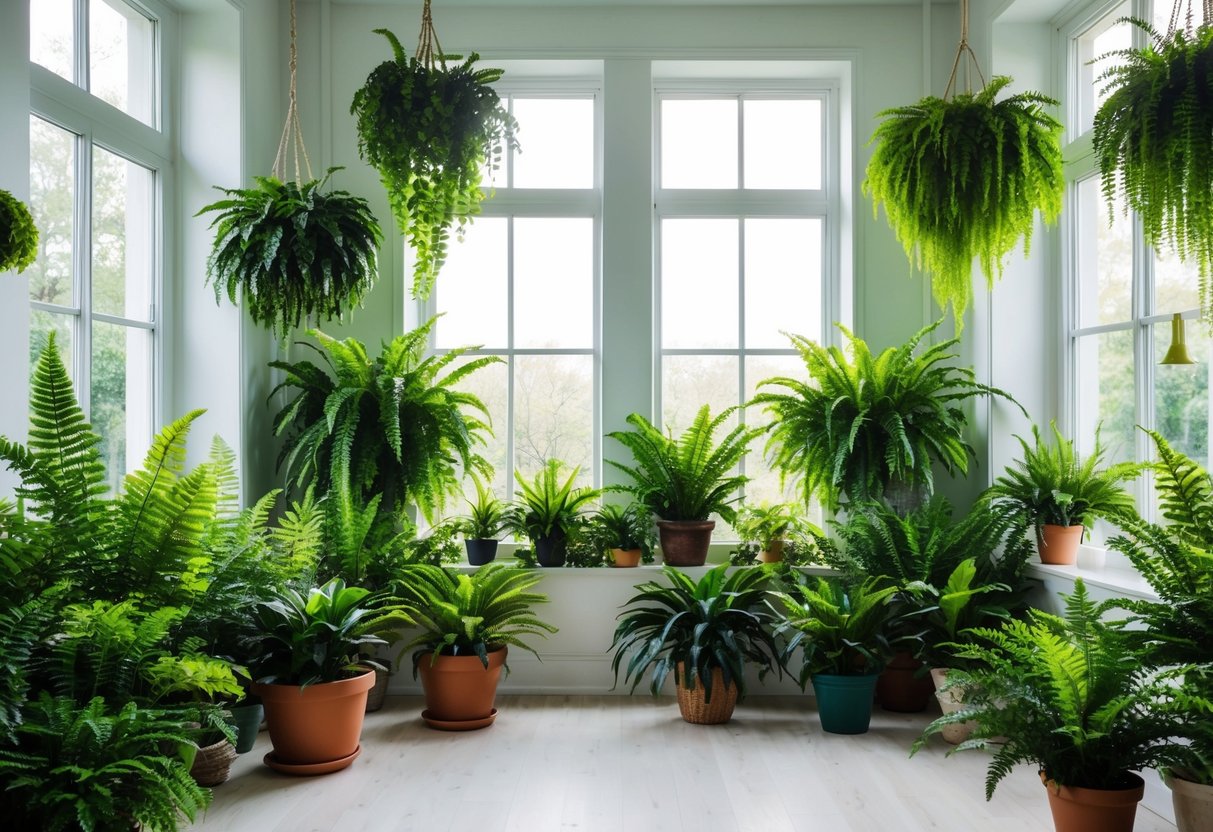
Growing ferns requires a balance of high humidity, consistent moisture, and filtered indirect light. While many varieties exist, mastering the resilient Boston Fern and the delicate Maidenhair Fern provides a foundational skill set for any indoor gardener. This guide covers the specific environmental needs, substrate compositions, and troubleshooting steps to keep these lush greenery favorites thriving in 2026.
Understanding Fern Anatomy and Why They Differ from Flowering Plants
To care for ferns effectively, one must first understand that they occupy a unique evolutionary niche. Unlike the majority of common houseplants, ferns are non-flowering vascular plants that reproduce via spores rather than seeds. This distinction dictates much of their care routine. In the wild, most ferns inhabit the forest floor or grow as epiphytes on trees, meaning they have evolved to thrive in dappled light and high-moisture environments.
The primary structure of a fern is the frond, which consists of a stipe (stem) and a blade (the leafy part). Many ferns grow from rhizomes—modified stems that grow horizontally just below or on the soil surface. These rhizomes act as storage organs and are the key to propagating many species. Because ferns do not produce seeds, they do not have a "dormancy" triggered by pollination cycles, but they do respond significantly to seasonal changes in light and humidity. By 2026, the shift toward peat-free substrates has become the industry standard, requiring gardeners to understand how alternative fibers like coconut coir and composted bark affect moisture retention for these sensitive root systems.
The Boston Fern (Nephrolepis exaltata): The Resilient Classic
The Boston Fern remains the quintessential indoor fern due to its relatively hardy nature and dramatic, arching fronds. Originally a mutation found in a shipment of Nephrolepis exaltata sent to Boston in the late 19th century, it has been bred for over a century to tolerate indoor conditions better than its wild ancestors.
Lighting and Temperature Requirements
Boston Ferns prefer bright, indirect light. Placing them in a north-facing window or several feet back from a south-facing window is ideal. Direct sunlight will scorch the delicate pinnules (the small "leaves" on the frond), leading to unsightly brown patches. In terms of temperature, they thrive in the 65°F to 75°F (18°C to 24°C) range. They are particularly sensitive to cold drafts; exposure to temperatures below 50°F can cause rapid frond drop.
Watering and Humidity
The "soak and dry" method used for succulents is fatal to a Boston Fern. The soil should remain consistently moist but never waterlogged. As of 2026, many growers use self-watering pots with wicking systems to maintain this equilibrium. Humidity is the most critical factor; Boston Ferns require at least 50% humidity. In dry winter months, using a dedicated humidifier is more effective than occasional misting, which only provides a temporary spike in moisture.
The Maidenhair Fern (Adiantum): The Elegant Diva
If the Boston Fern is the reliable workhorse of the fern world, the Maidenhair Fern is its sophisticated, albeit demanding, cousin. Known for its wiry, dark stipes and fan-shaped, translucent green leaflets, the Adiantum genus requires a strict adherence to care protocols to prevent it from shriveling.
The "Never Dry" Rule
The defining characteristic of Maidenhair care is that the substrate must never dry out. Even a single day of dry soil can result in the entire plant turning crisp and brown. However, because their roots are fine and hair-like, they are also prone to root rot if the soil is compacted and lacks oxygen. A mixture of equal parts potting soil, perlite, and chopped sphagnum moss provides the necessary drainage while holding onto vital moisture.
Strategic Placement for Humidity
Maidenhair ferns are the perfect candidates for terrariums or "wardian cases," which were popular in the Victorian era and have seen a significant resurgence in 2026 interior design. Within these enclosed environments, the plant creates its own microclimate, recycling moisture through transpiration. If grown in an open room, a bathroom with a shower is often the only location with enough ambient humidity to keep a Maidenhair lush without constant mechanical humidification.
Comparative Care Requirements for 2 Fern Favorites
The following table outlines the key differences in maintenance for these two popular species to help you decide which is best suited for your specific home environment.
| Care Feature | Boston Fern (Nephrolepis exaltata) | Maidenhair Fern (Adiantum) |
|---|---|---|
| Light Level | Medium to Bright Indirect | Low to Medium Indirect (No direct sun) |
| Watering Frequency | When top 1" of soil feels slightly dry | Maintain constant surface moisture |
| Humidity Needs | Moderate (50%+) | High (70%+) |
| Soil Type | Rich, loamy, well-draining | Peat-free/Coir-based with high organic matter |
| Growth Habit | Large, arching, vigorous | Delicate, clumping, slow to moderate |
| Best Placement | Hanging baskets, pedestals | Terrariums, humid bathrooms, pebble trays |
| Fertilizer | Monthly (Spring/Summer) at half-strength | Bimonthly (Spring/Summer) at 1/4 strength |
Advanced Propagation Techniques for Ferns in 2026
Propagating these two ferns is primarily achieved through division, which is best performed in early spring as the plant enters its active growth phase. For a Boston Fern, remove the plant from its pot and look for natural separations in the rhizome clump. Using a sterilized knife, saw through the root mass, ensuring each section has several healthy fronds and a robust portion of the root system. Re-pot these immediately into fresh, pre-moistened substrate.
Maidenhair ferns are more sensitive to root disturbance. When dividing an Adiantum, try to gently tease the root ball apart with your fingers rather than cutting it, as the fine roots are easily damaged. After division, both types of ferns benefit from being placed in a high-humidity "recovery zone"—often achieved by placing a clear plastic bag over the pot for two weeks—to minimize transplant shock. While growing from spores is a fascinating botanical experiment, it is a slow process that can take months to show visible "prothalli" (the first stage of fern growth) and is generally reserved for specialist hobbyists.
Troubleshooting Common Fern Ailments
Even with the best care, ferns can exhibit signs of distress. Recognizing these symptoms early in 2026 is easier thanks to a better understanding of water chemistry and indoor pollutants.
- Brown Tips on Fronds: This is almost always a sign of low humidity or the use of "hard" tap water. Ferns are sensitive to fluoride and chlorine. If possible, use filtered water or rainwater.
- Yellowing Fronds at the Base: While some old growth naturally dies off, widespread yellowing often indicates overwatering or poor drainage, leading to the early stages of root rot.
- Leaf Drop (The "Shedding" Boston): Boston Ferns are notorious for dropping leaflets when stressed. This usually happens immediately after moving the plant to a new location or if the air becomes too dry.
- Pests: Scale and mealybugs are the primary enemies. Because fern fronds are sensitive to oils and soaps, traditional Neem oil treatments can sometimes damage the plant. It is often safer to manually remove pests with a cotton swab dipped in diluted isopropyl alcohol or use systemic granules labeled for indoor use.
Designing with Ferns: Aesthetics and Microclimates
Ferns are more than just plants; they are architectural elements. In 2026, the "Biophilic Design" movement emphasizes the use of ferns to soften the hard lines of modern technology and minimalist furniture. A large Boston Fern on a pedestal can act as a living sculpture, while a collection of different Maidenhair varieties on a tiered plant stand creates a lush, jungle-like corner.
To maximize their health, group ferns together. This practice, known as plant grouping, creates a collective microclimate where the transpiration from one plant helps humidify its neighbors. You can further enhance this by placing pots on a tray filled with pebbles and water. As the water evaporates, it rises directly into the canopy of the fronds. This is particularly effective for the Maidenhair, which struggles in the center of a large, dry room.
FAQ: Growing and Caring for 2 Ferns
Can I grow these ferns outdoors?
Both Boston and Maidenhair ferns can grow outdoors in USDA Zones 9-11. In cooler climates, they are strictly seasonal patio plants. They must be kept in full shade and brought indoors before the first frost, as they have zero frost tolerance.
Are ferns safe for cats and dogs?
Yes, both the Boston Fern (Nephrolepis exaltata) and the common Maidenhair Fern (Adiantum) are non-toxic to cats and dogs according to the ASPCA. This makes them excellent choices for pet-friendly households compared to toxic alternatives like Sago Palms (which are actually cycads, not true ferns).
How often should I repot my ferns?
Ferns generally prefer to be slightly root-bound. You should only repot when you see roots growing out of the drainage holes or when the plant requires watering every single day to stay hydrated. Typically, this occurs every 18 to 24 months.
Why is my Maidenhair fern dying despite constant watering?
It is likely a humidity issue rather than a soil moisture issue. If the ambient air is too dry, the plant loses water through its leaves faster than the roots can take it up, leading to "flash drying." Try moving it to a more humid environment like a terrarium.
Should I mist my ferns every day?
Misting is largely ineffective for long-term health. It increases humidity for only a few minutes. A dedicated ultrasonic humidifier or a pebble tray provides the consistent 50-70% humidity levels that ferns actually require to thrive.
Next Steps for Your Fern Collection
To ensure the long-term success of your ferns, begin by assessing the humidity levels in your home with a digital hygrometer. If your ambient humidity is below 45%, invest in a humidifier before purchasing a Maidenhair fern. For the Boston Fern, ensure you have a location with bright, filtered light and a sturdy hook if you plan to hang it, as a well-watered fern can become quite heavy. By focusing on the specific moisture requirements of these two distinct species, you can enjoy the timeless, lush greenery that only ferns can provide to an interior space.