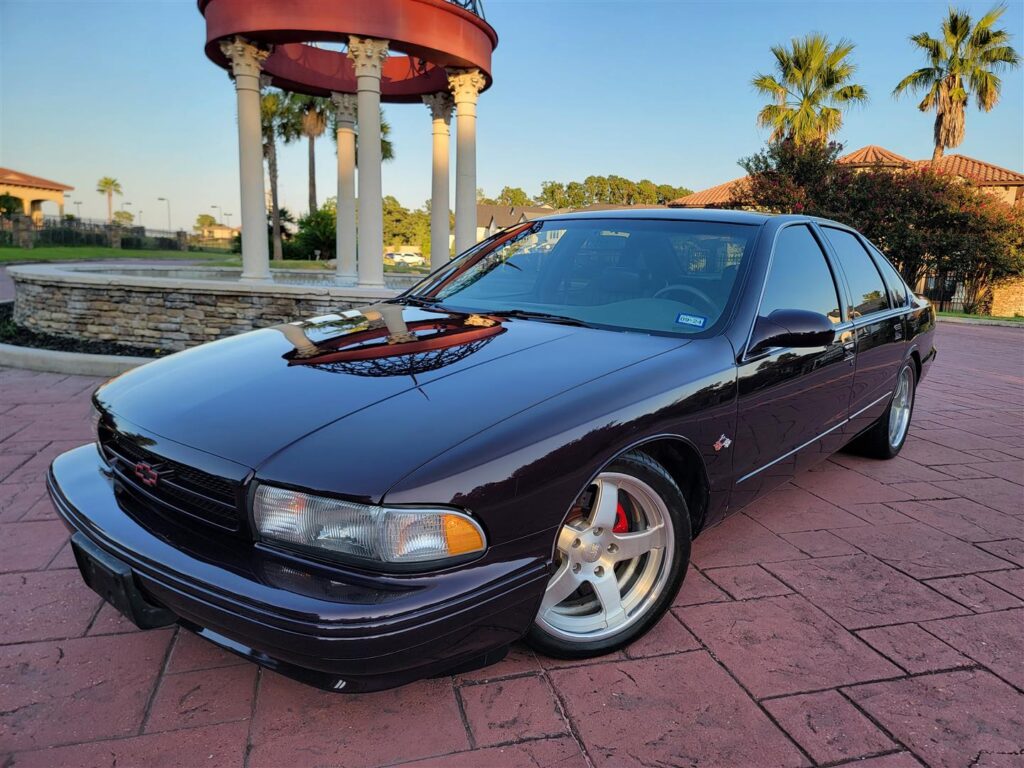
The 1996 Chevrolet Impala SS represents the final and most refined iteration of the B-body rear-wheel-drive muscle sedan era, pairing a 5.7-liter LT1 V8 engine with a heavy-duty chassis derived from the Caprice police package. Its combination of understated styling, high-performance mechanicals, and a roomy full-size interior made it an instant modern classic upon the conclusion of its brief three-year production run.
Origins and Evolution of the B-Body Performance Renaissance
The genesis of the 1996 Chevrolet Impala SS dates back to the 1992 Specialty Equipment Market Association (SEMA) show, where Chevrolet showcased a lowered, black Caprice concept car outfitted with a Corvette-derived LT1 engine. The positive public response caught General Motors executives by surprise, leading to the fast-tracked production of the 1994 Impala SS. For its first two model years, the car was characterized by its distinctive dark cherry, black, or greenish-gray paint, a unique single-bar grille, rear wheel spats, and a floor-shifted automatic transmission paired with a center console.
By 1996, the final year of production for the B-body platform at the Arlington Assembly plant in Texas, General Motors introduced a series of subtle yet significant functional updates. The most notable interior modification was the relocation of the analog tachometer and speedometer cluster from the Caprice's digital dashboard setup to a traditional, fully analog instrument panel that featured a tachometer—a feature enthusiast drivers had requested since 1994. Additionally, the floor-shifted automatic gear lever was retained, but the electronic controls and powertrain calibration were refined to comply with increasingly stringent OBD-II emissions standards.
Powertrain and Mechanical Specifications
Underneath the muscular exterior sheet metal, the 1996 Chevrolet Impala SS relied on the iron-block, aluminum-head LT1 5.7-liter (350 cubic inches) small-block V8 engine. Factory-rated at 260 horsepower and 330 lb-ft of torque, this powerplant utilized sequential port fuel injection and a reverse-cooling system that chilled the cylinder heads before the block, permitting higher compression ratios without detonation. Unlike the 1994 and 1995 models which used the 4L60 four-speed automatic transmission, the 1996 variant was equipped with the robust, electronically controlled 4L60E four-speed automatic transmission, capable of managing the substantial low-end torque produced by the LT1.
The vehicle’s foundation was the heavy-duty 9C1 police package frame, which incorporated stiffened coil springs, high-pressure gas-filled De Carbon shock absorbers, and a thick solid stabilizer bar front and rear. Braking duties were handled by massive four-wheel power disc brakes featuring heavy-duty rotors and anti-lock braking system (ABS) software tuned specifically for high-speed stability. The car rolled on 17-inch cast-aluminum wheels wrapped in 255/50ZR17 BFGoodrich Comp T/A tires, a sizable footprint for a sedan produced in the mid-1990s. Dual exhaust pipes with chrome tips exited the rear, emitting a deep, resonant V8 note that distinguished the SS from standard civilian Caprices.
| Feature / Specification | 1994–1995 Model Years | 1996 Model Year |
|---|---|---|
| Engine | 5.7L LT1 V8 (Iron Block / Aluminum Heads) | 5.7L LT1 V8 (OBD-II Compliant) |
| Horsepower | 260 hp @ 5,000 RPM | 260 hp @ 5,000 RPM |
| Torque | 330 lb-ft @ 2,400 RPM | 330 lb-ft @ 3,200 RPM |
| Transmission | 4L60 4-Speed Automatic | 4L60E 4-Speed Automatic |
| Instrumentation | Digital Speedometer with Caprice Layout | Analog Gauges with Tachometer |
| Shifter Location | Floor Console | Floor Console |
| Exterior Colors | Black, Dark Cherry, Dark Gray Green | Black, Dark Cherry, Dark Gray Green |
Interior Comfort and Exterior Design Aesthetics
While the performance credentials anchored the Impala SS identity, the cabin offered the generous dimensions expected of a traditional American full-size sedan. Passengers enjoyed expansive legroom across both front and rear bench seats, upholstered in gray or dark gray leather featuring embroidered Impala SS logos on the headrests. The inclusion of the floor console integrated dual cup holders, storage space, and secondary power outlets, shifting the car's interior ambiance away from a standard taxi or police cruiser toward a driver-focused cockpit.
Externally, the 1996 model adhered to the "monochromatic" design philosophy that defined the trim line. Chrome trim was kept to a minimal accent, with window surrounds, grille outlines, and wheel centers coordinated with the chosen body color. The deletion of the traditional fender skirts present on the base Caprice exposed the entire wheel well, allowing the 17-inch five-spoke alloy wheels to fill the arches aggressively. The rear decklid carried a subtle rear spoiler, completing a low-profile aerodynamic silhouette that eschewed loud graphics in favor of a sleek, muscular presence.
Performance Evaluation and Driving Dynamics
Driving a 1996 Chevrolet Impala SS reveals a unique blend of old-school American muscle and modern highway stability. Tipping the scales at over 4,000 pounds, the vehicle does not possess the nimble apex-hunting characteristics of a lightweight sports car; instead, it excels as an effortless high-speed cruiser. Straight-line acceleration allows the car to sprint from zero to 60 mph in approximately seven seconds, accompanied by the authoritative roar of the LT1 engine.
Cornering composure is aided by the 9C1-derived suspension tuning, which minimizes body roll significantly compared to standard full-size sedans of the era. The steering provides adequate feedback, though the heavy curb weight requires deliberate inputs during sudden transitional maneuvers. On long interstate stretches, the long wheelbase and plush seating isolate occupants from road imperfections, making the vehicle an exceptional long-distance tourer that maintains composure at elevated legal speeds.
Collectibility, Maintenance, and Ownership Considerations
Decades after rolling off the assembly line, the 1996 Impala SS commands a dedicated following among automotive collectors and enthusiasts. Because 1996 marked the final year of production before General Motors retired the B-body platform to retool the Arlington facility for full-size SUVs, production numbers reached 41,941 units—the highest of any single model year for this generation. Despite this relatively high production volume, finding clean, unmodified examples has become increasingly challenging due to modifications, high mileage, or rust in northern climate regions.
Maintenance requires attention to a few known mechanical quirks specific to the LT1 platform. The Opti-Spark distributor, mounted behind the water pump at the front of the engine, is sensitive to moisture leaks and can cause ignition failure if coolant drips onto it. Prospective owners should verify the condition of the water pump, coolant hoses, and ignition wiring. Additionally, sourcing specific interior trim pieces, body panels, and exterior badging can require patience, though mechanical components share broad interchangeability with contemporaneous Chevrolet Caprices, Buick Roadmasters, and Cadillac Fleetwoods.
Frequently Asked Questions
How many 1996 Chevrolet Impala SS sedans were produced?
General Motors produced 41,941 units of the Impala SS for the 1996 model year. This total represented the peak production volume for the vehicle's three-year run, eclipsing the production figures of both 1994 and 1995.
What are the main differences between the 1995 and 1996 Impala SS models?
The primary differences involve the transition to an OBD-II compliant engine management system, the inclusion of a fully analog instrument cluster featuring a factory tachometer, and the shift from the 4L60 to the electronically managed 4L60E transmission.
What exterior colors were available for the 1996 model year?
Buyers could select from three exterior paint colors in 1996: Black (Dark Cloak), Dark Cherry Metallic, and Dark Gray Green Metallic. Unlike earlier model years, every color was paired with a monochromatic exterior trim package.
Is the LT1 engine in the Impala SS identical to the Corvette LT1?
While sharing the same basic 5.7-liter displacement and aluminum cylinder head architecture, the Impala SS LT1 engine utilized cast-iron exhaust manifolds instead of tubular headers, a different camshaft profile optimized for low-end torque, and accessories routed specifically for the B-body engine bay layout.
What common mechanical issues should buyers watch for?
The most notable mechanical concern is the Opti-Spark high-voltage distributor, which is vulnerable to moisture intrusion and coolant leaks from the water pump mounted directly above it. Routine inspection of the cooling system and ignition components is essential for reliable operation.
Strategic Acquisition and Preservation Next Actions
For enthusiasts seeking to acquire or preserve a 1996 Chevrolet Impala SS, prioritizing vehicle verification is paramount. Begin by inspecting the vehicle's RPO (Regular Production Option) codes inside the trunk lid to confirm the "WX3" package designation, which authenticates a true factory Impala SS rather than a clone built from a standard Caprice. Evaluate structural integrity by checking rear quarter panels, rocker panels, and frame rails for corrosion, especially if the car originated from regions utilizing road salt. Prioritize examples with comprehensive service documentation, unmodified engine bays, and verified maintenance of critical ignition and cooling components to secure a reliable piece of American automotive history.