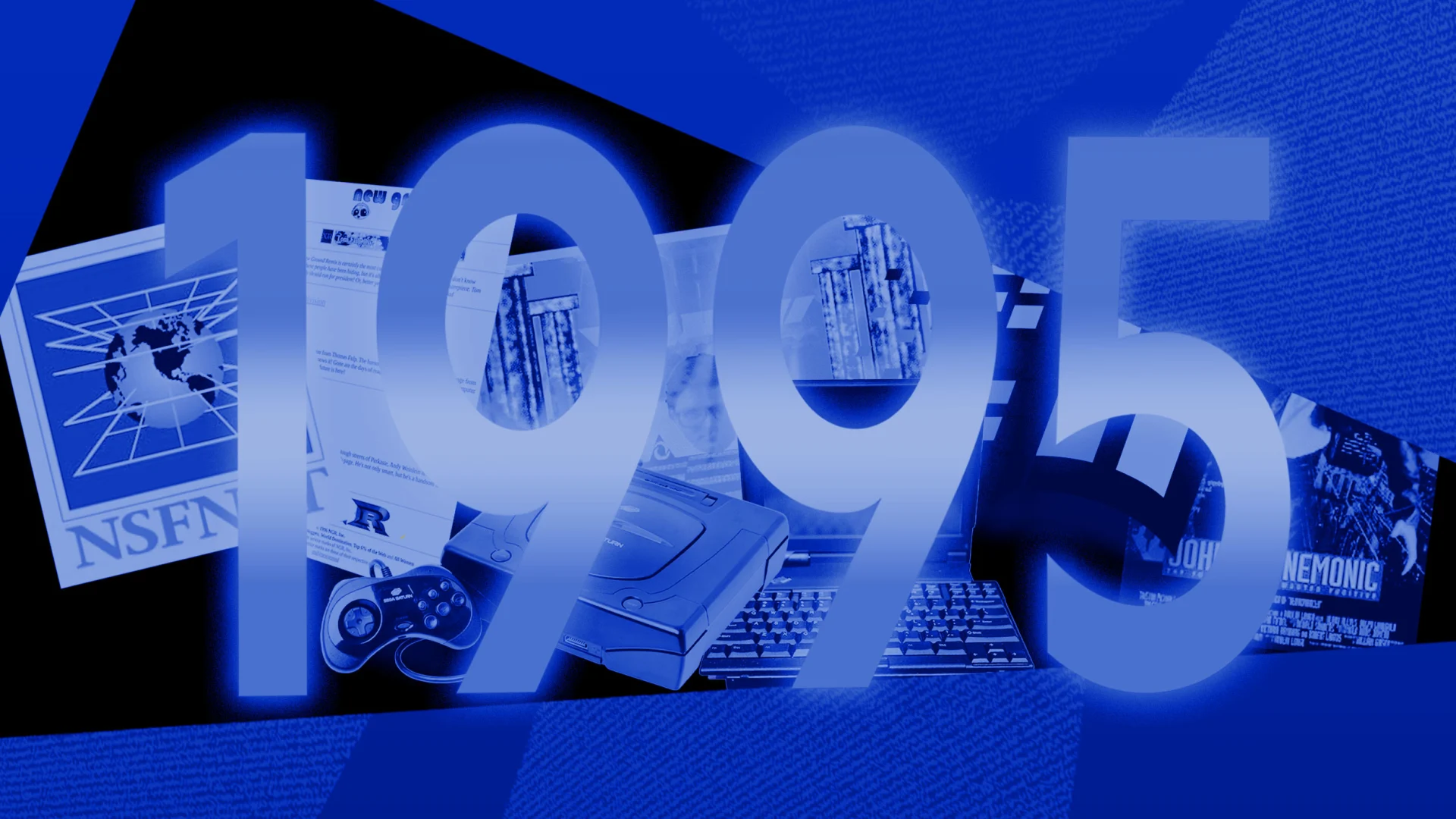
The year 1995 represents a watershed moment in technological history, serving as the critical bridge where mass-market analog systems collided with the explosive commercialization of the internet, standardizing graphical operating systems, and shifting consumer electronics from luxury novelties to household staples.
The Cultural and Technical Landscape of 1995
To understand 1995 technology, one must examine a world caught in a profound transition. Telecommunications relied heavily on copper wires and analog signals, yet digital computing had reached a threshold of affordability and capability that made personal computers viable for the average middle-class household. Operating systems transformed from text-heavy command-line interfaces into user-friendly graphical environments.
At the same time, entertainment and office productivity began their migration toward digital formats. Compact discs were rapidly supplanting cassette tapes and vinyl, while text processing and spreadsheet management on personal computers rendered mechanical typewriters and standalone word processors obsolete. This era did not invent the microprocessor or the internet, but it democratized them, laying the groundwork for the hyper-connected infrastructure of the twenty-first century.
Personal Computing and Operating Systems
The personal computer market in 1995 experienced a seismic shift defined by mainstream processing power and graphical interfaces. Intel’s Pentium processor, introduced a year earlier, dominated high-end systems, while the older 486 chip remained a budget-friendly option. Systems typically featured between 8 megabytes and 16 megabytes of RAM, and hard drives measured storage in gigabytes—often ranging from 500 megabytes to 2 gigabytes.
The definitive software event of the year was the release of Microsoft Windows 95 on August 25, 1995. Windows 95 revolutionized desktop computing by introducing the Start menu, the taskbar, and native support for 32-bit applications with preemptive multitasking. It also popularized "Plug and Play" architecture, which theoretically simplified the installation of peripheral hardware like printers and modems, though early driver conflicts frequently tested user patience. Competitors such as Apple’s Macintosh operating system and various UNIX-based distributions maintained niche loyalties, but Windows 95 established a near-monopoly on desktop environments that would shape enterprise and consumer computing for decades.
The Commercialization of the Internet and World Wide Web
Before 1995, the internet was primarily the domain of academics, researchers, and government agencies. The lifting of restrictions on commercial traffic across the National Science Foundation Network (NSFNET) in 1995 catalyzed a massive explosion of private internet service providers (ISPs) such as America Online (AOL), CompuServe, and Prodigy.
Connecting to the internet required a dial-up modem, which translated digital computer data into analog audio signals capable of traveling over standard telephone lines. Speeds were painfully slow by modern standards, typically maxing out at 28.8 kilobits per second (Kbps) or 33.6 Kbps, with 56K modems arriving slightly later. The process involved a distinctive auditory handshake—a cacophony of beeps, hisses, and static—as the modem negotiated a connection with the ISP server.
Web browsing was defined by the rivalry between Netscape Navigator and the newly introduced Microsoft Internet Explorer 1, which debuted as part of the Windows 95 Plus! pack. Websites were constructed using rudimentary HyperText Markup Language (HTML), featuring gray backgrounds, blinking text, and animated "under construction" GIFs. Search engines like Yahoo!, AltaVista, and Lycos helped users navigate the rapidly expanding digital landscape, though indexing was primitive compared to modern algorithmic search.
Telecommunications and Mobile Devices
Mobile communication in 1995 was transitioning from bulky "transportable" car phones to handheld cellular devices, though adoption remained largely confined to business professionals and affluent consumers. Analog networks—known as 1G—were standard, though early digital 2G networks (using standards like GSM and IS-54) were beginning to roll out, enabling rudimentary text messaging and improved call security.
The iconic mobile phone of the era was the Nokia 2110, released in 1994 and popular throughout 1995, which introduced the legendary Nokia tune and a monochrome LCD screen capable of displaying basic address book information and SMS messages. These phones lacked internet connectivity, cameras, or color displays, focusing exclusively on voice calls and battery endurance that lasted for days.
In households, landline telephones dominated, often paired with answering machines that used microcassettes to record missed calls. Pagers, or beepers, reached peak popularity among teenagers and working professionals alike, serving as a rapid messaging tool where numeric codes or call-back numbers were transmitted to a small belt-worn receiver.
Home Entertainment and Media Storage
Home entertainment in 1995 was anchored by physical media formats undergoing a generational shift. The audio Compact Disc (CD) had definitively triumphed over the cassette tape, while the video cassette recorder (VCR using VHS tapes) remained the absolute monarch of home video viewing, despite the emergence of LaserDisc for cinephiles.
Gaming experienced a generational leap with the release of the Sony PlayStation in North America in September 1995, alongside the Sega Saturn. These 32-bit consoles utilized CD-ROM technology, replacing cartridges with optical discs that offered vast storage capacity for pre-rendered cinematic sequences, complex soundtracks, and immersive three-dimensional polygon graphics. Nintendo countered with the 16-bit Super Nintendo Entertainment System (SNES) and awaited the 1996 launch of the Nintendo 64, keeping cartridge-based gaming alive for traditionalists.
| Technology Category | Dominant Format / Standard (1995) | Typical Technical Specifications |
|---|---|---|
| Operating Systems | Microsoft Windows 95, Mac OS 7.5 | 32-bit architecture, 8MB–16MB RAM requirement, GUI-driven |
| Internet Access | Dial-up Modems via ISPs (AOL, CompuServe) | 14.4 Kbps to 28.8 Kbps transfer speeds over analog copper lines |
| Storage Media | 3.5-inch Floppy Disk, CD-ROM | Floppy: 1.44 MB; CD-ROM: 650 MB optical storage |
| Mobile Phones | Analog (1G) and early Digital (2G GSM) | Monochrome LCD screens, voice-only or basic SMS, external antennas |
| Video Gaming | Sony PlayStation, Sega Saturn, SNES | 32-bit CD-ROM systems vs. 16-bit cartridge systems |
Frequently Asked Questions
How fast was internet access in 1995?
Internet access in 1995 relied on dial-up connections over standard telephone lines, yielding speeds between 14.4 Kbps and 28.8 Kbps. Downloading a single high-resolution image could take several minutes, and loading media-heavy websites required considerable patience while page elements rendered line by line.
What operating system dominated computers in 1995?
Microsoft Windows 95 dominated the personal computer market following its launch in August 1995. It replaced older MS-DOS and Windows 3.1 environments by providing an integrated graphical user interface featuring the Start menu, taskbar, and robust support for 32-bit software applications.
Were mobile phones common in 1995?
Mobile phones were not common among the general public in 1995. They were bulky, expensive devices primarily used by business executives and high-net-worth individuals. Most everyday communication outside the home relied on fixed landlines, public payphones, or numeric pagers.
What storage formats did computers use in 1995?
Personal computers in 1995 relied heavily on the 3.5-inch magnetic floppy disk, which held just 1.44 megabytes of data. For larger software programs and games, CD-ROM drives capable of reading 650 megabytes of optical data became the industry standard.
How did people search the internet before Google?
Before Google became dominant, users relied on early web directories and search engines such as Yahoo!, AltaVista, Lycos, and WebCrawler. These services indexed websites based on keywords and human-curated directory categories rather than advanced web-ranking algorithms.
Preserving and Archiving Retro Computing Hardware
For modern enthusiasts looking to explore or preserve 1995 technology, sourcing operational hardware requires careful attention to component degradation. Capacitors on vintage motherboards and power supplies frequently leak or fail over time, requiring professional recapping. Magnetic media like floppy disks and audio cassettes suffer from magnetic decay and physical wear, making data migration to modern solid-state storage via specialized interface adapters a primary maintenance priority for vintage computing preservationists.