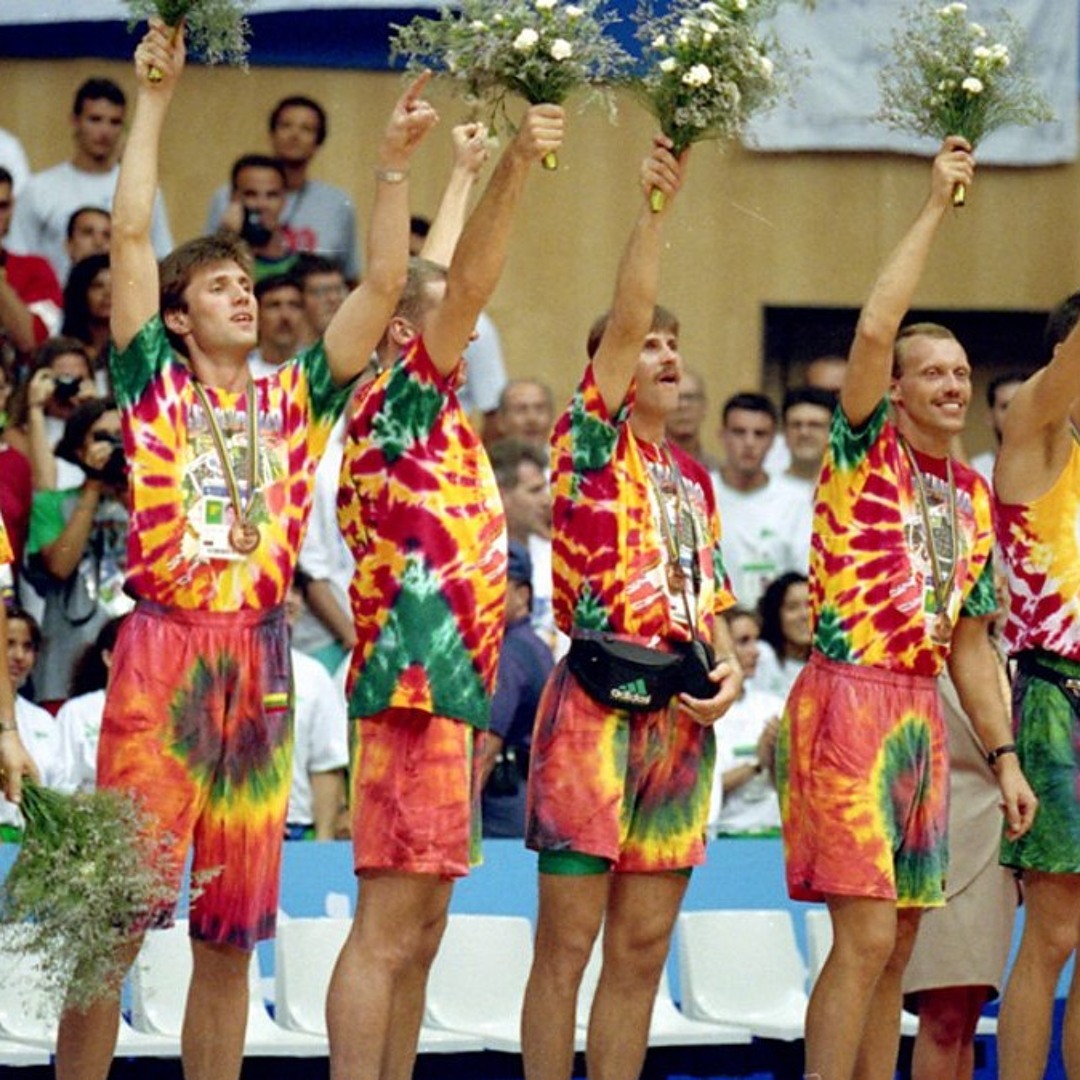
The 1992 Lithuanian Olympic basketball team captured global hearts at the Barcelona Summer Games by winning the bronze medal under their own flag just two years after declaring independence from the Soviet Union. Driven by national pride, funding from the rock band Grateful Dead, and a fierce athletic spirit, players like Šarūnas Marčiulionis and Arvydas Sabonis forged a legacy that transcended sports to symbolize freedom and resilience.
Historical Context: Basketball, Occupation, and Independence
To understand the profound weight of the 1992 Lithuanian Olympic basketball team, one must examine the deep roots of the sport in the Baltic nation. Basketball was introduced to Lithuania in the 1920s by ethnic Lithuanians returning from North America, rapidly evolving into the undisputed national pastime. When the Soviet Union annexed Lithuania in 1940, and again following World War II, basketball courts became unofficial cultural sanctuaries where national identity survived under Soviet occupation.
Lithuanian players regularly formed the backbone of the dominant Soviet national teams throughout the mid-to-late 20th century. Icons such as Arvydas Sabonis, Rimas Kurtinaitis, and Šarūnas Marčiulionis delivered crucial victories for the USSR on the international stage, including the gold medal at the 1988 Seoul Olympics. However, these athletes competed under a flag and system that did not represent their true homeland.
The geopolitical landscape shifted dramatically on March 11, 1990, when Lithuania became the first Soviet republic to declare its independence. This bold step toward sovereignty carried immense political risk, and the nascent republic faced severe economic blockades and military pressure from Moscow. Rebuilding a national sports infrastructure from scratch amid an economic crisis seemed almost impossible. Yet, restoring a sovereign basketball team to the international stage became an urgent cultural priority for a country desperate to assert its rightful place among free nations.
The Struggle for Sovereignty and Financial Survival
Securing entry into the 1992 Barcelona Olympics required navigating complex bureaucratic hurdles and severe financial constraints. The International Olympic Committee (IOC) and FIBA required the newly independent nation to re-establish its National Olympic Committee and gain official recognition, a process complicated by international hesitation to antagonize the collapsing Soviet Union.
Once recognition was achieved, the financial reality proved daunting. The Lithuanian government, newly independent and financially strapped, could not allocate state funds to send an athletic delegation to Spain. The players themselves were scattered across European professional leagues and the nascent NBA, often paying out of pocket for their training equipment, travel arrangements, and lodging.
Salvation came from an unexpected source: the American counterculture icon rock band Grateful Dead. Drummer Mickey Hart and his bandmates learned of the team's financial plight through independent journalist George Vecsey and sympathized with Lithuania's fight for freedom. The band financed the team's iconic tie-dyed warm-up jerseys—designed by artist Nibecker, featuring a skeleton dunking a basketball in the colors of the Lithuanian flag—and provided crucial monetary support. The band also funded the production of custom merchandise, allowing the team to generate independent revenue by selling the apparel worldwide, securing their passage to Barcelona.
Building the Golden Squad: Roster and Talent Profile
The 1992 squad combined elite international experience with exceptional toughness, anchored by towering centers and lethal perimeter shooters. Head coach Vladas Garastas inherited a roster of veterans who had endured decades of athletic suppression and professional exhaustion.
Arvydas Sabonis, widely regarded as one of the most brilliant passing and shooting big men in basketball history, served as the emotional and tactical centerpiece. Having suffered catastrophic Achilles tendon injuries earlier in his career, Sabonis lacked his youthful explosiveness by 1992, yet his basketball IQ, court vision, and physical presence remained elite.
Alongside Sabonis was Šarūnas Marčiulionis, a ferocious, bruising guard who became one of the first European players to star in the NBA with the Golden State Warriors. Marčiulionis acted as the team's de facto general manager, handling logistics, fundraising, and player relations while averaging significant points on the court.
The roster was rounded out by elite marksmen and gritty competitors:
- Rimas Kurtinaitis: A legendary perimeter sniper known for his deep shooting range and fearless competitiveness.
- Valdemaras Chomičius: The veteran floor general and team captain who provided steady leadership.
- Artūras Karnišovas: A versatile forward who provided essential scoring and defensive depth.
- Šarūnas洁 / Gintaras Einikis, Andris Brazys, Alvydas Pazdrazdis, Romanas Brazdauskis, Darius Dimavičius, and Gintaras Krapikas: Role players who provided vital minutes, defensive intensity, and rebounding.
| Player Name | Primary Position | 1992 Team Role | Notable Affiliation / NBA Status |
|---|---|---|---|
| Arvydas Sabonis | Center | Post Playmaker / Anchor | Real Madrid / Future Portland Trail Blazers |
| Šarūnas Marčiulionis | Guard | Scorer / Co-Captain | Golden State Warriors |
| Rimas Kurtinaitis | Guard | Perimeter Shooter | European Professional Leagues |
| Valdemaras Chomičius | Guard | Floor General / Captain | European Professional Leagues |
| Artūras Karnišovas | Forward | Versatile Scoring Forward | NCAA / European Professional Leagues |
The Barcelona Olympics and the Clash with the Dream Team
The 1992 Barcelona Olympics are universally remembered for the debut of the United States "Dream Team," featuring Michael Jordan, Magic Johnson, Larry Bird, and other NBA legends. While the Americans dominated global headlines, the Lithuanian squad carved out a parallel narrative of survival and triumph that captured the world's imagination.
Lithuania advanced through the preliminary rounds with gritty, emotional victories, driven by the knowledge that millions of their countrymen were watching from home, often waking up in the middle of the night to tune in. The emotional peak of the tournament for Lithuania occurred in the semi-finals, where they faced the United States Dream Team.
While the American squad secured a predictable victory, the game transcended the final score. Before the opening tip, the Lithuanian players received warm recognition from their American opponents, many of whom understood the political stakes of the match. For the Lithuanians, sharing the court with the world's best players under their own flag represented the ultimate validation of their independence.
The Bronze Medal Match: Lithuania vs. Unified Team
Following the semi-final loss, Lithuania faced the Unified Team—composed of athletes from the former Soviet Union—in the bronze medal game on August 8, 1992. The matchup carried immense psychological weight. Facing the very sports apparatus that had claimed ownership of their athletic identities for decades, the Lithuanian players delivered a masterclass in determination.
Marčiulionis scored 29 points, and Sabonis added 27 points and 16 rebounds, overpowering the Unified Team in the paint and on the perimeter. When the final buzzer sounded, securing an 82-78 victory for Lithuania, the players collapsed in tears on the court.
The medal ceremony provided one of the most enduring images in Olympic history. Eschewing standard athletic warm-ups, the Lithuanian players proudly donned their Grateful Dead tie-dyed skull-and-basketball t-shirts on the podium as they accepted their bronze medals. The vibrant, countercultural shirts stood in stark contrast to the formal Olympic blazers, symbolizing a joyous rebellion against decades of drab Soviet conformity.
Legacy and Cultural Impact on Global Basketball
The impact of the 1992 Lithuanian bronze medal extended far beyond the medal podium in Barcelona. Domestically, the victory served as a unifying cultural anchor for a nation struggling to stabilize its economy and political institutions in the wake of the Soviet collapse. It proved that Lithuanian identity could thrive on the global stage independently of its former occupiers.
Globally, the team played a pivotal role in opening the floodgates for international talent in the NBA. While players like Petrovic, Divac, Sabonis, and Marčiulionis had already begun proving European viability, the 1992 squad shattered lingering American skepticism regarding the toughness and skill level of Eastern European basketball.
The story of this golden squad was immortalized in the acclaimed 2012 documentary The Other Dream Team, directed by Marius Markevičius, which detailed the political struggles, financial hardships, and cultural triumph of the players. Today, basketball remains akin to a religion in Lithuania, with the 1992 bronze medalists revered not merely as athletes, but as founding fathers of modern Lithuanian national pride.
Frequently Asked Questions
Why did the Grateful Dead sponsor the 1992 Lithuanian basketball team?
The Grateful Dead funded the team after learning through journalists that the newly independent nation lacked the financial resources to send its athletes to the Barcelona Olympics. Drummer Mickey Hart and the band resonated with Lithuania's struggle for freedom from the Soviet Union, providing funds for travel, lodging, and the iconic tie-dyed uniforms.
Who were the star players on the 1992 Lithuanian Olympic basketball team?
The team's biggest stars were Arvydas Sabonis, a towering, highly skilled center who later starred for the Portland Trail Blazers, and Šarūnas Marčiulionis, an aggressive guard who became one of the first European stars in the NBA. Other key contributors included elite shooters Rimas Kurtinaitis and Valdemaras Chomičius.
Did Lithuania play the US Dream Team in the 1992 Olympics?
Yes, Lithuania played the United States Dream Team in the semi-finals of the 1992 Barcelona Olympics. While the US team won the game, the matchup became historic because it pitted the newly liberated nation against the greatest assembly of basketball talent ever assembled, representing a powerful symbol of freedom.
What did the tie-dyed jerseys worn by the Lithuanian team symbolize?
The tie-dyed jerseys featured a skeleton dunking a basketball in the national colors of yellow, green, and red. They symbolized the playful rebellion of a liberated nation against the rigid, gray conformity of the former Soviet Union, as well as a tribute to the financial backing of the American counterculture band, the Grateful Dead.
What was the final result of the 1992 bronze medal game for Lithuania?
Lithuania defeated the Unified Team—representing the former Soviet republics—82-78 in the bronze medal match on August 8, 1992. Winning this medal under their own flag was considered an extraordinary emotional and athletic victory for the newly independent country.
Honoring a Monumental Athletic Legacy
To fully appreciate the triumph of the 1992 Lithuanian Olympic basketball team, sports enthusiasts and historians should explore primary source documentaries such as The Other Dream Team, visit the basketball museums in Kaunas, or examine archival recordings of the Barcelona tournament. Recognizing the sacrifices made by these athletes illuminates how sport can become a powerful vehicle for human rights, national sovereignty, and cultural resilience.