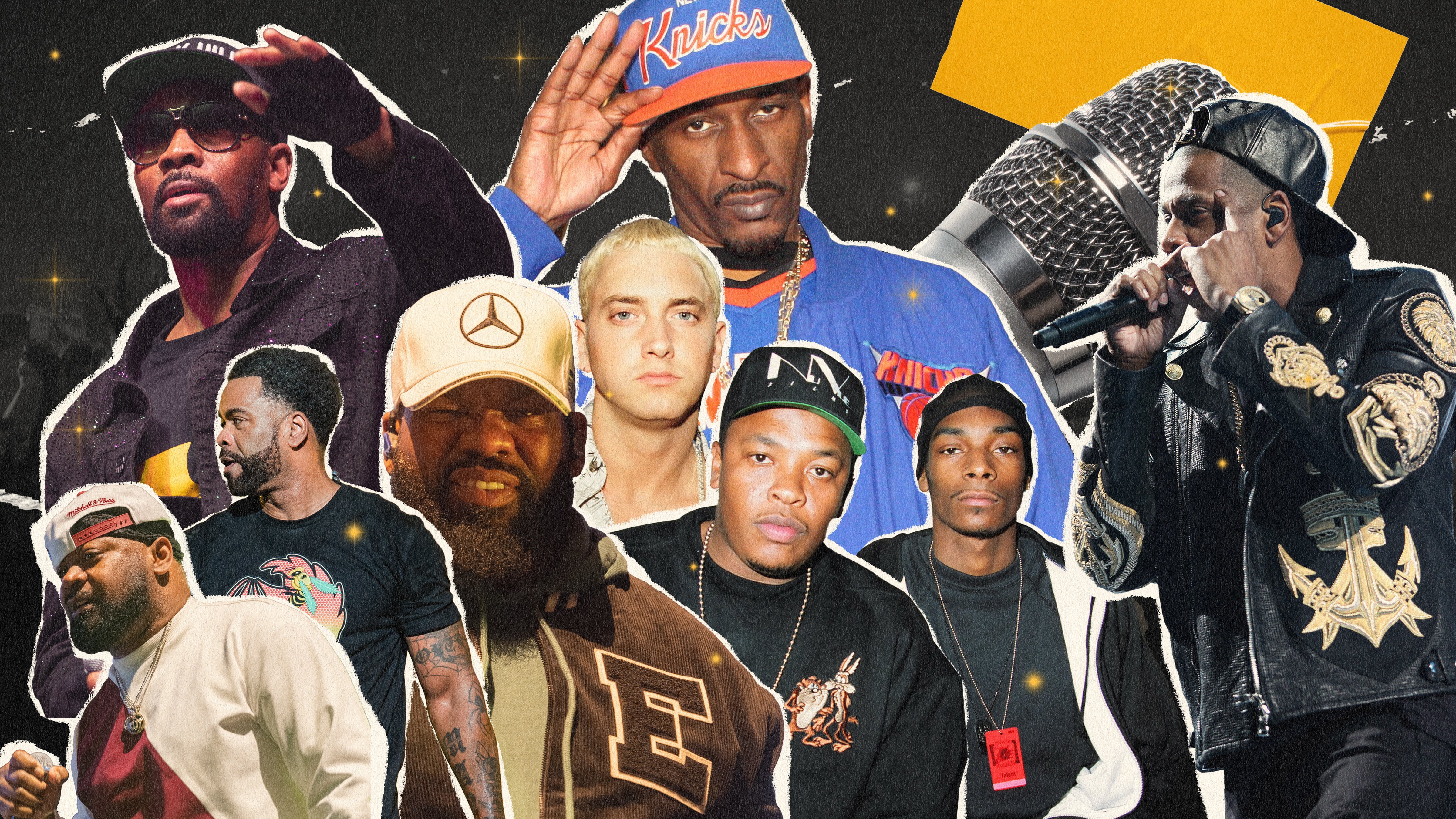
The 1990s marked hip hop's transition from a regional New York novelty into a dominant global commercial and cultural force. Driven by technological advancements in sampling, regional rivalries, and the rise of independent record labels, the decade produced definitive subgenres, legendary lyricists, and multi-platinum albums that redefined popular music production, fashion, and media worldwide.
The Golden Era Foundation and Production Evolution
The early 1990s inherited the experimental spirit of the late 1980s, often termed the Golden Age of hip hop, but quickly industrialized its sound. Producers shifted from hardware-limited sampling to sophisticated digital audio workstations and advanced samplers like the E-mu SP-1200 and Akai MPC series. This hardware evolution allowed beatmakers to slice, filter, and layer funk breaks, jazz horns, and soul vocal loops with unprecedented precision.
East Coast production championed gritty, boom-bap aesthetics characterized by heavy, unprocessed kick-and-snare drums coupled with dusty jazz samples. Concurrently, West Coast producers—particularly Dr. Dre—pioneered G-funk on landmark releases like 1992's The Chronic. G-funk combined whining synthesizer melodies inspired by Parliament-Funkadelic, heavy basslines, and live instrumentation, establishing a distinct auditory identity that contrasted sharply with New York's concrete-and-alleyways atmosphere.
Lyrically, the early decade favored Afrocentric themes, social consciousness, and intricate multi-syllabic rhyming patterns. Groups like A Tribe Called Quest, De La Soul, and the Native Tongues collective introduced bohemian philosophies and jazzy instrumentation, proving that hip hop could be both intellectually stimulating and commercially viable. This era established the blueprint for album sequencing, guest features, and conceptual storytelling within rap music.
Regional Rivalries and Commercial Explosion
As the decade progressed, commercial success fueled fierce regional polarization, most notably encapsulated by the East Coast versus West Coast rivalry. Independent and major labels invested heavily in regional scenes, transforming localized street movements into national phenomena. New York counterpunched the West Coast G-funk wave with gritty street narratives from artists like Nas, whose 1994 debut Illmatic set a new benchmark for lyrical density and observational realism, and The Notorious B.I.G., whose effortless flow dominated commercial radio.
| Region | Defining Subgenre | Key Producers | Landmark Albums |
|---|---|---|---|
| East Coast | Boom-Bap / Hardcore Rap | DJ Premier, RZA, Pete Rock | Illmatic, Enter the Wu-Tang (36 Chambers) |
| West Coast | G-Funk / Gangsta Rap | Dr. Dre, DJ Quik, Warren G | The Chronic, Doggystyle |
| Southern | Bounce / Dirty South | Mannie Fresh, DJ Paul, Juicy J | Get It How You Live!, Unlv's Sixty-Two |
| Midwest | Chopper / Fast-Flow | Timbaland, DJ U-Neek, Bone Thugs-N-Harmony | E. 1999 Eternal, Critical Beatdown |
Record labels such as Death Row Records on the West Coast and Bad Boy Entertainment in New York capitalized on this geographic friction, driving unprecedented album sales while inadvertently escalating tensions that culminated in the tragic murders of Tupac Shakur and The Notorious B.I.G. Despite these losses, the commercial machinery of hip hop expanded rapidly, proving that the genre could sustain multi-million-dollar corporate entities.
The Rise of Independent Powerhouses and Southern Expansion
While major label conglomerates vied for dominance, the mid-to-late 1990s witnessed the emergence of fiercely independent business models. Master P founded No Limit Records in New Orleans, negotiating a revolutionary distribution deal with Priority Records that allowed him to retain 85 percent of his profits while saturating the market with high-volume releases and distinctive, flashy packaging. Simultaneously, Birdman and Ronald "Slim" Williams built Cash Money Records, utilizing producer Mannie Fresh to create an electronic-infused Southern bounce sound that eventually dominated the mainstream charts.
In Atlanta, LaFace Records laid the groundwork for the city's future dominance with acts like Outkast, whose 1994 debut Southernplayalisticadillacmuzik blended live instrumentation with distinctly Southern perspectives, challenging New York and Los Angeles hegemony. In Houston, the screw culture pioneered by DJ Screw slowed down chopped-and-screwed mixtapes, creating a psychedelic, hypnotic subgenre that heavily influenced regional identity and later national production styles.
Technological Shifts and Sampling Legislation
The commercial growth of hip hop forced a legal reckoning regarding the use of unauthorized audio samples. In the landmark 1991 federal court case Grand Upright Music Ltd. v. Warner Bros. Records Inc., Judge Kevin Thomas Duffy ruled that unauthorized sampling constituted copyright infringement, effectively ending the wild-west era of unregulated audio collages.
Artists and producers were forced to adapt:
- Interpolation: Replaying melodies and basslines with live session musicians rather than lifting audio directly from vinyl.
- Clearance Budgets: Allocating substantial financial resources to legally clear samples with publishers and rights holders.
- In-House Production: Relying more heavily on synthesized sounds, drum machines, and original compositions to minimize licensing costs.
Despite these legal hurdles, producers found innovative ways to manipulate sampled material, chopping audio into microscopic fragments or pitching vocals up and down to obscure their origins while retaining emotional resonance.
Cultural Expansion: Fashion, Film, and Language
Beyond music, 1990s hip hop established a comprehensive lifestyle aesthetic that permanently altered global youth culture. Baggy jeans, oversized t-shirts, athletic jerseys, Timberland boots, and customized gold jewelry transitioned from New York and Los Angeles inner cities to international runways and suburban malls. Brands like Karl Kani, FUBU, and Cross Colours emerged as multi-million-dollar enterprises owned or inspired by hip hop creators.
Cinema also reflected the culture's rise. Directors like John Singleton (Boyz n the Hood) and Hughes brothers (Menace II Society) cast prominent rappers in feature films, while documentaries and soundtracks cemented hip hop as the definitive voice of urban youth. The slang, cadence, and vernacular pioneered by 1990s lyricists integrated into global lexicons, demonstrating the culture's unmatched linguistic influence.
Frequently Asked Questions About 1990s Hip Hop
What defined the Golden Era of 1990s hip hop?
The Golden Era is generally characterized by intense lyrical innovation, sampling experimentation, and socio-political commentary spanning roughly from the late 1980s to the mid-1990s. Artists prioritized complex rhyme schemes, jazz-infused instrumentals, and Afrocentric or gritty street narratives, creating albums that remain critical touchstones in contemporary music criticism.
How did the legal ruling on sampling change 1990s production?
The 1991 Grand Upright Music v. Warner Bros. decision criminalized un-cleared audio sampling, forcing producers to either pay expensive licensing fees for master recordings or adopt interpolation. This legal constraint catalyzed a shift toward original instrumentation, heavier synthesizer use, and more intricate chopping techniques to bypass strict copyright enforcement.
What caused the East Coast and West Coast hip hop rivalry?
The rivalry was fueled by competing regional record labels, media sensationalism, and contrasting musical styles—specifically New York's boom-bap rhythm versus Los Angeles's synth-heavy G-funk. While initially driven by friendly competition and market dominance, tabloid journalism and escalating personal conflicts tragically transformed the geographic dispute into real-world violence.
How did independent record labels shape the late 1990s market?
Independent labels like No Limit Records and Cash Money Records pioneered lucrative distribution models that bypassed traditional major-label gatekeeping. By retaining ownership of masters, maintaining relentless release schedules, and marketing directly to underserved regional audiences, these independent moguls proved that rap entrepreneurs could secure unprecedented financial autonomy.
Why is 1994 considered such a pivotal year for hip hop albums?
The year 1994 witnessed an unprecedented concentration of critically acclaimed and commercially successful debut albums. Releases like Nas's Illmatic, The Notorious B.I.G.'s Ready to Die, Outkast's Southernplayalisticadillacmuzik, and Common's Resurrection dropped within months of each other, permanently elevating the artistic standards of lyricism and regional representation.
Strategic Archival and Further Exploration
To fully understand the structural impact of 1990s hip hop, researchers and enthusiasts should examine original print publications like The Source magazine, catalog vinyl pressings with producer liner notes, and study the business documents behind independent label distribution deals. Analyzing the original hardware specifications of period samplers also provides technical context for the distinct sonic textures defining the decade's masterworks.