The year 1989 marked a profound turning point in modern history, characterized by the collapse of communist regimes in Eastern Europe, the fall of the Berlin Wall, and major transitions in international governance. When examining the title of a "1989 president," the context typically points to the executive leaders holding office during this pivotal twelve-month period—most notably George H.W. Bush of the United States, who assumed office on January 20, 1989, or leaders across shifting global republics navigating the end of the Cold War.
Understanding who held presidential office in 1989 requires examining the intersection of constitutional authority, sweeping geopolitical restructuring, and domestic policy challenges. Across major world powers and newly democratizing states, the office of the president carried immense responsibilities as traditional alliances dissolved and new sovereign nations began to emerge. This analysis explores the primary figures who defined the presidency in 1989, their administrative priorities, and the lasting historical implications of their governance.
The Geopolitical Landscape of 1989
To understand the nature of any presidency in 1989, one must evaluate the extraordinary geopolitical volatility of the era. The post-World War II bipolar order dominated by the United States and the Soviet Union was rapidly unraveling. Presidents serving during this year faced unprecedented diplomatic crises and opportunities that required a delicate balance of military deterrence and diplomatic engagement.
In Eastern Europe, popular uprisings challenged entrenched authoritarian regimes, culminating in the opening of the Berlin Wall in November 1989. For Western leaders, this required careful navigation to encourage democratic reforms without provoking a military intervention from the crumbling Soviet bloc. Meanwhile, in the Soviet Union itself, General Secretary Mikhail Gorbachev was implementing sweeping political reforms, including the creation of the executive presidency of the Soviet Union, which fundamentally altered the office's constitutional powers later in the transition period.
| Region / Nation | Key Executive Figure in 1989 |
|---|---|
| United States | George H.W. Bush (Inaugurated January 20, 1989) |
| Soviet Union | Mikhail Gorbachev (General Secretary / Supreme Soviet Chairman) |
| France | François Mitterrand (President) |
| Argentina | Raúl Alfonsín / Carlos Menem (Presidents transition in 1989) |
| Brazil | José Sarney / Fernando Collor de Mello (Transition period) |
George H.W. Bush and the United States Presidency in 1989
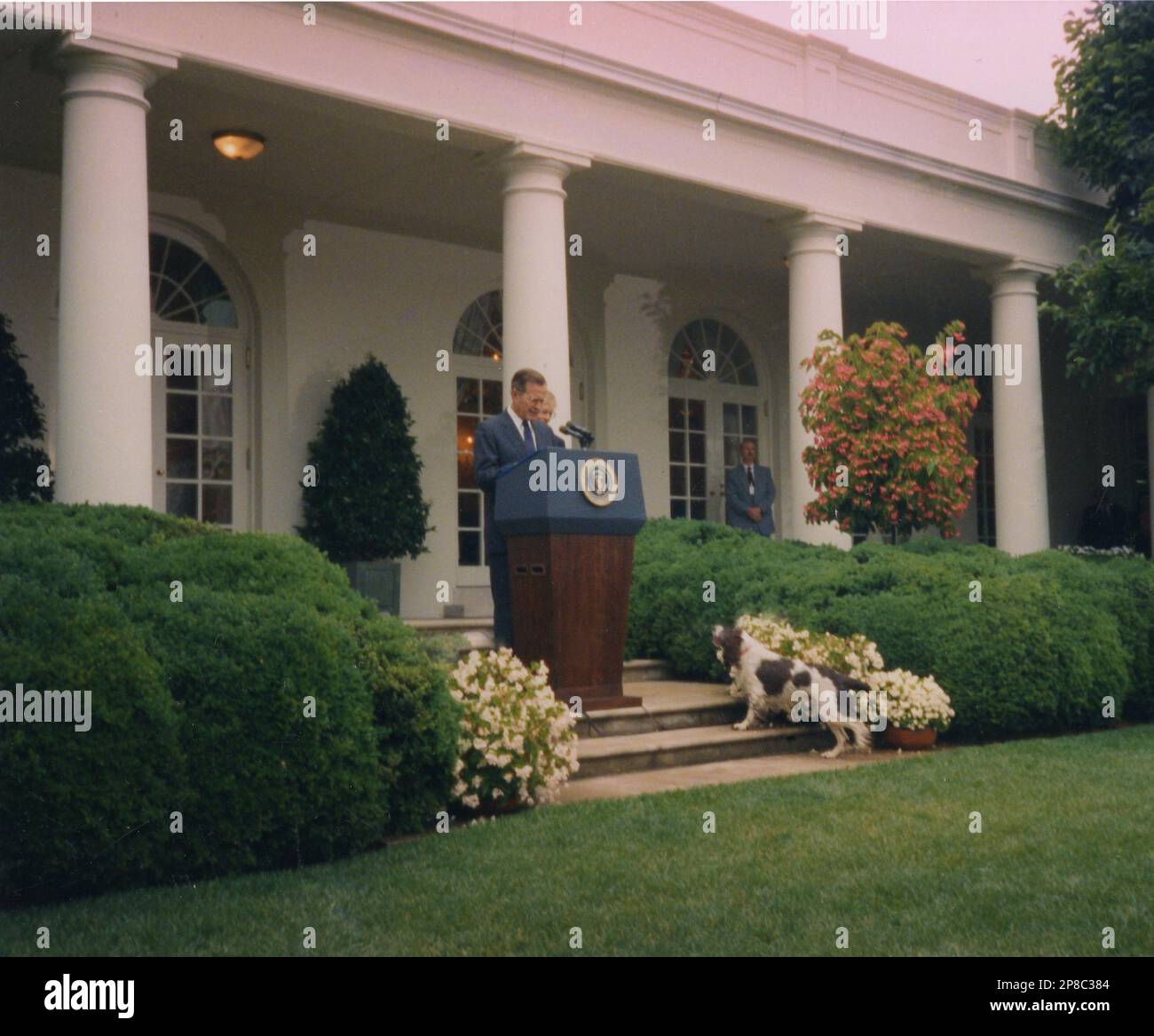
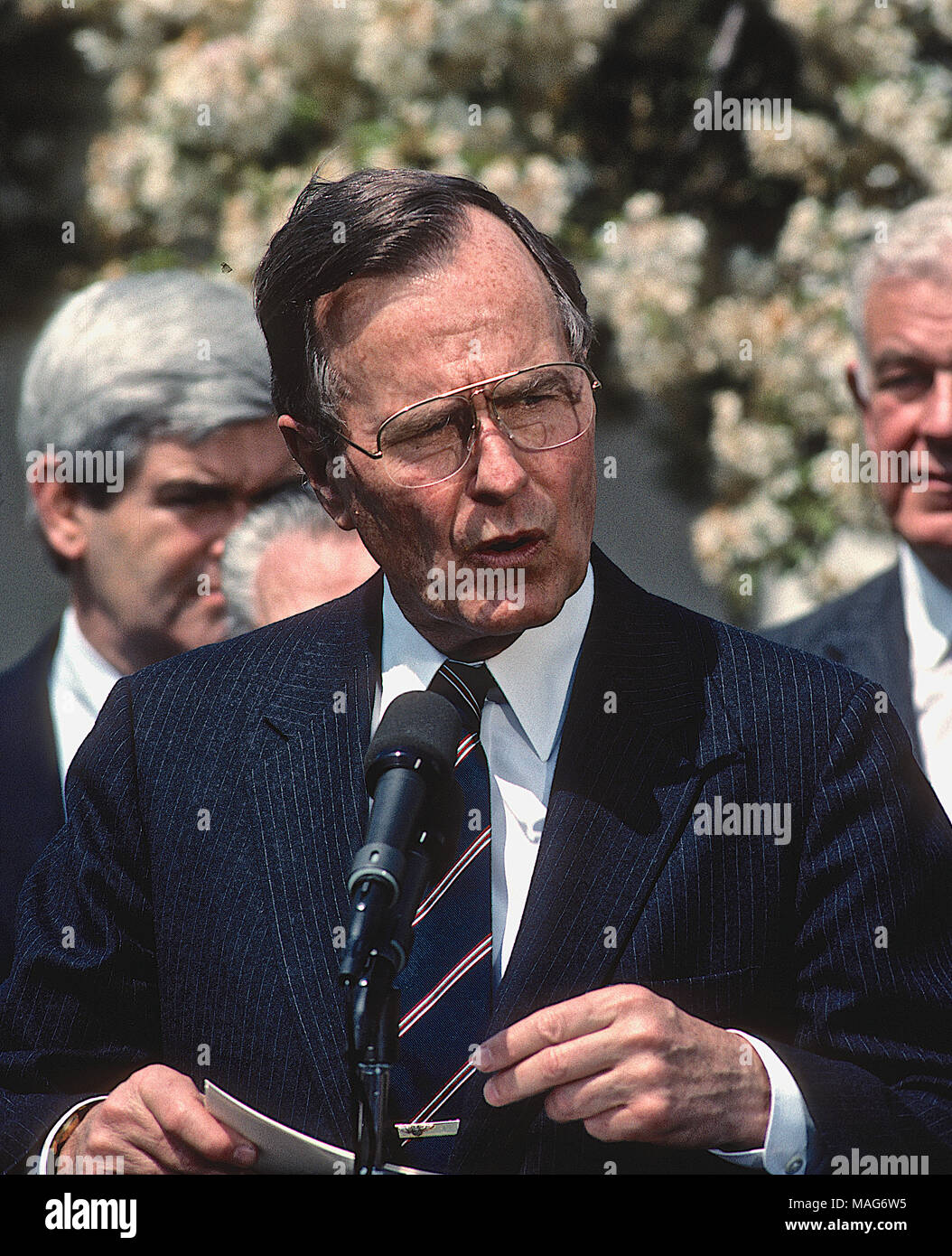
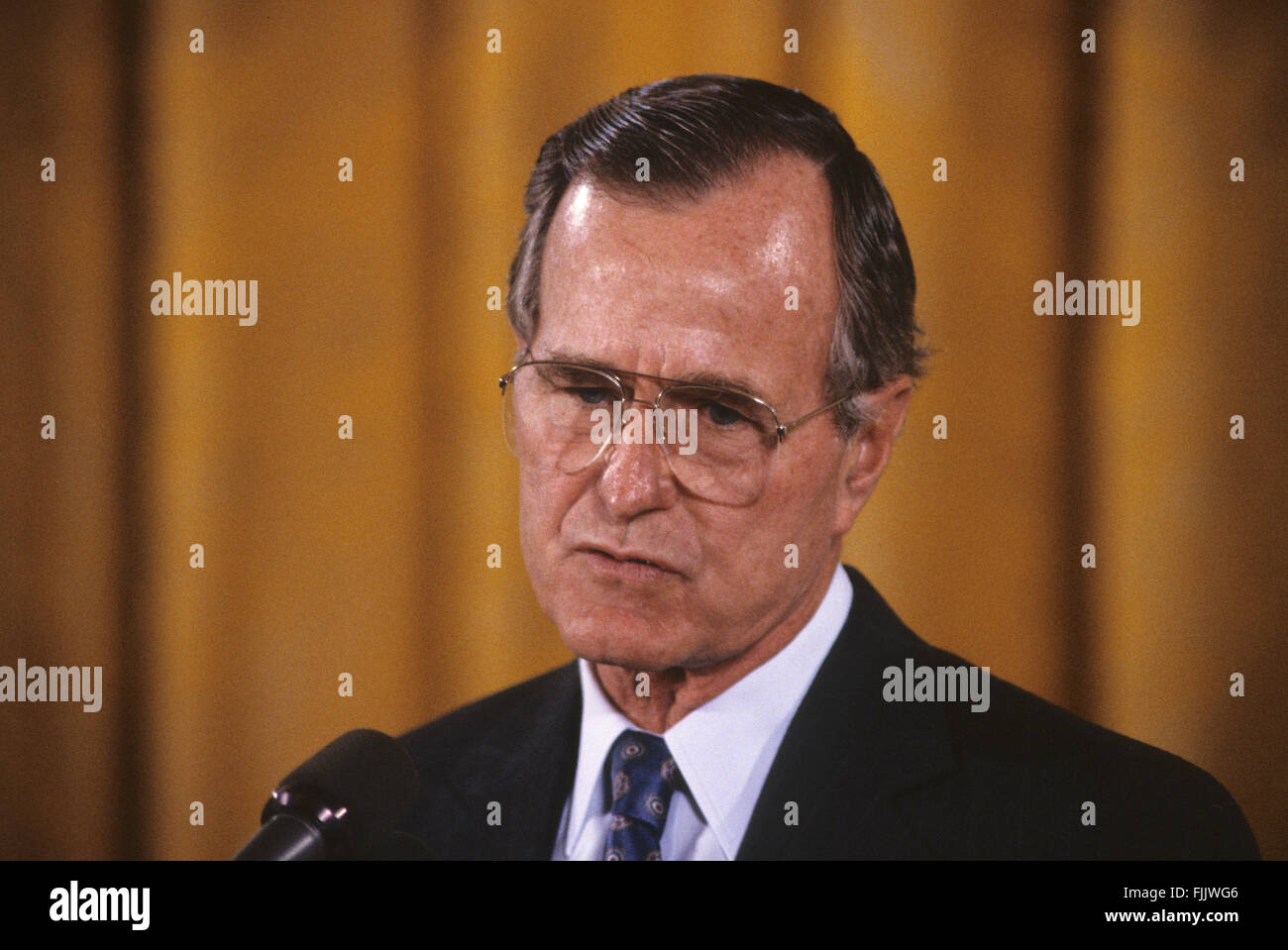
George Herbert Walker Bush assumed the office of the 41st President of the United States on January 20, 1989, succeeding Ronald Reagan. Bringing a deep background in foreign policy as a former Director of the Central Intelligence Agency, Ambassador to the United Nations, and Vice President, Bush entered office precisely when international relations required seasoned diplomatic craftsmanship.
Domestic policy in 1989 was heavily influenced by economic stagnation concerns, the ongoing fallout from the 1987 stock market correction, and the monumental task of resolving the Savings and Loan crisis. President Bush signed the Financial Institutions Reform, Recovery, and Enforcement Act (FIRREA) of 1989 to restructure the failed savings and loan regulatory apparatus, committing billions in taxpayer and industry funds to stabilize the banking sector.
Foreign Policy and Summit Diplomacy
Foreign affairs dominated the first year of the Bush administration. The administration's cautious response to the democratization movements in Eastern Europe was designed to avoid destabilizing Soviet leadership while signaling firm support for self-determination.
Key milestones of the 1989 presidential agenda included:
- The Malta Summit (December 1989): President Bush and Soviet leader Mikhail Gorbachev met off the coast of Malta, where they effectively declared an end to the Cold War, laying the groundwork for future arms control treaties.
- Operation Just Cause (December 1989): Citing the protection of American citizens, democracy in Panama, and the apprehension of dictator Manuel Noriega on drug-trafficking charges, President Bush authorized military intervention in Panama.
- The Response to Tiananmen Square (June 1989): Following the Chinese government's violent crackdown on pro-democracy protesters, the Bush administration instituted diplomatic and military sanctions while maintaining covert channels to preserve long-term bilateral relations with Beijing.
Executive Transitions in Latin America and Global Republics
While the United States and the Soviet Union dominated superpower dynamics, 1989 was also a critical year for presidential transitions in Latin America and newly emerging democratic states. Many of these nations were moving away from military dictatorships toward civilian-led presidential systems, grappling with hyperinflation, foreign debt crises, and the establishment of independent judicial frameworks.
In Argentina, President Raúl Alfonsín handed over power to Carlos Menem in July 1989 following an early election prompted by severe hyperinflation and food riots. This marked the first democratic transfer of power from one civilian president to another in Argentina in decades. Similarly, Brazil held its first direct presidential election in nearly thirty years in late 1989, electing Fernando Collor de Mello, who assumed office in early 1990 after an intense campaign focused on economic stabilization and structural reform.
These transitions highlighted the structural fragility of presidential systems during economic crises. Unlike parliamentary systems where a prime minister can be swiftly replaced through a vote of no confidence, fixed-term presidential systems often required leaders to govern through severe economic shocks without immediate legislative relief, frequently testing the limits of constitutional decree powers.
Constitutional Powers and Institutional Dynamics
The powers exercised by a president in 1989 were shaped by distinct constitutional frameworks, yet common institutional challenges defined the era. Executive-legislative relations often determined the success or failure of major legislative initiatives, particularly in fiscal policy and national security oversight.
In the United States, the presidency operated under a divided government, with a Republican executive facing a Democratic-controlled Congress. This dynamic necessitated bipartisan compromise on landmark legislation such as the Americans with Disabilities Act (ADA), which moved forward during this period, and the Clean Air Act amendments of 1990. Conversely, in presidential systems across Latin America, executives increasingly relied on emergency decree powers—such as Argentina's necesidad y urgencia decrees—to bypass fractured legislatures and implement sweeping economic austerity measures.
Administrative Oversight and Bureaucratic Control
Managing the federal bureaucracy represented a core operational requirement for any chief executive in 1989. Presidents utilized executive orders, budgetary proposals submitted through agencies like the Office of Management and Budget (OMB), and strategic political appointments to align federal departments with their policy goals.
Key operational focus areas included:
- Intelligence and Defense Restructuring: Adapting national security apparatuses to the shifting threat landscape as the Soviet threat receded.
- Environmental Regulation: Balancing industrial growth mandates with rising public awareness of ecological degradation, acid rain, and climate change.
- Judicial Appointments: Nominating federal judges to shape the ideological balance of appellate and supreme courts, a lasting legacy of presidential authority.
What Were the Major Economic Challenges Faced by Presidents in 1989?
Presidents in 1989 confronted severe economic headwinds, including high national debt, structural inflation, and regional banking crises. In the United States, the federal deficit required intense budgetary negotiations, leading to the enforcement of the Gramm-Rudman-Hollings balanced budget targets. Internationally, developing nations governed by presidential systems struggled with the Latin American debt crisis, where high interest rates and massive foreign liabilities stifled domestic growth and provoked widespread social unrest.
How Did the Fall of the Berlin Wall Impact Executive Decision-Making?
The fall of the Berlin Wall in November 1989 forced executive leaders to accelerate diplomatic planning for German reunification and the dissolution of the Warsaw Pact. For Western presidents, this meant reassuring nervous allies—such as France and the United Kingdom—while negotiating financial assistance and security guarantees with Soviet leadership to ensure a peaceful transition of power across Central and Eastern Europe.
What Role Did Media and Public Relations Play in the 1989 Presidency?
By 1989, televised news, live press conferences, and 24-hour news cycles had fundamentally transformed how presidential actions were communicated to the public. Executives had to manage rapid-fire media narratives surrounding foreign policy crises and economic indicators. Spin rooms, immediate pundit analysis, and televised addresses became essential tools for maintaining public approval ratings and pressuring legislative bodies during policy stalemates.
How Did Presidential Term Limits Shape Governance in 1989?
Constitutional term limits restricted the political longevity of several prominent executives in 1989, influencing their policy horizons. In nations with strict single-term or two-term limits, "lame-duck" status often reduced a president's leverage with domestic legislatures during their final years in office. Conversely, in nations undergoing democratic transitions, establishing and respecting clear constitutional term limits was viewed as a vital benchmark for preventing the resurgence of authoritarianism.
Navigating Historical Legacy and Presidential Governance
Analyzing the office of the president in 1989 requires recognizing the immense pressure placed on executive leaders during a rare moment of structural geopolitical transformation. Whether managing the peaceful end of the Cold War, stabilizing faltering domestic financial institutions, or steering fragile new democracies through economic hyperinflation, the actions of these presidents established precedents that continue to influence modern constitutional law and international diplomacy. Researchers, historians, and policy analysts studying this era must weigh structural economic limitations against the personal agency of individual leaders to fully comprehend how executive decisions shaped the contemporary global order.