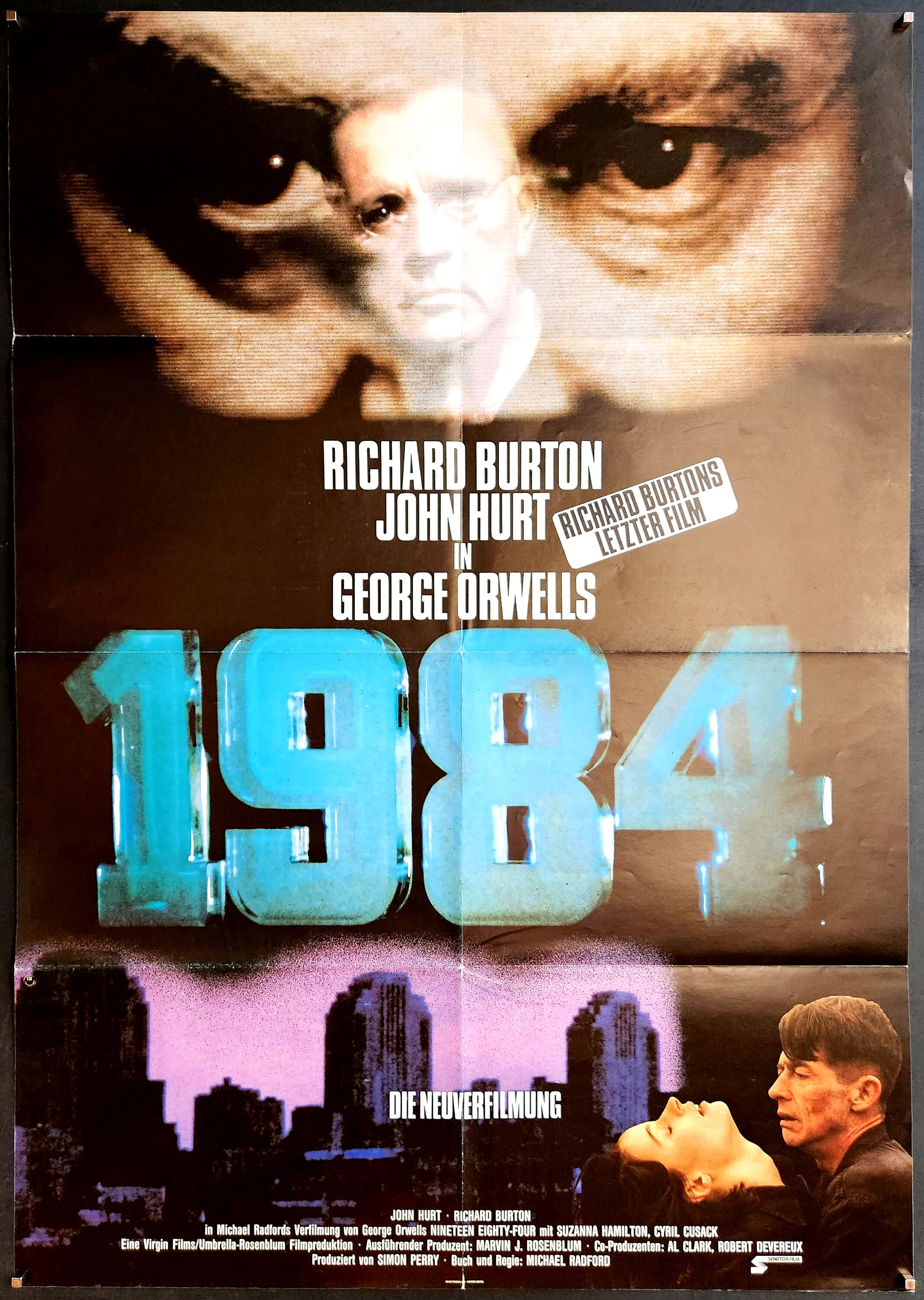
The 1984 film adaptation of George Orwell’s "Nineteen Eighty-Four," directed by Michael Radford, is widely considered the most faithful cinematic representation of the novel. Released in late 1984, it stars John Hurt as Winston Smith and Richard Burton in his final role as O’Brien, capturing Orwell’s bleak vision through grimy, desaturated visuals and haunting performances.
The Visionary Production of Michael Radford’s Adaptation
When Michael Radford set out to adapt George Orwell’s seminal novel, he committed to a level of temporal authenticity rarely seen in literary adaptations. The film was shot during the actual months (April to June) and in the exact city (London) specified in the book. This decision was not merely a marketing gimmick; it was intended to anchor the production in the physical reality Orwell imagined, providing a visceral sense of place that makes the dystopian setting of Airstrip One feel disturbingly tangible.
The production design, led by Allan Cameron, avoided the "high-tech" tropes of 1980s science fiction. Instead, Radford envisioned a "future" that looked like a decaying version of 1944—the era in which Orwell actually wrote the book. This "retro-futurism" creates a world of crumbling Victorian architecture, primitive heavy machinery, and omnipresent soot. By eschewing sleek chrome for rusted iron, the film captures the stagnation of a society where progress has been sacrificed for the sake of total political control.
Furthermore, the casting was instrumental in achieving this grounded tone. John Hurt was Radford’s only choice for Winston Smith. Hurt’s physical fragility and expressive, weary face perfectly embodied the "small, frail figure" described by Orwell. His performance conveys the quiet desperation of a man attempting to reclaim his humanity in a world designed to extinguish it.
Technical Mastery: Roger Deakins and the Bleach Bypass Process
One of the most distinctive features of the 1984 film is its haunting, washed-out visual style. This was achieved by cinematographer Roger Deakins using a specialized laboratory technique known as the bleach bypass process (or silver retention). At the time, this was an experimental choice that fundamentally altered the look of the film's color palette.
In a standard film development process, the silver is bleached out of the emulsion. By bypassing this step, the silver remains in the film, resulting in high contrast, deep blacks, and significantly reduced color saturation. The result is a sepia-toned, almost monochromatic image that perfectly mirrors the joyless existence of the citizens under Big Brother. The visuals feel "bruised," emphasizing the physical and psychological trauma of the characters.
Deakins’ work on this film helped establish him as one of the world’s leading cinematographers. His use of shadow and light—particularly in the Ministry of Love sequences—creates a sense of claustrophobia that mirrors Winston’s internal state. The lighting is often harsh and unforgiving, reflecting the lack of privacy in a world where "Big Brother is Watching You."
The Final Performance of Richard Burton
The 1984 film holds significant historical weight as the final screen appearance of legendary actor Richard Burton. Casting Burton as O’Brien, the high-ranking Inner Party member who both nurtures and destroys Winston, was a masterstroke. Burton was in failing health during the production, which lent his performance a weary, cynical gravitas that suited the character perfectly.
Burton’s O’Brien is not a mustache-twirling villain; he is a calm, intellectual, and deeply terrifying figure who truly believes in the Party’s philosophy. The scenes between Hurt and Burton in the final act of the film are a masterclass in acting. Their interactions are characterized by a strange, distorted intimacy—O’Brien acts as a twisted father figure or a dark priest, "saving" Winston by breaking his spirit.
Burton passed away in August 1984, just months before the film's release. The movie is dedicated to him, and his portrayal remains the definitive screen version of O'Brien, capturing the terrifying logic of a regime that seeks power not for wealth or luxury, but for its own sake.
Soundtrack Controversy: Eurythmics vs. Dominic Muldowney
One of the most debated aspects of the 1984 film's history is its musical score. The film exists in two primary versions regarding its soundtrack. Originally, Michael Radford commissioned a traditional, orchestral score from composer Dominic Muldowney. However, the film's financial backers at Virgin Films sought a more commercial appeal and commissioned the popular synth-pop duo Eurythmics to produce a modern soundtrack.
The resulting conflict was highly publicized. Radford publicly denounced the Eurythmics' music, which included the hit "Sexcrime (Nineteen Eighty-Four)," as being forced upon the film against his artistic vision. The Eurythmics, for their part, were reportedly unaware that Radford had not consented to their involvement.
In 2026, most cinephiles and critics prefer the Muldowney score (or the hybrid versions that prioritize it), as it better complements the film’s grim atmosphere. However, the Eurythmics' contribution remains a fascinating artifact of the 1980s, highlighting the tension between artistic integrity and commercial pressures in the film industry.
Comparative Analysis of 1984 Film Adaptations
While Michael Radford's 1984 version is the most famous, it was not the first time Orwell's work was adapted for the screen. Comparing the 1984 film with its predecessors highlights why it remains the gold standard.
| Feature | 1954 BBC Teleplay | 1956 Film (Anderson) | 1984 Film (Radford) |
|---|---|---|---|
| Lead Actor | Peter Cushing | Edmond O'Brien | John Hurt |
| Visual Style | Live Television Drama | Standard Mid-Century Noir | Bleach Bypass/Sepia Gritty |
| Faithfulness | Very High (limited by tech) | Moderate (changed ending) | Extremely High |
| O'Brien Character | Played as "O'Connor" | Played as "Parsons" | Richard Burton (Definitive) |
| Key Strength | Cushing's intense performance | Early cinematic attempt | Visual atmosphere and acting |
The 1956 version is often criticized for softening the novel's bleak ending for certain audiences, whereas Radford’s film leans fully into the soul-crushing finale. By maintaining the novel’s nihilistic conclusion—where Winston eventually learns to love Big Brother—the 1984 film preserves the power of Orwell’s warning against totalitarianism.
Narrative Themes and Orwellian Concepts
The 1984 film succeeds because it does not shy away from the complex linguistic and psychological concepts introduced in the novel. It effectively visualizes abstract ideas that are difficult to translate to a visual medium.
- Newspeak: The film portrays the gradual reduction of the English language to limit the range of thought. We see this through Winston’s interactions with Syme, who expresses a perverse joy in the destruction of words.
- Doublethink: The ability to hold two contradictory beliefs in one's mind simultaneously and accept both of them. The film illustrates this through the Party's slogans: War is Peace, Freedom is Slavery, Ignorance is Strength.
- The Two Minutes Hate: The film’s depiction of this daily ritual—where citizens scream at a screen showing the "enemy of the state" Emmanuel Goldstein—is visceral and frightening. It showcases the power of state-mandated collective anger.
- The Room 101 Sequence: The climax of the film in the Ministry of Love is legendary for its tension. By focusing on Winston’s primal fear, the film demonstrates how a sufficiently powerful state can find and exploit an individual's breaking point.
Legacy and Relevance in 2026
Decades after its release, the 1984 film continues to serve as a cultural touchstone. In an era of pervasive digital surveillance, data privacy concerns, and the manipulation of information, the film’s warnings feel more relevant than ever. The term "Orwellian" is frequently used to describe modern political and technological developments, and Radford's film provides the visual shorthand for what that term truly means.
The film is not merely a period piece or a relic of the Cold War; it is a timeless exploration of the fragility of truth. By showing how the Party constantly rewrites history to suit its current needs ("He who controls the past controls the future"), the film reminds viewers of the importance of objective reality and the dangers of allowing any entity to hold a monopoly on information.
FAQ
How does the 1984 film differ from the book?
While the film is exceptionally faithful, it does compress certain subplots. For example, Winston’s time in the prole quarters and his reading of "The Theory and Practice of Oligarchical Collectivism" (Goldstein’s book) are shortened. However, the thematic core and the ending remain identical to Orwell's text.
Is the 1984 film available in 4K or remastered formats?
Yes, the film has undergone several restorations. The most notable is the Criterion Collection release, which carefully preserved the bleach bypass look that Roger Deakins intended. In 2026, these high-definition remasters are the preferred way to view the film, as they maintain the intentional grittiness without the loss of detail found in older DVD versions.
Why is the Eurythmics music controversial?
The director, Michael Radford, felt the pop-oriented synthesizer music clashed with the 1940s-style dystopian atmosphere he created. The studio's decision to include it was seen as a commercial move that undermined the film's artistic consistency.
What happened to the 1984 film sets?
Most of the filming took place in the Docklands area of London and at Twickenham Studios. Much of the original Docklands architecture seen in the film has since been redeveloped or demolished, making the movie a visual record of a London that no longer exists.
Was the movie actually filmed in 1984?
Yes, production occurred between April and June of 1984. This was a deliberate choice by the director to align the filming dates with the dates mentioned in Winston Smith's first diary entries in the novel.
Recommendations for Further Engagement
To fully appreciate the depth of the 1984 film, viewers should consider exploring the broader context of its production and the source material.
- Read the Novel: George Orwell’s original text provides a deeper dive into the mechanics of Newspeak and the internal monologue of Winston Smith that film cannot fully capture.
- Watch the Criterion Collection Supplementals: These include interviews with Roger Deakins and Michael Radford, explaining the technical hurdles of the bleach bypass process.
- Compare with 'Brazil' (1985): Released just a year later, Terry Gilliam’s Brazil offers a more satirical, surrealist take on similar dystopian themes, providing a fascinating contrast to Radford's grounded, grim approach.
- Listen to Both Scores: To understand the controversy, listen to the Dominic Muldowney orchestral score alongside the Eurythmics' "1984 (For the Love of Big Brother)" album to see how music can fundamentally change the tone of a cinematic work.
By engaging with these resources, one can better understand why the 1984 film remains a harrowing and essential piece of cinema that continues to challenge audiences over forty years after its namesake year.