The 1970s sitcom revolutionized television comedy by shifting away from escapist fantasy toward socially relevant, politically charged, and contemporary domestic storytelling. Guided by trailblazing producers like Norman Lear and MTM Enterprises, the decade transformed the half-hour comedy format into a vital mirror for societal change, tackling civil rights, feminism, inflation, and political corruption with unprecedented realism.
The Paradigm Shift: From Escapism to Social Relevance
Throughout the 1950s and 1960s, American television comedy largely favored rural antics, magical premises, and sanitized suburban harmony. Shows like The Beverly Hillbillies, Bewitched, and Green Acres provided comforting entertainment during a turbulent era, but they studiously avoided the cultural upheavals occurring outside the living room. By the dawn of the 1970s, audience demographics had matured, and urban markets demanded programming that reflected the gritty realities of modern life.
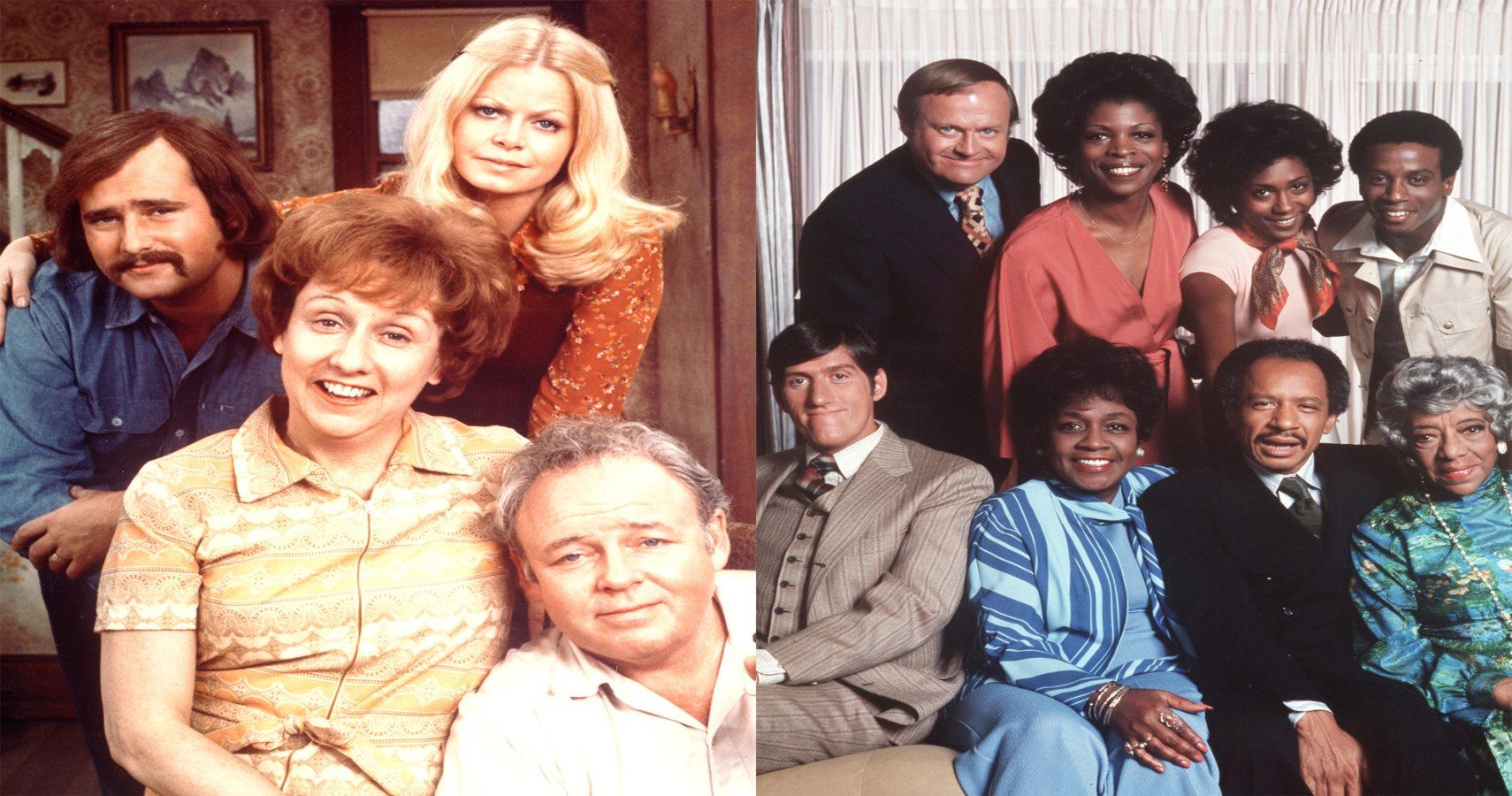
This transformation was spearheaded by producer Norman Lear, who adapted the British sitcom Till Death Us Do Part into the groundbreaking American series All in the Family, which premiered on CBS in January 1971. By centering the show on a working-class, politically conservative bigot named Archie Bunker and pitting him against his progressive liberal son-in-law, Lear shattered long-standing broadcast taboos. For the first time, prime-time television openly discussed racism, antisemitism, the Vietnam War, homosexuality, and women's liberation.
The success of All in the Family proved that audiences hungered for comedy with teeth. It paved the way for a wave of authentic, character-driven narratives that replaced pristine, idealized households with messy, diverse, and economically stressed families. The multi-camera setup before a live studio audience—or recorded on videotape with a live audience—became the standard crucible for testing these sharp, contemporary ideological clashes.
The Norman Lear Empire and Topical Satire
Building on his initial success, Norman Lear established a television empire that continuously pushed boundaries throughout the decade. Shows like Maude, Good Times, The Jeffersons, and One Day at a Time tackled specific cultural touchstones that had previously been ignored by mainstream broadcast networks.
Maude, starring Bea Arthur, debuted in 1972 as a spin-off of All in the Family and immediately made history by addressing abortion, mental health, and middle-aged feminism. In a legendary two-part episode airing shortly before the landmark Roe v. Wade Supreme Court decision, the titular 47-year-old protagonist decided to terminate an unexpected pregnancy, generating intense public debate and station boycotts while cementing television's role as a platform for serious social discourse.
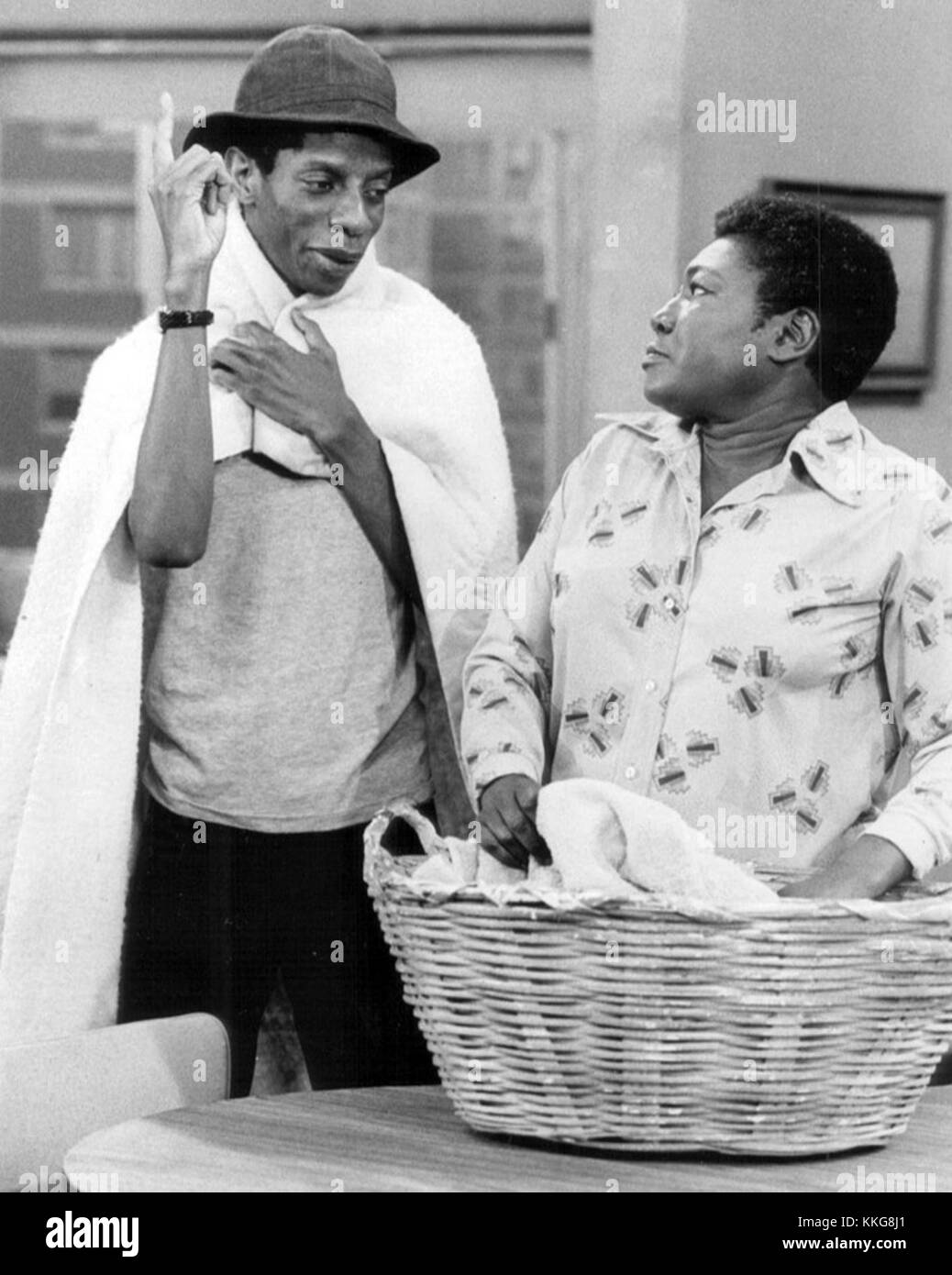
Simultaneously, Good Times and The Jeffersons brought Black families to the forefront of network television with distinct socio-economic perspectives. Good Times, created by Eric Monte and Mike Evans, focused on a low-income Black family living in a Chicago housing project, balancing humorous family dynamics with stark examinations of systemic poverty, gang violence, and bureaucratic neglect. Meanwhile, The Jeffersons tracked upward mobility as an affluent Black couple moved "on up" to a luxury apartment on the East Side of Manhattan, cleverly satirizing class snobbery, racial integration, and American capitalist aspirations.
| Show Title | Premiere Year | Primary Network | Key Social Themes Explored |
|---|---|---|---|
| All in the Family | 1971 | CBS | Bigotry, racism, generation gap, Vietnam War |
| Maude | 1972 | CBS | Feminism, abortion, alcoholism, mental health |
| Good Times | 1974 | CBS | Urban poverty, systemic racism, family survival |
| The Jeffersons | 1975 | CBS | Upward mobility, race relations, class snobbery |
| One Day at a Time | 1975 | CBS | Divorce, single parenthood, modern working mothers |
MTM Enterprises and the Rise of Professional Feminism
While Norman Lear focused on blue-collar domesticity and socio-political satire, MTM Enterprises—founded by Mary Tyler Moore and her then-husband Grant Tinker—redefined the workplace comedy with a distinctively sophisticated, urban aesthetic. The Mary Tyler Moore Show, which premiered in 1970, introduced television audiences to Mary Richards, an unmarried, independent 30-something woman prioritizing her career as an associate producer at a fictional Minneapolis news station over traditional marriage and family.
MTM's approach championed naturalistic acting, subtle comedic timing, and emotional nuance over broad physical gags and predictable punchlines. The workplace ensemble functioned as a surrogate family, mirroring the changing demographics of the American workforce as more women entered professional offices. The show directly addressed the gender pay gap, office politics, and the personal complexities of independence.
The success of The Mary Tyler Moore Show spawned an impressive roster of critically acclaimed spin-offs and peer shows that further explored professional and interpersonal dynamics:
- Rhoda (1974): Followed Mary's lovable, neurotic best friend as she returned to New York City and navigated the trials of dating, marriage, and divorce.
- Phyllis (1975): Tracked the aristocratic Phyllis Lindstrom as she relocated to San Francisco and attempted to re-enter the workforce as a widow.
- Lou Grant (1977): Ventured into full dramatic territory, proving that characters birthed in the 1970s sitcom ecosystem possessed enough depth to sustain serious journalistic drama.
- The Bob Newhart Show (1972): Explored the deadpan, dry wit of a Chicago psychologist balancing eccentric patients with a stable, egalitarian marriage.
Nostalgia and Escapism: Looking Back to Look Forward
Even as gritty realism dominated the critical landscape, the 1970s also birthed a powerful counter-trend of comforting nostalgia. The enormous cultural footprint of George Lucas’s American Graffiti and the theatrical success of period pieces fueled a massive appetite for idealized representations of the American past, particularly the 1950s and 1960s.
Happy Days, created by Garry Marshall and premiering in 1974, transported viewers to a sun-drenched, idealized Milwaukee of the mid-1950s and early 1960s. Although it began as a single-camera comedy focusing on gentle adolescent struggles, the series evolved into a multi-camera studio-audience phenomenon largely due to the breakout popularity of Arthur Fonzarelli, the leather-jacketed mechanic universally known as "The Fonz." Happy Days spawned its own empire of culturally significant spin-offs, most notably Laverne & Shirley, which tracked the blue-collar antics of two roommates working in a Milwaukee brewery, and Mork & Mindy, which blended nostalgic suburban settings with science-fiction absurdity.
This duality defined the decade's television landscape: networks offered audiences sharp, immediate reflections of current anxieties through Lear's socio-political comedies, while simultaneously providing emotional shelter through Marshall's nostalgic, comforting mythologies. Both approaches successfully utilized the sitcom format to process collective cultural identity during a deeply transitional period in American history.
Production Evolution: Videotape, Multi-Camera Setups, and Ensemble Casts
Technological advancements during the 1970s fundamentally altered how comedies were produced, recorded, and consumed. Throughout the previous two decades, most sitcoms were filmed on single 35mm cameras using film stock, mimicking cinematic production with pre-recorded laugh tracks added during post-production. The 1970s popularized the use of multiple high-definition electronic television cameras shooting on soundstages before a live studio audience, a hybrid production technique pioneered by producer and director John Rich.
This setup allowed actors to feed off the immediate energy of live spectators, creating a rhythmic, theatrical pacing that defined the era's comedic timing. Furthermore, recording on magnetic videotape enabled cheaper production costs, faster turnaround times, and sharper visual clarity. The inclusion of genuine audience reactions eliminated the artificial sound of canned laughter that had plagued earlier eras, grounding the performances in authentic human exchange.
Ensemble writing also matured significantly. Rather than relying on a singular comedic lead supported by generic foils, 1970s sitcoms constructed intricate webs of fully realized characters. Shows like Barney Miller utilized a diverse squad room of New York City police detectives to explore philosophical, moral, and economic debates entirely through dialogue and character interaction. The confined space of the precinct functioned as a microcosm of American society, proving that high-concept action was entirely unnecessary when sharp writing and robust ensemble dynamics took center stage.
Frequently Asked Questions About 1970s Sitcoms
Why did 1970s sitcoms focus so much more on social issues than previous decades?
The cultural upheavals of the late 1960s—including the civil rights movement, anti-war protests, the women's liberation movement, and political scandals—demanded a more mature television landscape. Producers recognized that younger, urban audiences wanted entertainment that mirrored their real-world concerns rather than escapist fantasy, leading networks to embrace edgy, socially relevant satire.
Who was Norman Lear and what was his impact on television?
Norman Lear was an influential American television writer and producer who revolutionized the medium by introducing socially and politically charged sitcoms. By adapting realistic British formats and centering shows on flawed, bigoted, or struggling working-class characters, he broke network taboos and proved that comedy could effectively address racism, poverty, politics, and gender equality.
How did The Mary Tyler Moore Show change the portrayal of women on TV?
The Mary Tyler Moore Show shifted the television paradigm by featuring an independent, unmarried career woman as the primary protagonist rather than a traditional housewife or romantic dependent. The show realistically portrayed workplace sexism, the challenges of single life, and professional ambition, inspiring generations of subsequent media representations.
What is the difference between Lear-style comedies and MTM-style comedies?
Norman Lear’s productions, such as All in the Family and Good Times, focused heavily on working-class domesticity, political satire, and explosive ideological conflicts. In contrast, MTM Enterprises comedies, such as The Mary Tyler Moore Show and The Bob Newhart Show, emphasized sophisticated urban workplaces, subtle character nuances, dry wit, and gentle emotional realism.
How did the production style of sitcoms change during the 1970s?
The decade popularized the multi-camera setup recorded on videotape in front of a live studio audience. This technical shift replaced artificial canned laughter with genuine crowd reactions, lowered production costs, and established a theatrical pacing that became the industry standard for decades to come.
Choosing and Preserving Your Classic Comedy Viewing Experience
Navigating the vast library of 1970s television requires an appreciation for historical context and stylistic diversity. To fully understand the scope of the era's comedic output, viewers should sample across both dominant production philosophies. Dedicate time to gritty, socially charged household comedies to witness how television first confronted American prejudice and economic strain, while also exploring sophisticated workplace ensembles to observe the evolution of modern professional representation. When streaming or collecting these historic programs, prioritize uncut archival releases and original broadcast masters to experience the cultural touchstones exactly as millions of contemporary viewers saw them unfold on their living room televisions.