The 1969 season stands as a monumental watershed year across multiple major professional sports leagues and cultural institutions, defined by seismic upsets, structural expansions, and cultural milestones that permanently reshaped modern competition and entertainment.
Defining the 1969 Season Across Landscapes
When historians, analysts, and enthusiasts examine the 1969 season, they are typically looking at a transformative period where traditional dynasties fell, new leagues gained definitive parity, and historic sporting achievements captured global attention. While the phrase most frequently evokes iconic moments in American professional sports—such as the "Miracle Mets" in Major League Baseball or the historic upset in Super Bowl III—the broader 1969 calendar year encapsulated sweeping operational and structural changes across various athletic disciplines and cultural arenas.
Understanding this era requires examining how pre-existing competitive models were disrupted by expansion teams, television integration, and shifting labor dynamics. The late 1960s represented a period of rapid modernization, where sports transitioned from regional pastimes into fully commercialized, nationally televised spectacles. The events of 1969 provided the dramatic narratives necessary to cement this transition, leaving a legacy that influences league formats, playoff structures, and fan engagement models decades later.
Structural Expansion and League Evolution
The institutional framework surrounding the 1969 season was characterized by aggressive growth and the formalization of integrated leagues. In professional football, the impending AFL-NFL merger cast a long shadow over operations, establishing high-stakes competition that culminated in a historic championship outcome. Meanwhile, Major League Baseball implemented a dramatic structural overhaul for the 1969 campaign, introducing divisional play, expanding the postseason format to include League Championship Series, and adding two new expansion franchises: the San Diego Padres and the Montreal Expos (who later became the Washington Nationals).
This structural shift fundamentally altered team strategies, roster construction, and schedule management. Dividing each league into Eastern and Western divisions meant that regular-season races carried new divisional implications, reducing the frequency of head-to-head matchups among traditional rivals while heightening the importance of intra-conference play.
| League / Sport | Key Structural Change in 1969 | Notable Milestone or Outcome |
|---|---|---|
| Major League Baseball | Introduction of divisional play and League Championship Series (LCS) | New York Mets complete historic "Miracle" run from expansion origins to World Series champions. |
| American Football League | Final pre-merger season preparations | New York Jets validate the AFL's competitive parity with a Super Bowl victory over the NFL. |
| National Basketball Association | Expansion and playoff formatting adjustments | Boston Celtics secure an improbable twilight title under player-coach Bill Russell. |
| National Hockey League | Continuation of the post-Six Era expansion | St. Louis Blues make a second consecutive Stanley Cup Finals appearance under the expanded format. |
Major Sporting Highlights and Historic Upsets
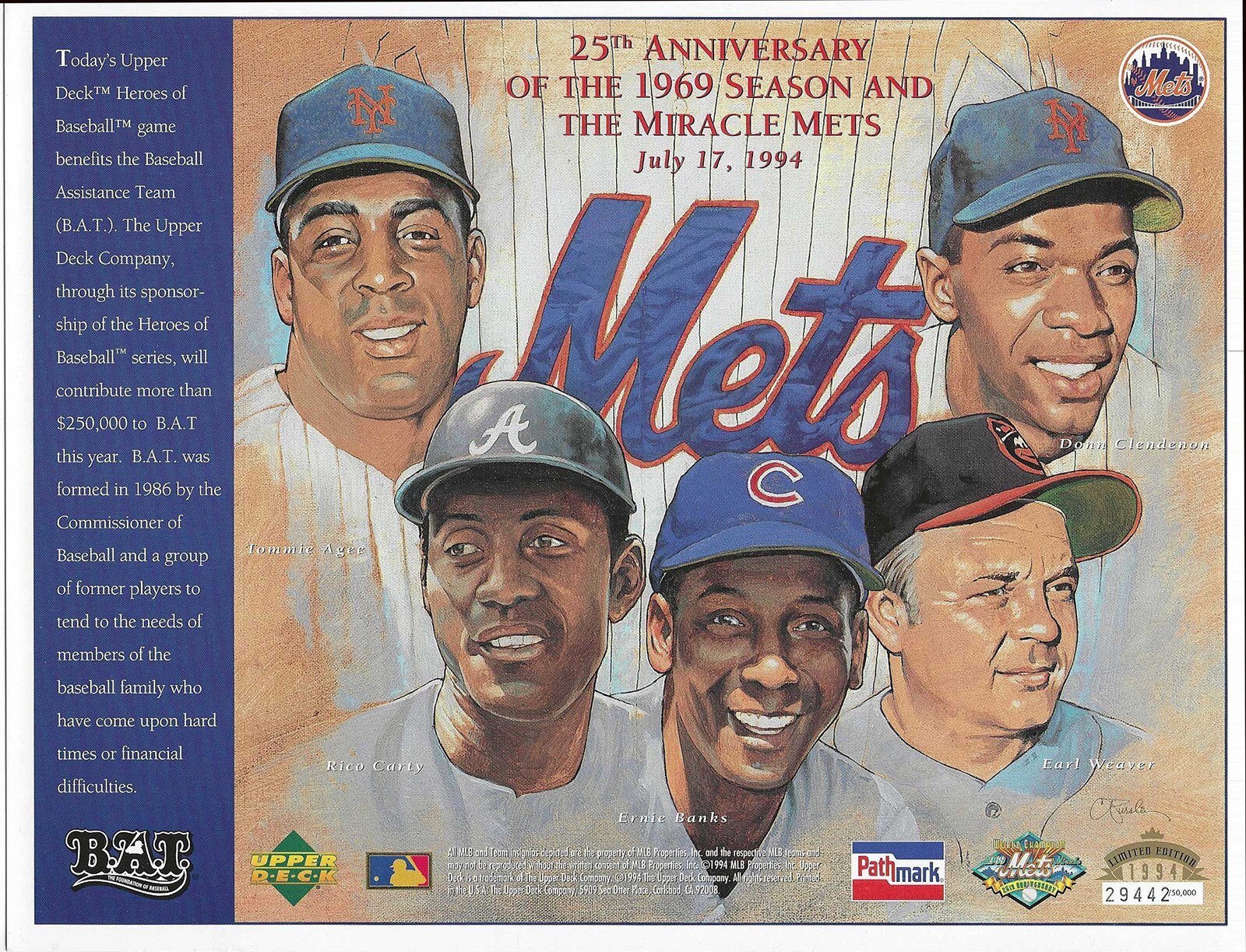
The competitive narrative of the 1969 season was dominated by David-versus-Goliath storylines that challenged established power dynamics. In professional baseball, the New York Mets stunned the sports world by capturing the World Series title just seven years after their inception as a dismal expansion franchise. Overcoming decades of futility and a seemingly insurmountable regular-season lead by the Chicago Cubs, the Mets utilized exceptional pitching depth and timely hitting to sweep the Atlanta Braves in the inaugural National League Championship Series before defeating the heavily favored Baltimore Orioles in five games.
Concurrently, the gridiron landscape experienced its own paradigm shift during the 1968-1969 professional football calendar. Although Super Bowl III officially took place in January 1969, it served as the definitive capstone to the 1968 season, cementing the competitive legitimacy of the American Football League ahead of its complete merger with the National Football League. Joe Namath's bold guarantee and subsequent victory for the New York Jets over the heavily favored Baltimore Colts shattered the perception of NFL invincibility and permanently altered the economic and media trajectory of professional football.
Cultural and Media Integration
Beyond the box scores and standings, the 1969 season marked a turning point in how athletic competitions were consumed by the public. The expansion of color television broadcasting and the proliferation of dedicated sports journalism transformed athletes into pop culture figures. The cultural backdrop of 1969—marked by social upheaval, the space race, and shifting generational norms—infused sports with broader symbolic meaning.
Coverage of games during this era began to emphasize human-interest narratives, tactical analysis, and behind-the-scenes drama, setting the template for modern sports media. The success of underdog franchises resonated with a public experiencing rapid societal change, making the sporting heroes of 1969 enduring symbols of resilience and unexpected triumph.
Long-Term Legacy and Historical Significance
The institutional and competitive precedents established during the 1969 season continue to reverberate through modern sports administration. The multi-tier playoff structures introduced in baseball became the blueprint for subsequent expansions across all major North American leagues. Furthermore, the commercial validation of expansion franchises proved that geographic growth could be profitable without diluting competitive integrity, encouraging future expansion waves in subsequent decades.
For analysts and historians, studying this era provides vital context regarding the evolution of modern sports economics, television rights negotiations, and labor-management relations. The challenges and innovations of 1969 forced league executives to adopt forward-thinking policies that reconciled traditional competition with the demands of an emerging mass-media economy.
Frequently Asked Questions
What major structural changes occurred in Major League Baseball during the 1969 season?
Major League Baseball introduced divisional play by splitting both the American and National Leagues into Eastern and Western divisions. This change necessitated the creation of the League Championship Series (LCS) to determine the pennant winners, and coincided with the addition of two expansion teams: the San Diego Padres and the Montreal Expos.
Which team won the World Series in the 1969 season?
The New York Mets won the 1969 World Series, defeating the Baltimore Orioles four games to one. Their victory is widely regarded as one of the greatest upsets in baseball history, transitioning the franchise from perennial losers known as the "Amazins" to world champions.
How did the events of the 1969 season impact professional football?
While the historic AFL-NFL merger was fully finalized for the 1970 season, the competitions leading through 1969 established complete parity between the two rival leagues. This set the stage for a unified, highly lucrative league structure that revolutionized sports broadcasting and commercial partnerships.
Why is the 1969 sports calendar considered a turning point for media coverage?
The season coincided with the widespread adoption of color television and sophisticated broadcast production techniques. These technological advancements, combined with compelling underdog narratives, elevated sports broadcasting into a dominant pillar of mainstream entertainment.
Are there any remaining franchises from the 1969 expansion era?
Yes. The San Diego Padres remain an active franchise in Major League Baseball. The other 1969 expansion team, the Montreal Expos, relocated prior to the 2005 season and currently operate as the Washington Nationals.
Navigating Historical Archives and Further Research
For researchers, sports historians, and enthusiasts looking to explore the 1969 season in greater detail, primary sources offer the most accurate insights into the period. Consulting official league yearbooks, contemporaneous newspaper archives, and broadcast recordings provides an unvarnished look at how events unfolded in real time. When analyzing statistics and historical claims, verify data against official record books maintained by governing bodies such as Major League Baseball and the Pro Football Hall of Fame to ensure absolute accuracy regarding player achievements, game outcomes, and franchise milestones.