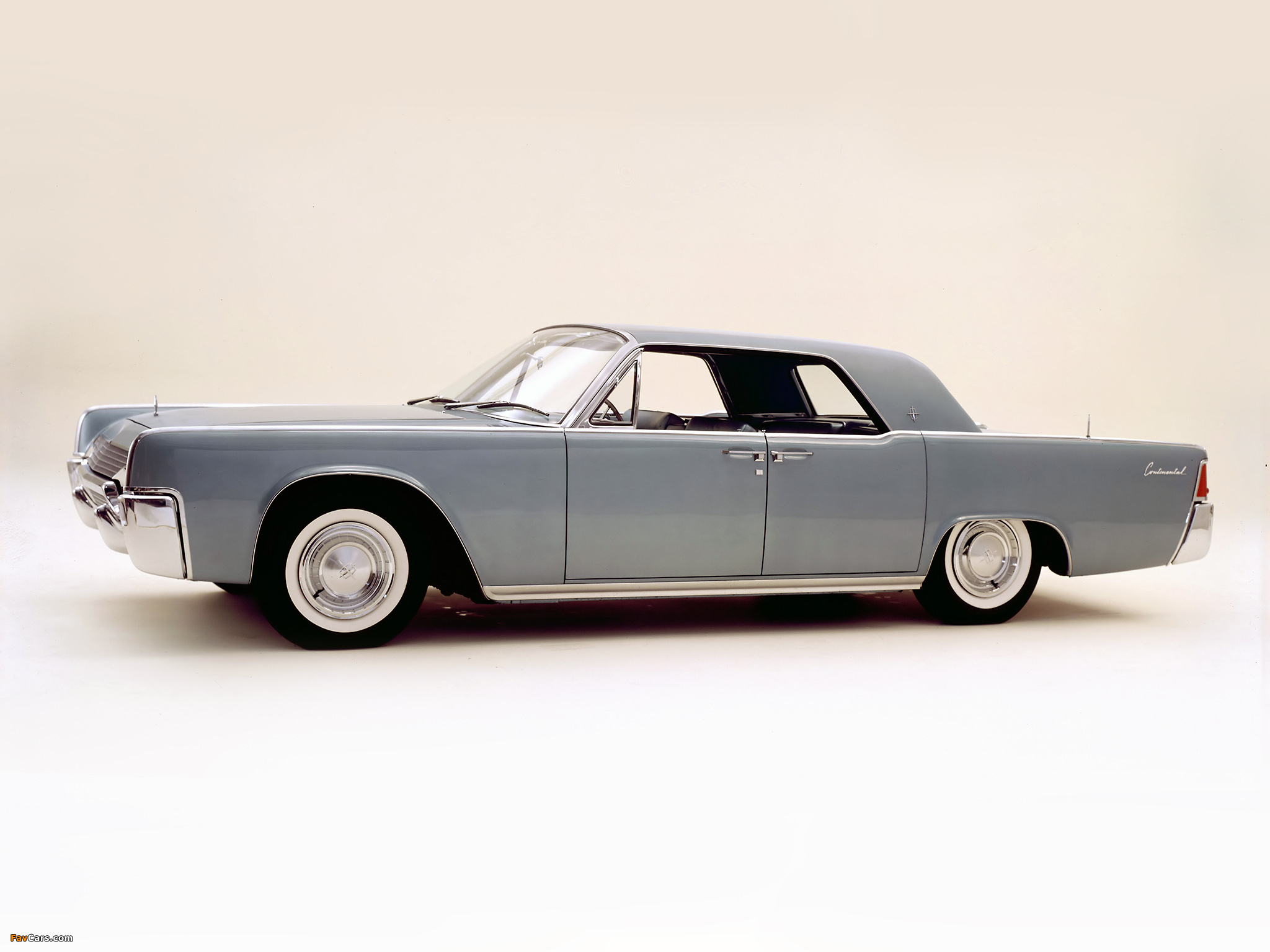
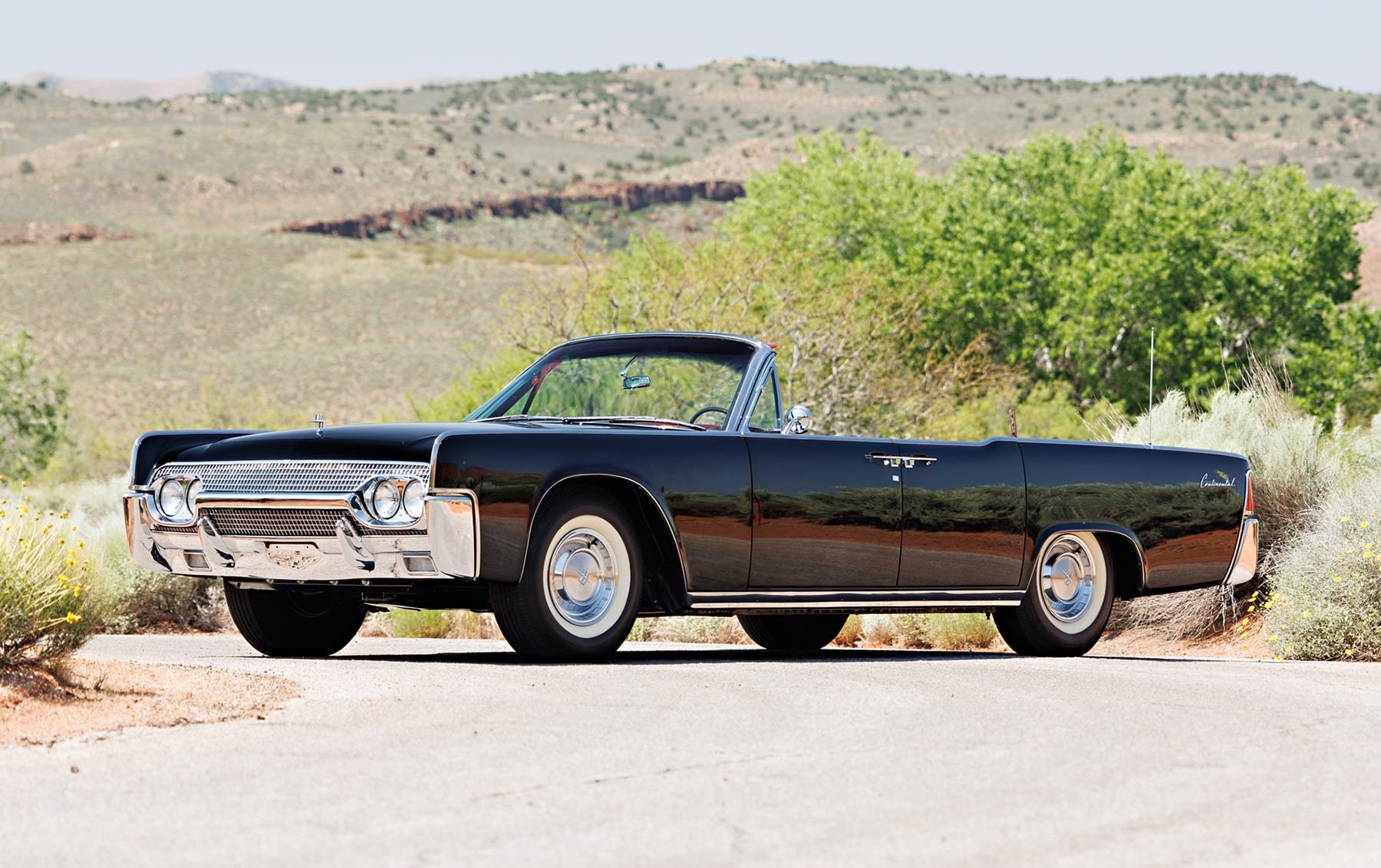
The 1961 Lincoln Continental is widely celebrated as a monumental milestone in American automotive history, transforming post-war luxury design through its clean, slab-sided architecture, suicide doors, and unyielding commitment to minimalist elegance. Developed under the direction of Ford styling chief Elwood Engel, Vice President of Styling Irving❜s predecessor, and executive McNamara, this groundbreaking vehicle rescued the Continental nameplate from near-obscurity and established a timeless design language that continues to define mid-century automotive excellence.
Origins and Design Philosophy of the 1961 Continental
The creation of the 1961 Lincoln Continental stemmed from an existential crisis within the Ford Motor Company's luxury division. Throughout the late 1950s, Lincoln had engaged in a costly styling race with General Motors' Cadillac, producing ever-larger vehicles loaded with massive tailfins, complex chrome appliques, and towering panoramic windshields. By 1958, these vehicles were suffering from disastrous build quality and astronomical production losses. To reverse this trajectory, Ford management made the bold decision to cancel the ongoing 1961 Lincoln design program and redirect the styling team toward a completely different aesthetic direction.
Elwood Engel, Howard Payne, and John Najjar are primarily credited with shaping the new Continental. Engel had previously drafted a design proposal for a 1961 Thunderbird that was ultimately rejected for that platform. Recognizing its intrinsic merit, Ford executives adapted the crisp, unadorned proportions of Engel’s sketch to the much larger Lincoln chassis. The resulting vehicle rejected the prevailing design trends of the era. Instead of sweeping chrome and ornamental wings, the 1961 Continental presented a stark, rectilinear body style defined by a single uninterrupted chrome beltline, flat side panels, and a tasteful absence of superfluous ornamentation.
Crucially, the car was built on a substantially shorter wheelbase than its immediate predecessor—3,112 millimeters (123 inches) compared to the 1958–1960 models' 3,327 millimeters (131 inches)—yet it retained immense physical presence. Ford engineers also mandated exceptional build quality. Every single 1961 Continental was subjected to a rigorous water-test facility and a grueling 19-kilometer (12-mile) road test before factory release. This dedication to quality control paid off immediately, restoring consumer confidence and cementing the vehicle's reputation for vault-like solidity.
Engineering and Mechanical Specifications
Beneath its understated sheet metal, the 1961 Lincoln Continental housed heavy-duty mechanical architecture designed to provide effortless performance and supreme ride comfort. The primary powerplant was a newly refined version of Ford's MEL (Mercury-Edsel-Lincoln) big-block V8 engine, displaced at 7.0 liters (430 cubic inches). Equipped with a Carter two-barrel or four-barrel carburetor depending on specific early tuning configurations, this engine generated 320 horsepower and a massive 465 pound-feet of torque at a low 2,200 rpm. This power curve ensured that the substantial luxury sedan—weighing approximately 2,268 kilograms (5,000 pounds)—could accelerate smoothly and quietly from a standstill.
The engine was paired with a three-speed Turbo-Drive automatic transmission, which channeled power to a Ford 9-inch rear axle equipped with highway-friendly gear ratios. While performance metrics of the era focused less on 0-to-60 mph times and more on turbine-like smoothness, independent automotive journalists of 1961 praised the powertrain for its silent operation.
| Specification Category | 1961 Lincoln Continental Data |
|---|---|
| Engine Type | 7.0L (430 cu in) MEL V8 |
| Horsepower | 320 hp @ 4,400 rpm |
| Torque | 465 lb-ft @ 2,200 rpm |
| Transmission | 3-speed Turbo-Drive Automatic |
| Wheelbase | 123.0 inches (3,112 mm) |
| Overall Length | 212.4 inches (5,395 mm) |
| Curb Weight | Approx. 4,927–5,071 lbs (2,235–2,300 kg) |
| Original Base Price | $6,067 (Sedan) / $6,720 (Convertible) |
Suspension duties were handled by independent coil springs with upper and lower control arms up front and a traditional live axle with semi-elliptic leaf springs in the rear. Power steering and power-assisted drum brakes were standard equipment across all models. To ensure structural integrity, especially given the removal of the traditional B-pillar for the rear-hinged doors, engineers reinforced the frame extensively with heavy box-section steel rails and X-bracing.
The Iconic Rear-Hinged Doors and Convertible Innovation
The defining visual and functional characteristic of the 1961 Lincoln Continental is its four-door design featuring rear-hinged "suicide" doors. While rear-hinged doors had been utilized on pre-war luxury automobiles, applying them to a modern post-war unibody sedan presented significant structural and safety challenges. Ford engineers developed an intricate safety latching mechanism and reinforced the door sills to ensure the body rigidity required for a large luxury car, particularly for the convertible variant.
The rear doors were hinged at the trailing edge, which allowed rear-seat passengers to step directly into the cabin rather than maneuvering around a forward door frame. To prevent accidental opening while the vehicle was in motion, engineers incorporated an electrical safety circuit. If any door was not completely shut, a dashboard warning light illuminated, and the transmission logic—along with a mechanical door-lock system—prevented the car from being driven safely until the latches were fully engaged.
The convertible model, introduced alongside the sedan, featured a complex, fully automated hydraulic top mechanism. Engineered by Aluminum Company of America (ALCOA) and train-door specialists, the top retracted entirely beneath a hard deck lid behind the rear seat in a synchronized ballet of electric motors, limit switches, and hydraulic cylinders. When closed, the thick, multi-layered fabric top provided acoustic isolation that rivaled its hardtop sibling, making the 1961 convertible one of the most mechanically sophisticated open-top cars of the 20th century.
Historical Impact and Cultural Significance
The 1961 Lincoln Continental earned immediate critical acclaim, receiving the prestigious Industrial Designers Institute (IDI) Gold Medal in 1961—an honor rarely bestowed upon mass-production automobiles. Its design restraint stood in stark contrast to the excess of Detroit's fin era, steering American automotive styling toward clean lines and geometric simplicity for the remainder of the decade.
The car's cultural footprint expanded significantly when it was selected as the platform for the Presidential State Car used by President John F. Kennedy. Delivered in June 1961, the modified convertible—designated code-name SS-100-X—featured custom modifications, including a stretched wheelbase, raised rear seating platforms, and a series of removable acrylic and metal top configurations. While the vehicle is tragically linked to historical events of November 1963, its graceful proportions forever associated the 1961 Continental with mid-century American political power and prestige.
Collectibility, Restoration, and Ownership Considerations
In the contemporary collector car market, the 1961 Lincoln Continental occupies a position of high desirability, particularly for well-preserved or meticulously restored examples. Because only 2,857 convertibles and 22,399 sedans were produced for the 1961 model year, surviving specimens command serious attention from marquee enthusiasts.
Restoring a 1961 Continental presents distinct technical challenges. The complex hydraulic system operating the convertible top, power windows, and door locks requires specialized knowledge and meticulous maintenance to prevent fluid leaks and electrical failures. Similarly, sourcing original brightwork, unique interior trim, and specialized mechanical components for the 430-cubic-inch MEL engine requires navigation through dedicated owner clubs and specialist vendors. When evaluating a potential purchase, prospective buyers must prioritize structural rust inspection in the frame rails, lower rocker panels, and floor pans, as unibody corrosion remediation on these heavy luxury vehicles can quickly exceed market value.
Frequently Asked Questions About the 1961 Lincoln Continental
Why are the doors on a 1961 Lincoln Continental called suicide doors?
The term refers to rear-hinged doors where the front edge of the door is attached to the C-pillar rather than the B-pillar. Historically, if an unlatched door opened while the vehicle was moving forward, wind resistance would force the door open wide, potentially pulling an occupant out of the vehicle. Ford addressed this in the 1961 Continental by adding robust safety latches and an electrical interlock system.
How many 1961 Lincoln Continental convertibles were built?
Ford produced exactly 2,857 convertible models for the 1961 model year. Because this body style required extensive structural reinforcement and complex top-mechanisms compared to the sedan variant, surviving convertibles are particularly prized by automotive collectors today.
What engine came standard in the 1961 Lincoln Continental?
The vehicle was equipped exclusively with a 7.0-liter (430 cubic inch) MEL (Mercury-Edsel-Lincoln) V8 engine. This large-displacement powerplant produced 320 horsepower and 465 pound-feet of torque, paired with a three-speed automatic transmission designed for smooth, effortless highway cruising.
Are replacement parts difficult to find for a 1961 Lincoln Continental?
While common mechanical wear items, brakes, and suspension bushings are readily available through specialty suppliers, unique trim pieces, body panels, and complex hydraulic convertible top components can be difficult and expensive to source. Joining dedicated owner organizations like the Road & Track or Lincoln and Continental Owners Club is essential for sourcing parts.
What was the original retail price of the 1961 Lincoln Continental?
When it debuted in the autumn of 1960, the four-door sedan had a base manufacturer's suggested retail price of $6,067, while the convertible model started at $6,720. These figures positioned the car directly against top-tier luxury competitors from Cadillac and Chrysler.
Preserving Mid-Century Automotive Artistry
Owning, driving, or restoring a 1961 Lincoln Continental requires an appreciation for a singular era of American industrial design where minimalism replaced ornamentation. By focusing mechanical inspections on rust-prone structural zones, verifying the integrity of the hydraulic roof and door systems, and sourcing correct replacement components, enthusiasts can safeguard a vital piece of automotive history. Maintaining these rolling sculptures ensures that Elwood Engel's timeless design philosophy continues to inspire future generations of engineers and designers.