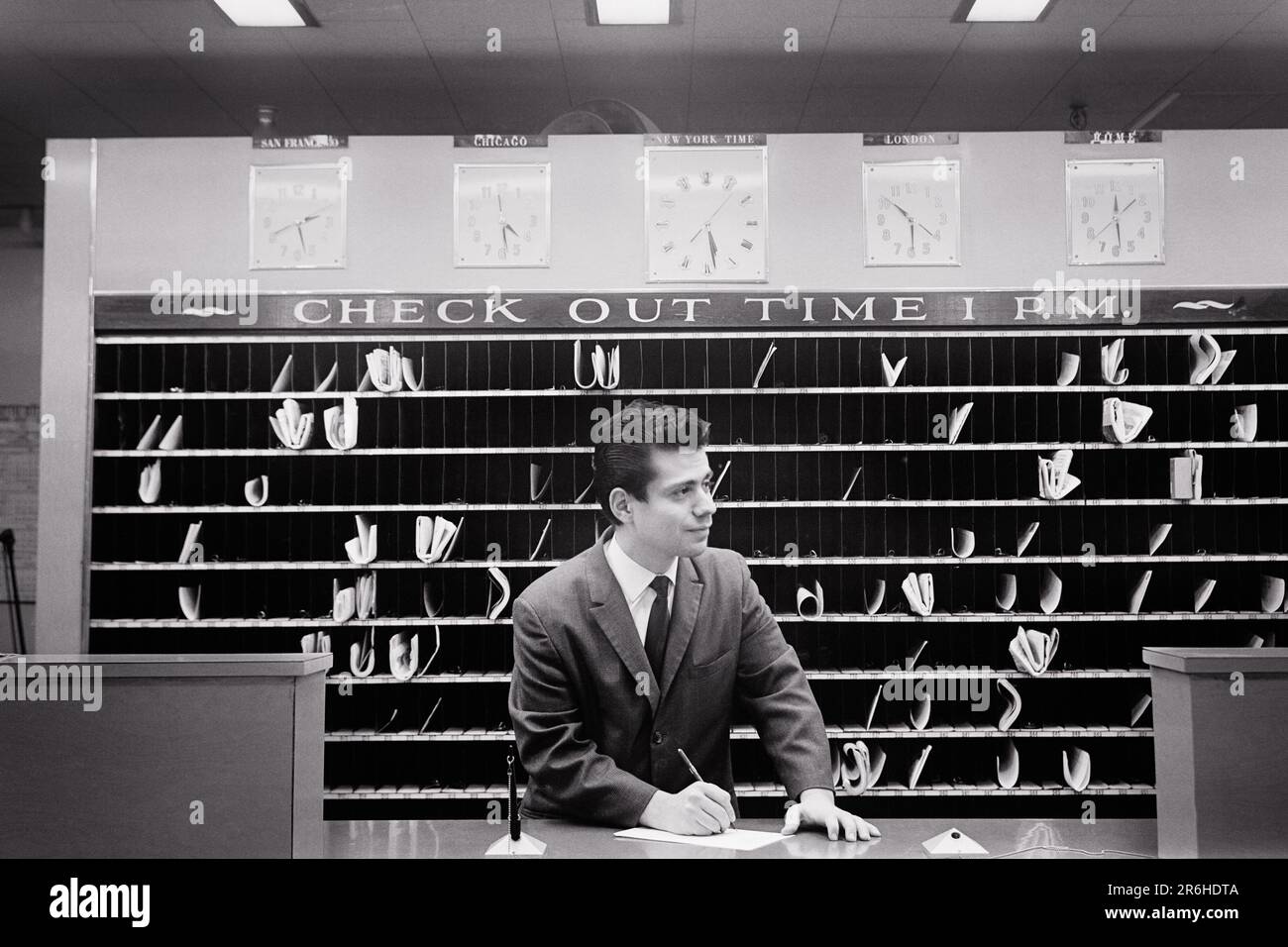
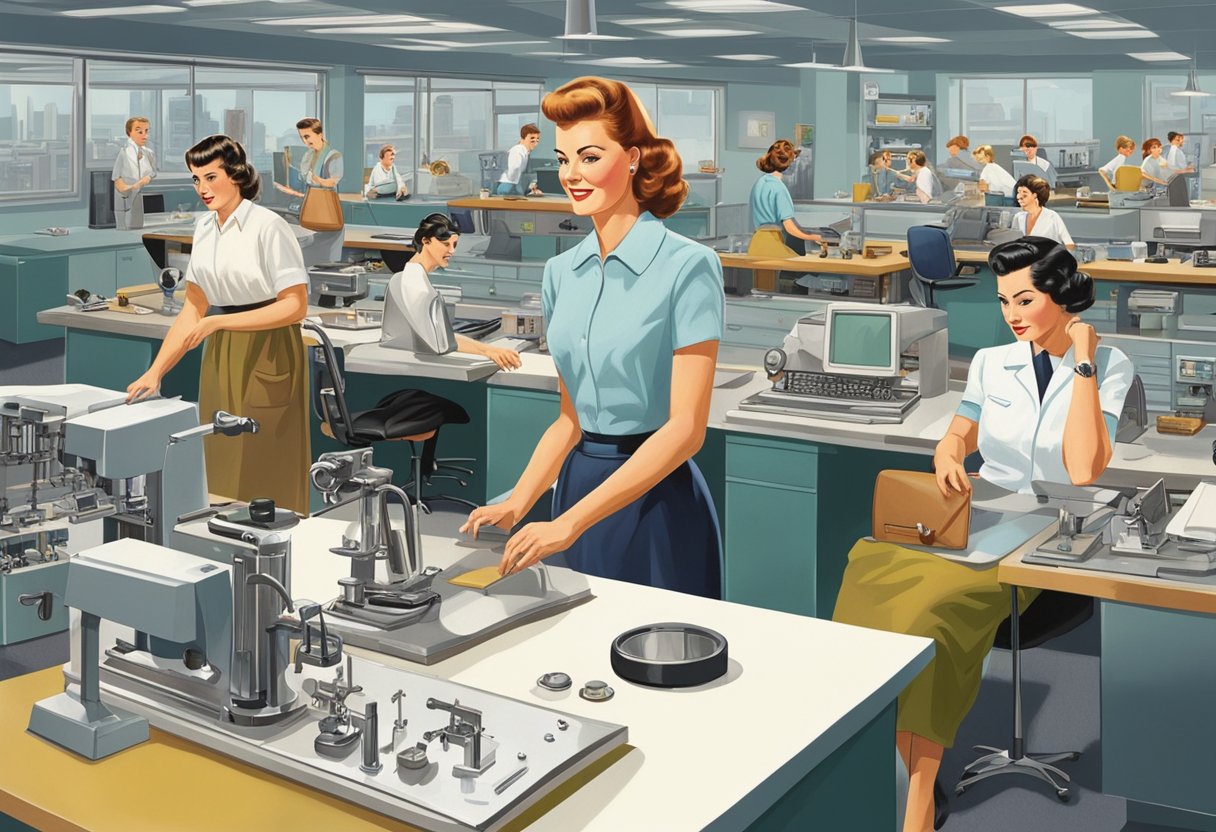
The employment landscape of the 1960s was defined by rapid corporate expansion, rigid hierarchical structures, and strict gender divisions, laying the groundwork for modern professional life while operating under vastly different social and technological norms. Understanding this era requires examining how workers entered the labor market, advanced through organizations, and navigated a society on the brink of cultural transformation.
The Mid-Century Labor Market Landscape
The economic boom following the Second World War created an unprecedented expansion of the white-collar workforce. Large corporations, manufacturing conglomerates, and federal agencies grew exponentially, establishing predictable, linear career paths that often promised lifetime job security in exchange for unwavering loyalty. Workers during this era typically expected to join a single company upon completing their education and remain there until retirement, accumulating pensions and steady incremental promotions along the way.
This corporate stability relied heavily on standardized employment practices. Job descriptions were rigid, and progression through organizational tiers followed well-defined timelines. Unlike the dynamic, project-based mobility of the twenty-first century, career advancement in the 1960s prioritized seniority, conformity, and adherence to established institutional norms. Men and women faced starkly different prospects upon entering this labor market, as institutionalized discrimination and cultural expectations strictly limited the range of acceptable occupations for female workers.
Gender Segregation and Professional Limitations
The 1960s labor market operated under deeply entrenched gender roles that segregated employment opportunities. While men populated the vast majority of executive, engineering, scientific, and upper-management positions, women were largely funneled into a narrow band of administrative and service roles. The vast majority of working women found employment as secretaries, stenographers, typists, elementary school teachers, nurses, or retail sales clerks.
Professional advancement for women was severely curtailed by explicit corporate policies and pervasive cultural attitudes. Many employers enforced "marriage bars"—rules that required female employees to resign upon getting married—or dismissed women upon pregnancy. Women who entered professional fields such as law, medicine, or academia encountered substantial barriers to admission in graduate programs and faced hiring quotas. Despite the passage of the Equal Pay Act of 1963 in the United States, significant wage disparities persisted, reflecting a labor market structurally dependent on undervalued female labor.
The Rise of the Organization Man and Corporate Culture
Sociological studies of the period, most notably William H. Whyte’s influential concept of the "Organization Man," captured the ethos of white-collar employment in the 1960s. Corporate employees were expected to subsume their individuality to the collective goals of the firm. Success required adopting a specific corporate persona, which included conservative dress codes—typically dark suits, white shirts, and narrow ties for men—as well as conformity in social behavior, suburban residency patterns, and civic engagement.
| Career Dimension | 1960s Employment Model | Modern Employment Model |
|---|---|---|
| Employment Duration | Lifetime tenure at a single firm | Frequent job mobility (2-4 years) |
| Advancement Criteria | Seniority, loyalty, and conformity | Performance metrics, skill sets |
| Workplace Technology | Typewriters, physical ledgers | Cloud computing, digital systems |
| Gender Participation | Highly segregated, restricted | Diverse across all sectors |
| Professional Development | Internal on-the-job training | Continuous self-directed learning |
This corporate culture placed a high premium on stability and predictability. Middle management swelled as large enterprises decentralized operations into regional offices. Workers relied on internal training programs rather than external credentials to climb the ladder. Mentorship took the form of senior executives taking younger male employees under their wing, guiding them through office politics and unwritten rules of corporate etiquette.
Technological Shifts and Emerging Technical Professions
While traditional industries dominated, the 1960s also witnessed the genesis of modern technological and scientific careers driven by the space race, the advent of mainframe computing, and automation. The National Aeronautics and Space Administration (NASA) and its defense contractors employed hundreds of thousands of engineers, mathematicians, and technicians, creating specialized roles that had barely existed a decade prior.
Computing technology began to transform back-office operations and scientific research. Early computer programmers, systems analysts, and data processors entered the workforce, often through rigorous aptitude testing administered by corporations like IBM. Interestingly, early programming was frequently viewed as administrative or clerical work, opening initial pathways for women into technical fields before computer science solidified into a male-dominated engineering discipline in later decades.
Blue-Collar Stability and Union Influence
For working-class Americans and Europeans, the 1960s represented the peak of industrial labor power. Manufacturing, automotive, steel, and construction sectors offered stable, well-remunerated blue-collar careers supported by powerful labor unions. Collective bargaining agreements secured health insurance, cost-of-living adjustments, and pensions for millions of assembly line workers and tradespeople.
These industrial careers allowed single-income households to achieve middle-class status, purchase suburban homes, and finance higher education for their children. However, these opportunities were largely restricted by racial discrimination. Trade unions and manufacturing firms frequently maintained discriminatory hiring practices, systematically excluding minority workers from high-paying skilled trades and apprenticeship programs until civil rights legislation and grassroots activism began to dismantle these barriers later in the decade.
Educational Pathways and Credentialing
Entering the professional workforce in the 1960s required different educational credentials than it does today. A high school diploma was often sufficient to secure an entry-level white-collar job in banking, insurance, or corporate administration, with the expectation that the employee would learn the necessary skills on the job. University enrollment expanded rapidly throughout the decade, fueled by the post-war baby boom and government subsidies such as the GI Bill, but a college degree remained a distinct marker of elite status rather than a baseline requirement for standard employment.
Graduate education followed a similar trajectory. Medical and legal fields maintained stringent, highly exclusionary admissions standards, operating as closed professional guilds. Professional networking occurred largely through alumni associations, country clubs, and fraternal organizations, reinforcing existing social strata and limiting socioeconomic mobility for marginalized groups.
Frequently Asked Questions About 1960s Careers
What were the most common jobs for women in the 1960s?
The vast majority of working women in the 1960s were employed in clerical, administrative, educational, or healthcare support roles. Common positions included secretary, typist, stenographer, elementary or secondary school teacher, registered nurse, librarian, and retail sales associate.
How did people find jobs before the internet?
Job seekers in the 1960s relied on classified advertisements in local newspapers, employment agencies, civil service examinations, and direct walk-in applications. Word-of-mouth recommendations, personal networking through family and acquaintances, and campus recruitment interviews for university graduates also played a central role in the hiring process.
Did workers really stay at one company for their entire career?
While job mobility existed, the cultural and structural norm for corporate and civil service workers was long-term or lifetime employment with a single organization. Defined-benefit pensions, internal promotion structures, and company-provided healthcare created strong financial disincentives for changing employers mid-career.
What impact did the Civil Rights Movement have on 1960s careers?
The Civil Rights Act of 1964 prohibited employment discrimination based on race, color, religion, sex, or national origin. While systemic barriers and discriminatory practices persisted throughout the decade, this legislation established the legal framework that gradually opened professional, corporate, and trade union opportunities to women and racial minorities.
How much did people earn in the 1960s?
Nominal wages were significantly lower than modern standards due to inflation and the purchasing power of the dollar at the time. For example, the median family income in the United States in 1960 was approximately $5,600 per year, rising to about $9,400 by 1969, though this income afforded a distinct standard of living that included lower relative housing and education costs.
Navigating Historical Research on Mid-Century Labor
Researchers and historians investigating 1960s employment patterns should consult primary sources such as United States Department of Labor archives, decennial census data, contemporary corporate recruitment brochures, and sociological studies from the period. Reviewing original union contracts, trade journals, and oral history archives provides a nuanced perspective on the lived experiences of workers navigating an era of profound industrial and social transition.