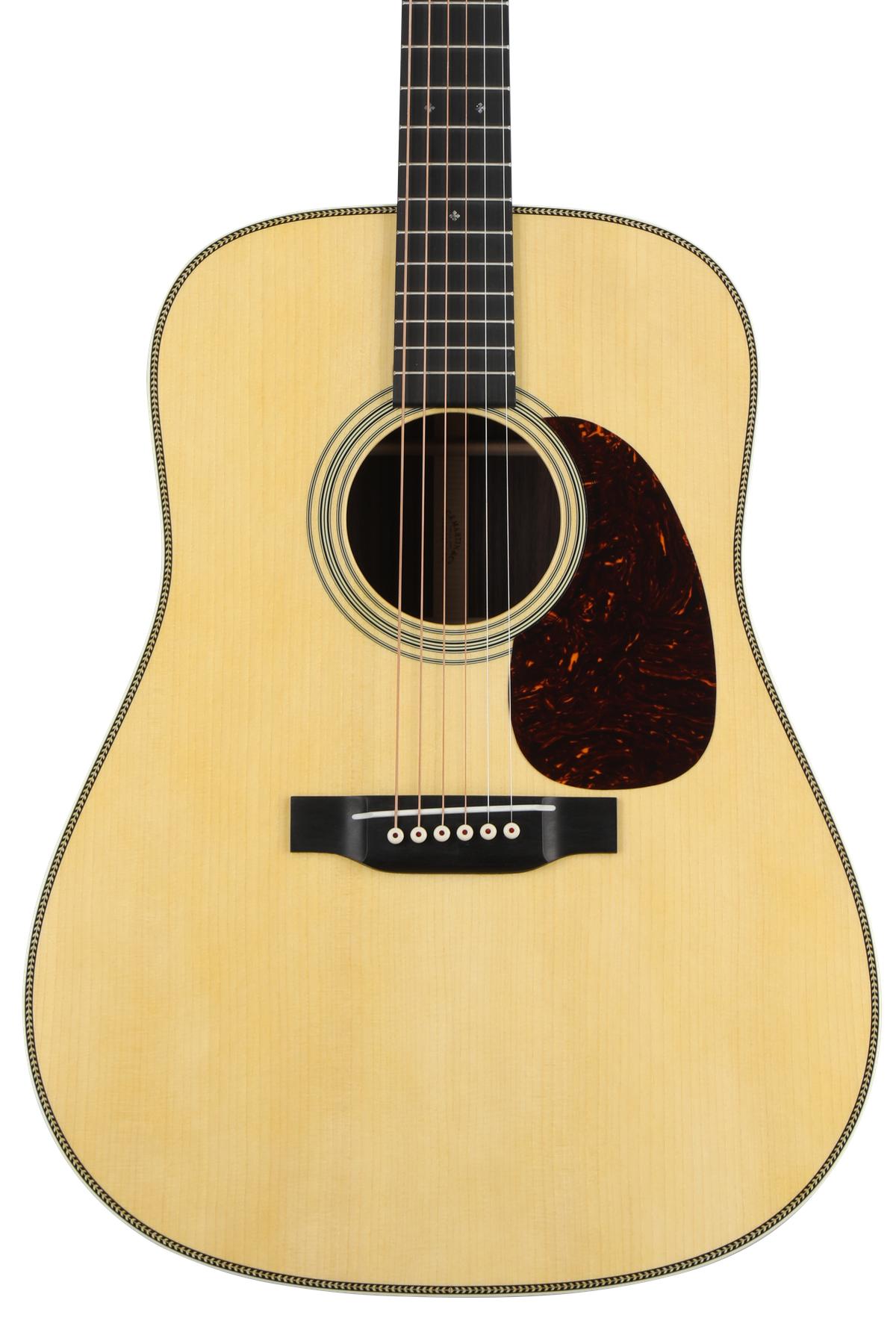
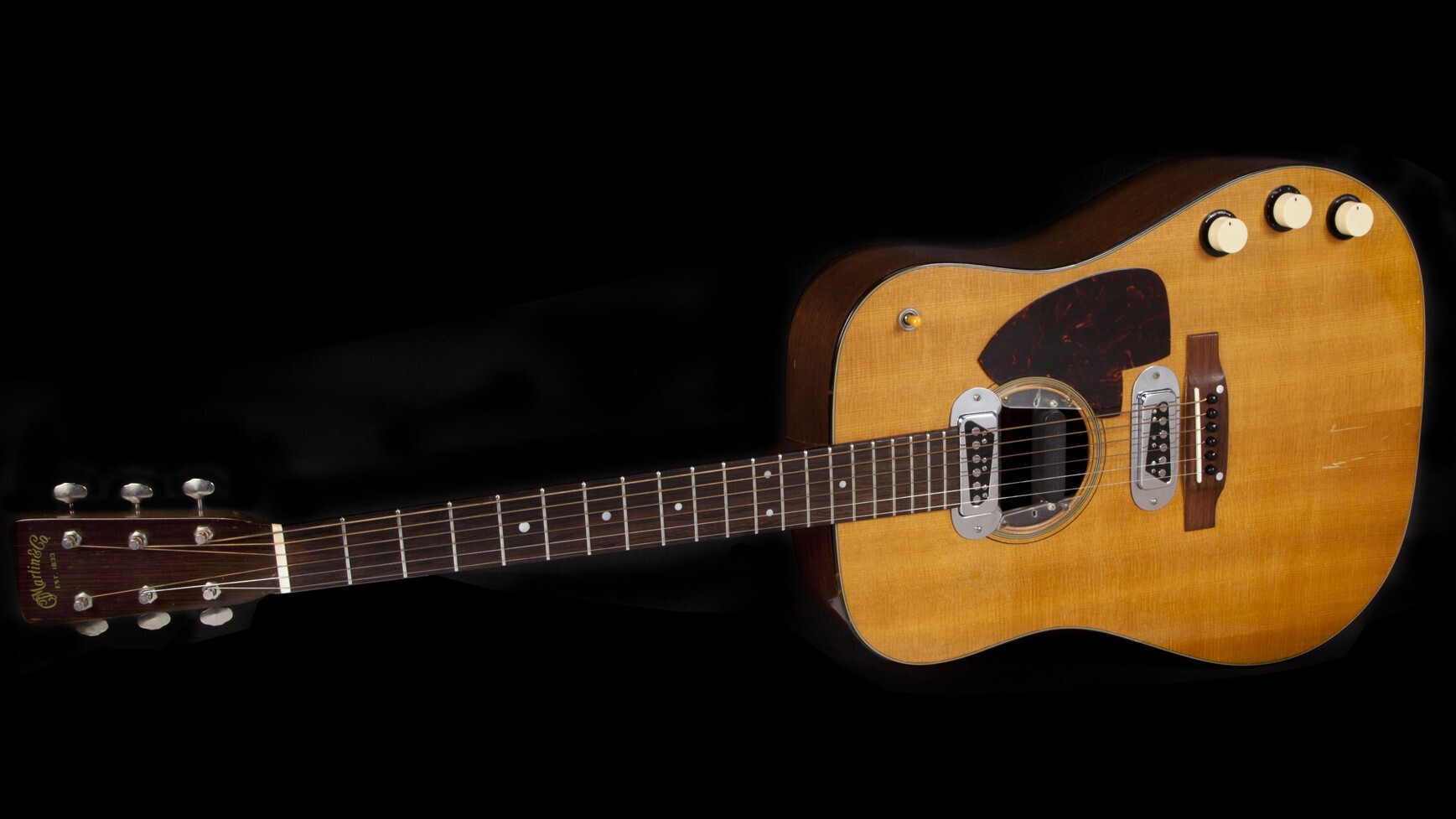
The 1957 Martin D-18 represents a golden era of acoustic guitar craftsmanship, combining old-growth Adirondack or Sitka spruce tops with genuine Honduran mahogany back and sides to produce a dry, woody, and exceptionally balanced tone that has anchored countless recordings and acoustic performances for decades.
The Historical Context of the Late 1950s Golden Era
The late 1950s occupy a fascinating transitional period in the history of C.F. Martin & Co. While the pre-war era, spanning the 1930s up until the onset of World War II, is universally regarded as the absolute apex of steel-string acoustic guitar manufacturing, the instruments built in the post-war decade of the 1950s possess their own distinct sonic signature and structural personality. By 1957, the acoustic guitar market was on the cusp of an immense cultural shift driven by the American folk revival, yet the instruments themselves were still built by hand in Nazareth, Pennsylvania, by craftsmen who maintained decades-old traditions.
During this era, production numbers were significantly lower than modern manufacturing volumes, ensuring that every instrument received individual attention from skilled luthiers. The D-18, sitting firmly as Martin’s flagship mahogany dreadnought, offered players a more direct, fundamental-heavy tone compared to its rosewood sibling, the D-28. In 1957, these guitars were built with a forward-thinking yet traditionally rooted approach: forward-shifted bracing had been replaced by straight bracing in the late 1940s, giving the 1957 models a tighter, more focused projection that excelled in ensemble playing, vocal accompaniment, and early studio recording environments.
Anatomy and Specifications of a 1957 Martin D-18
Understanding the sonic footprint of a 1957 Martin D-18 requires a close examination of its raw materials, physical dimensions, and internal architecture. Every component was carefully selected for stability, resonance, and aesthetic harmony, creating a lightweight instrument that vibrates freely against the player's chest.
| Component | 1957 Martin D-18 Specification |
|---|---|
| Top Wood | Sitka Spruce (with occasional Adirondack transitions) |
| Back & Sides | Genuine Honduran Mahogany |
| Neck Material | Genuine Mahogany with traditional T-bar reinforcement |
| Fingerboard & Bridge | Brazilian Rosewood |
| Scale Length | 25.4 inches |
| Nut Width | 1-11/16 inches |
| Bracing Pattern | Non-scalloped X-bracing (Sitka spruce) |
The top wood on a 1957 model is typically high-grade Sitka spruce, featuring tight, straight grain lines that indicate decades of slow tree growth. By 1957, Martin had largely transitioned from the Adirondack red spruce used extensively before the war to Sitka spruce, which yields a slightly smoother, highly articulate treble response while maintaining vast headroom. The back and sides consist of solid Honduran mahogany (Swietenia macrophylla), prized for its light weight, stability, and ability to reflect middle frequencies without muddying the overall mix.
The neck profile of a 1957 D-18 is another defining characteristic. It generally features a comfortable, slightly chunky "C" shape that fills the hand securely without feeling overly cumbersome, distinct from the pronounced "V" shapes of the 1930s. Inside the neck, Martin utilized a traditional non-adjustable steel T-bar reinforcement. This rigid bar prevents warping over decades and contributes significantly to the neck’s mass, which in turn enhances sustain and acoustic coupling between the neck and the body.
The Sonic Signature: Why the 1957 Voice Stands Out
The acoustic voice of a 1957 Martin D-18 is defined by a distinct lack of excessive overtones, favoring instead a powerful, dry, and woody fundamental tone. This acoustic quality allows the instrument to sit effortlessly in a mix behind a human voice or alongside other stringed instruments without creating frequency clashing.
Mahogany dreadnoughts are structurally distinct from rosewood guitars because mahogany absorbs high-order harmonics and emphasizes a punchy, fundamental-driven midrange. When a player strikes a chord on a 1957 D-18, the initial attack is immediate and explosive, followed by a rapid, clean decay. This characteristic makes the instrument exceptionally well-suited for flatpicking, bluegrass rhythm playing, and fingerstyle accompaniment where note clarity and separation are paramount.
Decades of natural aging—often referred to as the drying out of resins, cellulose, and lignin within the wood—play a critical role in the contemporary sound of a 1957 D-18. Over nearly seven decades, the wood has crystallized, reducing internal dampening and allowing the top to flex with maximum efficiency under string tension. Consequently, vintage instruments possess an open, "played-in" warmth and dynamic responsiveness that modern instruments, regardless of build quality, simply cannot replicate immediately out of the workshop.
Structural Evolution and Manufacturing Details
To fully appreciate the 1957 model, it is helpful to contrast its internal bracing and construction details with those of earlier and later decades. While pre-war Martin guitars featured scalloped X-bracing that allowed the soundboard to bounce freely and produce deep, booming bass responses, the post-war era introduced heavier, non-scalloped bracing.
The braces on a 1957 D-18 are relatively stout, straight-peaked Sitka spruce bars. While this design reduced the extreme bottom-end woofiness of 1930s instruments, it provided structural integrity that prevented the soundboard from bellying excessively under heavy steel-string tension. Furthermore, this bracing pattern gives 1957 models their signature tight low-end response, crisp mid-range bark, and bell-like trebles that cut through acoustic jams with absolute clarity.
Other notable appointments of the period include tortoise-celluloid binding, a simple black-and-white rosette, and fading dark sunburst finishes (though natural spruce tops were far more common on standard D-18s). The fingerboard and bridge are crafted from dense Brazilian rosewood (Dalbergia nigra), a legally protected tonewood today that contributes to the rich visual aesthetic and snappy note definition characteristic of mid-century Martin builds.
Preservation, Maintenance, and Valuation Considerations
Owning or evaluating a vintage 1957 Martin D-18 requires careful attention to structural health, originality, and climate control. Because these instruments are now decades old, their wood is dry and sensitive to environmental fluctuations in relative humidity and temperature.
- Humidity Control: Maintain a stable relative humidity between 45% and 55% to prevent wood shrinkage, top cracking, and bridge lifting.
- Neck Alignment: Many vintage guitars eventually require a neck reset as the body pulls forward under string tension over decades. Check the action height and saddle clearance.
- Originality Verification: Inspect tuning machines, bridge plates, and finish integrity, as original parts significantly impact collector valuation.
- Structural Inspection: Use a small mirror and flashlight to check internal brace gluing surfaces (kerfing and braces) for separation or loose joints.
From an economic perspective, vintage Martin dreadnoughts from the 1950s represent significant investments for collectors and working musicians alike. Prices fluctuate based on condition, structural originality, the presence of major repairs (such as healed cracks or replaced bridge plates), and whether the original hardshell case is included. When evaluating a potential acquisition, consulting an experienced vintage guitar specialist or luthier is essential to verify internal stamps, neck sets, and finish authenticity.
Frequently Asked Questions
What tonewoods were used on a 1957 Martin D-18?
A standard 1957 Martin D-18 features a solid Sitka spruce top combined with solid Honduran mahogany back and sides. The neck is crafted from genuine mahogany, while the fingerboard and bridge are made of Brazilian rosewood, all assembled with hide glue and modern adhesives depending on the specific assembly station.
How does a 1957 D-18 sound different from a pre-war Martin?
Pre-war Martin D-18s typically feature scalloped X-bracing and Adirondack spruce tops, producing a deeper, more resonant bass response with complex overtones. A 1957 model uses non-scalloped bracing and Sitka spruce, yielding a tighter, more direct fundamental tone with exceptional mid-range punch and note separation.
Did 1957 Martin D-18s come with adjustable truss rods?
No, 1957 Martin D-18 guitars do not feature adjustable truss rods. Instead, they utilize a rigid, non-adjustable steel T-bar embedded inside the mahogany neck, which provides permanent reinforcement and adds structural mass to enhance sustain.
What is the typical nut width of a 1957 Martin D-18?
The standard nut width for a 1957 Martin D-18 is 1-11/16 inches (approximately 42.8 mm). This spacing offers a comfortable compromise that accommodates both complex chord fretting and rapid single-note flatpicking.
How can I verify the year of a vintage Martin guitar?
The manufacturing year of a Martin guitar is verified by checking the unique serial number stamped on the neck block inside the soundhole. For a 1957 model, serial numbers generally fall within the established factory ledger ranges for that calendar year.
Assessing and Acquiring a Vintage Icon
If you are pursuing a 1957 Martin D-18 for your collection or recording studio, begin by establishing clear criteria regarding structural originality versus playing condition. Prioritize instruments with stable necks, clean bridge plates, and minimal top cracks, as these factors directly govern long-term playability and acoustic performance. Schedule an inspection with a qualified vintage luthier to verify that the neck angle, frets, and internal bracing are structurally sound before finalizing any acquisition.