The year 1923 marked a pivotal watershed in modern world history, defined by post-World War I geopolitical realignments, catastrophic economic hyperinflation, and monumental cultural shifts. Major milestones include the establishment of the Republic of Turkey, the devastating Great Kantō Earthquake in Japan, the rise of political extremism in Weimar Germany, and the birth of media giants like Time magazine and Disney.
Geopolitical Realignments: The Treaty of Lausanne and the Birth of Modern Turkey
The diplomatic architecture of post-World War I Europe underwent profound revisions in 1923. The most significant structural realignment was the signing of the Treaty of Lausanne on July 24, 1923. Negotiated in Lausanne, Switzerland, between the Allied Powers and the Grand National Assembly of Turkey led by Mustafa Kemal Atatürk, the treaty formally superseded the aborted Treaty of Sèvres of 1920.
The Treaty of Sèvres had sought to partition the heartland of the collapsed Ottoman Empire among European powers, triggering the Turkish War of Independence (1919–1922). Atatürk’s military and diplomatic victories forced the Allied nation-states to negotiate new terms that respected Turkish sovereignty. Under the Treaty of Lausanne, the international community recognized the borders of the newly defined Turkish state, regulated the status of the Turkish Straits, and mediated territorial claims in the former Ottoman domains.
- Treaty of Sèvres (1920) [Partitioning of Anatolia]
- Turkish War of Independence (1919–1922)
- Treaty of Lausanne (July 1923) [International Recognition]
- Proclamation of the Republic of Turkey (October 29, 1923)
A major and contentious component of the Lausanne settlement was the convention overseeing the compulsory population exchange between Greece and Turkey. Over one million Greek Orthodox Christians were relocated from Anatolia to Greece, while approximately 350,000 Muslims were transferred from Greece to Turkey. This enforced demographic shift fundamentally reshaped the ethnoreligious composition of both nation-states and established a precedent for post-war state building.
On October 29, 1923, the Grand National Assembly officially proclaimed the Republic of Turkey, designating Ankara as its new capital and electing Mustafa Kemal Atatürk as its first President. Atatürk immediately initiated a sweeping secularization and modernization program, introducing legal, political, and social reforms that aligned the new republic with Western institutional frameworks.
Economic Collapse and Political Extremism: Weimar Germany in 1923
For the Weimar Republic in Germany, 1923 was a year of existential crisis characterized by territorial occupation, catastrophic hyperinflation, and armed insurrection.
The Occupation of the Ruhr
The crisis escalated on January 11, 1923, when French and Belgian troops occupied the Ruhr region—Germany's industrial heartland. The occupation was launched because Germany defaulted on its World War I reparation payments, specifically deliveries of coal and timber mandated by the Treaty of Versailles. In response, the German government under Chancellor Wilhelm Cuno funded a policy of "passive resistance," encouraging German workers in the Ruhr to go on strike while the state continued paying their wages.
- Reparation Default
- Ruhr Occupation (Jan 1923)
- Passive Resistance & Printing Money
- Hyperinflation Crises
The Hyperinflation Disaster
To maintain liquidity and pay striking workers, the German Reichsbank began printing enormous quantities of paper currency (Papiermark). This reckless expansion of the money supply unleashed hyperinflation of unprecedented proportions. By late 1923, monetary value had completely decoupled from economic reality:
- January 1923: US$1 was worth approximately 17,000 Papiermarks.
- November 1923: US$1 was equivalent to 4.2 trillion Papiermarks.
Workers were paid twice daily, transporting money in wheelbarrows, and prices for basic commodities multiplied by the hour. Life savings were wiped out overnight, devastating the middle class and severely damaging public trust in liberal democratic institutions. The crisis was stabilized only late in the year when newly appointed Chancellor Gustav Stresemann halted passive resistance and introduced the Rentenmark, a temporary currency backed by land and industrial bonds, on November 15, 1923.
The Beer Hall Putsch
The economic destabilization created fertile ground for political extremism on both the far left and far right. On November 8–9, 1923, Adolf Hitler and the National Socialist German Workers' Party (NSDAP), in alliance with World War I General Erich Ludendorff, attempted a violent coup d'état in Munich, Bavaria, known as the Beer Hall Putsch.
Hitler intended to seize the Bavarian government and march on Berlin to overthrow the Weimar Republic. However, the insurrection was quickly crushed by local police forces, resulting in sixteen Nazi deaths and four police fatalities. Hitler was arrested, tried for high treason, and sentenced to five years in Landsberg Prison. Although the coup failed, the trial provided Hitler with a national political platform. While imprisoned in 1923 and 1924, he authored Mein Kampf, reframing his political strategy from violent overthrows to electoral subversion.
Imperial Transitions and Power Shifts: The US, UK, and USSR
The year 1923 witnessed crucial executive transfers and constitutional developments across the major political powers of the era.
| United States | United Kingdom | Soviet Union |
|---|---|---|
| Sudden Death of Pres. Harding; Coolidge Sworn In | Baldwin Becomes Prime Minister; Labor Party Gains | Formalization of 1923 Soviet Constitution |
The United States: The Harding Succession
On August 2, 1923, US President Warren G. Harding died unexpectedly of a heart attack at the Palace Hotel in San Francisco while returning from a presidential tour of Alaska. Harding’s presidency had been increasingly overshadowed by administrative corruption, most notably the Teapot Dome Scandal, involving the illegal leasing of federal oil reserves by Secretary of the Interior Albert Bacon Fall.
Vice President Calvin Coolidge was sworn in as the 30th President of the United States on August 3, 1923, by his father, a notary public, in his childhood home in Plymouth Notch, Vermont. Coolidge’s pro-business, regulatory restraint agenda ("the business of America is business") helped calm market anxieties and laid the groundwork for the economic expansion of the later 1920s.
United Kingdom: Political Realignment
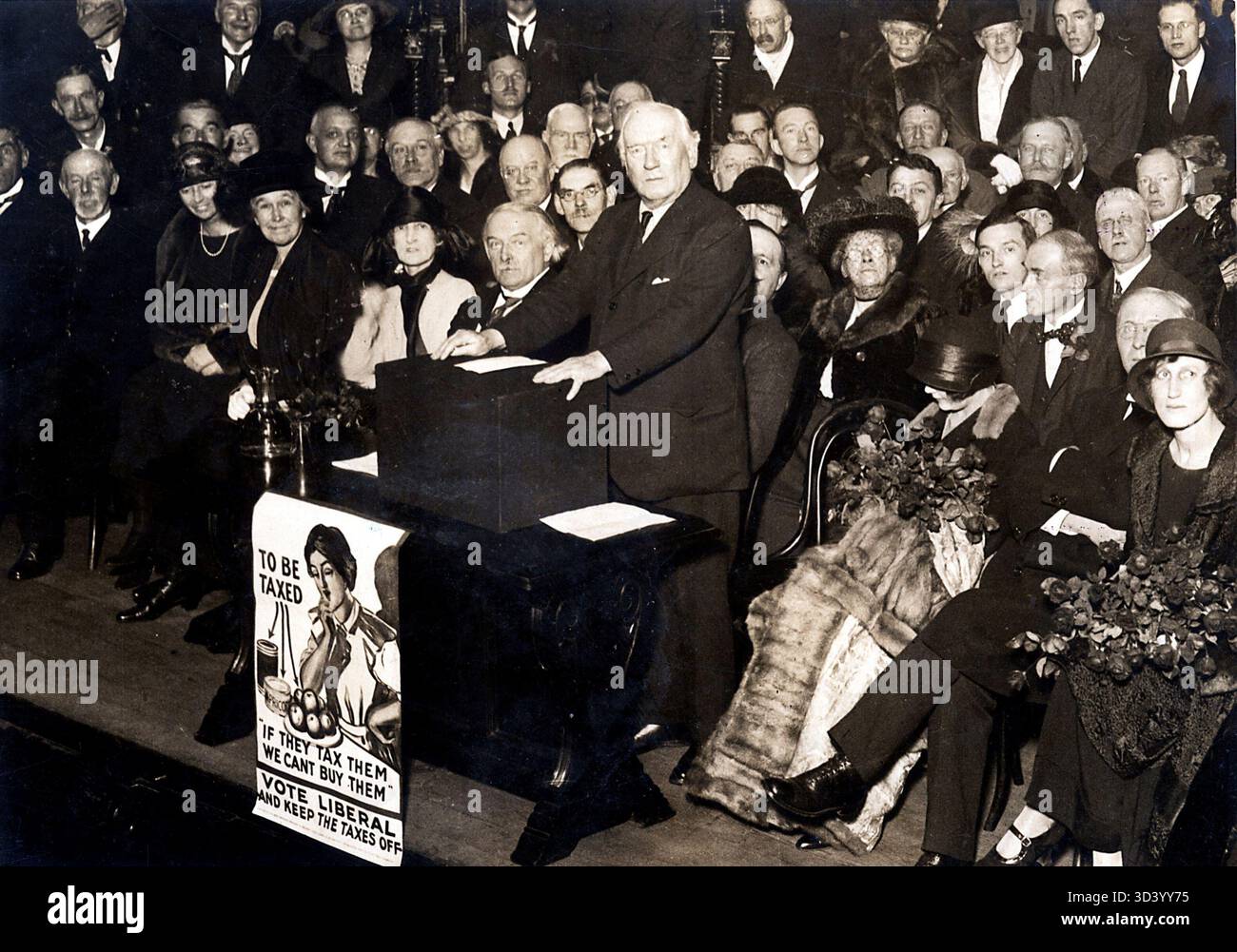
In May 1923, British Prime Minister Andrew Bonar Law resigned due to terminal throat cancer. King George V selected Stanley Baldwin over Lord Curzon to head the Conservative government. Baldwin's appointment marked a shift toward modern parliamentary politics. Later that year, Baldwin called a surprise general election in December 1923 around the issue of protective tariffs. The election resulted in a hung parliament, setting the stage for Ramsay MacDonald to form the UK's first-ever Labour Party government in early 1924.
Soviet Union: Institutional Consolidation
Following the December 30, 1922 declaration that formed the Union of Soviet Socialist Republics (USSR), the year 1923 saw the operational establishment of its centralized governing apparatus. The Central Executive Committee of the USSR approved the draft of the 1923 Soviet Constitution in July 1923 (formally ratified in January 1924).
Simultaneously, Soviet founder Vladimir Lenin suffered his third stroke in March 1923, leaving him bedridden and unable to speak. Lenin’s incapacitation triggered an intense, quiet power struggle within the Politburo between the triumvirate of Joseph Stalin, Lev Kamenev, and Grigory Zinoviev against Leon Trotsky, accelerating Stalin's centralization of administrative authority over the Communist Party machine.
Disaster and Reconstruction: The Great Kantō Earthquake of Japan
On September 1, 1923, at 11:58 a.m. local time, a magnitude 7.9 earthquake struck the Kantō plain on the main Japanese island of Honshu. The Great Kantō Earthquake remains one of the most destructive natural disasters in modern history.
- Seismic Shock (7.9 Mw)
- Widespread Firestorms & Tsunami
- 140,000+ Fatalities & Infrastructure Destruction
- Imperial Reconstruction Plan & Modern Urban Planning
Because the earthquake hit at noon while thousands of household coal stoves were lit for lunch, firestorms spread rapidly across the urban centers of Tokyo and Yokohama. High winds caused by an offshore typhoon accelerated the firestorms, which burned for three days. A fire whirl at the Army Clothing Depot in Tokyo killed nearly 38,000 displaced citizens gathered in an open space.
Key Impacts of the Disaster:
- Human Loss: Over 140,000 fatalities occurred, with hundreds of thousands injured and left homeless.
- Infrastructure Devastation: Yokohama Port was largely destroyed, and Tokyo lost roughly half of its total housing stock.
- Societal Fallout: In the chaotic aftermath, false rumors alleging that ethnic minorities were poisoning wells led to violent vigilante attacks against thousands of resident Koreans, Chinese, and political dissidents before martial law stabilized the capital.
- Reconstruction: Under the leadership of Home Minister Gotō Shinpei, the Imperial Capital Reconstruction Board embarked on a massive modernization campaign. Tokyo was rebuilt with wider avenues, fireproof parks, modern bridges, and updated building codes that laid the foundation for modern Japanese urban planning.
Breakthroughs and Cultural Icons: Science, Media, and Entertainment in 1923
Beyond political upheaval, 1923 was a transformative year for global science, mass media, and popular culture.
Science and Exploration
- Nobel Prize in Medicine: Frederick Banting and John Macleod were awarded the 1923 Nobel Prize in Physiology or Medicine for their landmark discovery of insulin at the University of Toronto, which revolutionized the management of diabetes mellitus.
- Archaeological Discovery: On February 16, 1923, British archaeologist Howard Carter unsealed the inner burial chamber of Pharaoh Tutankhamun in the Valley of the Kings near Luxor, Egypt. The discovery of the intact royal sarcophagus sparked global interest in Egyptology and ancient history.
Mass Media and Entertainment
- Time Magazine Launch: On March 3, 1923, Henry Luce and Briton Hadden published the first issue of Time, creating the weekly news magazine format that reshaped print journalism in the United States.
- The Disney Brothers Studio: On October 16, 1923, Walt Disney and his brother Roy Disney founded the Disney Brothers Cartoon Studio in Hollywood, California, after signing a contract for the Alice Comedies series. This studio later grew into The Walt Disney Company.
- The Hollywood Sign: Originally erected in July 1923 as an outdoor advertising campaign reading "HOLLYWOODLAND" for a suburban housing development, the temporary sign quickly transformed into an enduring international icon of the American film industry.
Timeline of Key Events in 1923
The following table summarizes the major political, social, and cultural events of 1923 by date, location, and global significance:
| Date | Location | Event | Historical Significance |
|---|---|---|---|
| January 11 | Ruhr Valley, Germany | Occupation of the Ruhr | French and Belgian forces occupied German industrial regions, triggering severe economic hyperinflation. |
| February 16 | Luxor, Egypt | Unsealing of Tutankhamun's Tomb | Howard Carter opened the inner burial chamber, revealing the intact sarcophagus of the pharaoh. |
| March 3 | New York, USA | Publication of First Issue of Time | Introduced the modern weekly news magazine format to American print media. |
| July 24 | Lausanne, Switzerland | Signing of the Treaty of Lausanne | Replaced the Treaty of Sèvres, established modern Turkish borders, and authorized compulsory population exchanges. |
| August 2 | San Francisco, USA | Death of President Warren G. Harding | Calvin Coolidge succeeded to the US presidency amid ongoing federal political corruption scandals. |
| September 1 | Kantō Plain, Japan | Great Kantō Earthquake | A magnitude 7.9 earthquake destroyed Tokyo and Yokohama, leading to over 140,000 deaths and urban reconstruction. |
| October 16 | Los Angeles, USA | Founding of Disney Brothers Studio | Walt and Roy Disney established the animation studio that would evolve into The Walt Disney Company. |
| October 29 | Ankara, Turkey | Proclamation of the Republic of Turkey | Mustafa Kemal Atatürk officially declared the republic, bringing an end to the Ottoman state. |
| November 8–9 | Munich, Germany | The Beer Hall Putsch | Adolf Hitler's failed coup against the Weimar government resulted in his arrest and trial for treason. |
Researching 1923 History: Accessing Primary Sources and Historical Archives
For historians, educators, and researchers looking to study the primary records of 1923, several specialized archives provide direct access to digitized contemporary materials:
Digital Archival Resources
- The League of Nations Archives: Maintained by the United Nations Office at Geneva (UNOG), these archives contain treaty documents, commission reports on the Ruhr Crisis, and official records of the Lausanne Conference negotiations.
- The US National Archives and Records Administration (NARA): Holds official state records from the Harding and Coolidge administrations, including federal documents on the Teapot Dome investigations and diplomatic dispatches from Turkey and Europe in 1923.
- The National Library of Japan (National Diet Library): Houses extensive photographic collections, government reports, and historical newspapers detailing the Great Kantō Earthquake and subsequent reconstruction plans.
- German Federal Archives (Bundesarchiv): Provides digitized access to Weimar Republic cabinet records, files on the Ruhr resistance, and monetary documentation detailing the 1923 hyperinflation period.
Best Practices for Primary Source Verification
- Cross-Reference Contemporary Periodicals: Compare reporting from major 1923 international outlets (such as The Times of London, The New York Times, or Le Figaro) against government dispatches to identify political bias versus verified facts.
- Evaluate Official Translation Documents: When studying international agreements like the Treaty of Lausanne, always consult the official bilingual French and English treaty texts published in the League of Nations Treaty Series.
- Examine Economic Indicators: Utilize central bank logs and government statistical yearbooks from 1923 when analyzing Weimar currency rates to ensure precise distinctions between different issues of paper money (Mark vs. Rentenmark).
Frequently Asked Questions About 1923 History
What major event happened in Germany in 1923?
Germany experienced three major interconnected crises in 1923: the French and Belgian occupation of the Ruhr industrial region in January, an extreme period of hyperinflation where the Papiermark lost nearly all value, and Adolf Hitler's failed Nazi coup known as the Beer Hall Putsch in Munich in November.
How did the Treaty of Lausanne change international borders in 1923?
Signed on July 24, 1923, the Treaty of Lausanne formally recognized the borders of the newly established Republic of Turkey. It annulled the partition plans of the previous Treaty of Sèvres, defined Turkey's modern frontiers with Greece and Bulgaria, regulated the international status of the Turkish Straits, and mandated a compulsory population exchange between Greece and Turkey.
What was the historical impact of the Great Kantō Earthquake of 1923?
The magnitude 7.9 earthquake struck Japan on September 1, 1923, causing firestorms that killed over 140,000 people and destroyed large parts of Tokyo and Yokohama. The disaster led to major social unrest, but it also resulted in the systematic modern reconstruction of Tokyo using advanced urban planning, fire-resistant construction, and updated seismic safety standards.
Who became President of the United States in 1923?
Calvin Coolidge became the 30th President of the United States on August 3, 1923. He assumed office following the sudden death of President Warren G. Harding from a heart attack on August 2 while on a trip to San Francisco.
What cultural institutions were founded in 1923?
The year 1923 saw the creation of several landmark cultural institutions, including Time magazine (first published in March), the Disney Brothers Cartoon Studio (founded by Walt and Roy Disney in October), and the original erection of the famous "Hollywoodland" sign in Los Angeles in July.