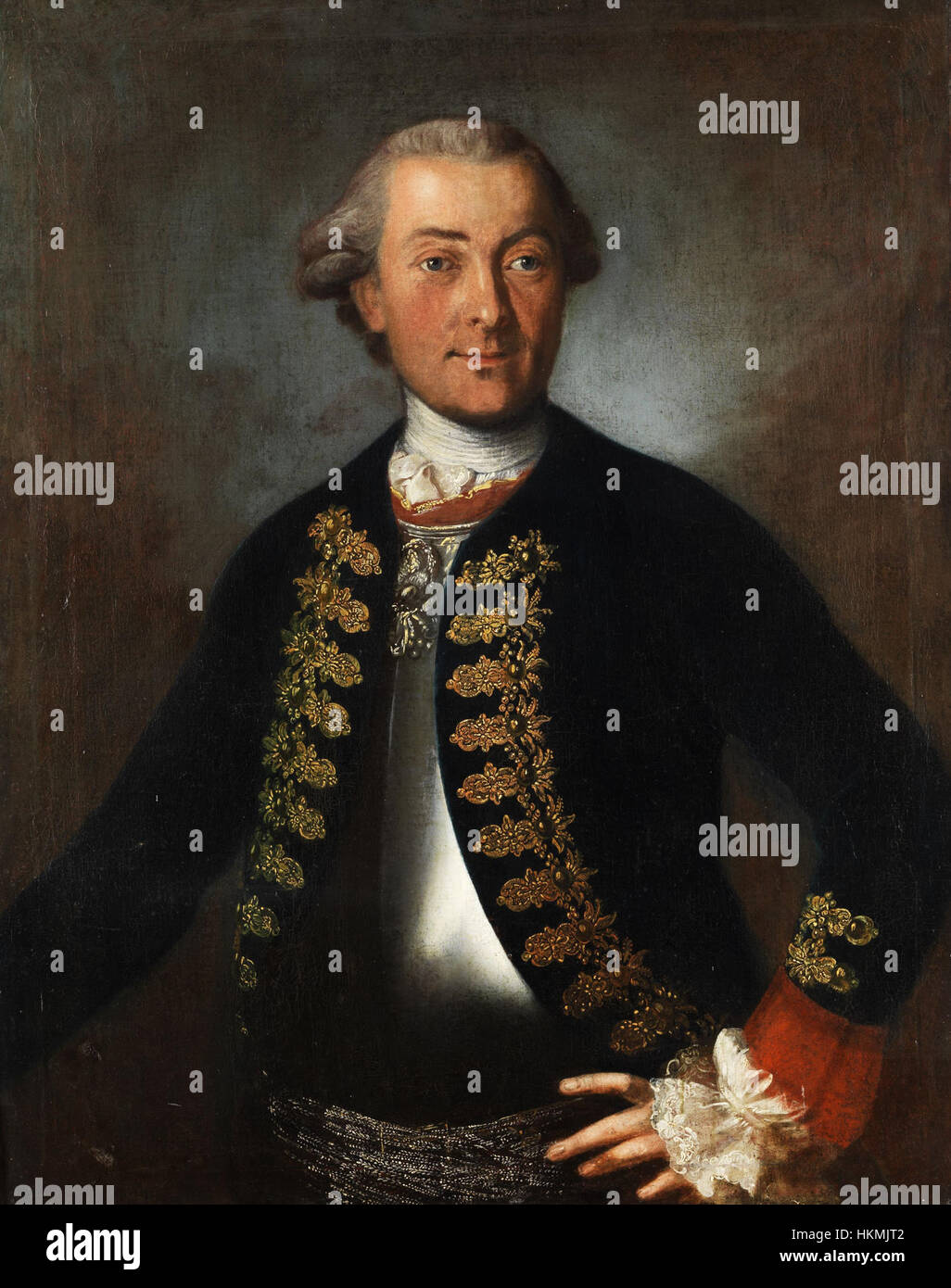
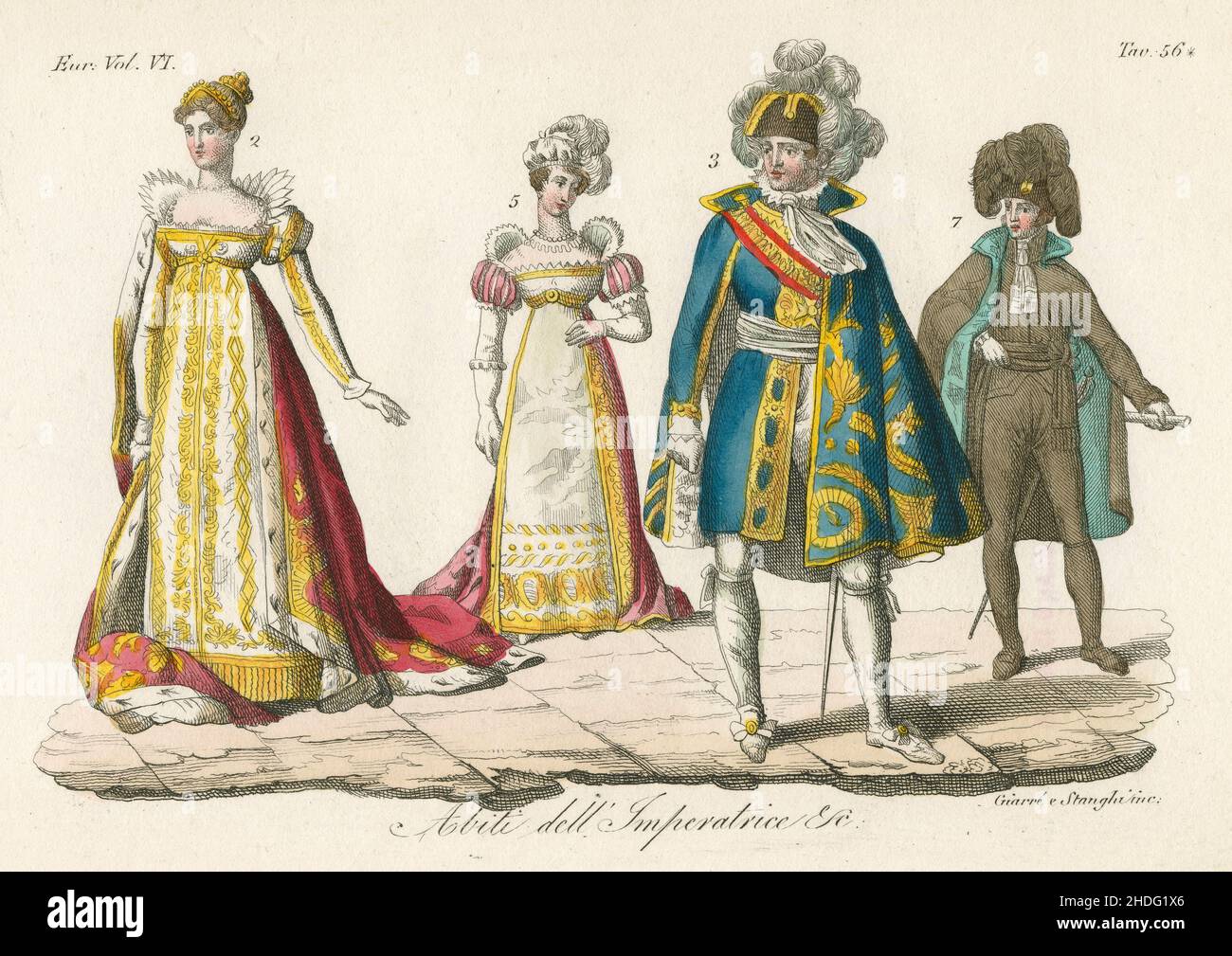
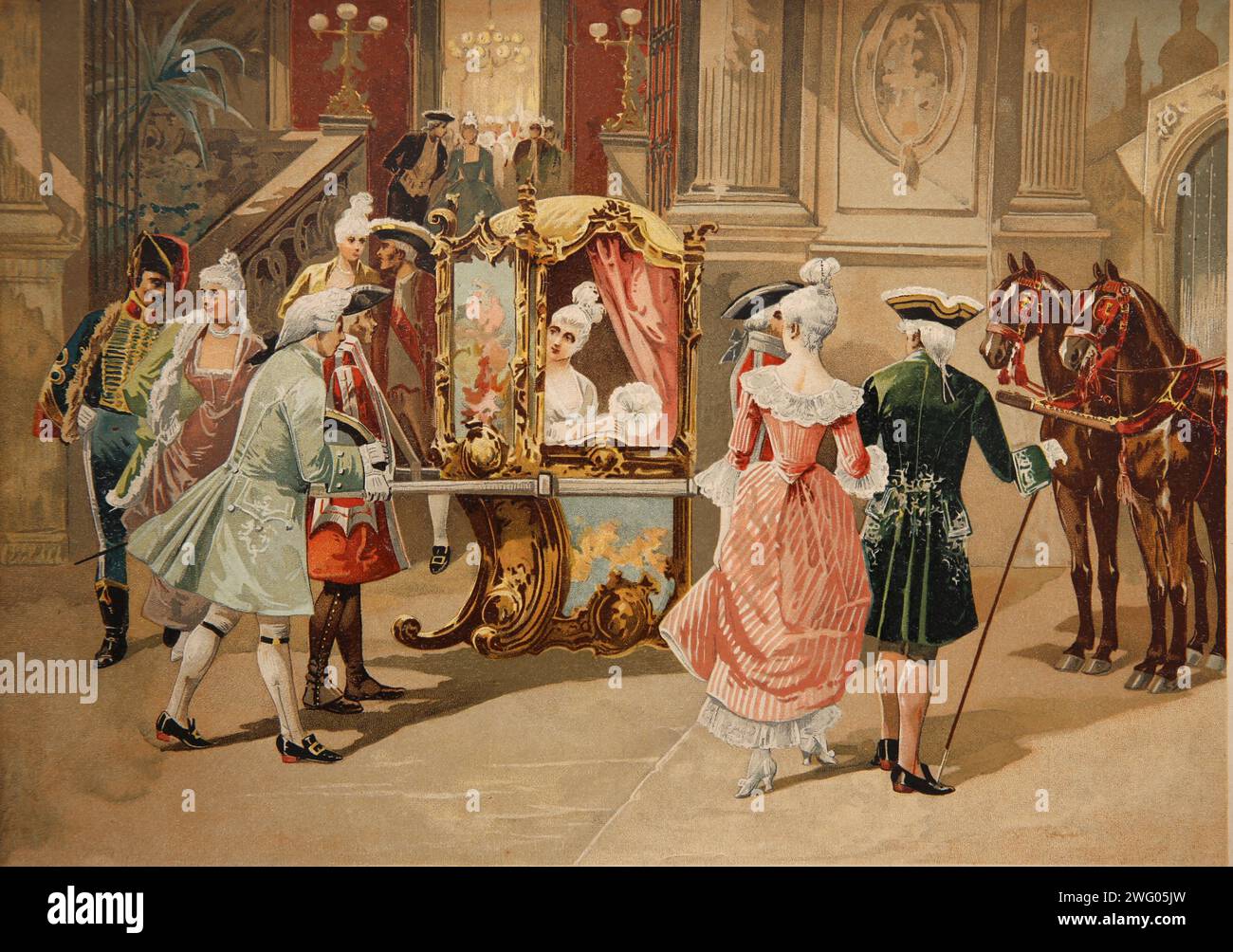
18th-century royalty was defined by a profound transition from absolute divine-right monarchy toward enlightened despotism and constitutional governance. Characterized by lavish court rituals, centralizing state bureaucracies, strategic intermarriages, and global dynastic warfare, European sovereigns projected immense cultural prestige while navigating rising fiscal crises and intellectual challenges to royal legitimacy.
- 18th Century Royalty
- Political Models
- Absolute
- Enlightened
- Constitutional
- Court Culture
- Versailles
- Rituals
- Patronage
- Dynastic Rivalries
- War of Spanish Succession
- Seven Years' War
- Political Models
From Divine Right to Enlightened Despotism
The political architecture of 18th-century monarchy rested upon foundations established in the preceding century, yet it underwent a radical philosophical evolution. At the century's outset, European sovereigns derived their authority primarily from the doctrine of the divine right of kings. Under this framework, monarchs were accountable solely to God, exercising supreme executive, legislative, and judicial powers over their subjects without institutional checks.
As the Enlightenment gained momentum across Western Europe, intellectual figures such as Voltaire, Montesquieu, and Jean-Jacques Rousseau subjected hereditary rule to critical analysis. In response, several prominent 18th-century rulers adapted their governance styles, giving rise to "Enlightened Absolutism" (or Enlightened Despotism). Rulers such as Frederick II (the Great) of Prussia, Catherine II (the Great) of Russia, and Joseph II of Austria reframed the monarch's role. Rather than viewing the state as personal property, these sovereigns presented themselves as the "first servant of the state."
This philosophical shift produced tangible structural administrative changes:
- Codification of Laws: Rulers initiated systematic legal reforms to eliminate local customary contradictions, restrict judicial torture, and standardize penal procedures.
- Religious Toleration: To improve economic productivity and reduce social friction, enlightened sovereigns issued edicts granting limited tolerance to religious minorities, such as Joseph II’s Edict of Toleration (1781).
- Administrative Rationalization: Monarchs modernizing their states replaced feudal patronage systems with professional civil service bureaucracies trained in fiscal management and public administration.
- Educational Reform: Primary and secondary education systems were expanded under state control to foster a literate citizenry capable of supporting military and industrial expansion.
This synthesis of autocratic authority and rational reform created an internal tension. Rulers embraced intellectual progress to enhance state efficiency and military power, yet they firmly rejected any proposals that threatened their ultimate authority or dismantled the aristocratic social order upon which their thrones depended.
Major Dynastic Houses of the 18th Century
Power in 18th-century Europe was concentrated within a few interconnected royal houses. Dynastic statecraft operated through a complex web of matrimonial alliances, where marriages were negotiated to consolidate territories, secure peace treaties, or claim succession rights across foreign thrones.
- Major 18th-Century Dynasties
- House of Bourbon (France, Spain)
- House of Habsburg (Austria, Holy Roman)
- House of Romanov (Russia)
- House of Hanover (Great Britain)
The House of Bourbon (France and Spain)
The French Bourbon monarchy set the standard for royal majesty across the continent. Under Louis XIV (who reigned until 1715), Louis XV, and Louis XVI, France remained the cultural center of Europe. The accession of Philip V (grandson of Louis XIV) to the Spanish throne in 1700 extended Bourbon influence into the Iberian Peninsula and South America, establishing the Spanish Bourbon line after the War of the Spanish Succession.
The House of Habsburg-Lorraine (Austria and the Holy Roman Empire)
The Habsburgs maintained their grip on Central Europe, governing a multi-ethnic empire that included Austria, Hungary, Bohemia, and territories in Italy and the Low Countries. Following the death of Charles VI without a male heir, the Pragmatic Sanction of 1713 allowed his daughter, Maria Theresa, to inherit the hereditary Habsburg lands. Her marriage to Francis Stephen of Lorraine established the House of Habsburg-Lorraine, which steered the empire through persistent conflict with rising rival powers.
The House of Romanov (Russia)
The 18th century marked Russia's emergence as a dominant European power under the Romanov dynasty. Peter I (the Great) forcibly modernized Russia's administrative, military, and cultural institutions, shifting the imperial capital to St. Petersburg. Later in the century, Catherine II expanded Russian territory through the Partitions of Poland and victories over the Ottoman Empire, establishing Russia as an indispensable player in European diplomacy.
The House of Hanover (Great Britain)
Following the Act of Settlement 1701 and the death of Queen Anne in 1714, the British crown passed to George I of the German House of Hanover. Unlike their continental counterparts, the Hanoverian kings operated within a constitutional framework where royal power was constrained by Parliament. Throughout the reigns of George I, George II, and George III, Britain developed a parliamentary cabinet system headed by a Prime Minister, balancing monarchical authority with legislative oversight.
Court Life, Versailles, and Cultural Projection
The 18th-century royal court served as both the physical seat of government and an instrument of political control. The Palace of Versailles, developed by Louis XIV and maintained by his successors, served as the visual and operational model for royal residences across Europe. Monarchs in Prussia, Austria, Russia, and the smaller German principalities built grand palaces—such as Sanssouci in Potsdam, Schönbrunn in Vienna, and the Winter Palace in St. Petersburg—to replicate French architectural and cultural authority.
Court life was governed by strict etiquette designed to reinforce social hierarchies and domesticate the nobility. By requiring high-ranking aristocrats to reside at court and compete for ceremonial duties—such as attending the sovereign's lever (waking ceremony) or coucher (retiring ceremony)—monarchs distracted potential feudal rebels with rivalries over royal favor.
- Monarchy / Royal Sovereign
- Distributes Court Titles
- Aristocratic Nobility
- Competes for ceremony roles
- Resides at central palace
- Surrenders regional autonomy
- Aristocratic Nobility
- Distributes Court Titles
Beyond court ritual, 18th-century royalty used artistic patronage to project power and legitimize their reign:
- Architecture and Landscape Design: Palaces built in Baroque, Rococo, and Neoclassical styles reflected the monarch's ability to command vast resources and impose order on nature through symmetrical French gardens or picturesque English parks.
- Operatic and Musical Patronage: Royalty funded court theaters, employing composers like Joseph Haydn (under Prince Esterházy) and Wolfgang Amadeus Mozart to compose works for state celebrations and royal weddings.
- Portraiture and Image Management: Court painters such as Hyacinthe Rigaud, François Boucher, and Elisabeth Vigée Le Brun crafted idealized portraits of sovereigns, projecting majesty, wisdom, and military command to public audiences.
- Scientific Academies: Monarchs founded and funded national academies of science and letters—such as the Royal Swedish Academy of Sciences or the Prussian Academy of Sciences—framing royal authority as a sponsor of rational human progress.
Warfare, Diplomacy, and the Pragmatic Balance of Power
Dynastic self-interest and the preservation of the "balance of power" drove international relations in 18th-century Europe. International politics operated under the premise that no single European state should be permitted to achieve hegemony over the continent. When a royal house threatened to accumulate disproportionate power—often through territorial inheritance—coalitions of rival states mobilized to restore balance through diplomacy or armed conflict.
- Threat to Balance: Dynastic Hegemony (e.g., Bourbon Unification, Prussian Growth)
- Coalition Response: Balance of Power Coalition (Allied Dynasties)
The 18th century was defined by four major continent-wide conflicts that reshaped royal territories and internal governance:
War of the Spanish Succession (1701–1714)
Triggered by the death of the childless Charles II of Spain, the last Habsburg king of Spain, this war pitted a Grand Alliance (including Great Britain, the Dutch Republic, and Austria) against Louis XIV's France. The alliance sought to prevent the unification of the French and Spanish crowns under a single Bourbon monarch. The Treaty of Utrecht (1713) resolved the crisis by permitting Philip V to retain the Spanish throne on the condition that the French and Spanish crowns remain permanently separate.
War of the Austrian Succession (1740–1748)
Upon the accession of Maria Theresa to the Habsburg lands in 1740, Frederick II of Prussia launched an invasion of the resource-rich Habsburg province of Silesia. Prussia's action violated the Pragmatic Sanction and sparked a wider conflict involving France, Britain, and Russia. While Maria Theresa successfully defended her crown and preserved the core of her empire, Silesia remained under Prussian control, initiating a long rivalry between Berlin and Vienna for control of the German states.
The Diplomatic Revolution and the Seven Years' War (1756–1763)
In 1756, long-standing alliance patterns dissolved during the "Diplomatic Revolution." Austria abandoned its traditional alliance with Great Britain to form an alliance with its historic adversary, France. In response, Great Britain partnered with Prussia. The ensuing Seven Years' War was fought across Europe, North America (the French and Indian War), and India. The conflict confirmed Prussia's status as a major European military power and resulted in Great Britain establishing global maritime and colonial dominance over France.
The Partitions of Poland (1772, 1793, 1795)
The structural vulnerability of the Polish-Lithuanian Commonwealth—an elective monarchy hampered by aristocratic infighting—allowed neighboring absolutist regimes to intervene in its domestic affairs. Through three successive partitions, the royal sovereigns of Russia (Catherine II), Prussia (Frederick II), and Austria (Joseph II) systematically annexed Polish territory, wiping the Polish state from the political map of Europe until the end of World War I.
Comparative Frameworks of 18th-Century Monarchies
The operational mechanisms of European royalty varied widely by region. The following table provides a direct comparative analysis of the primary structural, institutional, and geopolitical characteristics of Europe's major 18th-century monarchies:
| Monarchy / Ruling House | Primary Governance Model | Core Institutional Strengths | Key Sovereign Figures | Primary Geopolitical Focus |
|---|---|---|---|---|
| Bourbon France | Absolute Monarchy | Cultural prestige, central bureaucracy, large population | Louis XIV, Louis XV, Louis XVI | Western European dominance, colonial expansion |
| Habsburg Austria | Composite Absolutism | Large standing army, vast dynastic territory | Maria Theresa, Joseph II, Leopold II | Central European hegemony, Ottoman border defense |
| Hohenzollern Prussia | Militarized Absolutism | Highly disciplined army, efficient civil administration | Frederick William I, Frederick II | Baltic expansion, rivalry with Austria |
| Romanov Russia | Autocratic Empire | Limitless territorial scope, total royal authority | Peter I, Elizabeth, Catherine II | Black Sea expansion, Westernization, Partition of Poland |
| Hanoverian Great Britain | Constitutional Monarchy | Parliamentary taxation, naval superiority, fiscal credit | George I, George II, George III | Maritime trade routes, North American colonies, balance of power |
Economic Pressures and the Fiscal Strain of Monarchy
Behind the ceremonial grandeur of 18th-century courts lay structural financial vulnerabilities. The cost of maintaining standing armies, expanding naval fleets, constructing palaces, and funding court pensions outpaced state revenues. Unlike modern governments, 18th-century monarchies lacked uniform national taxation frameworks and often relied on outdated feudal tax exemptions that favored the wealthier classes.
In most continental nations, the nobility and clergy enjoyed widespread tax exemptions, shifting the fiscal burden onto the agrarian peasantry and the urban middle class (bourgeoisie). To raise immediate capital, monarchs frequently resorted to short-term measures:
- Tax Farming: Governments auctioned the right to collect taxes to private financiers (tax farmers), who extracted heavy payments from citizens while keeping a portion of the revenue for themselves.
- Sale of Venal Offices: Rulers sold judicial, administrative, and military offices to wealthy commoners in exchange for immediate cash, granting the buyers noble status (noblesse de robe) and future tax exemptions.
- Sovereign Loans: Monarchs borrowed heavily from private banking networks (such as those in Amsterdam, Geneva, and London) at high interest rates, leading to mounting state debt.
Great Britain proved an exception to this continental pattern. Through the establishment of the Bank of England (1694) and the development of a national debt guaranteed by Parliament, the British crown secured loans at significantly lower interest rates than its absolutist rivals. This financial system allowed Britain to fund large military campaigns despite having a smaller population than France.
- Continental Fiscal Model
- Aristocratic Exemptions
- Nobility/Clergy exempt
- Peasantry overtaxed
- Structural Debt
- High-interest loans
- Financial instability
- Aristocratic Exemptions
In France, structural tax exemptions created a financial crisis. By the 1780s, servicing the national debt—exacerbated by France's financial intervention in the American Revolutionary War—consumed over half of the royal budget, setting the stage for a political breakdown.
The Crisis of Royal Legitimacy and the Revolutionary Shift
By the final decades of the 18th century, the institutional foundations of European royalty faced unprecedented destabilization. The ideological principles of the Enlightenment, combined with mounting fiscal crises and structural social inequality, undermined traditional claims of royal authority.
This political transformation reached its peak in France during the reign of Louis XVI. Unable to enact tax reforms through autocratic decree due to resistance from local courts (parlements), the King summoned the Estates-General in 1789 for the first time since 1614. This move initiated a rapid dismantling of royal authority:
- 1789: Estates-General convened; Third Estate forms National Assembly
- 1791: Absolute power replaced by short-lived Constitutional Monarchy
- 1792: Monarchy abolished; French First Republic declared
- 1793: Execution of King Louis XVI and Queen Marie Antoinette
The execution of Louis XVI shattered the centuries-old belief in the sacredness of the royal person. Across Europe, neighboring monarchs responded to the French Revolution by abandoning their enlightened reform programs. Regimes in Austria, Prussia, and Russia instituted strict censorship, expanded secret police forces, and formed counter-revolutionary military coalitions to protect hereditary monarchy.
Despite these efforts to preserve traditional governance, the late 18th century marked a permanent shift in European political theory. Royalty was no longer viewed as an immutable divine institution. Sovereignty was increasingly understood to originate from the people, setting the stage for the constitutional conflicts and nationalist movements of the 19th century.
Practical Guidance for Historians and Historical Researchers
Analyzing 18th-century monarchies requires evaluating administrative records, diplomatic dispatches, court memoirs, and fiscal ledger systems. Researchers investigating royal institutions should follow a structured archival framework to evaluate primary sources:
1. Distinguish Public Edicts from Practical Implementation
When examining royal decrees, statutes, or legal codifications (such as Prussia's Allgemeines Landrecht or Austria's Ratio Educationis), compare the official text with local magistrate records. Centralized decrees issued from Versailles, Berlin, or Vienna often faced quiet resistance, delay, or selective enforcement by regional nobles and provincial assemblies.
2. Cross-Reference Court Memoirs with Diplomatic Dispatches
Memoirs written by court insiders (such as the Duc de Saint-Simon or court ladies-in-waiting) provide detailed insight into interpersonal factions and court ritual. However, these accounts often suffer from personal bias. Cross-reference them with official dispatches sent by foreign ambassadors back to their home governments to establish objective timelines and political contexts.
3. Analyze Fiscal Data Alongside Political Decrees
Assess state financial ledgers, tax rolls, and debt registers alongside royal policies. Shifts in foreign policy, royal marriage negotiations, and military mobilization were frequently dictated by sovereign credit limits, interest rates, and the immediate need to secure liquid capital from private banking syndicates.
4. Utilize Digital Archives and Primary Repositories
Researchers can access primary documents from major European repositories that have digitized significant portions of their 18th-century collections:
- Gallica (Bibliothèque nationale de France): Contains digitized French royal edicts, court correspondence, and Enlightenment pamphlets.
- The National Archives (UK - Kew): Houses State Papers Foreign and Domestic for the Hanoverian period, detailing British diplomatic correspondence.
- Geheimes Staatsarchiv Preußischer Kulturbesitz (Berlin): Preserves administrative, military, and diplomatic records of the Hohenzollern dynasty.
- Österreichisches Staatsarchiv (Vienna): Contains the official records of the Habsburg-Lorraine dynasty, including foreign affairs (Haus-, Hof- und Staatsarchiv).
Frequently Asked Questions About 18th Century Royalty
What was "Enlightened Absolutism" in the 18th century?
Enlightened Absolutism was a governance model where monarchs incorporated Enlightenment principles—such as rational administration, legal reform, religious tolerance, and expanded public education—into their autocratic rule. Rulers like Frederick the Great of Prussia and Catherine the Great of Russia used these rationalizing reforms to increase state efficiency, strengthen their armies, and centralize power, while refusing to grant popular sovereignty or surrender ultimate executive control.
How did the British monarchy differ from continental European monarchies during this period?
Unlike continental rulers who exercised absolute or autocratically centralized power, the British Hanoverian monarchs operated within a constitutional framework established by the Glorious Revolution of 1688 and the Act of Settlement 1701. The British crown was constrained by Parliament, which held exclusive authority over taxation and legislation. This dynamic led to the development of a parliamentary cabinet system headed by a Prime Minister.
What role did royal marriages play in 18th-century diplomacy?
Royal marriages functioned as formal diplomatic alliances designed to secure territorial peace, consolidate dynastic claims, and form strategic international coalitions. Marriages were negotiated between royal courts through formal treaties. However, as the 18th century progressed, the strategic value of intermarriage was increasingly balanced against nation-state interests and the preserve of the continental balance of power.
Why did Versailles become the cultural template for European courts?
Versailles served as the ultimate visual symbol of royal absolutism, political centralization, and luxury. By integrating grand Baroque architecture, structured court etiquette, and extensive arts patronage into a single residence, Louis XIV successfully domesticate his nobility. Rulers across Europe replicated Versailles' physical design and social rituals to project internal authority and international prestige.
How did financial crises lead to the downfall of 18th-century royal governance in France?
France's involvement in major global wars, including the Seven Years' War and the American Revolutionary War, generated massive state debt. Because the nobility and clergy enjoyed traditional tax exemptions, the crown could not generate sufficient revenue from the lower classes to service its debts. When Louis XVI attempted to overhaul the fiscal system, political resistance forced him to convene the Estates-General in 1789, unleashing political forces that ultimately abolished the monarchy.