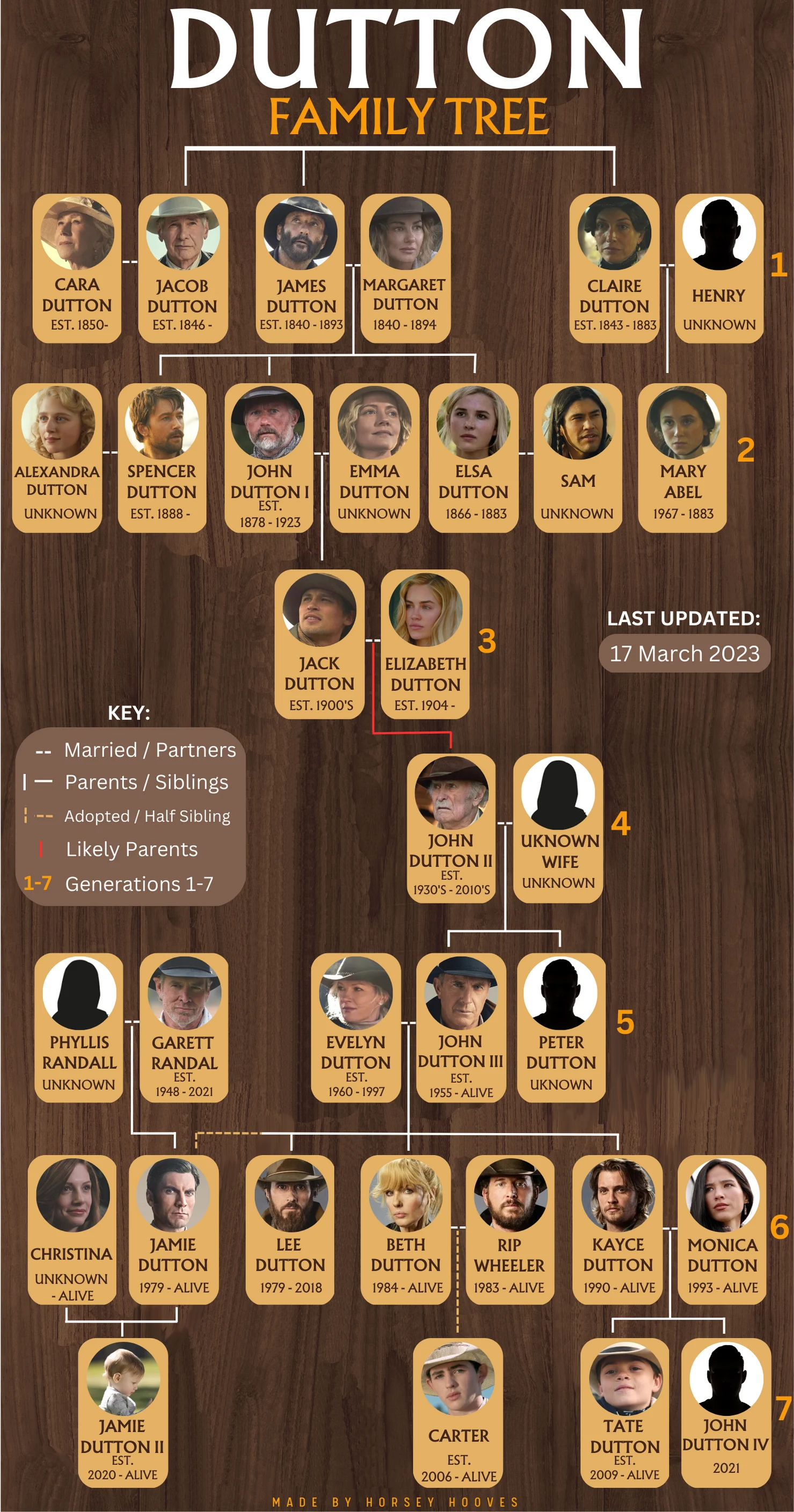
The search for the "1893 Yellowstone" cast refers to Taylor Sheridan’s acclaimed Yellowstone prequel franchise—primarily 1883 starring Tim McGraw, Faith Hill, and Sam Elliott, alongside 1923 starring Harrison Ford and Helen Mirren—which chronicles the fictional Dutton family as they settled Montana. Historically, 1893 also marks a pivotal era when real-life pioneer families and U.S. Army superintendents established the first permanent footprint in Yellowstone National Park.
Disambiguating "1893 Yellowstone": Franchise Reality vs. Historical Timeline
Searches for an "1893 Yellowstone" series often stem from a widespread conflation of dates within Taylor Sheridan's expanded television universe. Following the massive global success of the flagship series Yellowstone, Paramount released two historical origin chapters: 1883, which detailed the grueling trek across the Oregon Trail, and 1923, which explored the ranching empire during Prohibition and the Great Depression era in Montana. Audience queries referencing 1893 frequently bridge the decade gap between these two television chronicles or seek information on rumored interstitial spin-offs detailing the mid-1890s development of the Dutton ranch.
Simultaneously, the phrase connects to non-fictional historical accounts of Yellowstone National Park's actual "first families." In the real 1890s, Yellowstone was not managed by a single ranching dynasty, but was governed by the U.S. Army while early homesteaders, hotel operators, and guides established permanent operations. Understanding both the dramatic cast of the television universe and the real historical figures of 1893 provides a complete picture of how the mythos and reality of America's first national park intersect.
The Cast of Yellowstone's First Family: The 1883 Prequel Core Ensemble
The narrative foundation of Yellowstone’s "first family" on screen is anchored by the cast of 1883. Created and written by Taylor Sheridan, the series presents the initial generation of Duttons who abandoned post-Civil War Texas to seek a new life in the American Northwest. The casting relied heavily on authentic country music icons and veteran Western actors to ground the physical and emotional hardship of 19th-century frontier travel.
| Actor | Character | Role in Origin Saga |
|---|---|---|
| Tim McGraw | James Dutton | Original Patriarch / Founder |
| Faith Hill | Margaret Dutton | Original Matriarch |
| Isabel May | Elsa Dutton | Primary Narrator & Daughter |
| Sam Elliott | Shea Brennan | Pinkerton Expedition Leader |
| LaMonica Garrett | Thomas | Veteran Buffalo Soldier / Guide |
| Audie Rick | John Dutton Sr. (Child) | Ancestor of Modern Dynasty |
Tim McGraw as James Dutton
Country music superstar Tim McGraw portrays James Dutton, a former Confederate captain determined to lead his family away from poverty in Texas. McGraw’s performance emphasizes quiet resilience, tactical firearm skills, and an uncompromising protective instinct. James Dutton serves as the founding patriarch who ultimately selects Paradise Valley, Montana, as the family’s permanent home after tragedy alters their original trajectory toward Oregon.
Faith Hill as Margaret Dutton
Faith Hill delivers a grounded, stoic performance as Margaret Dutton, the family matriarch. Unlike idealized portrayals of frontier women, Margaret is depicted managing heavy livestock, enduring extreme climate shifts, and making severe survival decisions. Her character highlights the grueling manual labor required of women on the 19th-century trail.
Isabel May as Elsa Dutton
Isabel May delivers the breakout performance of the series as Elsa Dutton, the 17-year-old daughter whose poetic voiceover narration frames the entire saga. Elsa’s transformation from an innocent Southern adolescent into an independent cowgirl forms the emotional core of the narrative. Her tragic fate in the Montana territory directly dictates where James Dutton lays down the roots of the future Yellowstone Dutton Ranch.
Sam Elliott as Shea Brennan
Veteran actor Sam Elliott plays Shea Brennan, a grieving Pinkerton agent leading a wagon train of European immigrants across the untamed wilderness. Elliott brings decades of Western genre credibility to the role, serving as a hardened guide whose cynical survival instincts clash with and complement James Dutton's single-minded focus on family preservation.
Expanding the Dutton Dynasty: The 1923 Cast and Second Generation
While 1883 establishes the physical arrival in Montana, the chronicle of how the family maintained their land into the late 1890s and early 1900s expands in 1923. This chapter introduces the elder generation of the family struggling against drought, cattle rustling, and encroaching industrialization.
- Harrison Ford (Jacob Dutton): The older brother of James Dutton, who takes control of the Montana ranch after James’s death to raise James’s surviving sons and protect the land from competing range interests.
- Helen Mirren (Cara Dutton): The Irish-born matriarch married to Jacob. Cara provides formidable administrative and emotional leadership, protecting the homestead through fierce diplomatic and physical resolve.
- Brandon Sklenar (Spencer Dutton): The younger son of James and Margaret Dutton, born after their arrival in Montana. Spencer’s storyline spans World War I combat in Europe, big-game hunting in Africa, and a perilous journey home to save the family estate.
- Julia Schlaepfer (Alexandra): A British aristocrat who joins Spencer Dutton on his trek across continents, bringing an international perspective to the struggle for Western land rights.
- Darren Mann (Jack Dutton): The son of John Dutton Sr., representing the eager, volatile young generation of cowboys working the ranch in the early 20th century.
- Aminah Nieves (Teonna Rainwater): Portrays a young Indigenous woman fighting for survival inside an Indian Boarding School, providing a crucial parallel narrative about the displacement of Native peoples in the region.
Comparing Fictional Representation with Real 1893 Yellowstone History
The dramatic portrayal of a single homestead family defending thousands of acres contrasts with the actual administrative and social structure of Yellowstone National Park around 1893. By 1893, Yellowstone was not a private cattle ranch, but a federally managed reserve under the direct oversight of the U.S. Army.
| Feature | Historic Yellowstone (c. 1893) | Fictional Television Universe |
|---|---|---|
| Primary Authority | U.S. Army (Cavalry Superintendents) | Private Landowners & Local Sheriffs |
| Resident Population | Army Troops, Guides, Concessionaires | Homesteading Cattle Families |
| Primary Industry | Tourism, Geological Preservation | Cattle Ranching & Territory Defense |
| Key Historical Figures | Capt. George S. Anderson, J. Yancey | James, Jacob, and Margaret Dutton |
During 1893, the real "first families" of Yellowstone were pioneering concessionaires and military officers stationed at Fort Yellowstone in Mammoth Hot Springs. Key historical figures who built permanent lives within the park boundaries during this period included:
- John Yancey: A frontier figure who established "Yancey's Pleasant Valley" near Tower Junction in the 1880s and 1890s. Yancey operated a simple hotel and saloon catering to early miners, tour guides, and park visitors, earning a reputation as one of Yellowstone’s earliest eccentric permanent residents.
- Captain George S. Anderson: Serving as the military superintendent of Yellowstone National Park from 1891 to 1897, Captain Anderson was instrumental in suppressing illegal poaching, protecting bison herds, and regulating early commercial travel within the park.
- Jack Baronett: An early scout, guide, and prospector who built the first toll bridge over the Yellowstone River in 1871. By the 1890s, Baronett’s operational contributions had become legendary among early park staff and visitors.
Production, Casting Choices, and Historical Authenticity
Taylor Sheridan’s approach to casting and producing the historical chapters of the Yellowstone universe focused on physical realism and immersive actor preparation. Rather than relying heavily on digital effects, cast members underwent rigorous training to authentically portray 19th-century frontier skills.
Cowboy Camp and Physical Preparation
Prior to filming 1883, the cast participated in a multi-week "Cowboy Camp" in Texas. Actors were trained in horse riding, wagon driving, roping, and period-accurate firearm handling. Tim McGraw, Faith Hill, and Sam Elliott performed the majority of their own horseback riding and herd management scenes, ensuring that movement on screen reflected authentic cowboy mechanics.
Costuming and Material Culture
Production designer Cary White and costume designer Janie Bryant prioritized strict historical accuracy for late-19th-century garments. Wardrobe items were constructed from period-appropriate wool, canvas, and leather, subjected to realistic distressing to simulate months of trail dust and weather exposure. Weapons featured in the series—including Colt 1873 Single Action Army revolvers and Winchester Model 1873 rifles—matched the exact firearms utilized by Western homesteaders during the late 1880s and 1890s.
Frequently Asked Questions
Is there an official television series titled 1893 Yellowstone?
No official television series bears the exact title 1893 Yellowstone. The canonical prequel series produced by Taylor Sheridan and Paramount are titled 1883 and 1923. Audience references to "1893" typically confuse these two chronological entries or refer to the decade during which the early Dutton family established their initial presence in Montana.
Who plays the original patriarch and matriarch in the Yellowstone origin story?
Real-life married country music stars Tim McGraw and Faith Hill portray James and Margaret Dutton, the original patriarch and matriarch of the family in 1883. In 1923, Harrison Ford and Helen Mirren play Jacob and Cara Dutton, who assume control of the family estate after James and Margaret's deaths.
How does the story in 1883 connect to the modern Yellowstone series?
The events of 1883 explain how the Dutton family migrated from Texas to Montana and established the ranch seen in the modern Yellowstone series starring Kevin Costner. The location where Elsa Dutton dies in 1883 dictates the exact plot of land James Dutton chooses for the ranch, setting up seven generations of continuous family ownership.
Were private families permitted to own land inside Yellowstone National Park in 1893?
Private homesteading inside the official boundaries of Yellowstone National Park was largely restricted after its establishment in 1872. While early squatters, bridge builders (like Jack Baronett), and hotel operators (like John Yancey) held commercial leases or pre-existing claims, the federal government under U.S. Army management actively prevented large private cattle ranches like the fictional Dutton Ranch from existing within the national park boundaries. Ranches of that scale were established in surrounding Montana valleys, such as the Paradise Valley.
Where can viewers stream the historical Yellowstone prequel series?
Both 1883 and 1923 are available for streaming exclusively on Paramount+. Individual seasons and episodes are also available for digital purchase on platforms such as Amazon Prime Video, Apple TV, and Google TV.
Recommended Viewing and Historical Research Steps
To gain a complete understanding of both the fictional drama and authentic historical context surrounding 19th-century Yellowstone, consider taking the following sequential steps:
- Watch the Prequels in Chronological Order: Begin with 1883 to observe the initial migration and foundation of the Dutton family estate, followed by 1923 to see how the second generation defended the property during early 20th-century economic shifts.
- Examine National Park Service Archives: Explore the official National Park Service Yellowstone History & Culture resources to read primary accounts of U.S. Army governance, early concessionaires, and Indigenous history in the park during the 1890s.
- Review Frontier History Publications: For an accurate depiction of real 1890s Montana homesteading, reference historical studies published by the Montana Historical Society, which document authentic cattle drives, land disputes, and range management practices of the era.
EDITORIAL CATEGORY METADATA: