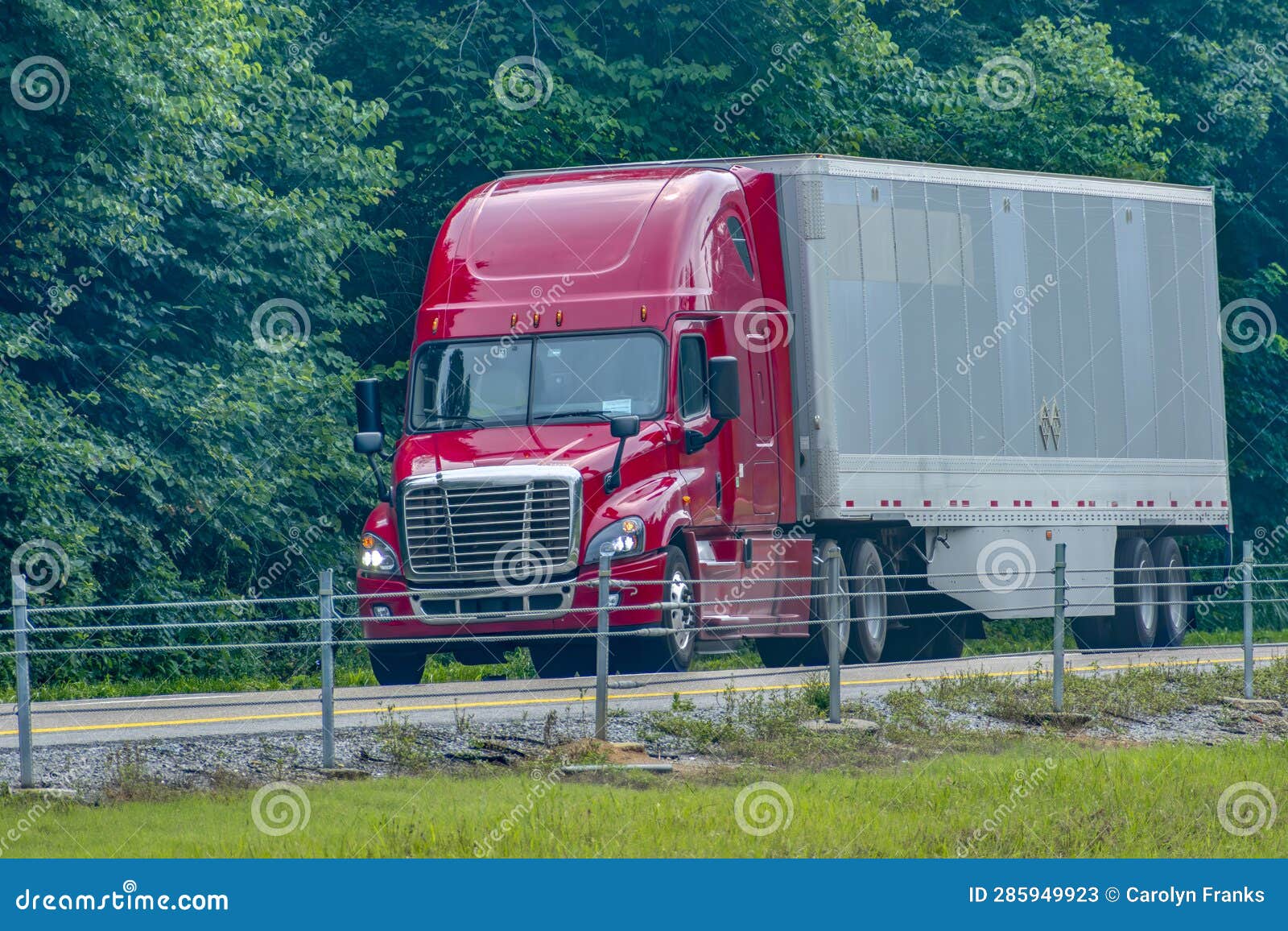
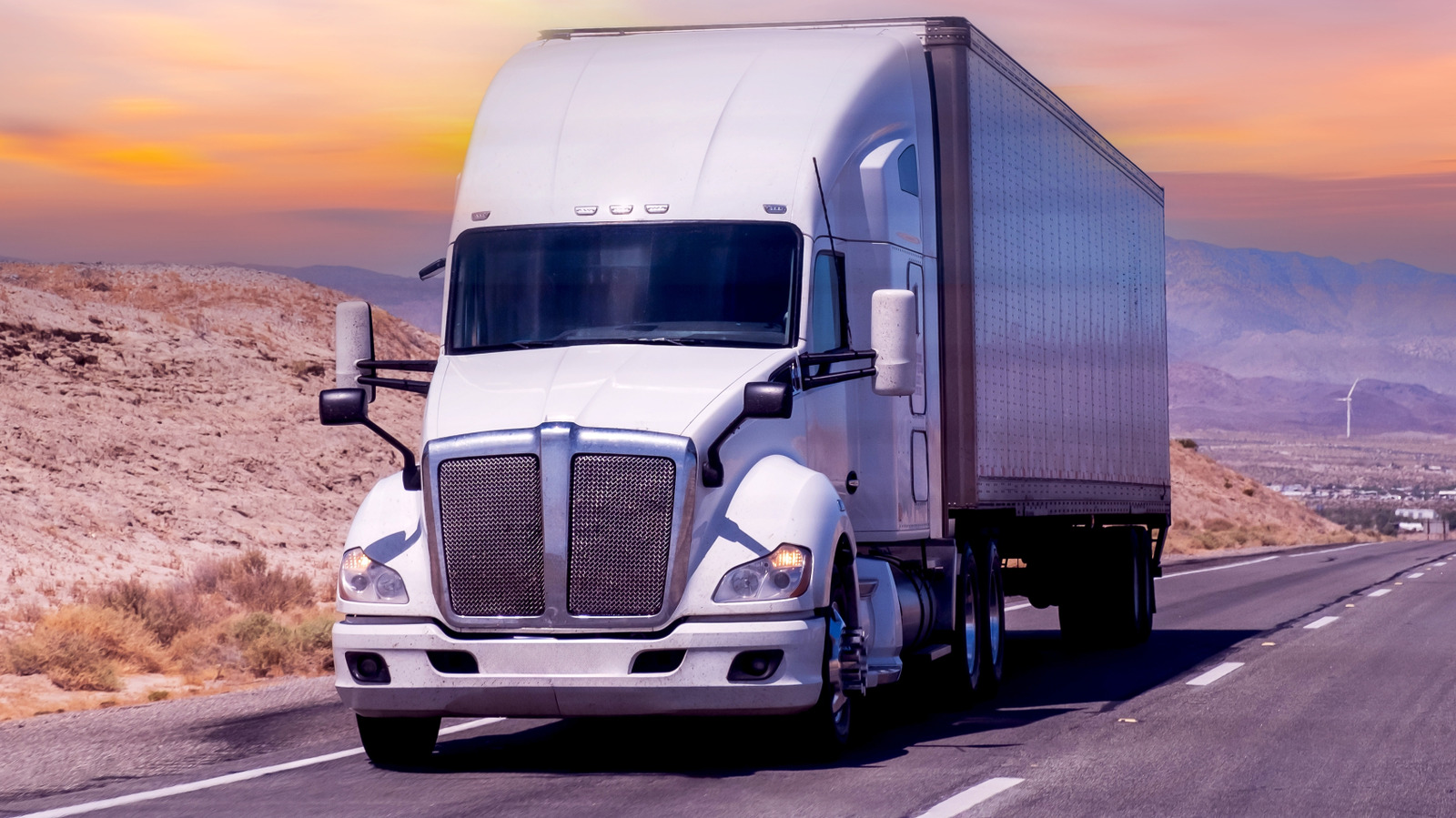
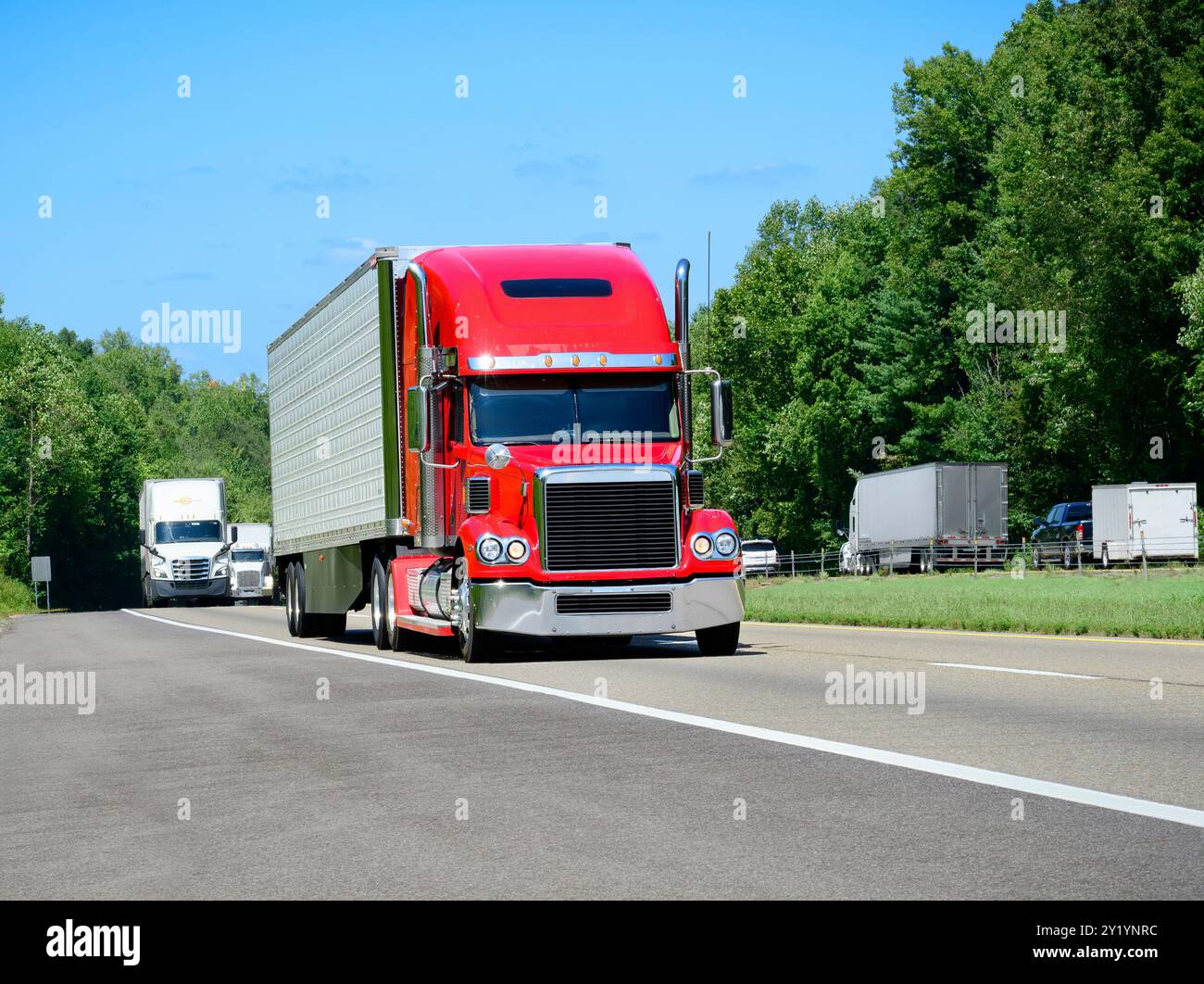
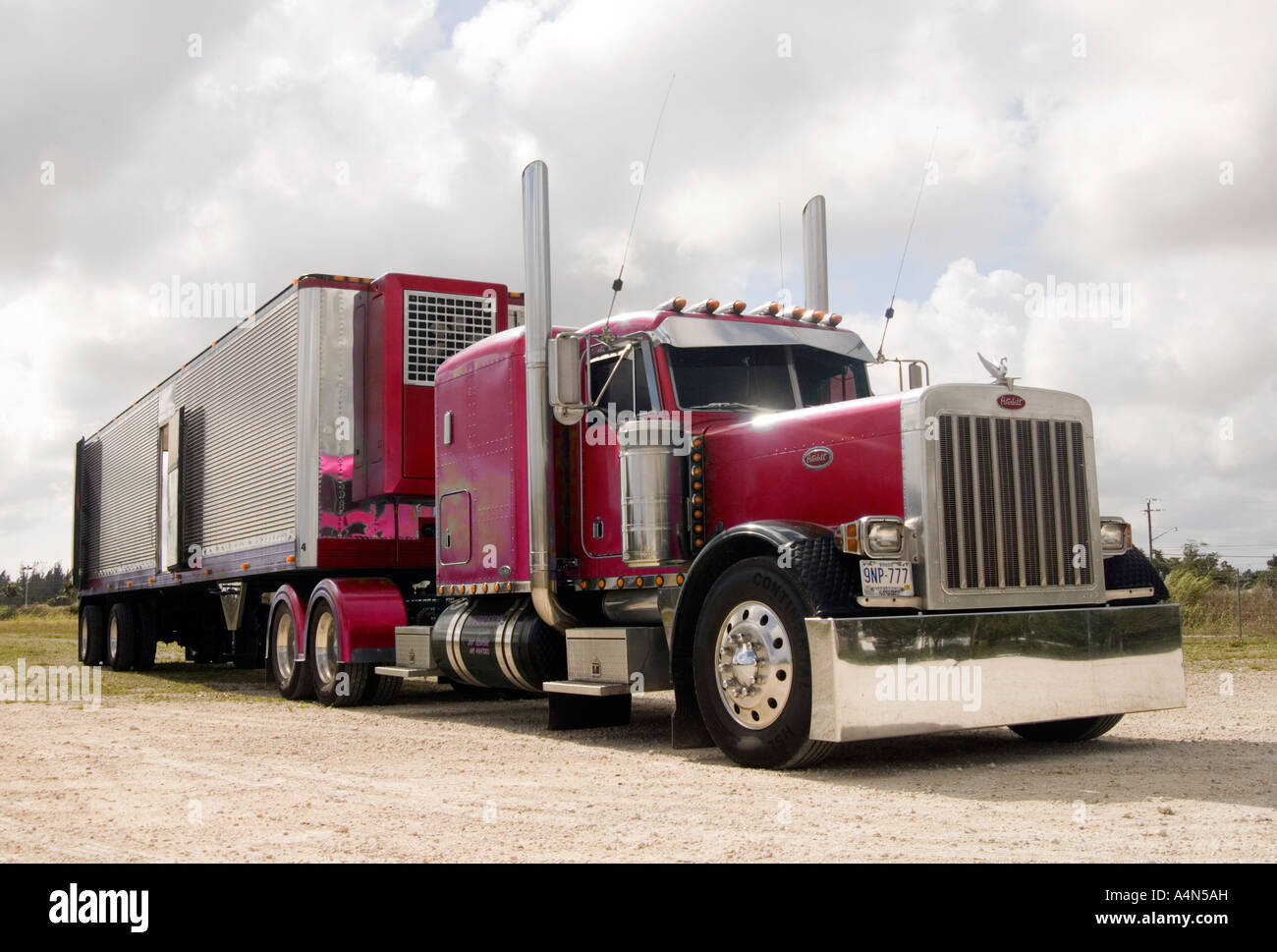
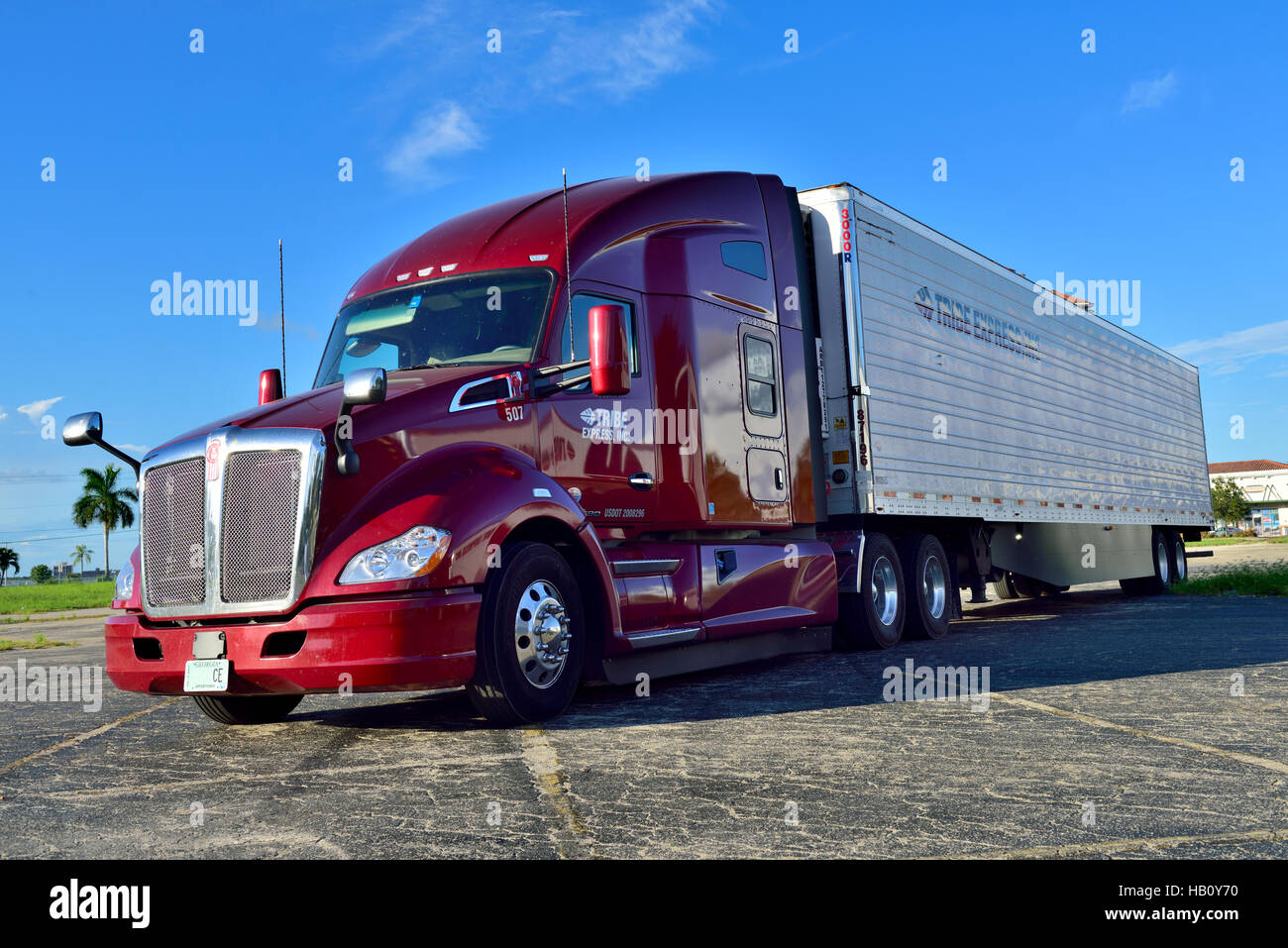
An 18-wheeler—commonly referred to as a semi-truck, tractor-trailer, or big rig—is a commercial vehicle combination consisting of a three-axle towing tractor and a two-axle semi-trailer. The 18 total wheels distribute heavy freight weight across multiple axles to meet federal bridge laws and safely transport up to 80,000 pounds of gross vehicle weight.
Wheel Architecture and Axle Configuration
The term "18-wheeler" derives directly from the specific wheel count and arrangement across the tractor and trailer combination. A standard heavy-duty commercial combination relies on five distinct axle positions to manage tire loading, vehicle stability, and tractive effort.
Front Tractor: Steer Axle: 2 (1 + 1)
Rear Tractor: Tandem Drive Axles: 8 (2 + 2) (2 + 2)
Semi-Trailer: Tandem Trailer Axles: 8 (2 + 2) (2 + 2)
Steer Axle (Front Tractor): The front axle of the tractor carries two single wheels (one on each side). These tires are responsible for directional control, steering geometry, and front-end weight distribution.
Drive Axles (Rear Tractor): Behind the cab sit two tandem drive axles. Each axle features two dual-wheel assemblies per side, accounting for eight wheels total ($2 \text{ axles} \times 4 \text{ wheels}$). These axles transfer engine torque to the road surface while bearing the forward weight of the semi-trailer.
Trailer Axles (Rear Semi-Trailer): The rear of a standard 53-foot semi-trailer rests on a tandem axle assembly (often called a "bogie"). Like the tractor drive axles, each trailer axle utilizes two dual-wheel assemblies per side, totaling eight wheels ($2 \text{ axles} \times 4 \text{ wheels}$).
The primary physical purpose of this 18-wheel arrangement is weight distribution. By spreading the gross weight over 18 contact patches, the vehicle minimizes pavement deflection, reduces thermal wear on tires, and prevents structural damage to highway infrastructure. In specialized applications, fleets may utilize wide-base "super single" tires to replace dual-wheel pairs, but the standard 18-wheel layout remains the dominant configuration across North American freight corridors.
Federal Weight Limits and Dimensional Standards
In the United States, commercial motor vehicle weights and dimensions are strictly governed on Interstate highways by the Federal Highway Administration (FHWA) and state departments of transportation. Compliance with these standards is enforced through highway weigh stations, weigh-in-motion (WIM) sensors, and roadside inspections.
Gross Vehicle Weight Rating and Axle Capacities
Without special oversize or overweight permits, a standard 18-wheeler is restricted to a maximum Gross Vehicle Weight (GVW) of 80,000 pounds ($36,287 \text{ kg}$). This maximum limit encompasses the weight of the tractor, trailer, fuel, accessories, driver, and cargo. In addition to total gross weight, federal law limits the load placed on individual axle groupings:
- Single Axle Limit: Maximum 20,000 pounds.
- Tandem Axle Limit: Maximum 34,000 pounds (applies to both the tractor drive tandem and the trailer tandem).
- Steer Axle Limit: Typically restricted to 12,000 pounds based on manufacturer tire ratings and axle design.
The Federal Bridge Gross Weight Formula
To protect bridges from stress induced by closely spaced heavy loads, federal regulations enforce the Federal Bridge Gross Weight Formula:
$$W = 500 \left( \frac{LN}{N-1} + 12N + 36 \right)$$
Where:
- $W$ = maximum overall gross weight on any group of two or more consecutive axles (rounded to the nearest 500 pounds).
- $L$ = distance in feet between the outer axles of any group of two or more consecutive axles.
- $N$ = number of axles in the group under consideration.
Applying this formula ensures that longer wheelbases can carry maximum legal weights safely, whereas shorter combinations must reduce total cargo weight to avoid structural shear stress on bridge spans.
- 80,000 lbs MAX GROSS WEIGHT
- Steer Axle: Max 12,000 lbs (2 Tires)
- Tandem Drive Axles: Max 34,000 lbs (8 Tires)
- Tandem Trailer Axles: Max 34,000 lbs (8 Tires)
Standard Vehicle Dimensions
- Overall Length: While federal law does not limit overall tractor-trailer combination length on the National Network, trailer lengths are standardized. The standard dry van or refrigerated trailer measures 53 feet ($16.15 \text{ meters}$) in length.
- Overall Width: The standard federal limit is 102 inches ($8.5 \text{ feet}$ or $2.6 \text{ meters}$), excluding exterior mirrors and safety devices.
- Overall Height: Height is governed primarily by state regulation rather than federal statute, ranging between 13 feet 6 inches ($4.11 \text{ meters}$) in Eastern states to 14 feet ($4.27 \text{ meters}$) in Western states.
Mechanical Systems: Powertrain and Pneumatics
The modern 18-wheeler relies on heavy-duty mechanical, hydraulic, and pneumatic systems engineered for continuous long-haul operations under severe stress.
High-Torque Diesel Powertrains
Commercial Class 8 tractors are powered by heavy-duty inline-6 diesel engines ranging from 12.8 to 15.0 liters in displacement. Unlike passenger car engines optimized for high horsepower at high RPM, commercial diesel engines are engineered for high torque at low engine speeds (typically between 1,100 and 1,400 RPM).
- Horsepower Output: Typically ranges between 400 hp and 600 hp.
- Torque Output: Ranges between 1,400 lb-ft and 2,050 lb-ft. High low-end torque allows the vehicle to start moving 80,000 pounds from a complete stop and maintain speed on steep mountain grades.
- Emissions Equipment: Exhaust gas recirculation (EGR), Diesel Particulate Filters (DPF), and Selective Catalytic Reduction (SCR) systems using Diesel Exhaust Fluid (DEF) are standard to comply with EPA emissions standards.
Transmissions: Manual vs. Automated Manual (AMT)
Historically, 18-wheelers utilized unsynchronized manual transmissions requiring multi-clutching or "floating gears" (shifting without the clutch pedal by matching engine RPM to drive gear speed). Standard manual configurations included 10-speed, 13-speed, and 18-speed gearboxes.
Modern commercial fleets predominantly specify Automated Manual Transmissions (AMTs) such as the Detroit DT12, Volvo I-Shift, or Eaton Endurant. AMTs retain the mechanical efficiency of a traditional manual gearbox with heavy-duty gears and a clutch, but use electronic actuators and microprocessors to perform shifts automatically. This technology optimizes fuel economy, minimizes driver fatigue, and reduces drivetrain shock loads.
Pneumatic (Air) Brake Architecture
Due to the extreme kinetic energy generated by an 80,000-pound combination at highway speeds, 18-wheelers utilize compressed air brake systems regulated under Federal Motor Vehicle Safety Standard (FMVSS) No. 121. Air brakes provide distinct advantages over hydraulic brakes, including resistance to fluid leaks and the ability to connect and disconnect trailers quickly via flexible air lines ("glad-hands").
- Air Compressor (Engine-Driven)
- Primary Reservoir & Air Dryer
- Tractor Service Brakes (Dual)
- Trailer Supply Emergency Line
Key elements of the pneumatic braking system include:
- Air Compressor and Governor: An engine-driven compressor charges system air reservoirs to a operating pressure between 100 and 125 pounds per square inch (psi).
- Dual Air Circuits: The primary circuit controls rear drive and trailer brakes; the secondary circuit controls front steer-axle brakes. This redundancy ensures stopping capability if one circuit loses pressure.
- Spring (Parking/Emergency) Brakes: Unlike hydraulic brakes that require hydraulic pressure to apply force, an 18-wheeler's parking brake uses powerful mechanical springs. Air pressure must be applied to hold the parking brakes open. If system air pressure drops below a critical threshold (typically 20–45 psi), the springs automatically force the brake shoes or pads against the drum or rotor, bringing the vehicle to an emergency stop.
- Foundation Brakes: Most trailers and tractors use S-cam drum brakes or air disc brakes. Disc brakes provide shorter stopping distances and resist thermal fade during prolonged downhill descent.
Comparative Specifications of Combination Commercial Vehicles
The following matrix compares common commercial combination configurations operated across North American freight networks to contextualize the standard 18-wheeler against other vehicle classes.
| Feature / Specification | Standard 18-Wheeler (53' Single Trailer) | Rocky Mountain Double (Tractor + 2 Trailers) | Straight Truck (Class 7/8 Box Truck) | Super-Heavy Oversize Load Combination |
|---|---|---|---|---|
| Total Wheel Count | 18 | 26 to 34 | 6 to 10 | 34 to 100+ |
| Axle Layout | 1 Steer + 2 Drive + 2 Trailer | 1 Steer + 2 Drive + 4–6 Trailer | 1 Steer + 1–2 Drive | Multi-axle hydraulic platform dolleys |
| Max Standard GVWR | 80,000 lbs | 105,500 to 129,000 lbs | 33,000 to 54,000 lbs | Exceeds 150,000+ lbs (Permit Required) |
| Primary Usage | Long-haul TL, regional distribution | Regional LTL, Western turnpikes | Local delivery, municipal service | Heavy equipment, industrial infrastructure |
| CDL Requirements | Class A | Class A with Doubles/Triples (T) | Class B or Class A | Class A + Specialized Oversize Permits |
| Engine Displacement | 12.8L – 15.0L Diesel | 15.0L Diesel | 6.7L – 9.0L Diesel | 15.0L – 16.0L High-Output Diesel |
| Brake System | Dual Pneumatic (Air) | Dual Pneumatic with Relay Valves | Hydraulic or Single/Dual Air | Pneumatic with Auxiliary Hydraulic Steer |
Driver Licensing and Federal Regulations
Operating an 18-wheeler requires specialized training, health certifications, and compliance with rules enforced by the Federal Motor Carrier Safety Administration (FMCSA).
- CDL CLASS A REQUIREMENTS
- Knowledge & Skills Testing (General Knowledge, Air Brakes, Combination)
- DOT Medical Examination (Physical fitness, vision, cardiovascular)
- Drug & Alcohol Clearinghouse Registration
- Optional Endorsements:
- Hazardous Materials (H)
- Tank Vehicles (N)
- Double/Triple Trailers (T)
Commercial Driver's License (CDL) Requirements
Drivers operating a vehicle combination with a Gross Combination Weight Rating (GCWR) over 26,000 pounds—where the towed unit exceeds 10,000 pounds—must hold a Class A Commercial Driver's License.
- Entry-Level Driver Training (ELDT): Candidates must complete standardized theory and behind-the-wheel training from an registered ELDT provider before taking their CDL skills test.
- Written Knowledge & Skills Exams: Testing covers general combination vehicle handling, air brake mechanics, pre-trip safety inspections, and backing maneuvers.
- Special Endorsements: Transporting specialized freight requires added testing:
- Tank Vehicle (N): Required for bulk liquid transport.
- Hazardous Materials (H): Requires background checks and TSA clearance.
- Doubles/Triples (T): Required for towing multiple trailers.
Hours of Service (HOS) Compliance
To minimize driver fatigue, federal HOS rules enforce rigid operating windows for property-carrying commercial drivers:
- 11-Hour Driving Limit: Drivers may drive a maximum of 11 hours after 10 consecutive hours off duty.
- 14-Hour Duty Window: Driving is not permitted beyond the 14th consecutive hour after coming on duty, following 10 consecutive hours off duty.
- 30-Minute Break: Drivers must take a 30-minute break after 8 cumulative hours of driving without an interruption of at least 30 minutes.
- 60/70-Hour Duty Limits: Driving is prohibited after accumulating 60 hours on duty in 7 consecutive days, or 70 hours on duty in 8 consecutive days. A driver may reset this calculation by taking 34 consecutive hours off duty (the "34-hour restart").
- Electronic Logging Devices (ELDs): Commercial tractors must be equipped with compliant ELD devices connected directly to the engine ECM to automatically record driving time, engine hours, and vehicle location.
Operating Costs and Maintenance Frameworks
Managing an 18-wheeler involves high variable operating expenses, capital depreciation, and stringent preventive maintenance (PM) routines.
Per-Mile Operating Cost Breakdown
Fleet management metrics evaluate operating efficiency on a cost-per-mile (CPM) basis. Total operating costs typically hover between $1.85 and $2.40 per mile, depending on regional fuel pricing, insurance rates, and equipment age.
- Fuel: Represents 25% to 35% of total operating expenses. A standard 18-wheeler averages 6.0 to 7.5 miles per gallon (MPG), depending on payload weight, aerodynamics, speed, and terrain.
- Driver Compensation: Wages and benefits account for 35% to 45% of total CPM.
- Maintenance and Repairs: Includes oil sampling, tire replacement, brake adjustments, and overhaul reserves (typically $0.15 to $0.25 per mile).
- Insurance and Permits: Commercial auto liability, cargo insurance, physical damage coverage, and IFTA (International Fuel Tax Agreement) registration add significant fixed costs.
Preventive Maintenance Intervals
Commercial fleets execute structured maintenance programs based on operational mileage intervals to prevent roadside breakdowns and Out-of-Service (OOS) violations during inspections:
- PM Service A (Inspection & Lube - Every 10,000 to 15,000 miles): Includes full chassis lubrication, oil level check, air system drain validation, brake adjustment check, tire tread depth inspection, and lighting verification.
- PM Service B (Oil & Filter Change - Every 25,000 to 50,000 miles): Includes engine oil and filter replacement, fuel filter changes, coolant analysis, drive belt inspection, and steering gear evaluation.
- PM Service C (Major Service - Annual or 100,000+ miles): Comprehensive vehicle overhaul inspection, including transmission fluid changes, differential fluid changes, wheel-end bearing repacks, suspension bushing replacement, and air dryer cartridge updates.
Fleet Implementation and Risk Mitigation Protocols
To maintain fleet safety, operational uptime, and regulatory compliance, motor carriers should execute the following core management protocols:
Implement Strict Pre-Trip and Post-Trip Inspection Procedures
Drivers must complete a Driver Vehicle Inspection Report (DVIR) before and after every trip under 49 CFR § 396.11. Safety checks should prioritize:
- Air pressure buildup times and air leakage rate tests (must not exceed 3 psi per minute for single vehicles or 4 psi per minute for combinations with brakes released).
- Tire tread depth (minimum 4/32-inch on steer tires; minimum 2/32-inch on drive and trailer tires).
- Fifth-wheel locking jaw engagement around the trailer kingpin.
Establish Active Tire Pressure Monitoring Systems (TPMS)
Under-inflated tires increase rolling resistance, drastically degrade fuel economy, and cause sidewall heat buildup that leads to highway blowouts. Fleets should equip all 18 wheel positions with automated inflation systems (on trailer tandems) or direct-sensing TPMS telematics that alert dispatch and drivers to pressure drops in real time.
Deploy Advanced Driver Assistance Systems (ADAS)
To reduce severe front-to-rear collisions and rollover incidents, carriers should specify tractors with:
- Forward collision warning and Active Braking Systems (ABS) with automated emergency braking (AEB).
- Electronic Stability Control (ESC) to prevent jackknife events during high-speed evasive maneuvers.
- Lane departure warning systems and blind-spot side-radar coverage.
Frequently Asked Questions
Why do semi-trucks have 18 wheels instead of 4 or 6?
An 18-wheeler uses 18 wheels spread over 5 axles to distribute heavy cargo loads over a larger surface area. This distribution keeps single and tandem axle weights within federal highway limits (20,000 lbs per single axle, 34,000 lbs per tandem axle), protecting road surfaces from excessive wear while maintaining stability when hauling up to 80,000 pounds.
What is the difference between a semi-truck, an 18-wheeler, and a tractor-trailer?
These terms generally refer to the same vehicle setup. A "semi-truck" or "tractor" is the engine-containing power unit. A "semi-trailer" is the unpowered freight carrier whose front rests on the tractor. The combination of both is a "tractor-trailer," which, when configured with 5 axles and 18 tires, is colloquially called an "18-wheeler."
How far can an 18-wheeler travel on a full tank of fuel?
Most Class 8 tractors carry two side-mounted fuel tanks with a combined capacity of 200 to 300 gallons of diesel fuel. At an average fuel economy of 6.5 miles per gallon, a fully fueled 18-wheeler has an operational range of approximately 1,300 to 1,950 miles before needing to refuel.
How does an 18-wheeler air brake system differ from passenger car brakes?
Passenger cars use hydraulic fluid to transfer pedal force to brake calipers. 18-wheelers use compressed air to actuate brake shoes or pads. Air systems store compressed air in tanks, allowing quick trailer coupling, and feature emergency spring brakes that automatically engage if air pressure is completely lost, providing a fail-safe mechanical stopping mechanism.
What causes an 18-wheeler to jackknife, and how can it be prevented?
Jackknifing occurs when the drive wheels of the tractor lose traction, causing the trailer to push the rear of the tractor sideways until the cab and trailer fold together like a pocket knife. Preventative measures include maintaining proper tire tread depth, using anti-lock braking systems (ABS), applying engine retarders (Jake brakes) cautiously on slippery surfaces, and avoiding sudden, hard braking maneuvers while cornering.