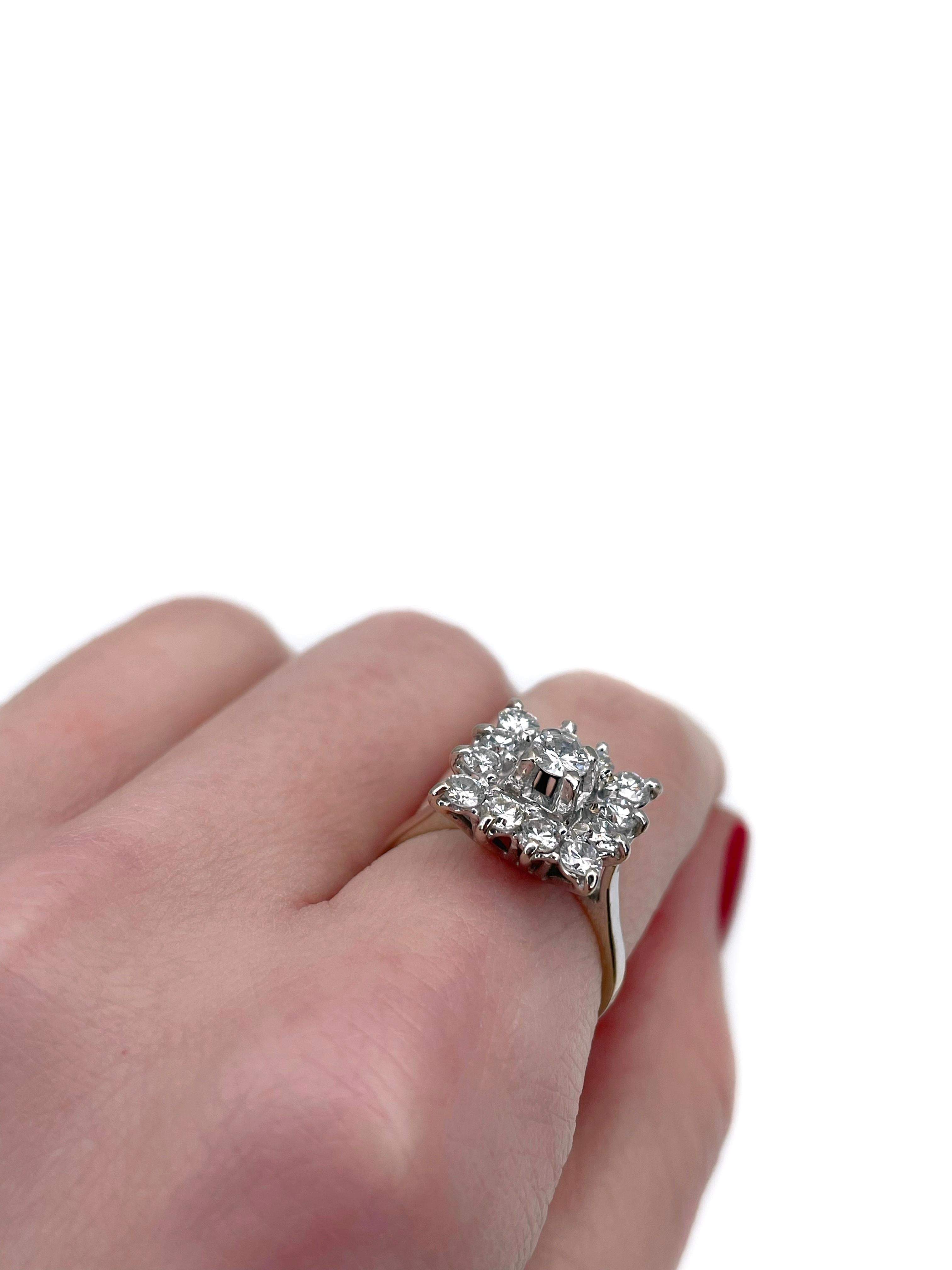
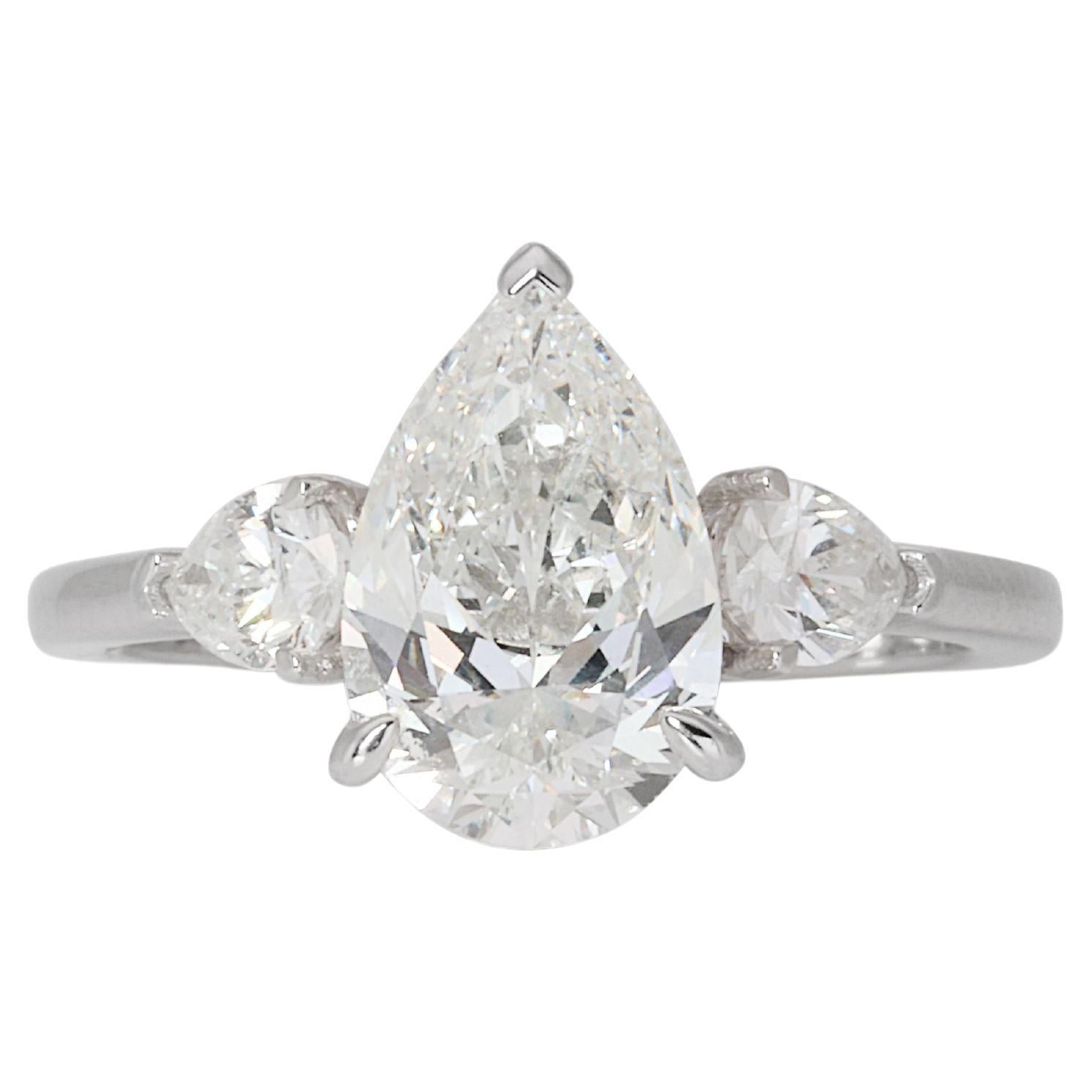
Acquiring a 17 carat diamond ring represents an extraordinary milestone in fine jewelry, combining massive visual impact with profound gemological rarity. Achieving maximum sparkling elegance while securing the best market price requires balancing cut precision, optical light return, color transparency, and structural setting design, whether selecting a natural investment-grade diamond or an advanced lab-grown alternative.
The Rarity and Physical Scale of a 17 Carat Diamond
A 17 carat diamond is an extraordinary gemological rarity. In physical terms, 17 carats equals exactly 3.4 grams of mass. While that weight may sound modest on a scale, in the world of gemstones, a single crystal of gemstone-quality diamond capable of yielding a 17 carat polished stone requires a rough crystal weighing anywhere from 35 to 50 carats before cutting. Less than a fraction of one percent of all mined rough diamonds worldwide reach a size capable of producing a finished gem above 10 carats, making a 17 carat polished diamond an elite, ultra-luxury asset.
The physical surface dimensions of a 17 carat diamond vary significantly depending on the cut shape:
- Round Brilliant: A well-cut 17 carat round diamond measures approximately 16.5 mm to 17.0 mm in diameter. Its impressive face-up surface area completely dominates the finger, offering maximum symmetrical light reflection.
- Oval Cut: An elongated oval of 17 carats often measures roughly 19.5 mm by 13.5 mm, creating a slighter, finger-lengthening silhouette with an expansive surface area.
- Emerald Cut: Featuring step-cut facets, an emerald cut of this weight frequently measures around 17.5 mm by 13.0 mm, highlighting deep optical transparency and a "hall-of-mirrors" visual presentation.
- Cushion and Radiant Cuts: These shapes combine deep pavilions with broad crowns, typically measuring around 15.5 mm by 15.5 mm, creating dense concentrations of spectral fire.
Because of its sheer physical scale, every interior feature, light ray, and optical facet within a 17 carat diamond is magnified. Minor inclusions or slight color tints that remain unnoticeable in a 1.00 or 2.00 carat diamond become visible to the naked eye at 17 carats. Understanding how to navigate the traditional 4 Cs (Cut, Clarity, Color, and Carat Weight) is critical to maintaining high visual appeal without overpaying.
Maximizing Sparkling Elegance: Gemological Criteria for High-Carat Stones
To achieve maximum brilliance, fire, and scintillation in a 17 carat stone, visual elegance must take priority over absolute weight retention during the selection process.
Cut Precision: The Engine of Sparkle
The cut of a diamond determines how efficiently light enters through the crown, bounces off the interior pavilion facets, and returns to the eye of the viewer. In a stone as deep and wide as a 17 carat gem, an improper cut angle causes light leakage through the bottom or sides, resulting in a dull, lifeless appearance known as a "fisheye" or "nailhead" effect.
For brilliant cuts (Round, Oval, Pear, Radiant, Cushion), insist on a cut grade of Excellent (or Ideal on specialized gemological scales). Pay close attention to table percentage (typically 54% to 60%) and depth percentage (60% to 62.5% for round diamonds). For step cuts like the Emerald or Asscher, symmetry and facet alignment dictate the crispness of the flash, making precise polish and symmetry parameters mandatory.
Clarity Selection: Visual Purity Without Excess Premium
Clarity measures the presence of internal inclusions or surface blemishes. Because 17 carat diamonds feature broad, open facets, clarity must be selected with care:
- Step Cuts (Emerald/Asscher): Require higher clarity thresholds. A grade of VVS2 or VS1 is recommended to guarantee an eye-clean appearance, as open tables reveal dark inclusions easily.
- Brilliant Cuts (Round/Oval/Radiant): The complex facet patterns of brilliant cuts disperse light dramatically, effectively masking small inclusions. A carefully vetted VS2 or eye-clean SI1 diamond can offer pristine visual elegance while saving tens of thousands of dollars compared to a VVS or Flawless grade.
Always review a high-resolution 360-degree video or inspect the diamond in person alongside its official grading report from the Gemological Institute of America (GIA) to ensure inclusions are not located directly under the center table.
Color Grading and Metal Pairings
Large diamonds act like prisms, concentrating and displaying body color more intensely than smaller stones.
- Colorless Range (D–F): Essential for platinum or 18k white gold settings where crisp, icy brilliance is desired. A D or E color 17 carat diamond provides an extraordinary display of visual purity.
- Near-Colorless Range (G–J): Offers exceptional economic value. A G or H color diamond appears face-up colorless to all but trained gemologists, particularly when set in white gold or platinum with brilliant facet arrangements. If setting the ring in 18k yellow gold or rose gold, an I or J color stone delivers a warm, rich tone while reducing the acquisition cost significantly.
Natural vs. Lab-Grown 17 Carat Diamonds
The modern luxury market provides two distinct pathways for acquiring a 17 carat diamond ring: natural mined diamonds and lab-grown diamonds. Both share identical physical, chemical, and optical properties (crystallized carbon structure, 10 on the Mohs hardness scale, refractive index of 2.42), but their market economics, supply chains, and resale dynamic differ dramatically.
| Attribute | Natural Diamond (17ct) | Lab-Grown (17ct) |
|---|---|---|
| Origin | Mined from the Earth | CVD or HPHT Lab |
| Gemological Structure | Pure Carbon Crystal | Pure Carbon Crystal |
| Rarity | Extreme (Ultra-Rare) | Manufactured |
| Relative Cost (D-VS2 Benchmark) | High ($350k - $1.5M+) | Accessible ($25k-$80k) |
| Value Retention | Strong Capital Value | Low Resale Liquidity |
Natural Mined 17 Carat Diamonds
A natural diamond of this magnitude represents hundreds of millions of years of geologic pressure. Natural stones maintain high asset liquidity, secondary market demand at global auction houses, and prestige. Natural 17 carat diamonds of top tier quality function both as fine wearable jewelry and as long-term physical assets, making them favored by high-net-worth individuals and collectors.
Lab-Grown 17 Carat Diamonds
Advanced technology utilizing Chemical Vapor Deposition (CVD) or High-Pressure High-Temperature (HPHT) methods now allows gem labs to grow massive, high-clarity diamond crystals. A lab-grown 17 carat diamond ring offers identical visual elegance, fire, and brilliance as a mined diamond, but at a fraction of the cost—often 80% to 95% less than a natural counterpart of equivalent grading.
For buyers seeking maximum visual presence and red-carpet scale without investing seven-figure sums, high-carat lab-grown diamonds represent a compelling option. However, buyers should understand that lab-grown diamonds do not hold secondary market resale value in the manner natural diamonds do.
Pricing Benchmarks and Market Factors
Pricing for 17 carat diamond rings scales non-linearly. In diamond valuation, the cost-per-carat increases exponentially as total carat weight increases, because larger rough crystals are progressively rarer.
Below is an indicative benchmark breakdown for 17 carat diamonds based on cut shape, origin, and quality tiers.
| Diamond Origin & Shape | Color / Clarity Tier | Cut / Polish / Symmetry | Estimated Price Range (USD) | Primary Value Consideration |
|---|---|---|---|---|
| Natural Round Brilliant | D - F / IF - VVS2 | Excellent / Excellent | $900,000 – $2,200,000+ | Investment-grade purity; maximum global demand. |
| Natural Oval / Cushion | G - H / VS1 - VS2 | Very Good to Excellent | $400,000 – $850,000 | Excellent visual spread; high elegance at better value. |
| Natural Emerald Cut | F - G / VVS2 - VS1 | Very Good to Excellent | $500,000 – $1,100,000 | Demands clean interior clarity; ultra-sophisticated look. |
| Natural Fancy Cut (K-M) | I - K / SI1 - SI2 | Good to Very Good | $220,000 – $420,000 | Lower entry price for natural mined stone; pairs with gold. |
| Lab-Grown Round | D - F / VVS1 - VS2 | Ideal / Ideal | $35,000 – $75,000 | Maximum optical purity and scale for accessible budget. |
| Lab-Grown Oval / Emerald | E - G / VS1 - VS2 | Ideal / Excellent | $25,000 – $55,000 | Outstanding finger coverage; sharp price advantage. |
Key Factors Influencing Price Beyond the 4 Cs
- Fluorescence: Strong blue fluorescence can decrease the value of top-color (D–F) natural diamonds by 5% to 15% because it may cause a hazy appearance in sunlight. Conversely, faint or medium fluorescence in G–J color diamonds can make the stone look whiter without reducing clarity, offering a smart pricing advantage.
- Certification Authority: Independent certification from internationally recognized laboratories—primarily the GIA for natural diamonds and the GIA or IGI (International Gemological Institute) for lab-grown stones—is mandatory. Uncertified stones or reports from unaccredited labs carry significant pricing discounts due to risks of inflated grading.
- Proportions and Shape Ratios: Premium shapes (such as an oval with a 1.35–1.50 length-to-width ratio or an emerald cut with a 1.40–1.50 ratio) command higher prices than off-ratio stones that appear overly wide or stubby.
Structural Engineering and Setting Considerations
A 17 carat diamond center stone weighs 3.4 grams and carries substantial height and width. The setting for a diamond of this scale is not merely decorative; it is an essential piece of structural engineering designed to protect an asset of immense value while permitting maximum light entry.
Metal Selection
- Platinum (Pt950): The gold standard for mounting high-carat diamonds. Platinum is dense, hypoallergenic, and extremely durable. Unlike white gold, platinum does not wear away over time; instead, it displaces metal, creating a protective patina that holds large stones securely.
- 18K Gold (Yellow, Rose, or White): Ideal for warm-toned diamonds or traditional aesthetic preferences. When using yellow or rose gold for the band, master jewelers often recommend utilizing a platinum head (prongs and basket) to prevent yellow metallic reflections from distorting the white color of a top-grade center diamond.
Mounting Style and Security Measures
- Six-Prong or Double-Claw Systems: Single four-prong settings leave a 17 carat stone vulnerable to impact damage or twisting. Custom double-claw prongs (eight contact points grouped in pairs) or robust six-prong mountings provide superior mechanical security while maintaining elegant lines.
- Under-Gallery Basket Reinforcements: A bridge or under-gallery wire ring beneath the main center stone adds structural rigidity to the shank, preventing the ring from warping under pressure and supporting the stone’s low-seated gravity.
- Shank Thickness and Ergonomics: The band width should measure at least 2.2 mm to 2.8 mm wide. Thin, delicate bands often cause top-heavy 17 carat rings to spin sideways on the finger. Incorporating sizing beads or an ergonomic rounded-square shank (Euro-shank) stabilizes the ring upright on the hand.
Smart Purchasing Strategies to Secure the Best Price
Acquiring a 17 carat diamond ring involves navigating specialized luxury channels. Implementing strategic buying principles ensures you secure peak elegance without paying unnecessary retail markups.
1. Work Direct with Wholesale Brokers or Specialized Cutters
Retail luxury boutiques on high-fashion streets carry immense overhead costs, brand premiums, and marketing expenses, often marking up high-carat natural diamonds by 40% to 100% over wholesale trade values. Partnering directly with certified diamond wholesalers, specialized private jewelers, or primary sight-holder networks allows you to access stones at secondary-market or trade-level pricing.
2. Target the "Sweet Spots" of Grading
To maximize your budget without compromising visual brilliance:
- Select an eye-clean VS2 clarity rather than paying a massive premium for VVS1 or Flawless grades.
- Choose a G or H color grade if mounting in white metals, or I to J color for yellow gold settings. The visual difference to the unassisted eye is negligible, but price savings range between 25% and 40%.
- Avoid arbitrary round numbers if purchasing natural diamonds. While 17.00 carats carries psychological appeal, a 16.50 to 16.80 carat diamond offers nearly identical physical dimensions (differing by mere fractions of a millimeter) at a substantially lower price per carat.
3. Verify Video and Light Performance Maps
Before committing funds, request high-resolution 360-degree video, an ASET (Angular Spectrum Evaluation Tool) image, or a Scope light performance map. These tools confirm that the diamond possesses balanced light reflection across all facets and lacks dead spots or heavy light leakage.
4. Insist on Full Verification and Independent Appraisal
Ensure the sale is contingent upon independent third-party verification. The diamond's laser inscription matching its GIA or IGI certificate must be verified under microscope inspection by an independent certified appraiser prior to final funds release. Secure full-value insurance coverage through specialized jewelry underwriters before taking physical delivery.
Frequently Asked Questions
How large does a 17 carat diamond ring look on a standard finger?
A 17 carat diamond makes a dramatic visual statement. On an average finger (US size 6 to 7), a round brilliant 17 carat diamond (approx. 16.8 mm diameter) covers over 80% to 90% of the finger width, extending almost from knuckle to joint. Oval and elongated shapes often cover the full width of the finger completely.
What is the realistic price of a high-quality natural 17 carat diamond ring?
A high-quality natural 17 carat diamond ring featuring an eye-clean clarity (VS1–VS2) and colorless/near-colorless grading (D–G) typically ranges from $450,000 to $1,500,000+. Top-tier D Color, Flawless stones of this weight can exceed $2,000,000 at international auctions, while stones with lower color or clarity grades can start around $220,000.
Are 17 carat lab-grown diamonds physically durable for daily wear?
Yes. Lab-grown diamonds possess the exact crystal lattice structure, hardness (10 on the Mohs scale), and density of natural mined diamonds. They are equally resistant to scratching, chipping, and chemical exposure, making them fully durable for long-term wear.
Which diamond cut provides the most visual size and sparkle at 17 carats?
For sheer brilliance and fire, the Round Brilliant cut is unmatched due to its mathematically optimized facet design. However, for maximum visual coverage (surface footprint relative to weight), Oval, Marquise, and Pear shapes provide a larger face-up appearance than round stones of identical carat weight while delivering exceptional sparkle.
How do I safely secure and insure a 17 carat diamond ring?
High-carat rings should be insured immediately upon purchase through specialized insurance providers offering scheduled personal property floaters. Ensure the policy covers mysterious disappearance, loss, theft, and damage globally at full appraised replacement value. Store the piece in a fireproof, bolted home safe or secure bank vault when not being worn.
Strategic Recommendations for Acquiring a 17 Carat Diamond Ring
When moving forward with an acquisition of this magnitude, adhere to a structured verification process to safeguard your investment and guarantee visual elegance:
- Define Your Asset Objective: Decide whether primary importance lies in long-term capital preservation (favoring natural, GIA-certified stones with top cut credentials) or achieving massive visual scale at an accessible cost (favoring premium lab-grown options).
- Require Primary Certification: Purchase only diamonds accompanied by an original, verifiable grading report from recognized authorities like the GIA or IGI. Verify the certificate number directly on the issuing lab's official online database.
- Prioritize Cut Quality Over Carat Precision: A 16.5 carat diamond with an Excellent cut will consistently outperform a poorly cut 17.2 carat diamond in brilliance, visual presence, and fire. Never sacrifice cut geometry for a slight increase in numerical weight.
- Commission a Custom Structural Mounting: Avoid pre-manufactured commercial settings. Work with a master bench jeweler to engineer a bespoke platinum or 18k gold mounting featuring double-claw prongs, a reinforced basket gallery, and a balanced shank width tailored specifically to the exact millimeter dimensions of your gemstone.