Translating 16th-century kitchen design into modern lower kitchen storage requires combining period-accurate exterior treatments with concealed contemporary utility. Historically, 16th-century kitchens relied on freestanding oak chests, low dressers, and masonry niches rather than continuous fitted cabinetry. Homeowners can replicate this aesthetic by pairing hand-pegged oak joinery, stone plinths, and forged iron hardware with hidden full-extension slides and pull-out organizers.
Historical Context: Lower Storage in the 16th-Century Kitchen
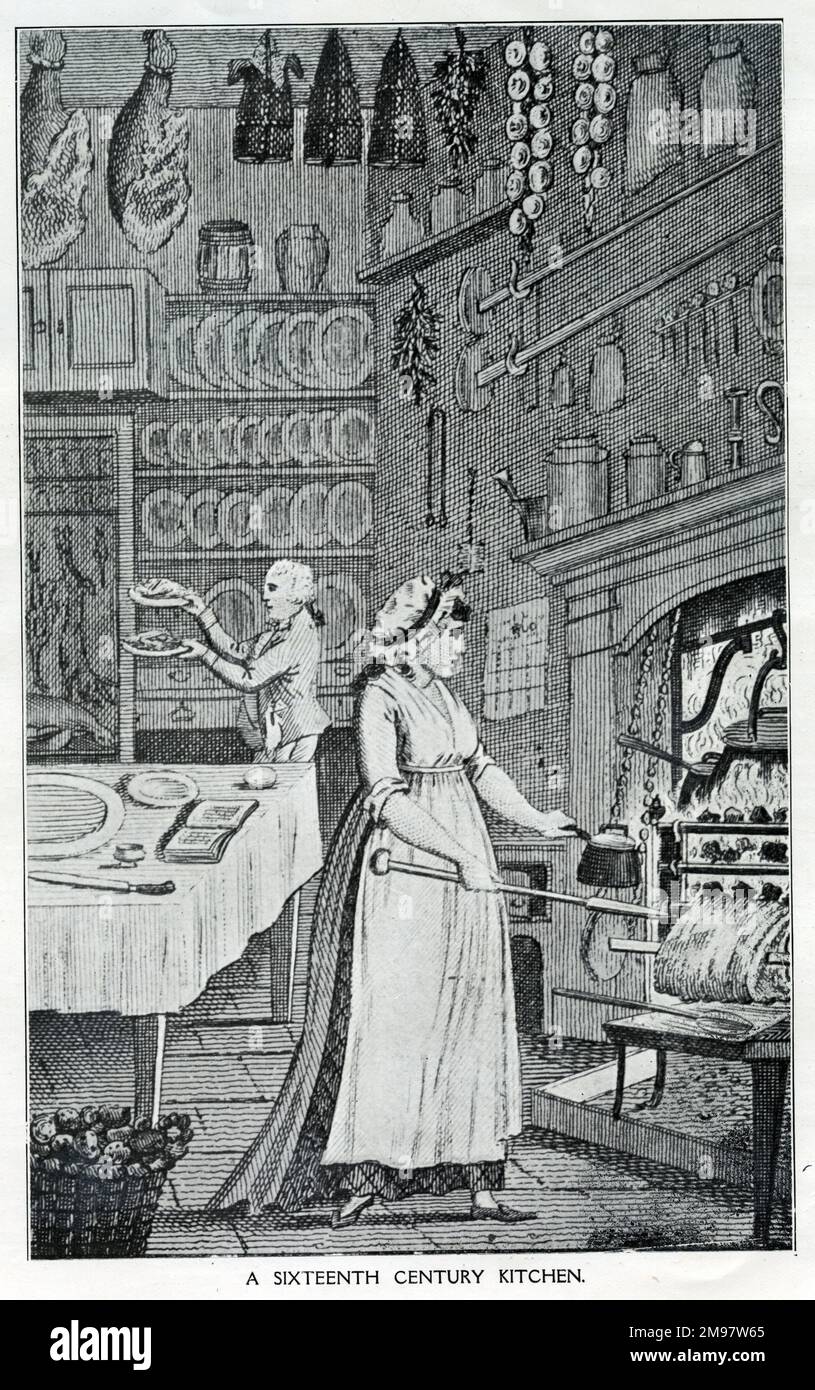
In 16th-century Europe, during the Tudor, Elizabethan, and High Renaissance eras, the kitchen was primarily a utilitarian workspace built around a central hearth or cavernous chimney arch. Unlike modern built-in kitchens, 16th-century culinary spaces did not feature continuous runs of counter-height base cabinets. Instead, lower storage was composed of heavy, freestanding wooden furniture and structural stone elements designed to withstand high heat, moisture, pests, and heavy daily use.
Lower storage during this era was dominated by several distinct vessel types:
- Hutches and Low Chests: Heavy oak chests (huts) featuring thick plank lids or front-opening doors served as the primary storage for dry grains, cured meats, and metal cookware.
- Ambries (Almries): Built-in wall niches framed in stone or thick timber, often enclosed with pierced wooden doors to allow ventilation while keeping pests away from larders.
- Dressing Boards and Credenzas: Low, sturdy tables or cupboards where food prep occurred, often featuring open slatted lower shelves for iron cauldrons, copper pots, and earthenware crocks.
- Meal Bins and Flour Chests: Deep, compartmentalized wooden boxes situated close to preparation zones to store bulk flour, oats, and legumes.
To capture the visual atmosphere of a 16th-century kitchen without sacrificing modern efficiency, interior designers must understand how these historical forms functioned. Modern base cabinets can be styled as discrete, furniture-like pieces that mirror the proportions, joinery, and grounded presence of original 16th-century joinery.
Key Architectural and Material Elements for Period-Accurate Lower Cabinets
Achieving an authentic 16th-century aesthetic in lower kitchen storage depends heavily on material selection, surface texture, and joinery details. Standard modern cabinet construction relying on smooth medium-density fiberboard (MDF) or painted shakers fails to capture the tactile quality of Renaissance-era woodwork.
- 16th-Century Lower Cabinet Architecture Structure:
- Top: Thick Slab Countertop - Butcher Block, Slate, or Soapstone
- Frame-and-Panel Front (Linenfold / Raised Oak Panels)
- Hand-Forged Wrought Iron Strap Hinges & Latch Hardware
- Bottom: Solid Masonry Plinth - Reclaimed Brick or Flagstone
Wood Species and Surface Treatment
Oak was the dominant hardwood for utilitarian furniture in 16th-century Northern Europe, while walnut and chestnut were widely used in Southern Europe. For authentic lower cabinetry, select quarter-sawn English oak, white oak, or sweet chestnut featuring prominent grain patterns. Avoid ultra-smooth, polyurethane finishes. Instead, specify wire-brushed or hand-planed wood surfaces finished with natural tung oil, linseed oil, or hard-wax finishes that emphasize the timber's natural relief and texture.
Joinery and Panel Styles
In the 16th century, wood joinery relied on mortise-and-tenon construction secured with visible wooden trunnels (pegs). Lower cabinet face frames should reflect this historic craft:
- Linenfold Paneling: A decorative carving style mimicking folded cloth, common on Tudor and early Renaissance chest fronts. Using linenfold carvings on lower cabinet doors adds immediate historical character.
- Field-Raised and Plank-and-Batten Doors: Flat or slightly raised timber panels set into thick stiles and rails, or vertical planks joined by horizontal back battens and forged iron nails.
- Exposed Pegged Frames: Solid wood face frames featuring slightly proud (raised) wooden dowels at the mortise-and-tenon joints, highlighting traditional timber frame techniques.
Masonry Plinths and Foundations
Modern cabinetry usually sits on a recessed wooden toe-kick. In contrast, 16th-century lower storage was either elevated on sturdy carved legs to protect timber from damp floorboards or built directly onto stone masonry bases. Installing base cabinets atop a raised stone, slate, or reclaimed brick plinth grounds the storage units visually and historically, providing high moisture resistance at floor level.
Ironwork and Hardware
Cabinet hardware in the 16th century was hand-forged by local blacksmiths from wrought iron. Modern cabinet doors and lower drawers should avoid bright chrome, brass, or concealed soft-close hinges on the exterior. Outfit doors with:
- Surface-mounted iron strap hinges extending across the cabinet face.
- Forged iron butterfly or H-hinges.
- Hand-hammered iron drop-ring pulls, thumb latches, or sliding bolt locks.
Designing Functional Lower Storage: Blending 16th-Century Style with Modern Ergonomics
While authentic 16th-century storage consisted of deep, dark cavities accessible only from the top or narrow hinged doors, contemporary kitchens require full visual access and ergonomic reach. The design challenge lies in maintaining an authentic period exterior while embedding modern mechanical hardware inside the carcass.
- Modern Interior Ergonomics (Concealed Behind Period Exterior):
- Exterior: Historic 16th-Century Oak Frame & Hand-Forged Ironwork
- Interior:
- Full-Extension Soft-Close Steel Drawer Runners
- Custom Pegged Organizers for Heavy Cast Iron & Pans
- Concealed Pull-Out Trash & Recycling Bins
Concealed Pull-Out Systems Behind Historic Doors
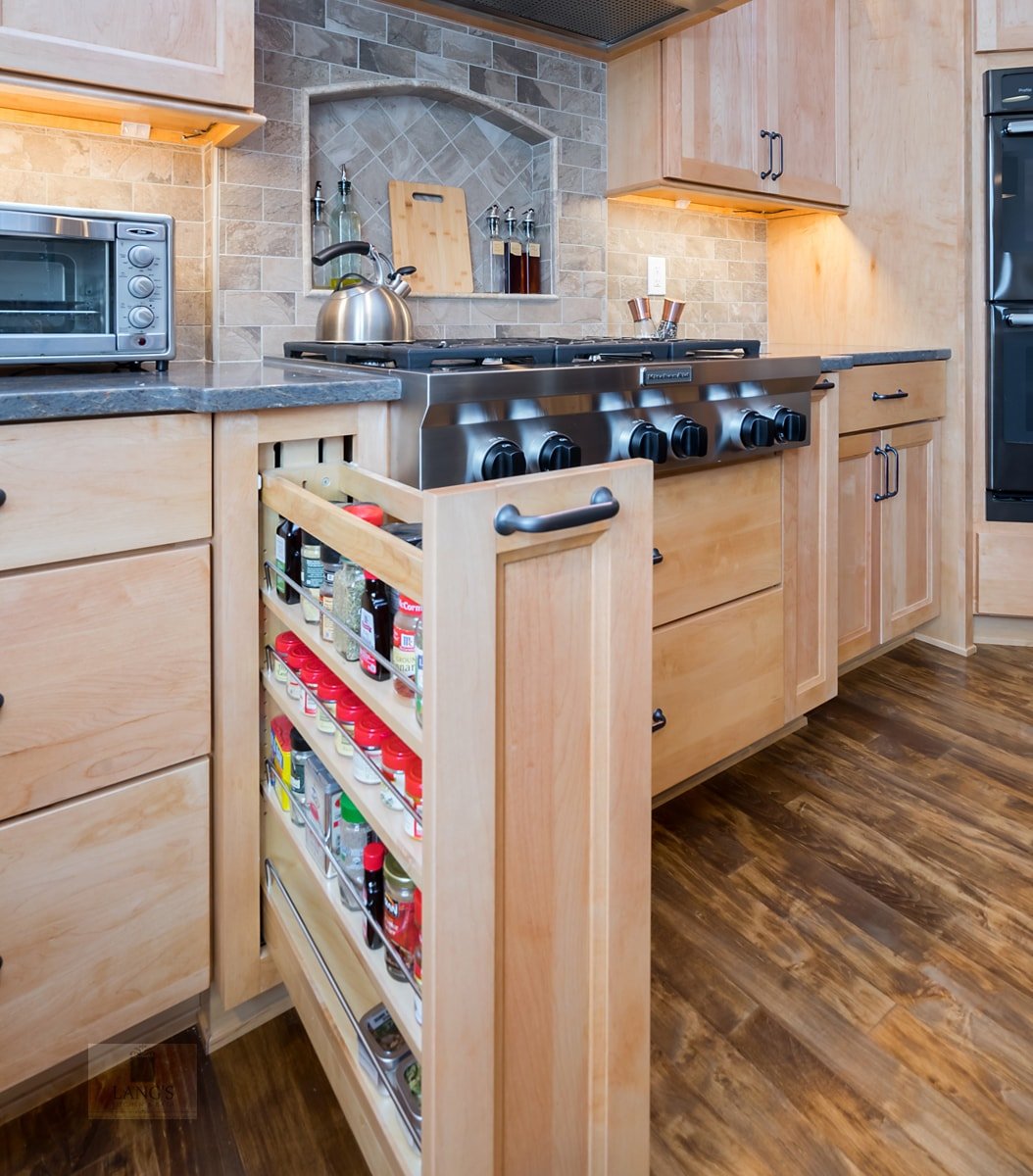
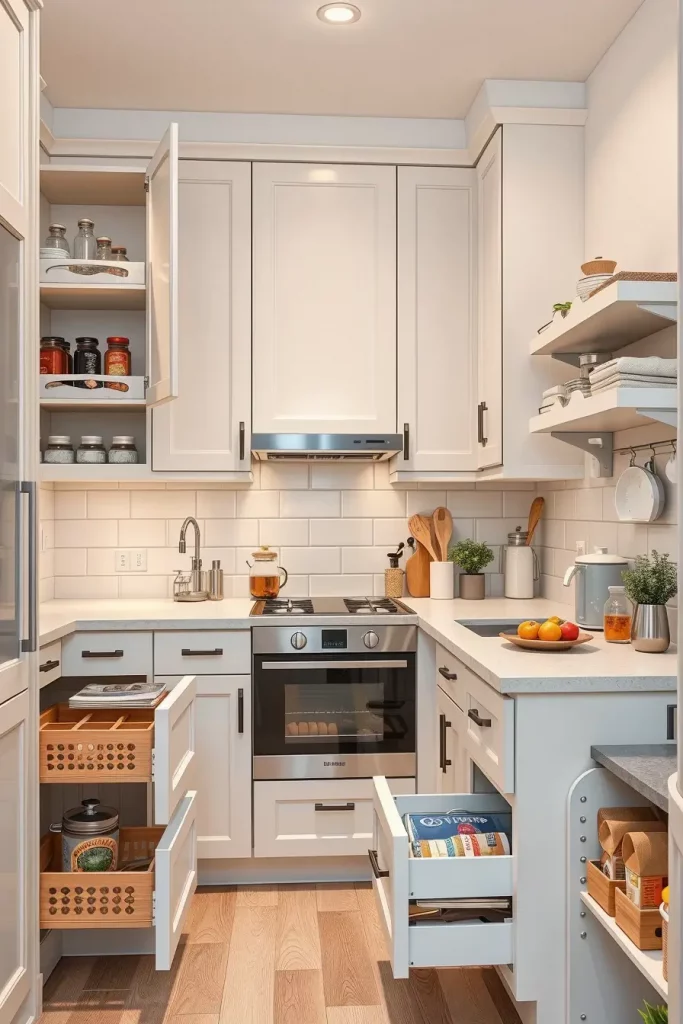
Instead of using standard modern drawer banks—which can look overly industrial—group deep lower storage behind full-height paneled cabinet doors. Mounting internal Blum-style or full-extension soft-close undermount runners behind a single or double Tudor-style door allows the cabinet to look like a 16th-century food chest while operating like a modern pantry pull-out.
Hearth-Adjacent Storage for Heavy Cookware
16th-century kitchens revolved around iron cauldrons, skillets, and roasting spits kept directly by the fire. Design lower storage adjacent to the range or cooktop to handle heavy cast iron cookware:
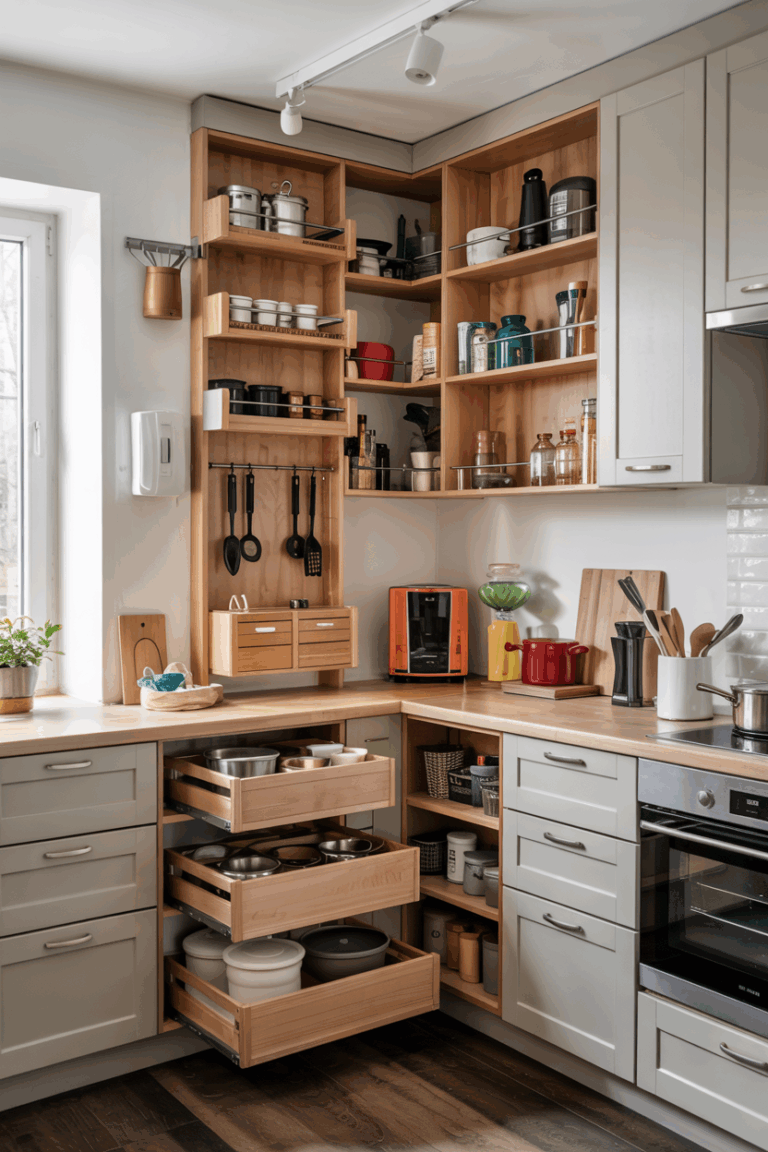
- Deep Pegged Drawers: Construct deep lower drawers out of 3/4-inch solid oak sides with adjustable wooden peg boards in the base. This holds heavy iron pans securely without rattling or scratching.
- Slotted Baking and Spit Drawers: Integrate low, wide base drawers lined with unglazed tile or dark hardwood to store modern pizza stones, heavy baking sheets, and rotisserie attachments.
Integrated Appliance Enclosures
Modern refrigerators, dishwashers, and trash compactors disrupt a historic aesthetic. Integrate built-in lower appliances using custom wood paneling that matches the surrounding 16th-century door profiles. Dishwashers can be hidden behind what appears to be a two-door oak dresser base, complete with decorative iron faux-latches. Trash pull-outs can be disguised as a traditional grain-bin drop-front door attached to an internal sliding frame.
Comparing 16th-Century Storage Elements with Modern Functional Adaptations
The following table contrasts original 16th-century lower storage solutions with their recommended modern architectural equivalents for historic-inspired kitchen projects:
| Historical 16th-Century Element | Original Function | Modern Functional Equivalent | Recommended Materials | Practical Application & Placement |
|---|---|---|---|---|
| Oak Meal Chest (Hutch) | Storing bulk flour, grain, and dry staples under lock and key | Deep lower pull-out drawers with internal steel canisters | Wire-brushed quarter-sawn oak, iron strap hinges | Kitchen island base or bake-center lower cabinetry |
| Stone Ambrie (Wall Niche) | Cool, ventilated storage for perishable larders and cheeses | Recessed masonry base cabinet with slatted oak doors | Fieldstone casing, lime mortar, slatted oak inserts | Perimeter walls near cold preparation zones |
| Dressing Board Shelf | Open lower storage for heavy iron cauldrons and wooden tubs | Open-slatted lower pot shelf under a thick timber counter | Solid white oak, thick timber slabs, iron brackets | Direct base framework under main work islands |
| Low Credenza / Cupboard | Storage for serving pewter, wooden trenchers, and linens | Concealed panel base cabinet housing modern dishwashers | Hand-carved linenfold oak panels, forged iron latches | Cleanup zones adjacent to modern sinks |
| Hearthside Charcoal Bin | Low storage for embers, firewood, and cooking ironwork | Heavy-duty pull-out drawer with high-capacity steel slides | Dark stained chestnut, iron ring pulls, flame-retardant liners | Base cabinets flanking the range or hearth surround |
Step-by-Step Implementation for Historic and Period-Inspired Kitchen Renovations
Executing a 16th-century lower kitchen storage concept requires careful sequencing to balance structural weight, custom woodwork, and modern plumbing/electrical rough-ins.
Step 1: Establish Structural and Masonry Layout
16th-century elements—such as solid stone plinths, heavy oak frames, and soapstone or slate countertops—weigh significantly more than standard prefabricated cabinetry.
- Verify floor load capacity with a structural engineer before specifying stone bases or heavy timber units.
- Construct masonry plinths using brick or natural stone, ensuring they are level, plumb, and stubbed with appropriate plumbing and electrical conduits.
Step 2: Custom Cabinet Carcass Construction
Standard 24-inch-deep cabinet carcasses must be adapted to accommodate face-frame joinery and concealed hardware.
- Build cabinet boxes using cabinet-grade hardwood plywood or solid oak framing.
- Fabricate face frames using 1-inch-thick solid oak stiles and rails joined with mortise-and-tenon connections. Secure joints with exposed 3/8-inch oak pegs driven flush or slightly proud of the frame.
- Apply hand-planing or wire-brushing to cabinet face frames prior to installation to create a subtle, aged surface texture.
Step 3: Integrate Internal Mechanics and Hardware
To retain an authentic exterior, install modern soft-close slides and hidden hinges inside the carcass structure.
- Install heavy-duty undermount drawer slides rated for at least 100–150 lbs to support solid oak drawer boxes and cast-iron cookware.
- Mount external surface hinges (such as hand-forged iron strap hinges) to the face frame and door exterior. Ensure internal hidden hinges or soft-close dampeners are calibrated so they do not fight the mechanical tension of the surface ironwork.
Step 4: Finishing and Sealing
Modern synthetic clear coats look out of place on period cabinetry. Use traditional oil finishes that penetrate the timber grain.
- Apply a penetrating coat of raw or polymerized tung oil thinned with natural citrus solvent.
- Allow 24 hours of drying time, then light-sand with 220-grit paper.
- Apply two additional coats of tung oil, followed by a hand-rubbed coat of natural beeswax paste for surface sheen and moisture protection.
Frequently Asked Questions
How can I hide modern appliances within 16th-century lower kitchen cabinetry?
Modern appliances such as dishwashers, under-counter refrigerators, and trash pull-outs can be integrated using custom panel-ready fronts designed with period-accurate details. Frame the appliance with thick oak stiles, field-raised or linenfold panels, and surface-mounted hand-forged iron hardware. Faux iron latches can be attached to the exterior face so the appliance blends seamlessly with surrounding freestanding-style dressers.
What wood species best replicate authentic 16th-century kitchen furniture?
Quarter-sawn English oak, American white oak, sweet chestnut, and European walnut are the best choices. Oak was the predominant wood used in Northern European 16th-century utility spaces due to its density and durability. Wire-brushing or hand-planing the wood surface helps replicate the subtle wear patterns of historic timber work.
How do stone plinths improve lower cabinet durability and period authenticity?
In the 16th century, lower storage sat on stone floors or elevated masonry bases to protect wood from dampness, spills, and hearth embers. Building lower cabinetry on a natural stone, slate, or brick plinth elevates the timber off the floor, prevents water damage during cleaning, and grounds the room visually in historic architecture.
Can linenfold paneling be used on low base cabinet drawers?
Yes. While linenfold carving was historically used on vertical chest panels and wall armoires, it can be scaled horizontally or vertically for lower cabinet doors and deep drawer faces. Ensure the carving depth is kept moderate (around 3/8 to 1/2 inch) so the drawer fronts remain easy to wipe down and maintain.
How do I maintain hand-oiled oak lower cabinetry in a high-moisture kitchen environment?
Hand-oiled oak finishes (such as tung oil and beeswax) require periodic reapplication to maintain water resistance. Wipe down cabinet faces with a damp cloth and mild soap, avoiding harsh chemical cleaners. Reapply a light coat of beeswax or specialized wood-care oil once or twice a year, particularly on cabinet doors adjacent to the sink and cooking hearth.
Planning Your Period-Inspired Lower Storage Layout
When designing lower kitchen storage inspired by the 16th century, avoid treating the kitchen as a continuous block of identical units. Instead, plan the layout as a collection of distinct, architectural furniture pieces tailored to specific tasks.
Begin by drafting a floor plan that identifies primary functional zones: a prep area featuring an open-slatted oak dressing board base, a cooking zone flanked by heavy hearth-style drawers for ironware, and a wet zone featuring panel-disguised appliances set on continuous stone plinths. Work directly with a custom joiner skilled in traditional timber frame construction and a local blacksmith for authentic iron hardware. By combining period joinery, authentic materials, and modern concealed drawer runners, your kitchen will retain historic character while fulfilling modern utility demands.
EDITORIAL CATEGORY METADATA: