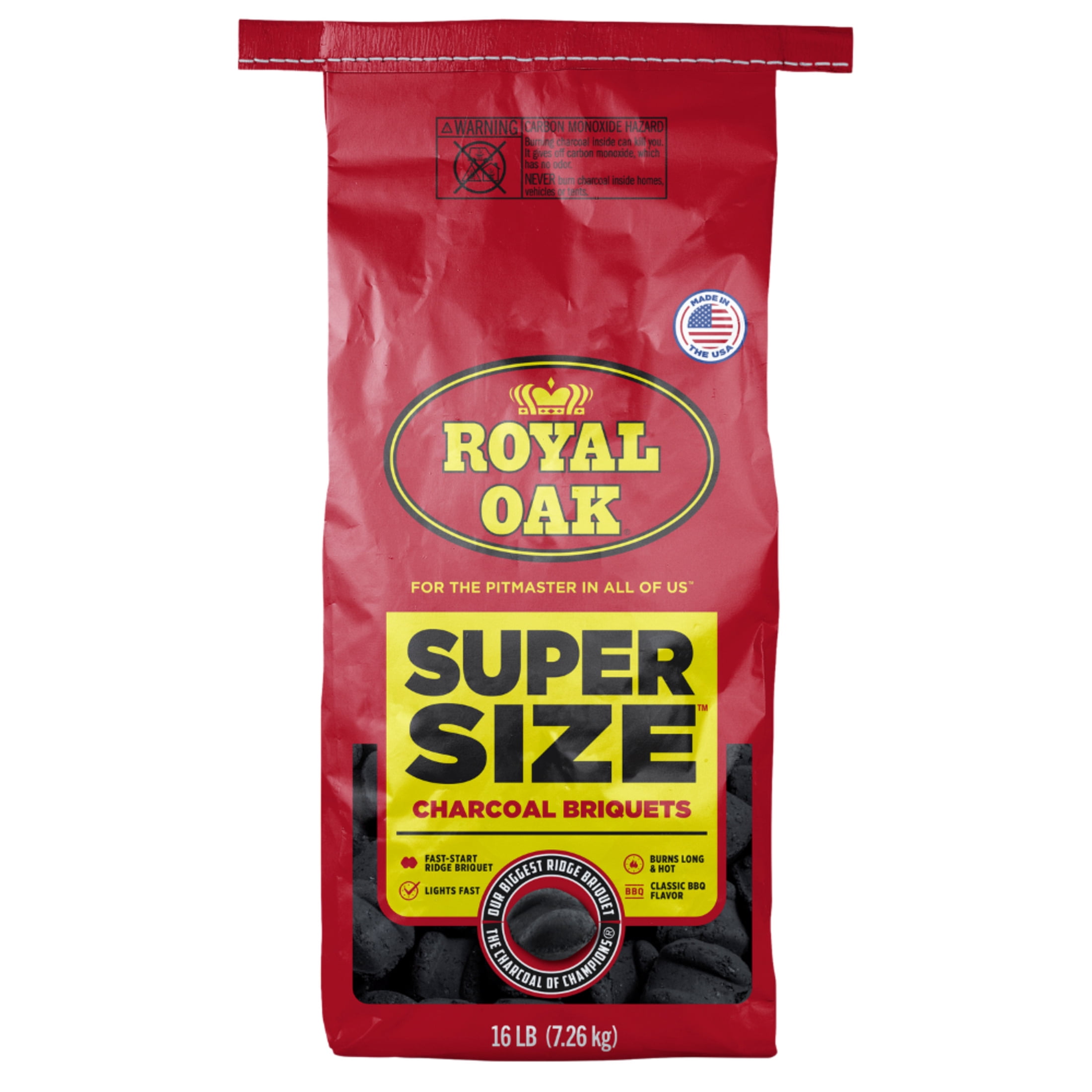
A weight of 16 lb (16 pounds) equals exactly 7.257 kilograms or 256 ounces in standard mass measurement. In commercial printing and paper manufacturing, 16 lb specifies lightweight 16 lb Bond paper (60 GSM), a thin, flexible stock widely utilized for multi-part carbonless forms, high-volume mailings, and memos where minimizing sheet weight is critical.
What Does 16 lb Represent? Standard Units and Conversion Factors
The abbreviation "lb" originates from the Roman unit of mass, libra, and serves as the primary unit of weight within the United States customary and imperial measurement systems. When evaluating a measure of 16 lb in purely physical mass, it represents a specific physical quantity used across logistics, engineering, trade, and daily commerce.
Under the International Yard and Pound Agreement, one avoirdupois pound is legally defined as exactly 0.45359237 kilograms. Multiplying this base factor yields exact mathematical equivalencies for 16 lb across standard scientific and commercial metric systems:
- Kilograms (kg): 7.25747792 kg (commonly rounded to 7.257 kg or 7.26 kg for commercial labeling).
- Grams (g): 7,257.48 grams.
- Ounces (oz): 256 avoirdupois ounces (calculated as 16 lb × 16 oz/lb).
- Stones (st): 1 stone and 2 pounds (1.14286 stones, based on 14 pounds per stone).
- Short Tons (US): 0.008 short tons (based on 2,000 pounds per short ton).
In freight logistics and shipping, a package designated at 16 lb falls into lightweight parcels that require specific dimensional weight checks if shipped in oversized packaging. For scientific and industrial applications, converting 16 lb to 7.257 kg ensures precision when configuring digital scales, calibrating load cells, or preparing customs manifest documentation.
16 lb in Paper Manufacturing: Specifications and Basis Weight
In graphic arts, commercial printing, and paper manufacturing, "16 lb" does not mean that an individual sheet of paper weighs 16 pounds. Instead, it refers to the paper’s basis weight—a standard traditional measurement defining the weight of one ream (500 sheets) of paper cut to its uncut industrial "parent size."
For Bond paper, the standard industrial parent sheet dimensions are 17 inches by 22 inches. Therefore, 16 lb Bond paper means that 500 sheets measuring 17" x 22" weigh exactly 16 pounds. When this parent sheet is cut down to standard letter size (8.5" x 11"), four letter sheets are created from one parent sheet. Consequently, a full ream (500 sheets) of letter-size 16 lb Bond paper actually weighs 4 pounds on a postal scale.
Converting 16 lb Bond to Metric GSM (Grams per Square Meter)
Because international printing standards rely on grams per square meter (GSM) rather than basis weight in pounds, converting 16 lb Bond into GSM is essential for cross-border production and equipment settings.
To convert Bond paper basis weight to GSM, multiply the basis weight by the standard conversion factor of 3.7597:
$$\text{GSM} = 16 \text{ lb Bond} \times 3.7597 = 60.155 \text{ GSM}$$
In commercial trade, 16 lb Bond paper is universally rounded and designated as 60 GSM stock.
Physical Attributes of 16 lb Paper
- Caliper (Thickness): 16 lb Bond typically measures between 3.0 to 3.2 mils (0.076 mm to 0.081 mm) thick. By comparison, standard 20 lb copy paper measures approximately 3.8 to 4.0 mils.
- Opacity: 16 lb paper features moderate to low opacity (typically around 80% to 85%). This thinness allows light to pass through more easily than heavier papers, making text on the reverse side faintly visible.
- Flexibility and Tensile Properties: The low basis weight yields high flexibility, making it easy to fold without cracking, though it has lower tear resistance than 20 lb or 24 lb sheets.
Practical Applications of 16 lb Paper Stock in Commercial Printing
Due to its thin profile and light weight, 16 lb paper serves specialized roles where structural density is secondary to volume, space savings, or multi-sheet layering.
Multi-Part Carbonless Forms (NCR Paper)
One of the most widespread uses of 16 lb paper is in multi-part carbonless (No Carbon Required) business forms. When a client or technician writes on the top sheet of a 3-part or 4-part invoice, the pressure must transmit cleanly through to the bottom layers. The thin caliper of 16 lb stock allows impact energy to transfer effectively, producing legible duplicates on all copies without needing heavy manual pressure.
Postage-Sensitive Mailings and Account Statements
In direct mail and transactional billing, total envelope weight dictates postage costs. Substituting standard 20 lb paper with 16 lb paper reduces the total weight of a multi-page document insertion by 20%. For institutions mailing hundreds of thousands of monthly statements, using 16 lb stock generates substantial annual postage savings.
Architectural Overlays and Tracing Applications
Translucent variants of 16 lb stock, such as 16 lb drafting vellum or lightweight bond, allow architects, engineers, and designers to overlay revisions over base blueprints. The high translucency of lightweight bond facilitates trace work without requiring dedicated light tables.
Limitations and Operational Considerations
While 16 lb paper offers economic benefits, it introduces specific operational constraints:
- Bleed-Through: High-ink applications, such as fountain pens, heavy gel pens, or inkjet printing, can bleed through 16 lb paper due to its reduced density.
- Duplex Printing Issues: Double-sided printing is generally discouraged on 16 lb stock because the low opacity results in severe show-through, reducing readability.
- Feeder Jams: Standard office desktop printers and copiers are calibrated primarily for 20 lb to 24 lb paper. Lightweight 16 lb stock can misfeed or double-feed if vacuum rollers or separation pads exert too much friction.
16 lb Equipment Standards Across Sports, Marine, and Industrial Use
Beyond paper measurement, the 16 lb weight point serves as a standardized benchmark across several physical equipment classifications and athletic regulations.
Men's Shot Put Standard
In track and field, the International Association of Athletics Federations (now World Athletics) mandates that the official implement for senior men’s shot put competition must weigh a minimum of 7.260 kilograms, which corresponds to 16 pounds. Athletes must balance technical mechanics and explosive power to launch this 16 lb solid steel or brass sphere.
USBC Bowling Ball Maximum Weight Limit
Under the regulations established by the United States Bowling Congress (USBC), a sanctioned bowling ball cannot exceed 16.00 pounds (7.257 kg) in total mass. While bowlers may choose lighter balls (ranging down to 6 lb for youth bowlers), 16 lb represents the maximum legal limit permitted in competitive play to maximize kinetic energy transfer upon pin impact.
Marine Anchor Sizing
In recreational boating, 16 lb fluke-style anchors (such as traditional Danforth designs) are engineered to secure powerboats and sailboats ranging from 24 to 31 feet in length under normal anchoring conditions. The 16 lb mass, combined with wide fluke geometry, enables the anchor to bury deep into sand and mud bottoms.
Technical Comparison: 16 lb Weight Equivalents and Specifications
The table below contrasts 16 lb across its distinct primary definitions, converting standard metrics and outlining standard applications for quick reference.
| Metric / Application Context | 16 lb Equivalent | Technical Specification / Parent Metric | Typical Operational Environment |
|---|---|---|---|
| Bond Paper Basis Weight | 60 GSM ($60.16 \text{ g/m}^2$) | 500 sheets of 17" x 22" parent bond stock | Multi-part forms, statement inserts, memos |
| Text / Book Paper Equivalent | 40 lb Text | 500 sheets of 25" x 38" parent text stock | Thin book pages, lightweight catalog inserts |
| Cover Stock Equivalent | ~22 lb Cover | 500 sheets of 20" x 26" parent cover stock | Ultra-light index dividers, temporary tags |
| Imperial Mass (Ounces) | 256 oz | $16 \text{ lb} \times 16 \text{ oz/lb}$ exact avoirdupois | Domestic parcel shipping, bulk packaging |
| Metric Mass (Kilograms) | 7.257 kg | $16 \text{ lb} \times 0.45359237 \text{ kg/lb}$ exact | International freight, customs declarations |
| Athletic Standards (Shot Put) | 7.260 kg minimum | Senior Men's World Athletics Rulebook | Track & field competitions, Olympic events |
| Bowling Ball Maximum | 16.00 lb max | USBC Equipment Specifications Manual | Sanctioned bowling leagues and tournaments |
How to Handle and Select 16 lb Materials Correctly
Working with 16 lb items requires specific operational practices depending on whether you are managing lightweight paper stock or handling heavy physical equipment.
Guidance for Printing on 16 lb Paper Stock
To prevent production downtime and material waste when running 16 lb paper through commercial or office machinery:
- Adjust Printer Tray Media Settings: Configure the printer driver and media sensors to "Lightweight Paper" or "Thin Paper" (55–65 GSM). This instruction prompts the printer to adjust fuser roller temperature and lessen feed roller pressure, minimizing jams.
- Control Ambient Humidity: Thin 16 lb paper absorbs environmental moisture rapidly, leading to edge curling and static buildup. Maintain printing rooms at 40% to 50% relative humidity.
- Use Laser Printers Over Inkjet: For single-sided text printing on 16 lb paper, dry toner laser printers perform significantly better than liquid inkjet printers, preventing paper warping and ink bleed-through.
Handling 16 lb Equipment and Physical Loads
When integrating 16 lb equipment into physical training, sports, or marine use:
- Athletic Ergonomics: When transitioning to a 16 lb bowling ball or medicine ball, verify that grip fit and finger hole pitch are custom-contoured. Handling a 16 lb load with improper ergonomics increases stress on finger tendons and wrist joints.
- Marine Rigging: Pair a 16 lb anchor with an appropriate chain lead (typically 6 feet of galvanized chain) to ensure the shank lies flat against the seabed, optimizing holding power.
Frequently Asked Questions About 16 lb Measurements
How many kilograms is 16 lb?
A weight of 16 lb is equal to exactly 7.25747792 kilograms. In most practical engineering, shipping, and fitness applications, this value is rounded to 7.257 kg or 7.26 kg.
What is 16 lb paper equivalent to in GSM?
16 lb Bond paper is equivalent to approximately 60.16 GSM, which is rounded to 60 GSM in international metric paper standards. If converted to Book or Text paper basis weight, it equals roughly 40 lb Text paper.
Can you print double-sided on 16 lb paper?
Double-sided (duplex) printing is generally not recommended for 16 lb paper. Because 16 lb stock has low opacity (thin sheet structure), text or images printed on one side will show through to the opposite side, compromising legibility.
Why is 16 lb the maximum allowable weight for a bowling ball?
The United States Bowling Congress (USBC) set the 16.00 lb maximum weight limit to ensure player safety, equalize competitive play, and protect lane surfaces and automated pinsetter machinery from excessive kinetic impact energy.
What is the difference between 16 lb Bond paper and 20 lb Bond paper?
16 lb Bond paper is lighter and thinner (60 GSM, ~3.1 mils thick) than standard 20 lb Bond copy paper (75 GSM, ~4.0 mils thick). 16 lb paper is used when reducing weight and thickness is essential, whereas 20 lb paper is the standard stock used for everyday office copying and printing.
Choosing the Right 16 lb Specification for Your Project
Selecting 16 lb paper or equipment requires matching the physical properties of the material to your project requirements. If your goal is to minimize postal expenses for large billing runs or build functional multi-part carbonless forms, 16 lb Bond paper (60 GSM) provides an efficient, cost-effective choice. Ensure your printing equipment is configured for thin media settings to prevent feed jams and avoid high-density ink designs that trigger bleed-through.
For physical mass calculations in shipping, athletic conditioning, or hardware sourcing, always apply the precise conversion factor of 7.257 kg to ensure compliance with metric standards and transport limits.