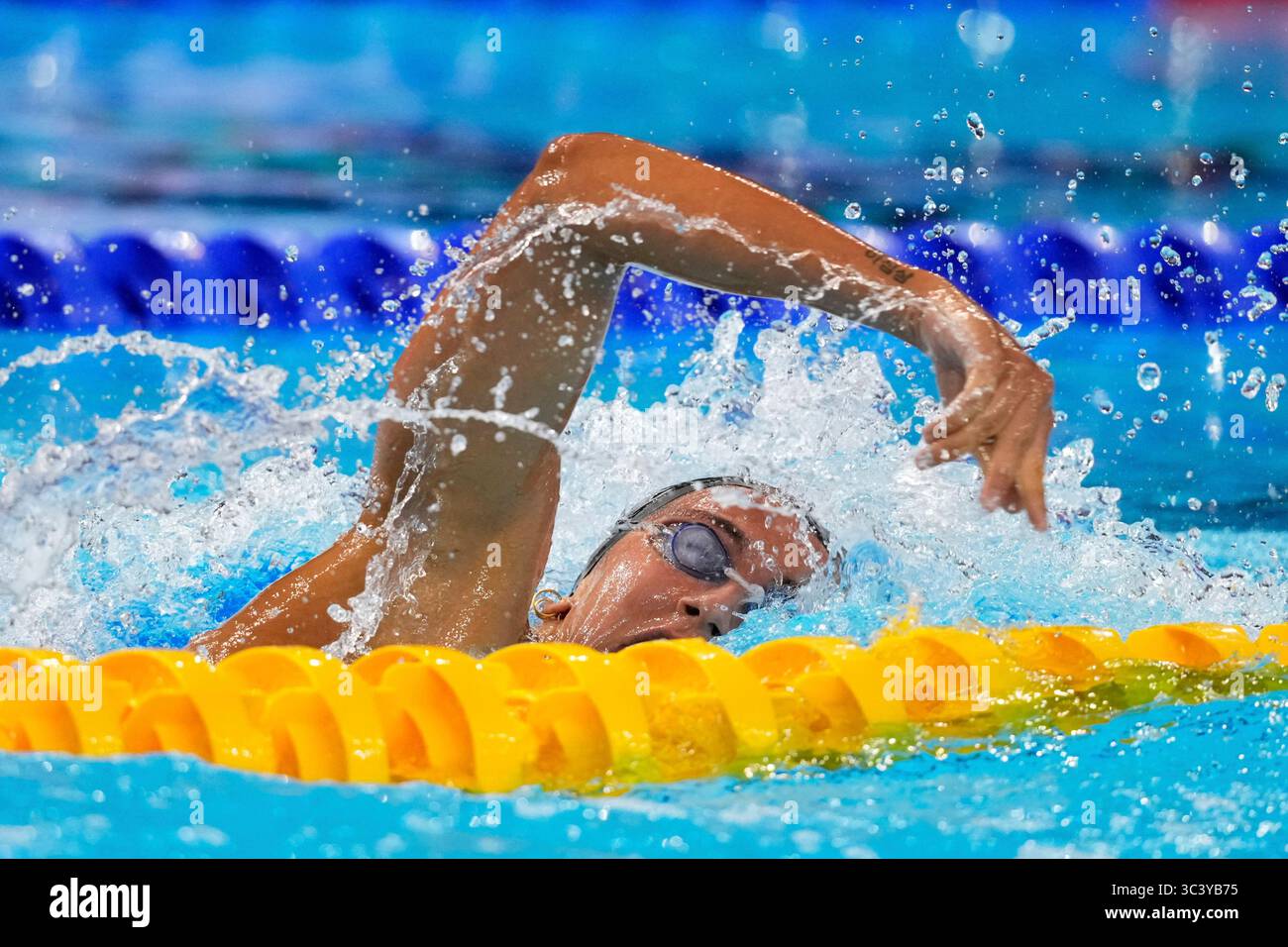
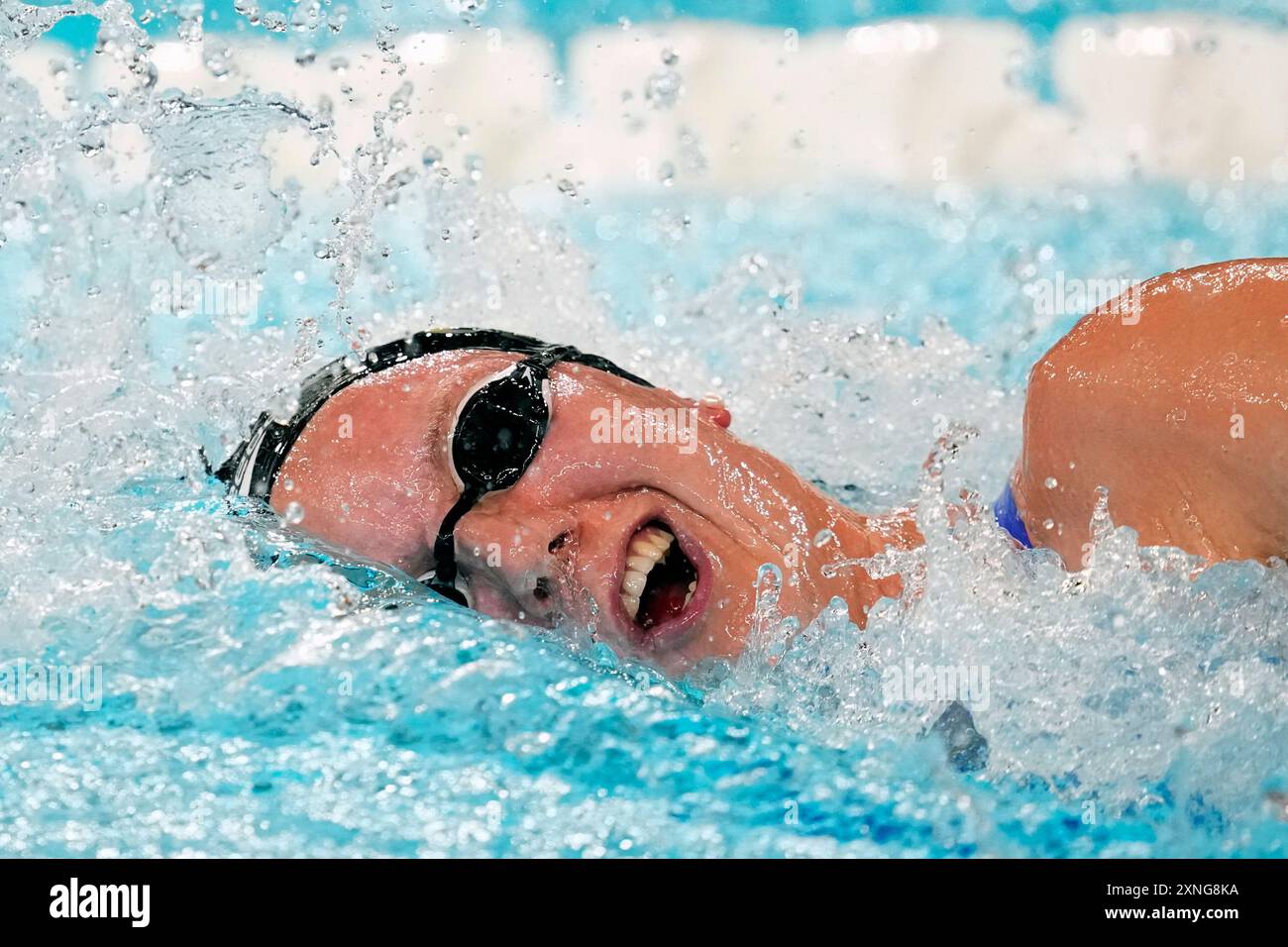
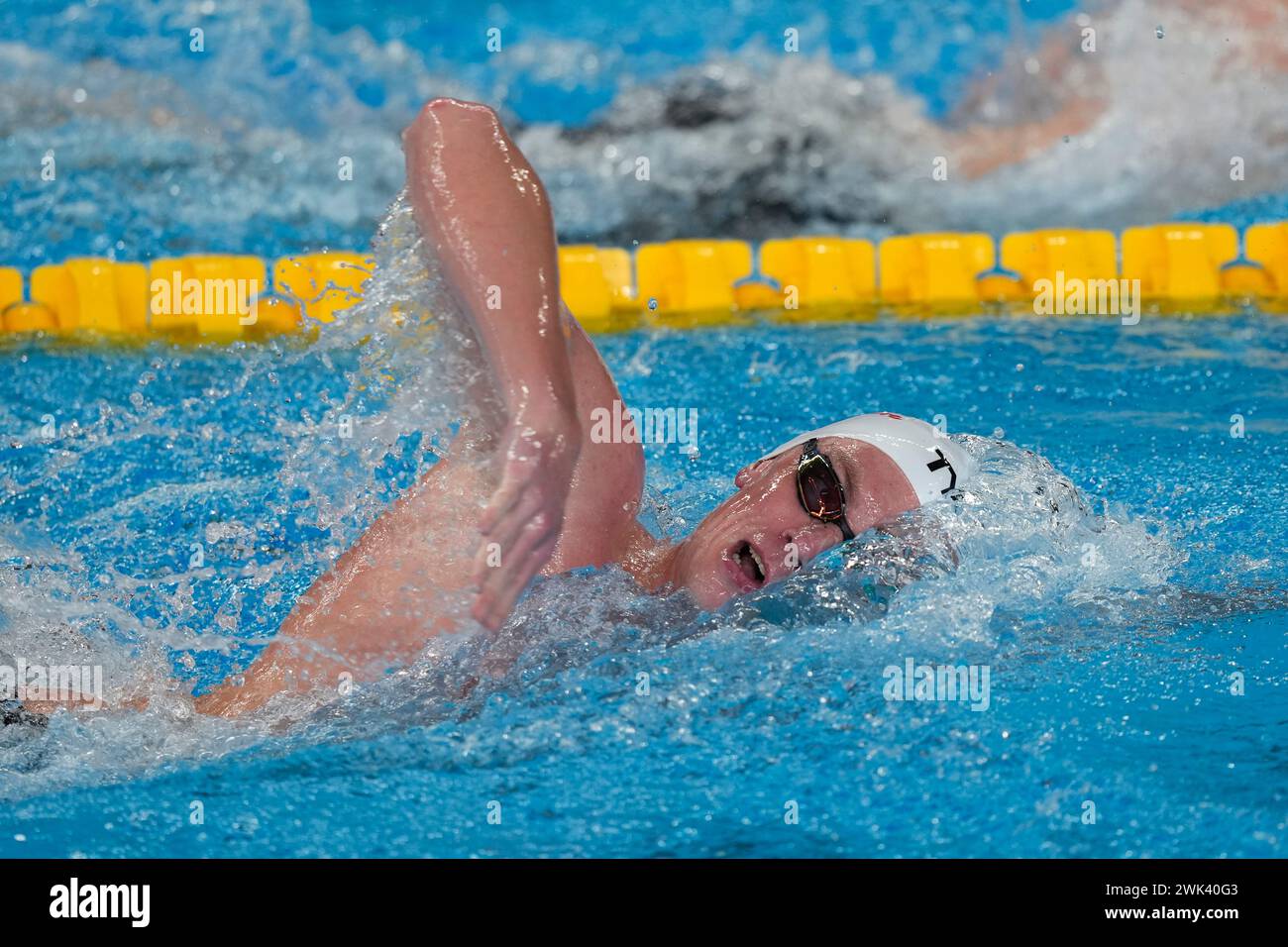
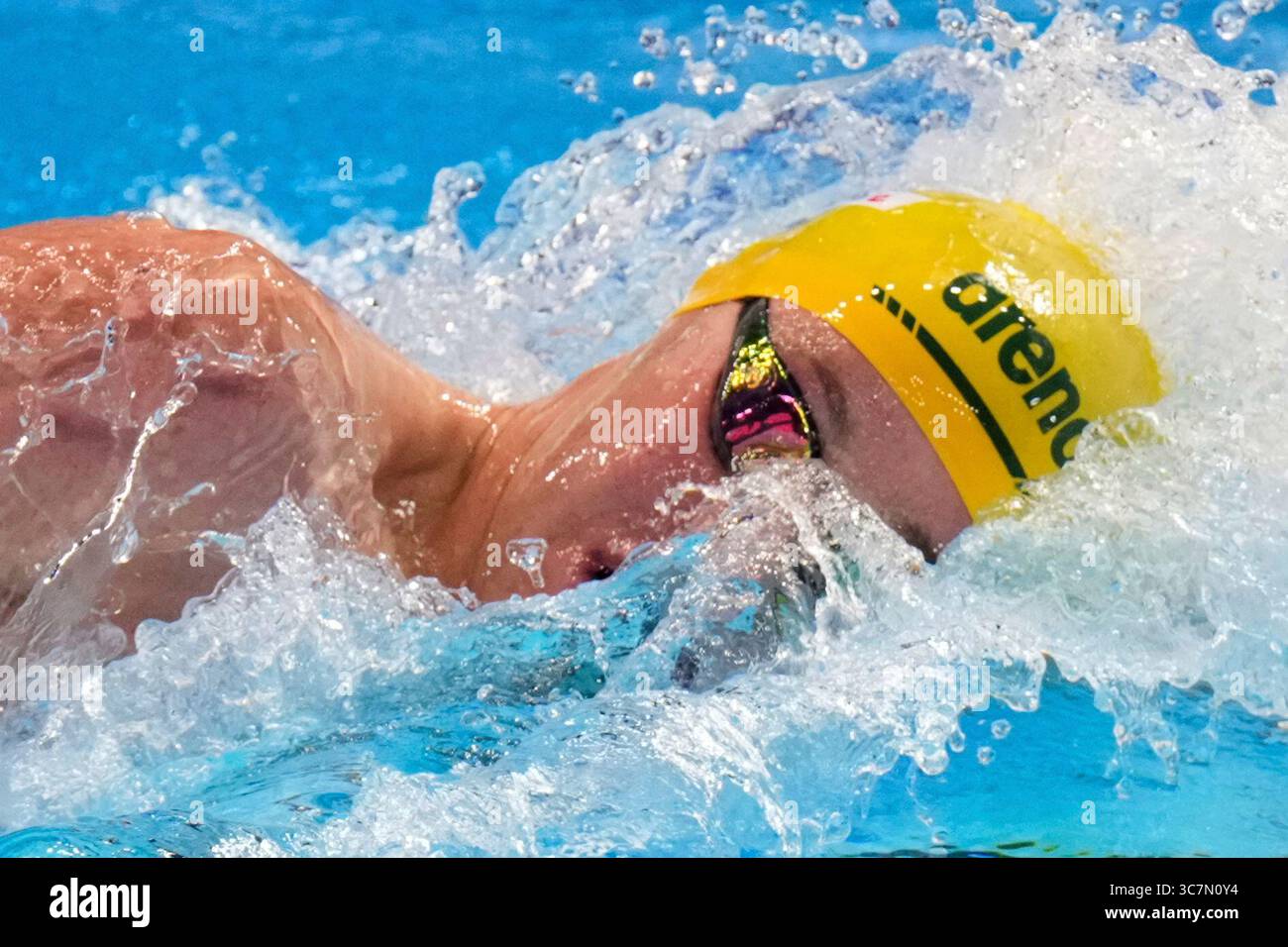
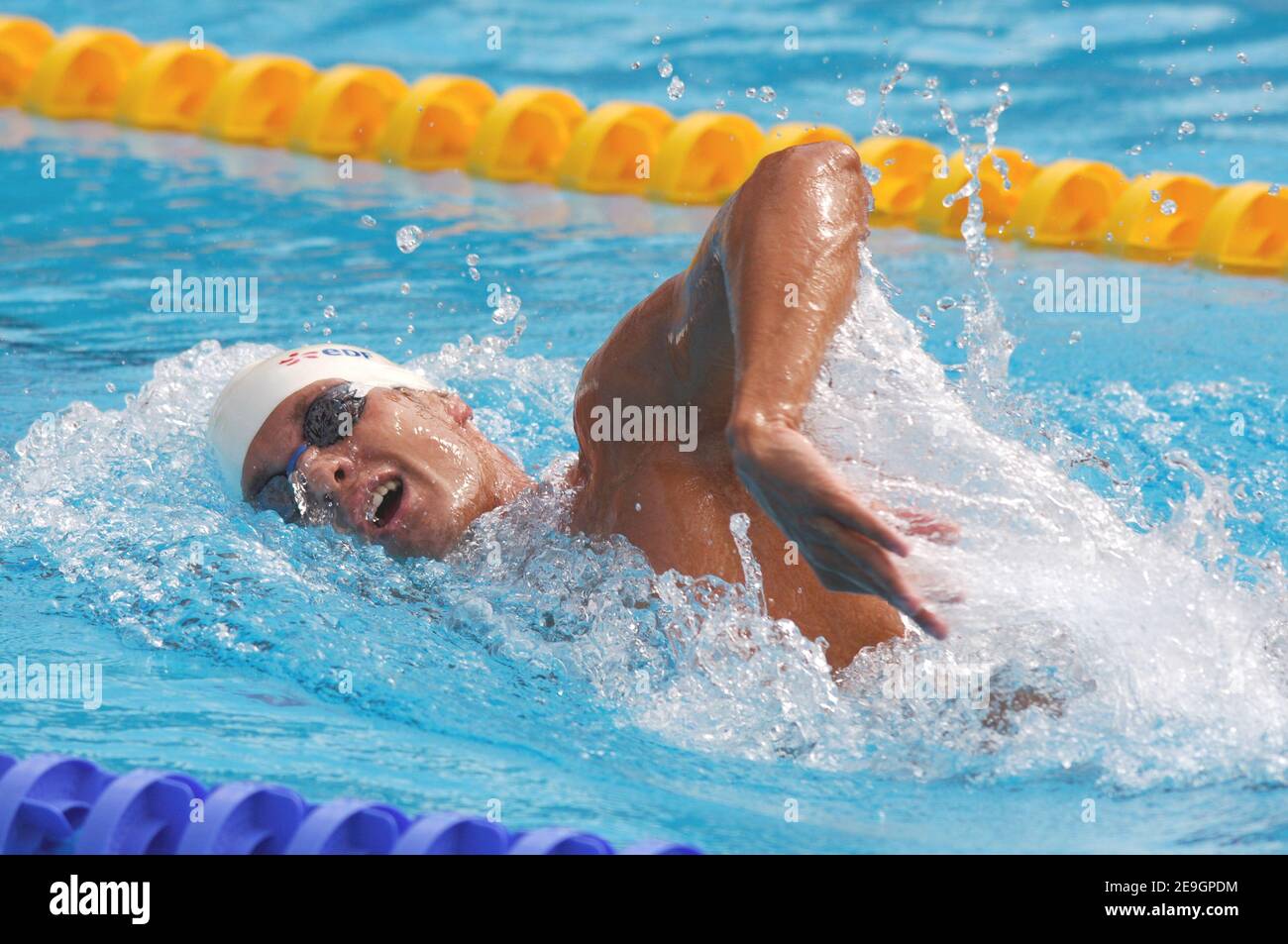
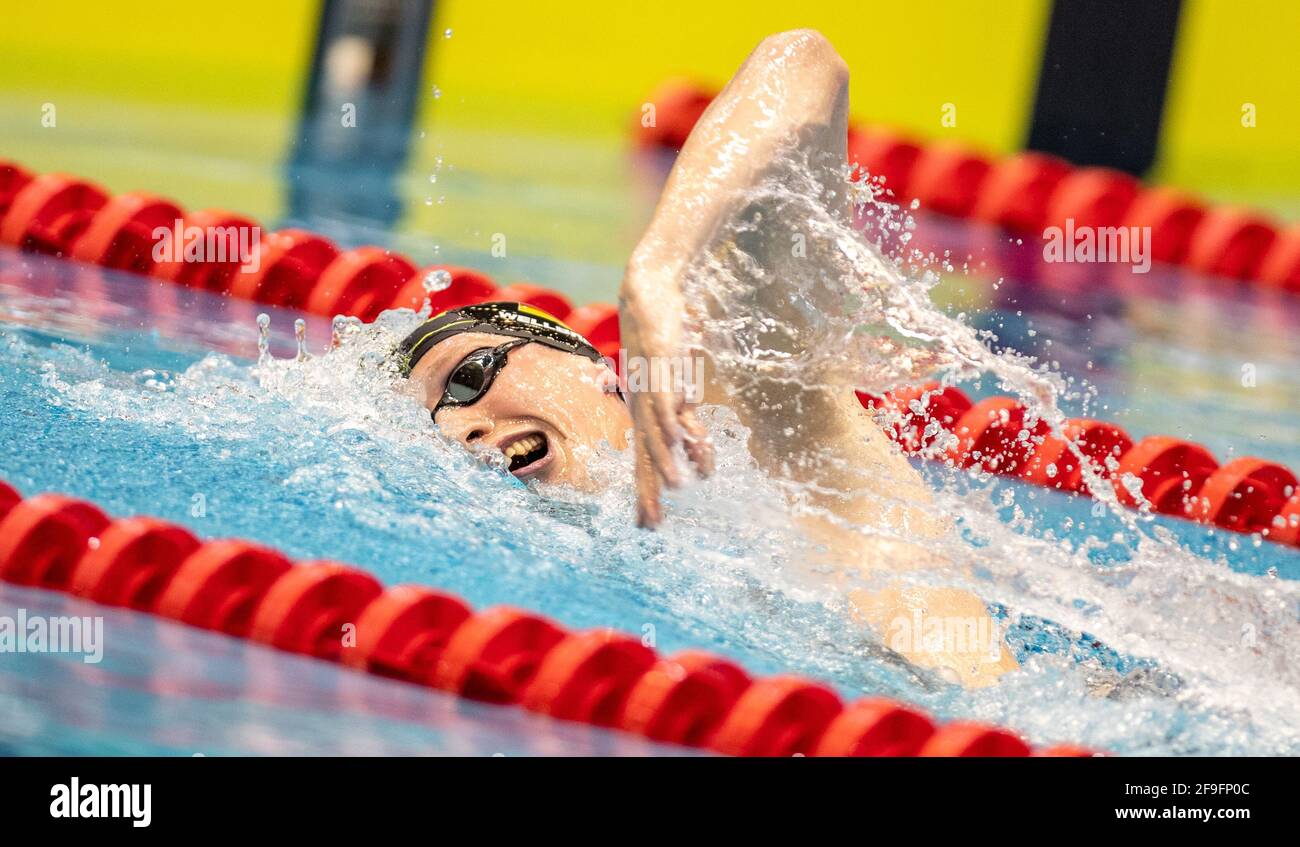
The 1500 metre freestyle is the longest pool-based event in competitive swimming, requiring athletes to complete 30 lengths of a standard 50-metre long-course pool. Achieving success in this endurance race demands a precise balance of physiological aerobic capacity, sustained biomechanical efficiency, tactical split management, and mental focus under extreme physical fatigue.
Technical Rules, Pool Specifications, and Event Logistics
In competitive swimming, the 1500 metre freestyle is held across two distinct pool configurations: Long Course Meters (LCM), consisting of a 50-metre pool, and Short Course Meters (SCM), consisting of a 25-metre pool. In long-course competitions, swimmers complete 30 lengths, whereas short-course events require 60 lengths. The higher density of flip turns and underwater streamline phases in a short-course pool generally yields faster overall times due to the propulsive force generated off the wall during turns.
Official governing bodies, such as World Aquatics, enforce strict rules regarding stroke mechanics, turns, and underwater limits:
- Stroke Freedom: Swimmers may use any stroke, though front crawl is universally adopted due to its superior speed and energetic efficiency.
- The 15-Metre Rule: Following the initial dive start and each subsequent flip turn, a swimmer's head must break the surface of the water before or at the 15-metre mark. Remaining submerged past 15 metres results in immediate disqualification.
- Wall Contact: Swimmers must touch the end wall with some part of their body at the completion of each length and at the finish line.
- Lap Counting and Acoustic Signals: Officials display visual lap cards at the turning end of the pool to notify swimmers of their remaining distance. When a swimmer has two lengths plus five metres remaining (or upon reaching the final turn depending on course length), an acoustic signal—typically a bell or whistle—is sounded to indicate the final 100 metres or final lap sequence.
Historical Benchmarks and World Record Milestones
The 1500 metre freestyle has held a central place in the Olympic swimming program for men since 1908. The women's 1500 metre freestyle, despite being contested at the World Championship level for decades, was officially added to the Olympic program at the Tokyo 2020 Olympic Games.
Historically, performance in the event was defined by landmark barriers. Australian legend Kieren Perkins and later Grant Hackett dominated the event around the turn of the 21st century. Hackett set a world record of 14:34.56 in 2001 that stood for a decade. This benchmark was later surpassed by China's Sun Yang at the London 2012 Olympics with a time of 14:31.02. At the Paris 2024 Olympic Games, American swimmer Bobby Finke set the current men's long-course world record at 14:30.67, driven by an aggressive final 50-metre surge of 26.27 seconds.
In the women's event, American distance swimmer Katie Ledecky established historic dominance. Ledecky broke the world record multiple times, setting the long-course world record of 15:20.48 in 2018. Ledecky holds the top fastest times in history, consistently finishing tens of seconds ahead of elite international competition through unmatched stroke propulsion and pacing stability.
Biomechanical Execution: Stroke Mechanics, Kick Tempo, and Drag Reduction
Sustaining propulsion over 1500 metres requires optimal hydrodynamics. Unlike sprint swimming, where raw power output overrides drag considerations, distance swimming requires continuous energy conservation.
- EARLY VERTICAL FOREARM (EVF)
- High elbow positioning maximizes catch surface area
- HYDRODYNAMIC ALIGNMENT
- Core engagement stabilizes body; reduces form drag
- ENERGY-EFFICIENT KICK
- 2-beat kick conserves glycogen during mid-race; shifts to 6-beat kick during final 100m sprint
The Catch and Early Vertical Forearm (EVF)
The primary propulsive phase relies on an early vertical forearm (EVF) catch. Rather than dropping the elbow during the entry and pull phase, the swimmer anchors the forearm vertically in the water as early as possible. This action engages the larger latissimus dorsi and chest muscles rather than relying solely on the shoulders, distributing muscular fatigue and generating higher force per stroke cycle.
Body Alignment and Core Stability
To minimize frontal form drag, distance swimmers maintain a horizontal body posture with high hip elevation. Lateral snaking or excessive hip sway increases resistance exponentially with speed. A tight core stabilization system absorbs the torque generated by shoulder rotation, keeping the body driving straight through the water column.
Kick Tempo Optimization
Kick cadence plays a vital role in glycogen management:
- Two-Beat Kick: Most world-class 1500 metre swimmers utilize a two-beat kick during the middle steady-state portion of the race. One leg kick occurs per arm entry. This rhythm provides structural hip stabilization and rotational support with minimal oxygen expenditure.
- Six-Beat Kick Transition: Swimmers transition to a propulsive six-beat kick (three kicks per arm stroke) during the final 100 to 200 metres. This significantly increases thrust and speed, but demands a high rate of anaerobic glycogen consumption, making it unsustainable over the full distance.
Breathing Patterns and Ventilation
Unilateral (breathing every two strokes to a single side) is common among distance swimmers because it allows for higher oxygen intake compared to bilateral breathing (breathing every three strokes). Elite swimmers maintain neutral head alignment during respiration, rotating the head along the longitudinal axis without lifting the chin, which would drop the hips and increase resistance.
Tactical Race Pacing and Energy System Utilization
The 1500 metre freestyle is overwhelmingly an aerobic energy event, with aerobic metabolism supplying approximately 85% to 90% of the required ATP (adenosine triphosphate). The remaining energy is supplied by anaerobic glycolysis, particularly during the explosive start, wall pushes, and final sprint kick.
Split Strategies
Coaches analyze 1500 metre races using 50-metre or 100-metre split breakdowns. Three primary pacing strategies are used in distance racing:
Even Splitting: The swimmer maintains an identical split time (within 0.5 to 1.0 second) across all 100-metre segments after the initial start. This approach maximizes metabolic efficiency by keeping blood lactate levels at a stable, manageable steady state.
Negative Splitting: The swimmer completes the second 750 metres of the race faster than the first 750 metres. This requires strict initial control to prevent premature glycogen depletion, allowing the athlete to overtake competitors who fatigue late in the race.
Parabolic / U-Shaped Pacing: The most common elite profile features a fast initial 100 metres (utilizing the dive momentum and phosphagen system), followed by a settling into a stable aerobic cruising speed, and ending with an aggressive surge over the final 100 to 200 metres.
Pacing Comparison (100m Segments)
- Parabolic Strategy: Fast start, steady mid-race, strong kick finish
- Even Splitting Strategy: Consistent split target maintained throughout
Critical Swim Speed (CSS)
Training and race pacing are structured around Critical Swim Speed (CSS)—the theoretical threshold speed a swimmer can maintain without continuous lactate accumulation. Expressed as a pace per 100 metres, CSS represents the boundary between aerobic capacity training and lactate accumulation zones. Swimmers whose race pace exceeds their CSS too early experience severe muscle acidosis, leading to loss of technique and elevated stroke counts late in the race.
Performance Metrics and Benchmark Comparisons
To understand target execution across competitive tiers, coaches monitor parameters including split consistency, stroke rate (cycles per minute), and stroke count (strokes per length).
| Level / Tier | Target 1500m Time Range | Average 100m Split | Stroke Rate (cycles/min) | Primary Kick Pattern |
|---|---|---|---|---|
| Elite Male (World Class) | 14:30.00 – 14:55.00 | 58.0s – 59.6s | 36 – 44 | 2-beat cruising / 6-beat final surge |
| Elite Female (World Class) | 15:20.00 – 15:55.00 | 61.3s – 63.6s | 38 – 46 | 2-beat or 4-beat cruising / 6-beat finish |
| NCAA Div I / National | 15:00.00 – 15:40.00 | 60.0s – 62.6s | 34 – 42 | 2-beat cruising |
| Advanced Club / Masters | 16:30.00 – 18:30.00 | 66.0s – 74.0s | 30 – 38 | 2-beat hybrid |
| Triathlete / Open Water | 18:30.00 – 22:00.00 | 74.0s – 88.0s | 28 – 34 | 2-beat energy saving pattern |
Note: Data derived from standard long-course meter (50m) target metrics.
Targeted Training Protocols and Workout Architecture
Developing performance in the 1500 metre freestyle requires high total weekly volume mixed with precise velocity sets aimed at elevating anaerobic threshold, VO2 max, and stroke efficiency. Guidance on athlete health and physical preparation parameters can be found through sports physiology resources such as USA Swimming.
1. CSS and Threshold Sets
These workouts focus on elevating the swimmer's lactate threshold, enabling a higher continuous cruising speed.
- Sample Set: 10 × 200 metres freestyle on a tight interval resting 10 to 15 seconds per repeat, maintaining target CSS pace ± 0.5 seconds per 100m.
- Objective: Train the circulatory system and muscle tissue to buffer and clear lactate efficiently during sustained mechanical work.
2. Race Pace Simulation Sets
Simulation training breaks the 1500m target distance into shorter segments to accustom the neuromuscular system to the exact stroke tempo and speed required on race day.
- Sample Set: 30 × 50 metres freestyle @ 1500m race pace, with 10 seconds rest between intervals.
- Metric Monitoring: Swimmers must hit their target 50m split while maintaining an identical stroke count (e.g., 32 seconds per 50m at 34 strokes per length).
3. Over-Distance Aerobic Capacity Sets
To ensure the physical conditioning surpasses race requirements, coaches prescribe sets ranging from 2,000 to 4,000 metres of continuous or broken aerobic work.
- Sample Set: 3 × 1,000 metres on long intervals (Aerobic Heart Rate Zone 2), focusing on distance per stroke (DPS) and breathing rhythm stability.
Mental Strategies for Managing Mid-Race Fatigue
The psychological demand of the 1500 metre freestyle stems from prolonged, repetitive exertion. Between the 700-metre and 1100-metre marks, swimmers often experience severe mental fatigue as glycogen stores diminish and sensory feedback from muscle strain intensifies.
- RACIAL SEGMENTATION (CHUNK)
- Break 1500m into 3 x 500m or 15 x 100m units
- INTERNAL PROCESS CHECKLIST
- Focus on EVF catch, streamline depth, core tightness
- LAP-CARD SYNCHRONIZATION
- Use visual count at turns to anchor tactical pacing
Cognitive Chunking
Elite athletes split the race into manageable visual or cognitive segments rather than viewing it as a single 30-length effort:
- 3 × 500-Metre Breakdown: Segment 1 is swum smoothly at controlled cruise pace; Segment 2 focuses on maintaining mechanical integrity and core stability; Segment 3 involves accelerating legs and increasing stroke cadence.
- 100-Metre Step Focus: Tracking the race in 15 individual 100-metre blocks, maintaining an internal clock that calculates whether the target split is being hit on every wall touch.
External and Internal Focus Switching
During early stages, athletes benefit from an internal focus—monitoring catch mechanics, body position, breathing rhythm, and turn tight streaminess. During the final third of the race, when pain signals peak, athletes shift toward an external focus, concentrating on lap counters, board position relative to competitors, and visual prompts from the coaching staff.
Action Plan for 1500m Swimmers
To build an effective training program for the 1500 metre freestyle, follow these steps:
- Determine Your Current CSS: Perform a 400m time trial followed by a 50m or 200m time trial after full recovery. Calculate your CSS per 100m using standard CSS assessment tools to set your training zones.
- Establish Baseline Stroke Count: Count your strokes per length at a steady cruising pace. Track this baseline; as conditioning improves, your target is to maintain speed without increasing stroke count.
- Integrate Weekly Threshold Volume: Dedicate at least two training sessions per week specifically to CSS threshold intervals, aiming for 2,000m–3,500m of main-set volume per session.
- Practice Lap-Counting Mechanics: Train with a partner or coach using official turn-end counting cards to get comfortable tracking remaining lengths while under physiological distress.
- Refine the Kick Shift: Practice sets where you switch from a 2-beat kick to a max-effort 6-beat kick over the last 100 metres of a repeated set to build anaerobic endurance for the finish.
Frequently Asked Questions
What is the difference between the 1500m freestyle and the metric mile?
The term "metric mile" is an informal swimming name often applied to the 1500 metre freestyle. An actual statute mile is approximately 1,609.34 metres. While high school and collegiate swimming in the United States historically contested the 1650-yard freestyle (often referred to as the American mile), the 1500 metre freestyle is the official international standard metric distance used at the Olympic Games and World Championships.
How many laps is the 1500 metre freestyle in standard pools?
In a standard Olympic 50-metre long-course pool, the 1500 metre freestyle is 30 lengths (or 30 laps). In a 25-metre short-course pool, the event consists of 60 lengths.
What is the most energy-efficient kick pattern for the 1500m freestyle?
The two-beat kick is widely considered the most energy-efficient kicking style for distance freestyle. By kicking once per arm stroke, swimmers maintain trunk stability and rotational rhythm while conserving glycogen reserves in the large leg muscles for the final sprint phase.
How do official lap counters work during a race?
An official or team handler sits at the turning end of the pool opposite the start block. Visual display cards are dipped into the water as the swimmer approaches the turn, displaying the number of lengths remaining (e.g., 29, 27, 25 down to 1). Under World Aquatics rules, odd numbers are shown. A bell or signal is sounded when the swimmer turns with two lengths plus five metres remaining.
How is Critical Swim Speed (CSS) calculated?
Critical Swim Speed is usually calculated from two maximum-effort time trials—typically a 400-metre test and a 50-metre (or 200-metre) test. By dividing the distance difference by the time difference, coaches obtain a functional velocity threshold representing the swimmer's maximum steady-state aerobic pace per 100 metres.