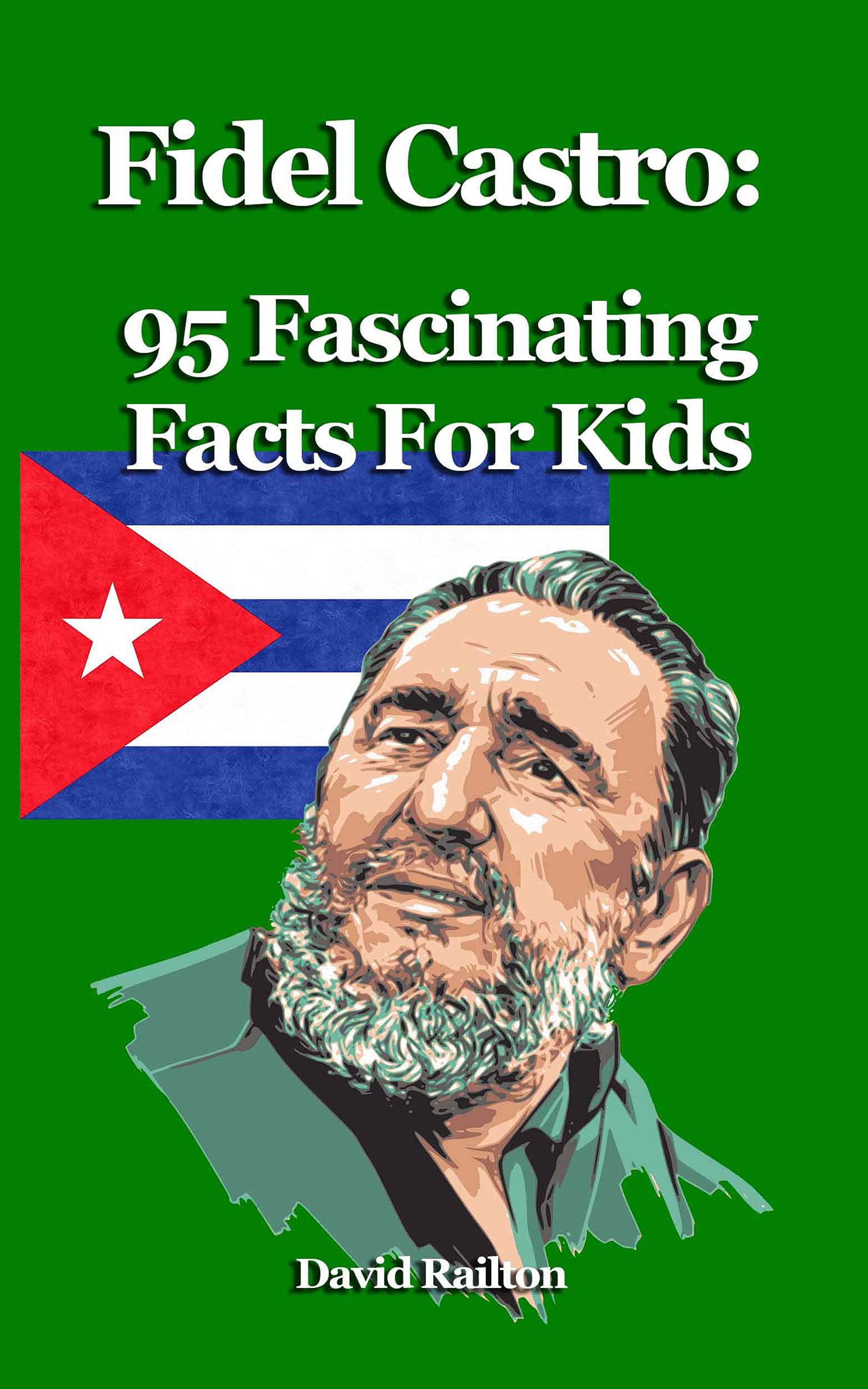
Fidel Castro remains one of the most polarizing and complex political figures of the 20th century. Ruling Cuba for nearly five decades, his life was marked by Cold War confrontations, remarkable survival stories, personal eccentricities, and deeply ingrained historical myths. Exploring the lesser-known historical realities behind his public persona reveals a nuanced portrait of his revolutionary career, personal habits, and enduring global impact.
Early Life Curiosity and Mythmaking
1. He Wrote a Letter to President Roosevelt Asking for a $10 Bill
In 1940, at the age of 14, a young Fidel Castro penned a letter written in English to U.S. President Franklin D. Roosevelt. Attending the Colegio de Dolores in Santiago de Cuba, Castro congratulated Roosevelt on his re-election and made a simple request: he asked the American president to send him a $10 bill because he had never seen one before. Although the White House acknowledged the letter with a standard acknowledgment, the requested bill was never sent. The original letter remains preserved in the U.S. National Archives.
2. The Major League Baseball Scouting Myth Is False
A widely circulated urban legend claims that Castro was a elite pitching prospect scouted by Major League Baseball (MLB) teams such as the Washington Senators or New York Yankees. Historical research confirms this story is entirely fictitious. While Castro was an athletic young man who played intramural sports—including baseball, basketball, and track—at the University of Havana, he was never evaluated by MLB scouts, nor did he receive a professional contract offer. The myth gained traction in American sports journalism during the late 1950s as a lighthearted "what if" scenario regarding Cold War history.
3. His Famous "History Will Absolve Me" Defense Was Delivered at Trial
Following his failed assault on the Moncada Barracks on July 26, 1953, Castro—a trained lawyer—conducted his own defense during the trial in October 1953. Facing a 15-year prison sentence, he delivered a four-hour closing argument that concluded with the famous statement: "Sentence me, it does not matter. History will absolve me." Castro later reconstructed the speech from memory while imprisoned on the Isle of Pines. Secretly smuggled out of prison in boxes of matches, it became the founding manifesto of the 26th of July Movement.
4. His Signature Beard Began as a Tactical Necessity
Castro’s iconic facial hair was not originally intended as a political symbol. During the guerrilla campaign against Fulgencio Batista’s regime in the Sierra Maestra mountains between 1956 and 1959, Castro and his fighters stopped shaving primarily because razors and clean water were scarce. Over time, the beard evolved into an ideological identifier for the barbudos (bearded ones). Castro later joked that maintaining a beard saved him roughly 10 working days a year that would otherwise be wasted on shaving.
Cold War Rivalries, Assassinations, and Political Longevity
5. He Survived Over 600 Documented Assassination Plots
Fabián Escalante, the former head of Cuba’s Department of State Security, estimated that the U.S. Central Intelligence Agency (CIA) and Cuban exile groups targeted Castro in 638 distinct assassination plots. The Church Committee investigations in the United States during the mid-1970s confirmed several of these covert operations. Schemes ranged from traditional explosive devices and sniper attacks to exotic methods, including poisoned wetsuits, exploding cigars, hypodermic pens, and thallium salts designed to make his famous beard fall out. Castro famously remarked that if surviving assassination attempts were an Olympic event, he would win the gold medal.
6. He Outlasted Ten U.S. Presidential Administrations
From the time Castro seized power in January 1959 until he officially transferred executive authority to his brother Raúl Castro due to failing health, his tenure spanned the administrations of ten U.S. presidents. Beginning with Dwight D. Eisenhower, Castro remained in control of Cuba throughout the presidencies of John F. Kennedy, Lyndon B. Johnson, Richard Nixon, Gerald Ford, Jimmy Carter, Ronald Reagan, George H.W. Bush, Bill Clinton, and George W. Bush, before retiring during Barack Obama's administration.
7. He Held the UN Record for the Longest Timed Speech
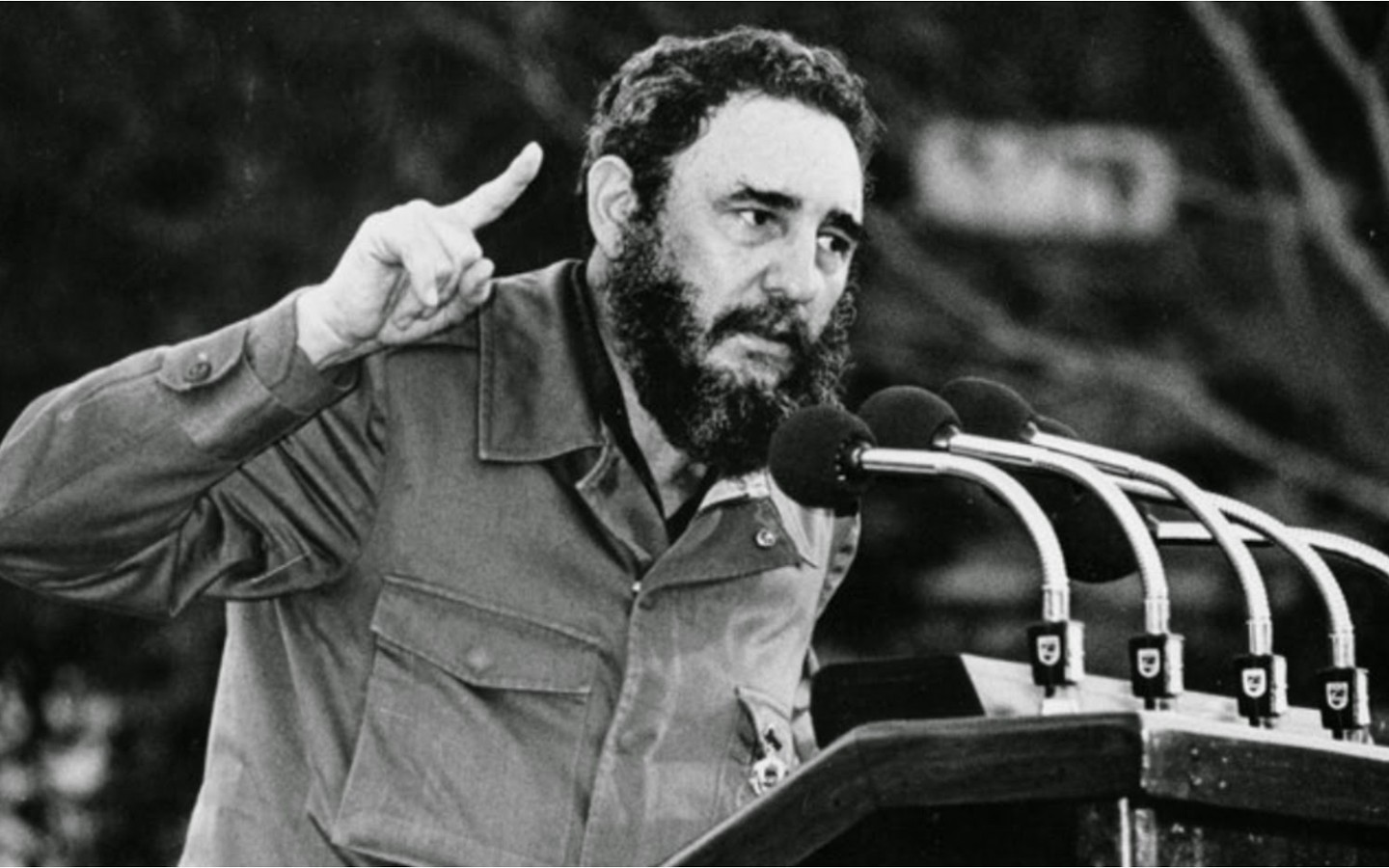
On September 26, 1960, Castro delivered a marathon address to the United Nations General Assembly in New York. Lasting four hours and 29 minutes, it remains the longest timed speech ever delivered at UN headquarters according to official records. During the address, Castro lambasted U.S. foreign policy and outlined Cuba's revolutionary goals. While he gave even longer speeches domestically—including a seven-hour address at the Third Communist Party Congress in 1986—his 1960 UN speech remains an unmatched benchmark in international diplomacy.
8. He Frequently Wore Two Rolex Watches Simultaneously
Photographs taken during Castro’s 1963 official state visit to the Soviet Union captured a curious detail: he was wearing two Rolex watches on his left wrist. This was not a display of material wealth, but a practical tracking method. One watch was set to local time in Moscow, while the second remained set to Havana time. During an era before digital dual-time displays or modern smartphones, wearing two wristwatches allowed Castro to manage complex communication schedules across multiple time zones.
Personal Quirks, Obsessions, and Cultural Habits
9. His Extreme Obsession with Dairy Led to "Ubre Blanca"
Castro possessed an intense personal obsession with dairy products, particularly ice cream and milk production. Frustrated by Cuba’s low milk yields in tropical climates, he commissioned intensive cattle-breeding initiatives. The project produced a hybrid cow named Ubre Blanca (White Teat), who became a national icon in the early 1980s. Ubre Blanca broke the Guinness World Record by producing 110 liters (nearly 29 gallons) of milk in a single day in 1982. Castro also ordered the construction of Havana's massive Coppelia ice cream complex to ensure affordable ice cream for the public.
Fidel Castro's Major Life Phases:
- Guerrilla Era (1953–1959)
- Moncada Attack
- Sierra Maestra
- Signature Beard
- State Leader Era (1959–2008)
- Cold War Alliances
- Dairy Initiatives
- Quitting Cigars (1985)
10. He Created Cohiba Cigars—Then Quit Smoking Cold Turkey
Although Castro’s public image was inseparable from his cigar, the creation of Cuba's premier cigar brand, Cohiba, occurred almost by accident. In the mid-1960s, Castro noticed a distinct aroma from a cigar smoked by his bodyguard. The bodyguard revealed that a local artisan named Eduardo Rivera rolled them privately. Castro set up the El Laguito factory to produce these specific cigars exclusively for top government officials and foreign diplomats. However, in 1985, Castro quit smoking cigars cold turkey at age 59 to promote a national public health initiative against smoking.
11. He Maintained a Surprising Literary Relationship with Ernest Hemingway
Castro was a reader of Western literature, citing Ernest Hemingway as one of his favorite authors. He frequently stated that Hemingway’s novel For Whom the Bell Tolls provided him with practical insights into organizing guerrilla warfare against an established army. The two men met publicly in May 1960 during the annual Hemingway Billfish Tournament in San Francisco de Paula, Cuba, where Castro won individual trophies.
12. Forbes Listed Him Among the World's Richest Rulers
In 2006, Forbes magazine listed Castro in its annual feature on the world's richest leaders, estimating his personal net worth at approximately $900 million. The magazine based its valuation on Castro’s control over state-owned enterprises, including economic conglomerates like CIMEX and the Havana Club rum brand. Castro reacted with fury, dedicating a televised four-hour broadcast to denying the claim. He asserted that he lived solely on a modest monthly state salary of 900 Cuban pesos (around $30 USD at the time) and challenged the publication to prove he held offshore bank accounts.
Policy Impacts, Historical Controversies, and Posthumous Directives
13. His Policies Prompted "Operation Peter Pan"
In the immediate aftermath of the revolution, rumors circulated that the new Marxist-Leninist government planned to strip parents of legal custody over their children to place them in state-run indoctrination centers. Between December 1960 and October 1962, a joint initiative between the Catholic Welfare Bureau and the U.S. government—known as Operation Peter Pan (Pedro Pan)—covertly transported more than 14,000 unaccompanied Cuban minors to the United States. It remains one of the largest child refugee evacuations recorded in the Western Hemisphere.
14. He Banned Professional Sports in Cuba for Five Decades
In 1961, Castro’s government officially outlawed professional sports in Cuba, characterizing commercial athletics as corrupt exploitation. Instead, Cuba established a fully state-subsidized athletic system focused on Olympic sports and amateur competition. While this decision produced world-class national teams and Olympic champions in boxing, baseball, and athletics, it also led to high-profile defections by Cuban athletes seeking multi-million-dollar contracts in professional leagues abroad.
15. He Explicitly Banned Public Monuments Named After Himself
Before his death on November 25, 2016, Castro requested that no cult of personality be built around his image after he passed away. Respecting his final wishes, the Cuban National Assembly passed Law No. 123 in December 2016. The law legally prohibits naming streets, avenues, plazas, public buildings, or institutions after Fidel Castro. It also outlaws the erection of statues, busts, or official monuments in his honor, making his memorial footprint distinctly different from other Cold War figures like Vladimir Lenin or Mao Zedong.
Myth vs. Fact: Evaluating Fidel Castro's Biography
To help clarify the historical record, the following table summarizes key myths, verified facts, and primary contextual details surrounding Fidel Castro's life:
| Subject / Topic | Common Urban Myth or Misconception | Historical Verified Reality | Primary Context / Source |
|---|---|---|---|
| Baseball Career | Scouted by MLB teams (NY Yankees / Washington Senators). | Played intramural sports at University of Havana; never scouted by MLB. | MLB Archives / Historical Biographies |
| Cigar Habits | Smoked heavy cigars continuously throughout his entire life. | Quit smoking cold turkey in 1985 for health promotion. | State Speeches (1985) / Public Health Records |
| UN Address | Gave a 7-hour speech at the UN General Assembly. | Delivered a 4-hour, 29-minute UN speech in Sept 1960 (7-hour speech was at Party Congress). | United Nations Official Records |
| Post-Mortem Honors | Statues and monuments line the streets of Havana. | Law No. 123 explicitly bans public monuments, streets, or statues in his name. | Cuban National Assembly (Dec 2016) |
| FDR Correspondence | Demanded land rights from President Roosevelt. | Requested a $10 USD bill in 1940 out of childhood curiosity. | U.S. National Archives |
| Personal Timekeeping | Wore two Rolexes as a display of capitalist luxury. | Wore two watches to track Havana and Moscow time zones simultaneously. | Soviet Tour Photo Records (1963) |
The Complex Historical Footprint of Castro's Legacy
Fidel Castro’s political trajectory redefined geopolitical dynamics in the Western Hemisphere throughout the Cold War. By establishing a socialist state 90 miles off the coast of Florida, his government directly catalyzed pivotal global incidents, including the 1961 Bay of Pigs invasion and the 1962 Cuban Missile Crisis—the closest the world ever came to nuclear war.
Domestically, Castro’s administration achieved total state control over healthcare, literacy, and education, resulting in social metrics that outpaced many developing nations. However, these programs came at severe human and political costs. The political landscape was defined by the suppression of political dissent, state censorship, economic centralization, and wave after wave of mass emigration. From the Mariel boatlift in 1980 to ongoing maritime migrations, hundreds of thousands of Cubans fled the island's authoritarian political structure and economic decline.
Understanding Castro requires disentangling carefully crafted political narratives from verified historical documentation. Whether analyzing his record-setting diplomatic speeches or his state policy decisions, examining these facts provides essential context for evaluating 20th-century history.
Frequently Asked Questions
Did Fidel Castro really get scouted by Major League Baseball teams?
No, Fidel Castro was never scouted by Major League Baseball teams. While he was an active athlete who played intramural baseball and basketball at the University of Havana in the 1940s, there is no archival evidence from MLB teams or independent scouts indicating he was ever evaluated for a professional baseball contract.
How many assassination attempts did Fidel Castro survive?
Cuban intelligence officials estimated that Castro survived 638 assassination plots throughout his career. While not all reached the execution phase, official U.S. congressional investigations (such as the 1975 Church Committee) confirmed that the CIA and Cuban exile groups devised multiple operational schemes targeting Castro between 1960 and 1965.
Why did Fidel Castro wear two Rolex watches at the same time?
Castro wore two Rolex watches on a single wrist during diplomatic trips—most notably during his 1963 visit to the Soviet Union—to track two time zones at once. One watch was set to Moscow time and the second to Havana time, allowing him to quickly manage communications without relying on complex manual calculations.
Is it legal to build a statue of Fidel Castro in Cuba today?
No, it is illegal under Cuban law to build statues or name public infrastructure after Fidel Castro. Following his explicit instructions before his death in 2016, the Cuban National Assembly enacted Law No. 123, which prohibits naming streets, parks, buildings, or public monuments after him to prevent a personal cult of personality.
When and why did Fidel Castro stop smoking cigars?
Fidel Castro stopped smoking cigars in 1985 at the age of 59. He quit cold turkey to support a national public health campaign aimed at reducing tobacco consumption in Cuba, acknowledging that setting a personal example was essential for the policy's success.
Exploring Cold War History Further
To develop a rigorous, evidence-based understanding of Cold War history and Cuban-American relations, researchers and readers should consult primary archival documents rather than popular folklore. Key resources include the U.S. National Archives, the Foreign Relations of the United States (FRUS) diplomatic volumes maintained by the Office of the Historian, and published historical transcripts from the United Nations. Comparing official government records against independent biographical scholarship remains the most effective way to separate historical realities from enduring political myths.