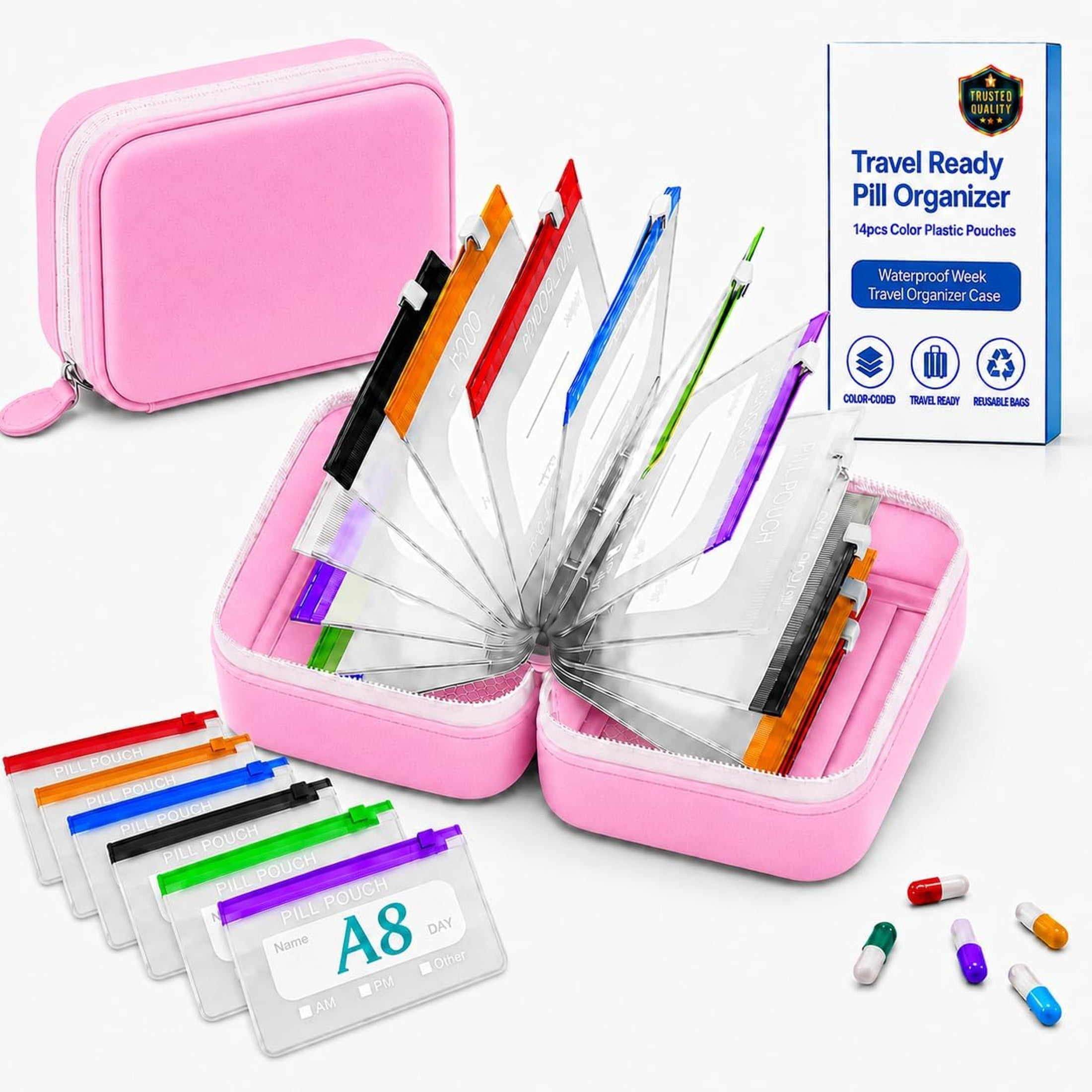
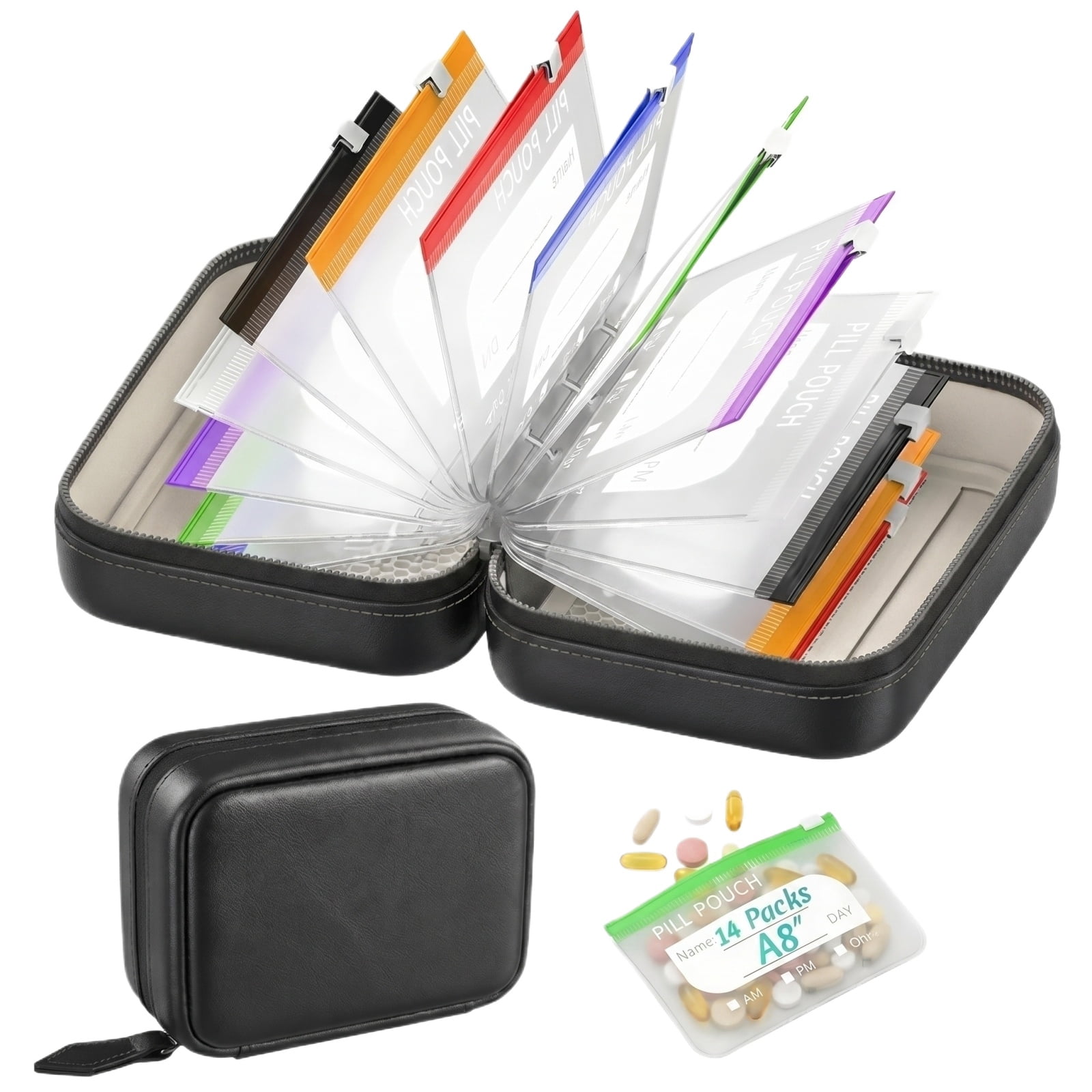
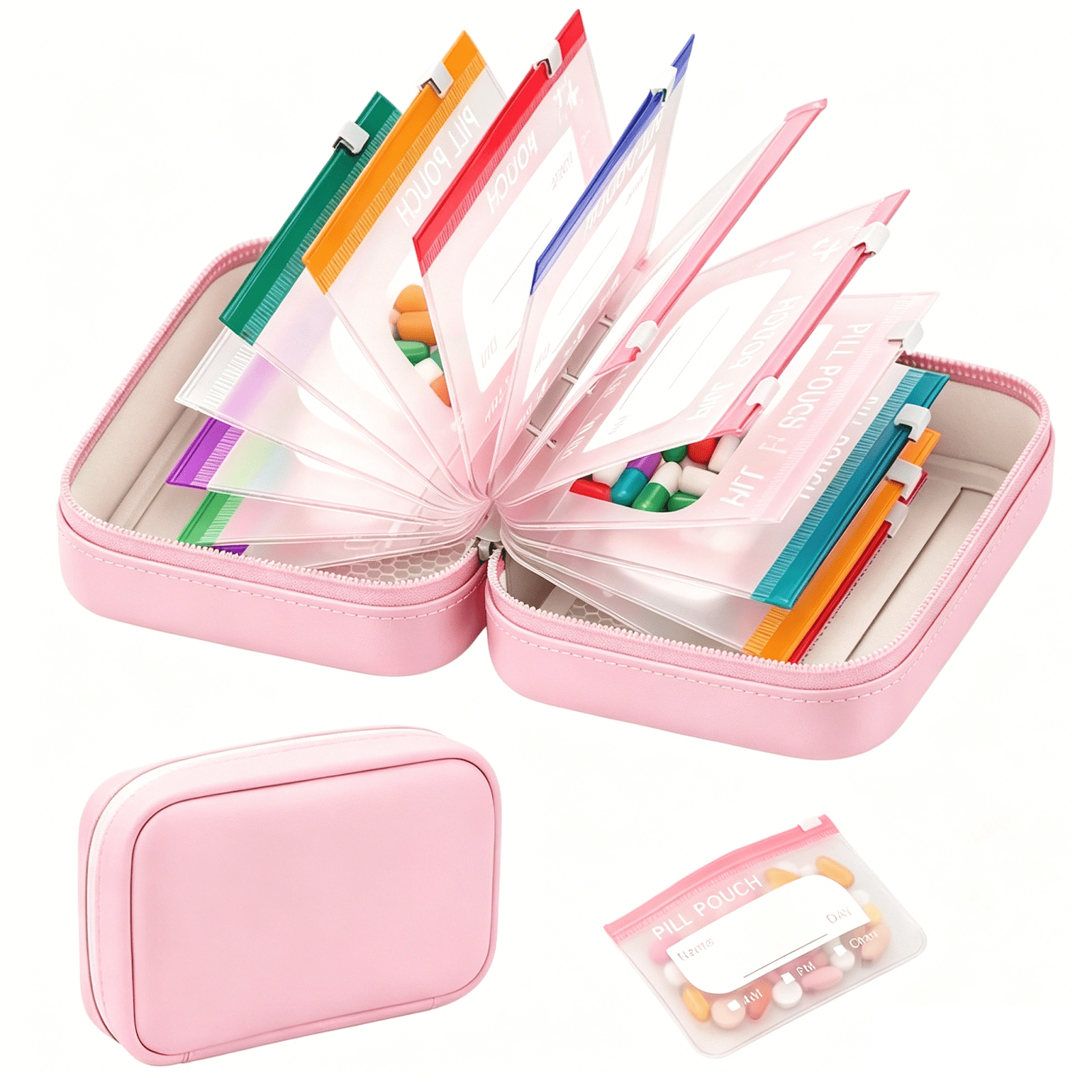
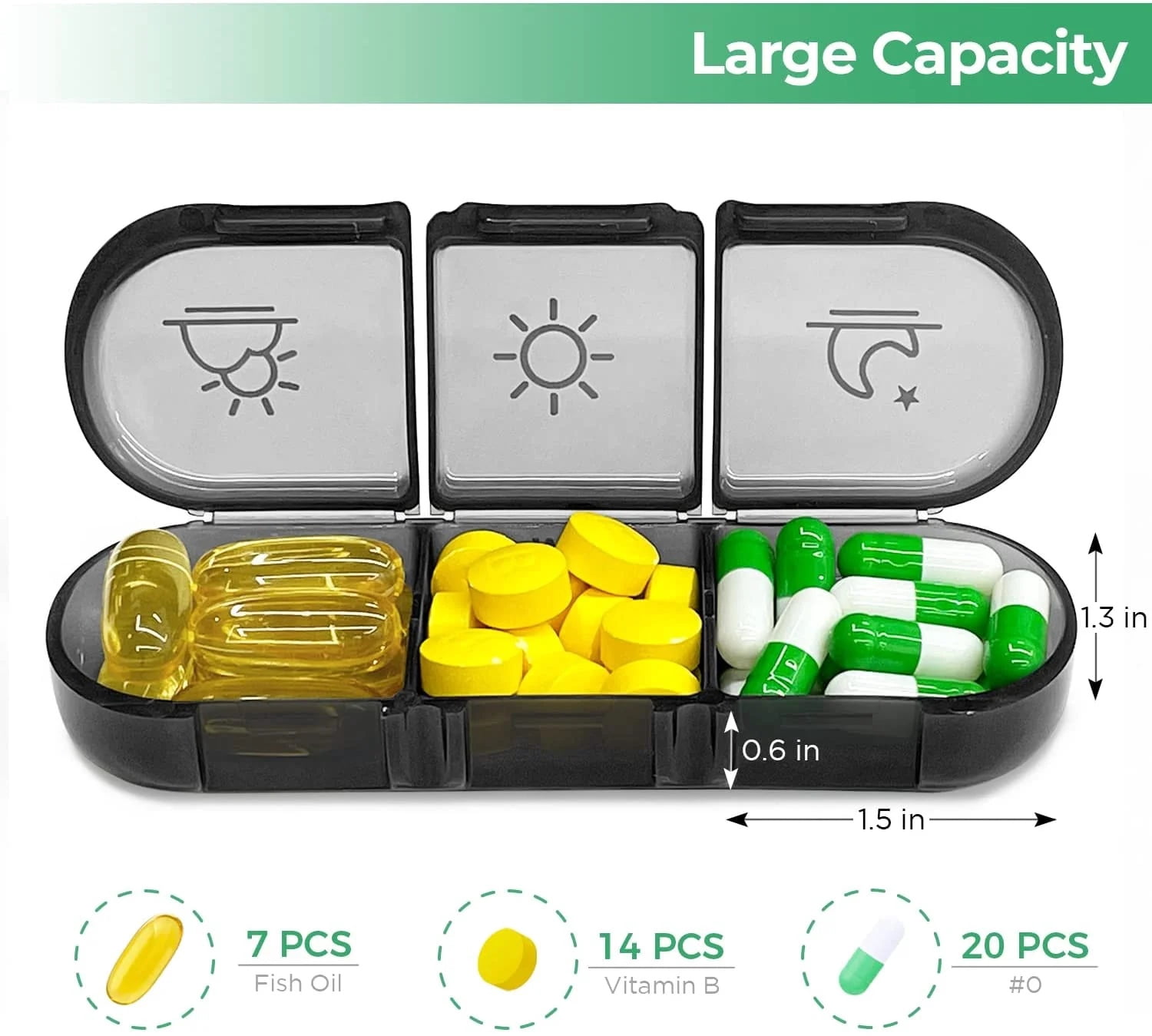
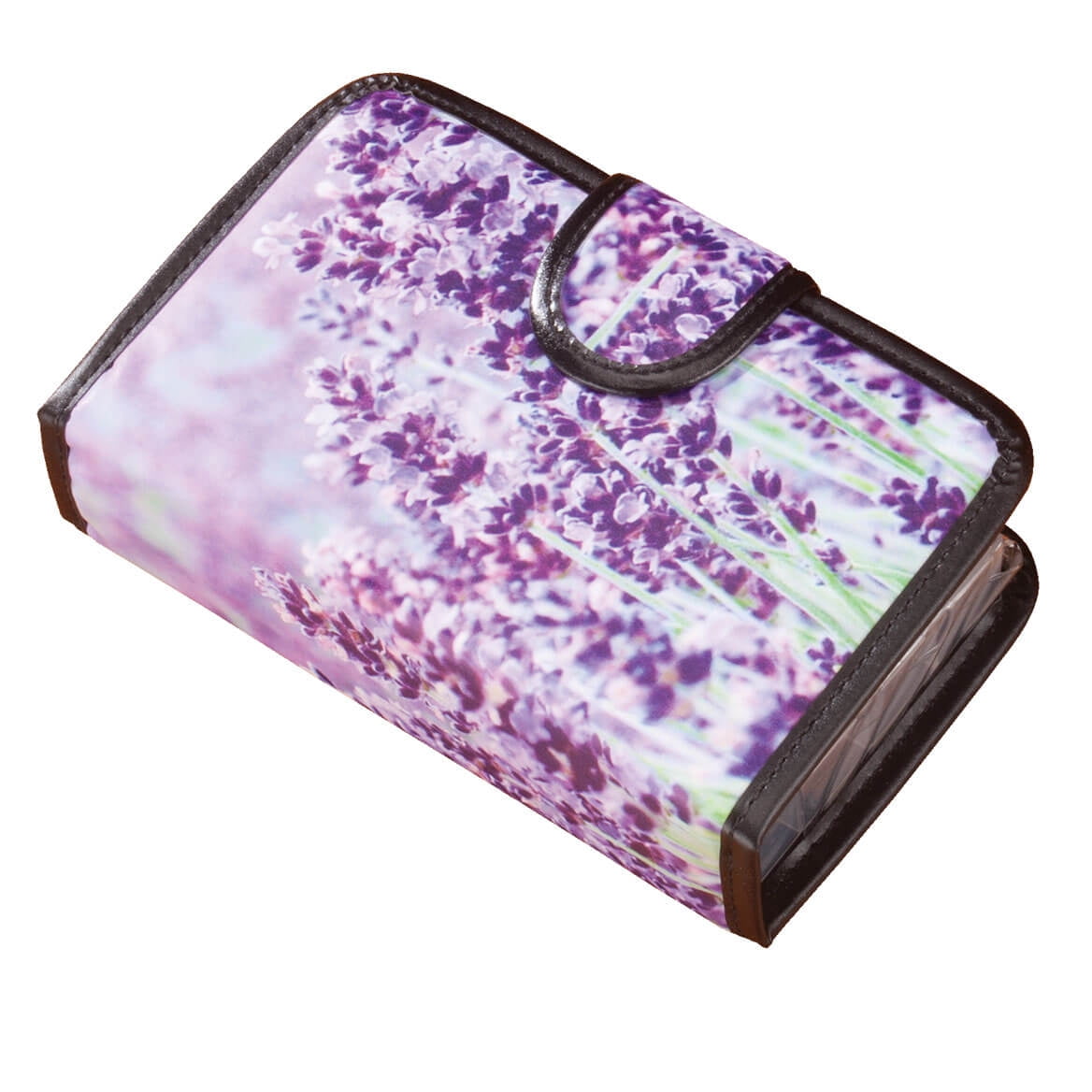
A 14 day travel pill organizer is a specialized storage system designed to manage two weeks of medication or supplements in a single, portable unit. These organizers typically feature 14 individual compartments or removable daily pods, allowing travelers to maintain dosage compliance without the bulk and clutter of multiple prescription bottles.
Understanding the Architecture of 14-Day Pill Organizers
When planning a two-week journey, the method of medication storage becomes a critical factor in both health maintenance and luggage organization. In 2026, the market for 14 day travel pill organizers has moved beyond simple plastic boxes toward sophisticated systems that prioritize durability, security, and discrete aesthetics. Understanding the different structural designs is the first step in selecting a model that fits your specific itinerary.
The most common design is the folio-style organizer. This model typically features a zippered or magnetic-clasp outer case, often made of fabric, leather, or synthetic materials, which houses 14 individual plastic pods. The primary advantage of the folio design is discretion; it looks more like a small planner or a tech accessory than a medical device. Furthermore, the outer casing provides an extra layer of protection against accidental openings in a crowded suitcase.
Another popular configuration is the stackable tower. These organizers utilize 14 interlocking circular or rectangular compartments that screw into one another. The stackable design is highly space-efficient for vertical packing in backpacks or carry-on side pockets. However, users should note that accessing a dose from the middle of the stack requires unscrewing the units above it, which may be cumbersome for those with dexterity issues.
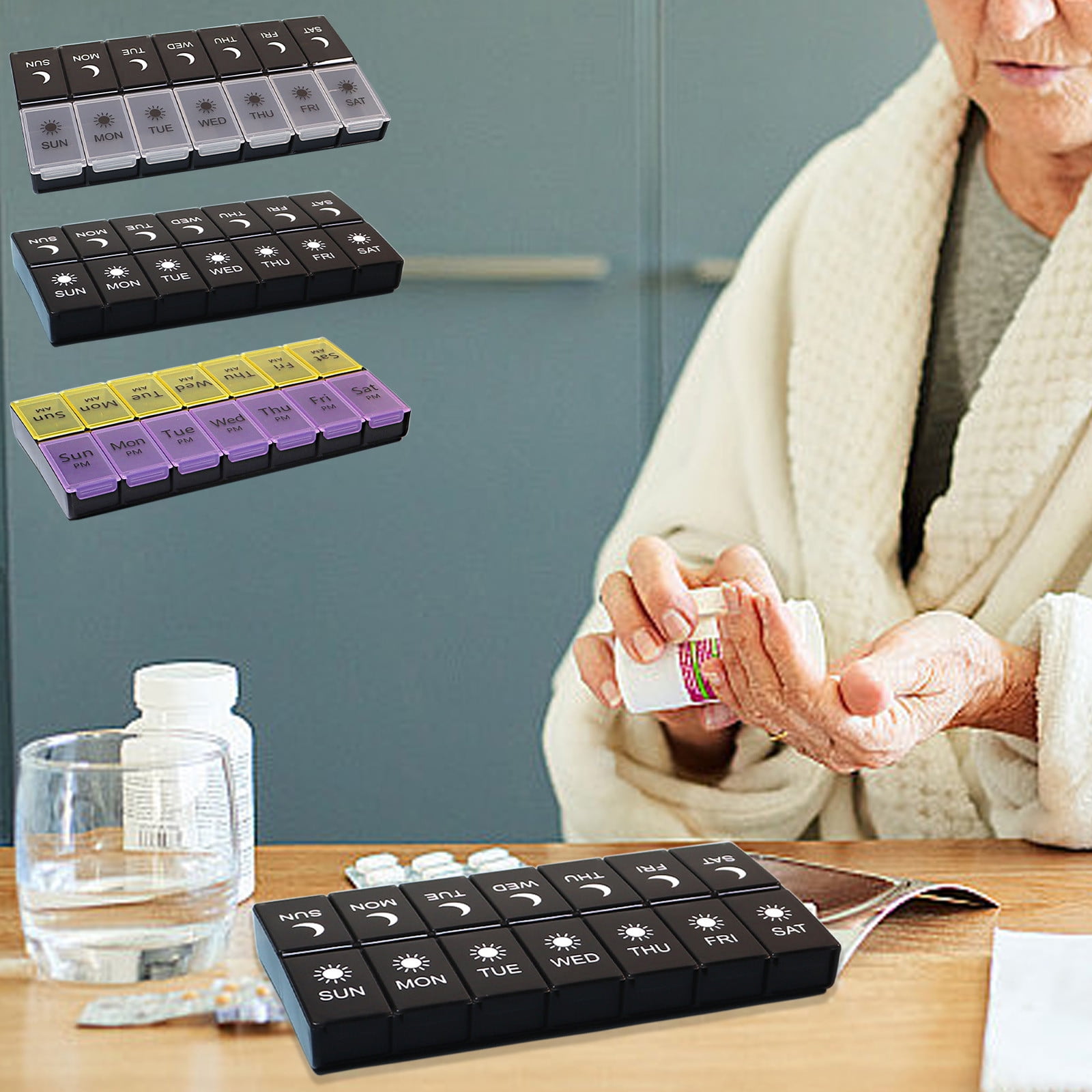
Finally, the fixed-grid tray remains a staple for those who prefer visual clarity. These are often divided into two rows of seven, clearly labeled from Day 1 to Day 14 or by specific dates. While less flexible than modular pods, the fixed-grid system allows you to see your entire two-week regimen at a glance, making it easier to verify if a dose was missed.
Key Features to Evaluate for Travel Durability
Travel environments are significantly more demanding than home environments. A pill organizer that works well on a bathroom counter may fail when subjected to the vibrations of a flight or the humidity of a tropical climate. When evaluating a 14 day travel pill organizer in 2026, several technical specifications deserve close attention.
Locking Mechanisms and Spill Prevention
The most frequent failure point for travel organizers is the "pop-open" event. If a compartment lid fails inside a bag, pills can be lost, contaminated, or mixed, creating a genuine health risk. Look for organizers that feature double-lock mechanisms. This usually involves a primary snap-shut lid on the individual pod and a secondary secure latch on the outer travel case. High-quality models often utilize "push-button" openings that are easy for the user to operate but resistant to opening under the pressure of shifting luggage.
Moisture and Light Protection
Many medications are sensitive to light (photodegradation) and moisture. Standard clear plastic organizers offer little protection against these elements. For long-term travel, consider organizers with amber-tinted or opaque compartments, which block harmful UV rays. Additionally, organizers featuring silicone gaskets or "O-rings" provide an airtight seal, protecting the chemical integrity of your medication in humid environments like cruise ships or coastal regions.
Material Safety and Sustainability
As of 2026, medical-grade, BPA-free plastics are the industry standard. High-quality organizers are typically made from Food-Grade PP (Polypropylene), which is non-toxic and does not leach chemicals into your medication over time. Some premium brands have also introduced recycled ocean plastics or bio-based polymers that maintain medical-grade durability while reducing the environmental footprint of the product.
TSA Regulations and International Border Compliance
Navigating security checkpoints with 14 days of medication requires an understanding of current regulations. According to the Transportation Security Administration (TSA), travelers are permitted to carry medications in pill or solid form through security checkpoints in unlimited amounts, provided they are screened.
While the TSA does not require medications to be in their original prescription bottles for domestic travel within the United States, international travel is more complex. Many countries have stricter laws regarding the identification of controlled substances. If you are using a 14 day travel pill organizer for international trips, it is highly recommended to:
- Carry a digital or physical copy of your prescriptions.
- Ensure your organizer has a clear slot for an ID card listing your name and contact information.
- Keep a photo of the original prescription bottles on your phone to prove the legality of the pills inside the organizer.
For those traveling with liquid medications or gels that exceed the standard 3.4-ounce limit, these must be declared to security officers at the start of the screening process. A 14-day organizer is generally for solid pills, but some hybrid kits include small, leak-proof vials for supplementary liquids.
Comparative Analysis of 14-Day Organizer Styles
To help you decide which format suits your travel style, the following table compares the three primary architectures of 14-day organizers based on key performance metrics.
| Feature | Folio/Wallet Style | Stackable Tower | Fixed-Grid Case |
|---|---|---|---|
| Portability | High (Fits in laptop bags) | Very High (Fits in bottle pockets) | Moderate (Requires flat space) |
| Durability | Excellent (Padded exterior) | High (Rigid structure) | Moderate (Prone to cracking) |
| Discretion | Best (Looks like a diary) | Moderate (Looks like a container) | Low (Clearly medical) |
| Capacity | High (Varies by pod size) | Moderate (Small diameter) | High (Large compartments) |
| Ease of Use | High (Removable pods) | Moderate (Requires unscrewing) | Very High (One-step access) |
| Spill Risk | Lowest (Zipped shut) | Low (Screw-on lids) | Moderate (Single latch) |
How to Pack and Maintain Your Organizer
Effectively utilizing a 14 day travel pill organizer involves more than just filling the slots. Proper preparation ensures that you remain compliant with your health regimen regardless of time zone shifts or travel delays.
1. The "Day Zero" Loading Strategy: Always fill your organizer at least 24 hours before departure. This prevents last-minute rushing, which is when most dosing errors occur. Ensure your hands are clean and dry before handling pills to prevent the introduction of moisture or bacteria into the compartments.
2. Time Zone Management: When traveling across multiple time zones, decide whether you will stick to your "home time" or transition to "local time." For certain medications (like insulin or blood thinners), timing is critical. Use your 14-day organizer in conjunction with a smartphone alarm to ensure you don't skip a dose during long-haul flights.
3. Redundancy Planning: If you are traveling for exactly 14 days, consider an organizer that has a "spare" compartment or carry a small 3-day backup in a separate bag. If your primary luggage is lost or delayed, having a small reserve of essential medication can prevent a medical emergency.
4. Cleaning and Maintenance: Between trips, it is vital to sanitize your organizer. Most 14 day travel pill organizers are not dishwasher safe because high heat can warp the plastic or degrade the silicone seals. Use warm, soapy water and a soft cloth, and ensure every compartment is completely dry before reloading. Even a single drop of trapped moisture can ruin an entire 14-day supply of pills.
Managing Complex Medication Needs
Not all medications are created equal, and a 14-day organizer must sometimes handle specialized requirements. If you take large supplements, such as fish oil or calcium, ensure the individual pod volume is sufficient. Many travelers underestimate the size of "horse pills" and find that a 14-day organizer designed for small tablets is inadequate.
For those with 2026-era "Smart" medication needs, some organizers now include NFC tags or QR codes on the interior. These can be scanned by a smartphone to log the dose automatically in a health app. This is particularly useful for 14-day trips where the change in routine makes it easier to forget whether you took your morning or evening dose.
If your medication is light-sensitive, avoid organizers with transparent lids. While it is convenient to see if a pill is inside, the exposure to cabin light or sunlight during travel can reduce the efficacy of certain drugs. In these cases, look for organizers with solid-colored lids or those housed within an opaque outer sleeve.
Frequently Asked Questions
Can I take my 14 day pill organizer through airport security?
Yes, you can take a 14 day pill organizer through TSA and most international security checkpoints. In the United States, medications in pill form are not required to be in original bottles, though they may be subject to additional screening. For international travel, it is safer to carry a copy of your prescription to avoid any confusion at customs.
What is the best way to prevent pills from rattling in the organizer?
Rattling can lead to pill breakage, especially with "scored" tablets. To prevent this, you can place a small, clean piece of a cotton ball inside each compartment to fill the empty space. This acts as a shock absorber during transit. Be sure the cotton is dry and does not snag on the medication.
Are 14 day organizers better than two 7 day organizers?
A dedicated 14 day organizer is generally superior for two-week trips because it keeps all your medication in a single, cohesive unit. This reduces the risk of losing one half of your supply. However, if your luggage space is extremely limited, using two 7-day organizers and packing them in different bags can provide a safety net in case one bag is lost.
How do I know if my organizer is "BPA-free"?
Reputable manufacturers will clearly state "BPA-free" on the packaging or the product itself. In 2026, most medical-grade plastics are required to meet this standard. Look for the recycling symbol with the number "5" (Polypropylene) on the bottom, as this is generally considered a safe, stable plastic for medication storage.
Can I store liquid gels in these organizers?
Yes, liquid gels can be stored in 14-day organizers, provided the environment does not become excessively hot. High temperatures can cause the gelatin capsules to soften and stick together. If traveling to a hot climate, keep your organizer in a cool, shaded part of your carry-on bag rather than in a checked suitcase that might sit on a tarmac.
Selecting Your Ideal Travel Companion
The primary goal of a 14 day travel pill organizer is to provide peace of mind. By centralizing your medication management, you remove the daily stress of tracking bottles and doses, allowing you to focus on your travel experience. When making your final selection, prioritize the "Double-Lock" feature and the folio-style casing if you value both security and discretion.
For 2026 travelers, the shift toward modular, BPA-free systems offers the highest level of flexibility. Before your next trip, audit your current medication volume, check the international regulations for your destination, and invest in a high-quality organizer that protects your health as much as it protects your schedule.