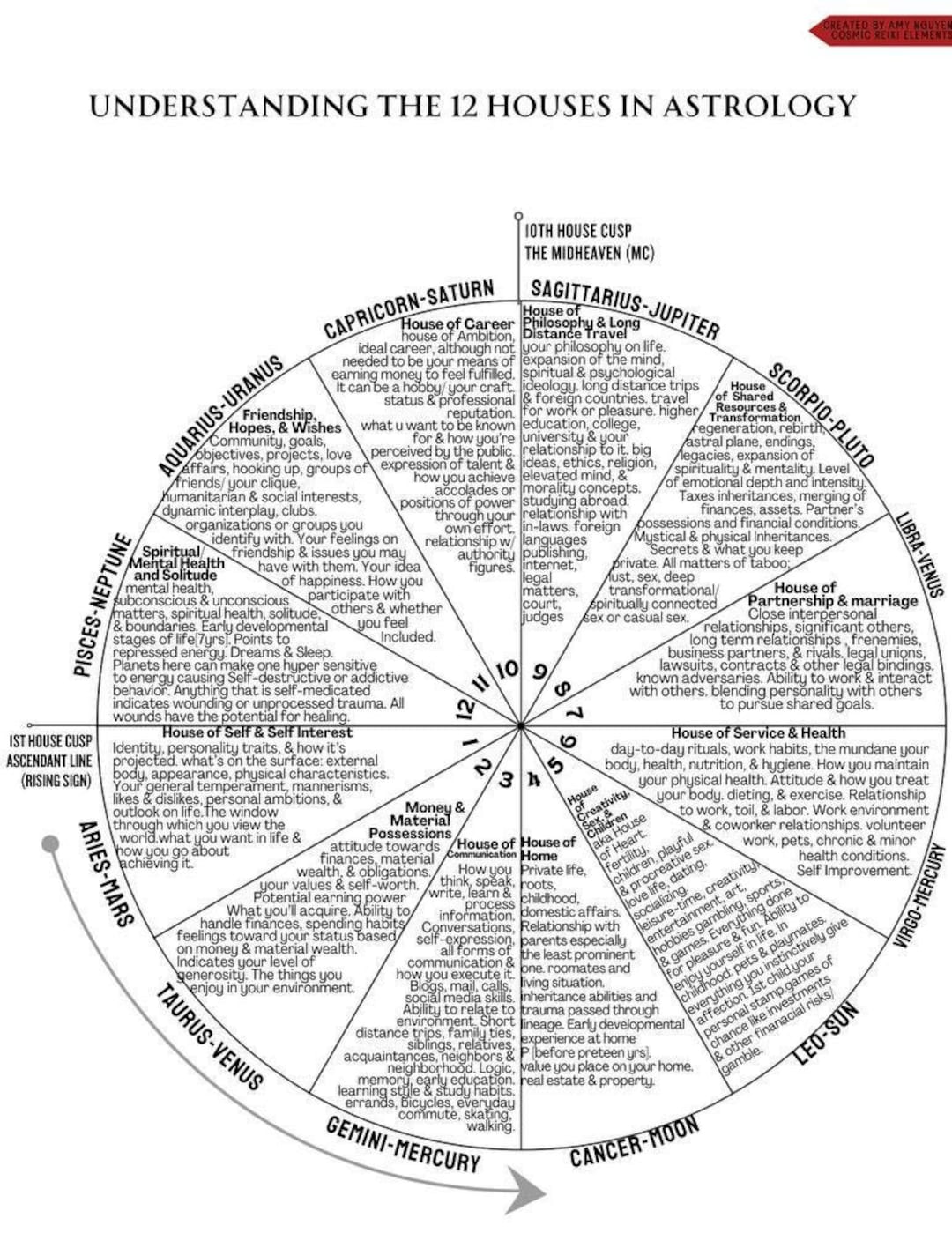
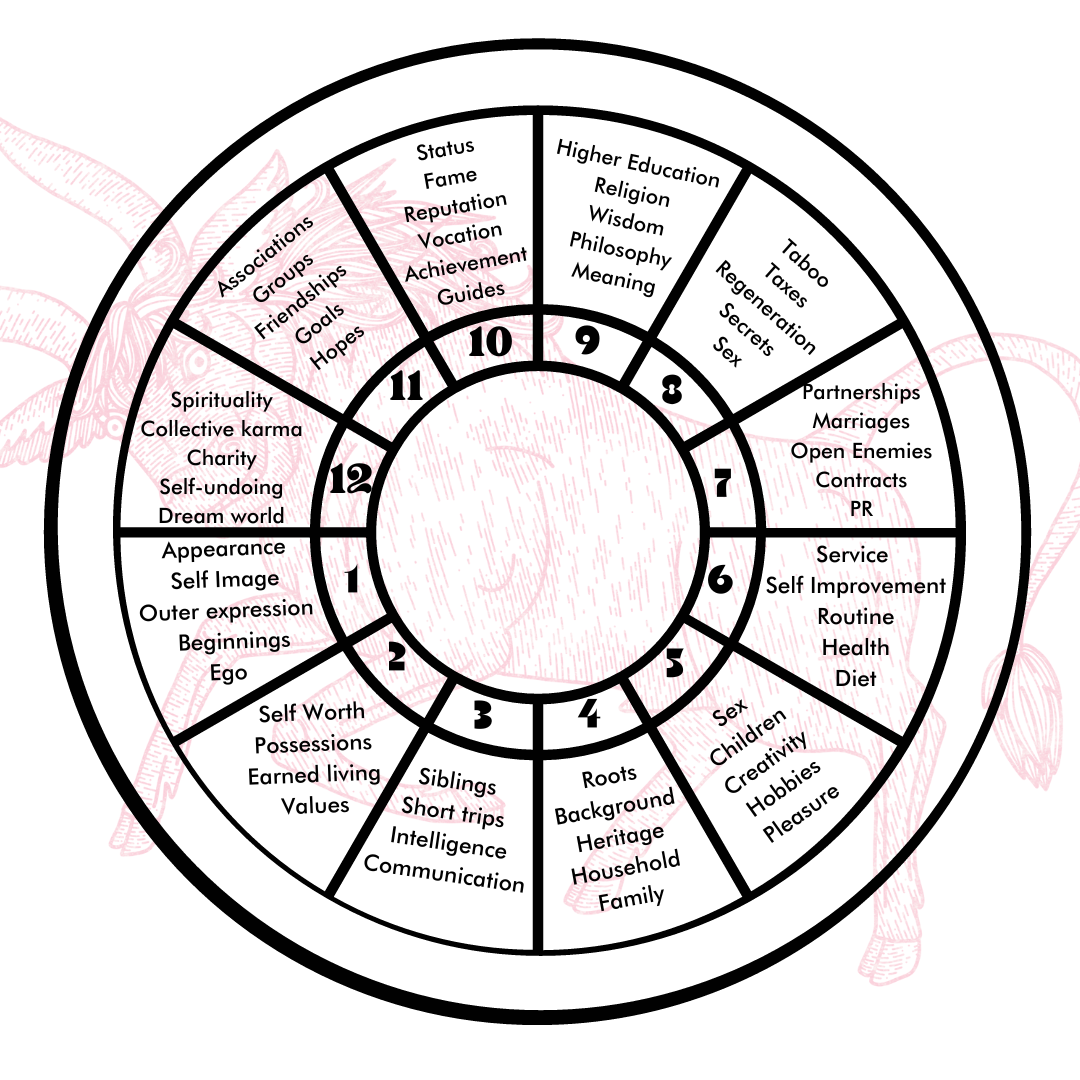
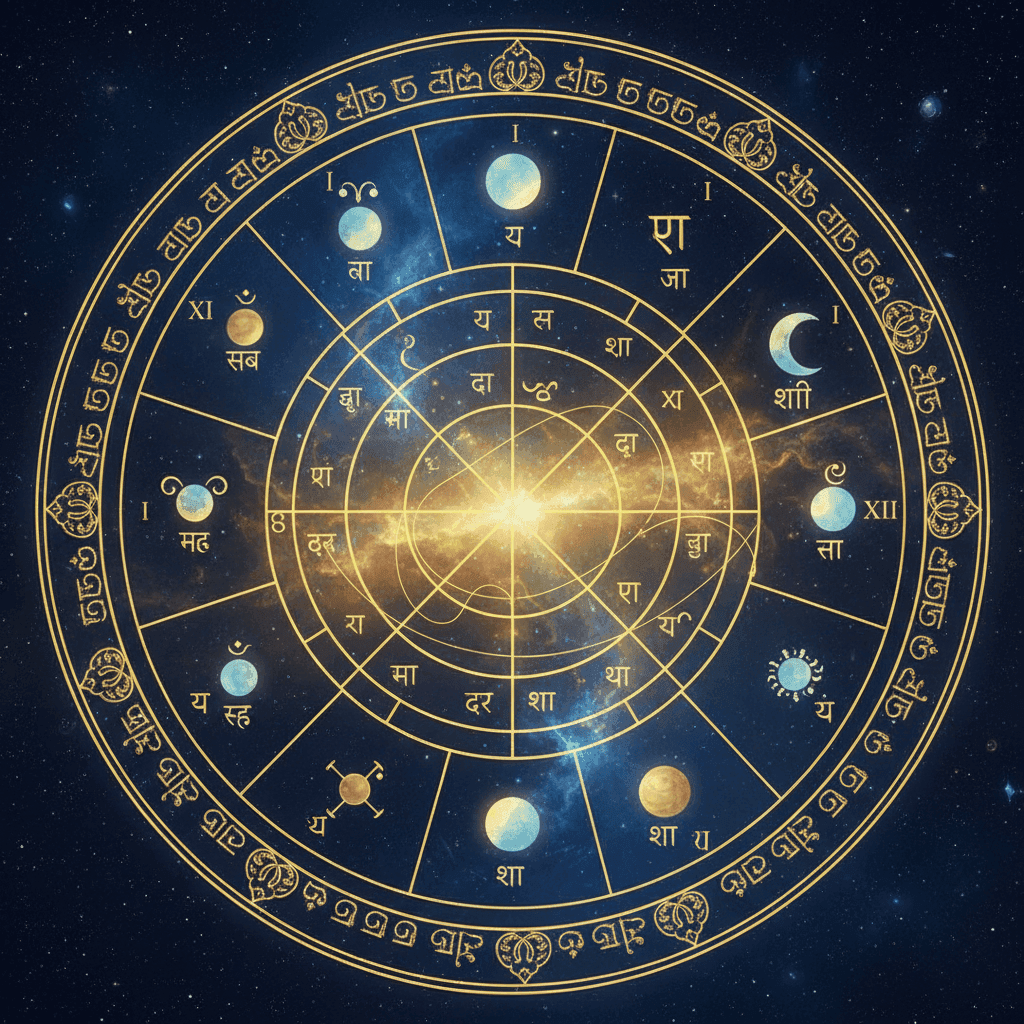
The twelve houses of astrology represent distinct areas of human experience, mapped onto a birth chart to define how planetary energies manifest in an individual’s life. By dividing the 360-degree zodiac into twelve segments based on the time and location of birth, the houses provide a practical framework for analyzing specific life domains, from personal identity and financial security to career trajectory and spiritual growth.
Understanding the Structure of the Astrological Houses
In Western astrology, the birth chart is a snapshot of the sky at the exact moment and location of your birth. The 360-degree circle is partitioned into twelve slices, known as houses. Unlike the signs of the zodiac, which are fixed at 30 degrees each, the houses can vary in size depending on the house system used (such as Placidus or Whole Sign) and your latitude on Earth.
Each house is governed by a specific area of life. When a planet occupies a house, its influence is directed into that specific domain. For instance, Venus—the planet of love and aesthetics—will express its energy differently depending on whether it sits in the 2nd House (material assets) or the 7th House (committed partnerships). Understanding these houses allows for a granular breakdown of an individual’s behavioral patterns, opportunities, and challenges.
The Twelve Houses: A Functional Breakdown
To navigate the astrological landscape, one must view the twelve houses as a progression of human development, starting from the self and expanding outward toward the community and the cosmos.
The Houses of Personal Development (1–4)
The first four houses focus on the immediate construction of the individual self.
- 1st House (The Self): Governs your physical appearance, vitality, and your initial approach to the world. It is the house of "I am."
- 2nd House (Possessions): Focuses on personal resources, earned income, and values. It defines how you manage your tangible assets.
- 3rd House (Communication): Governs daily exchanges, early education, siblings, and short-distance travel. It is the realm of intellectual processing.
- 4th House (Home/Foundations): Represents your roots, family, private life, and the foundation upon which your adult personality is built.
The Houses of Social Integration (5–8)
These houses mediate how the individual engages with others and the structures of society.
- 5th House (Creativity and Pleasure): Governs hobbies, romance, self-expression, and children. It is where one pursues personal joy.
- 6th House (Daily Routine and Service): Focuses on health, workplace habits, and routine tasks. It is the house of "how we serve others" and maintain our bodies.
- 7th House (Partnerships): Known as the house of "the other," it covers marriage, business contracts, and open enemies.
- 8th House (Transformation): Deals with shared resources, inheritance, taxes, and deep psychological metamorphosis. It is often associated with the mysteries of life and death.
The Houses of Higher Expansion (9–12)
These final houses bridge the gap between the individual and broader philosophical or universal themes.
- 9th House (Philosophy and Expansion): Governs long-distance travel, higher education, beliefs, and worldviews.
- 10th House (Career and Public Status): Represents your public persona, reputation, and professional legacy.
- 11th House (Community and Goals): Focuses on groups, social circles, networking, and the realization of long-term aspirations.
- 12th House (The Unconscious): The final house, governing secrets, spiritual health, solitude, and everything hidden from the waking mind.
Comparison of House Meanings and Focus Areas
The following table provides a reference for the primary domain of each house, assisting in the quick interpretation of a natal chart.
| House | Focus Area | Key Theme |
|---|---|---|
| 1st | Self | Identity and First Impressions |
| 2nd | Resources | Material Assets and Personal Value |
| 3rd | Environment | Communication and Short Journeys |
| 4th | Roots | Home and Emotional Security |
| 5th | Joy | Creativity and Romance |
| 6th | Utility | Health and Routine Duties |
| 7th | Connection | Committed Relationships |
| 8th | Depth | Shared Wealth and Transformation |
| 9th | Vision | Wisdom and Higher Learning |
| 10th | Legacy | Career and Social Standing |
| 11th | Network | Social Groups and Aspirations |
| 12th | Spirit | Subconscious and Solitude |
Practical Application: Integrating Houses and Planets
To effectively use the twelve houses, you must look for the "ruler" of the house. In astrology, every house has a zodiac sign on its cusp (the line starting the house). The planet that rules that sign is the "ruler" of the house. For example, if your 10th House cusp is in Scorpio, the ruler of your 10th House is Mars (or Pluto, depending on the tradition used).
By finding where that ruling planet is located in your chart, you can understand how your career (10th House) is being influenced by other parts of your life. If the ruler of your 10th House is sitting in your 2nd House, it suggests your career path is heavily tied to your ability to manage your finances or personal skills. This intersectionality is what makes house interpretation a powerful tool for self-analysis.
Identifying and Troubleshooting House Systems
One common point of confusion is the choice of house system. In 2026, the most widely discussed systems remain the Placidus system (which creates unequal house sizes based on the time of birth) and the Whole Sign system (which assigns one entire zodiac sign to each house).
When analyzing a chart, consistency is essential. If you are learning the basics, sticking to one system for a period of time is recommended. If you find your house placements seem to contradict your lived experience, verify the birth time accuracy—a difference of even four minutes can shift the house cusps for some individuals, particularly those born near the poles or in high-latitude regions.
Frequently Asked Questions
What happens if I have an empty house in my birth chart?
An empty house does not mean that area of your life is inactive or unimportant. Every house has a sign on its cusp, and the planet that rules that sign acts as the manager of that house. You must look at the location of that ruling planet to understand how that specific house functions for you.
Why do some houses look larger than others on my chart?
This is a standard feature of time-based house systems like Placidus. Because the Earth is tilted, some houses appear "intercepted" (containing two signs) while others may span a large arc. This is simply a mathematical representation of the intersection between the horizon and the ecliptic at your specific birthplace.
How do houses differ from zodiac signs?
Think of signs as the "how" or the flavor of the energy (e.g., Aries is impulsive, Taurus is steady), and the houses as the "where" (e.g., the 10th House is the office, the 4th House is the home). The signs are the temperament; the houses are the stage upon which that temperament acts.
Can planetary transits in houses change my life?
Yes, as planets move through the sky (transits), they cross into different houses of your birth chart. When a transiting planet enters a new house, it often triggers a period of focus on the themes governed by that house. For example, when Jupiter transits your 2nd House, you may experience an expansion in financial opportunities or a shift in your spending habits.
Next Steps for Personal Chart Analysis
To begin your practical exploration of these concepts, pull up a verified copy of your birth chart using a reputable astrological database. Locate the house cusps and identify the signs residing at the start of each. Begin by observing the 1st, 4th, 7th, and 10th houses—often called the "angular" houses—as these usually contain the most prominent themes of your outward life. Observe the placements of the ruling planets of these four houses to see how your identity, home, partnerships, and career are interconnected. By consistently mapping these connections, you can build a deeper, more accurate understanding of your personal astrological profile.