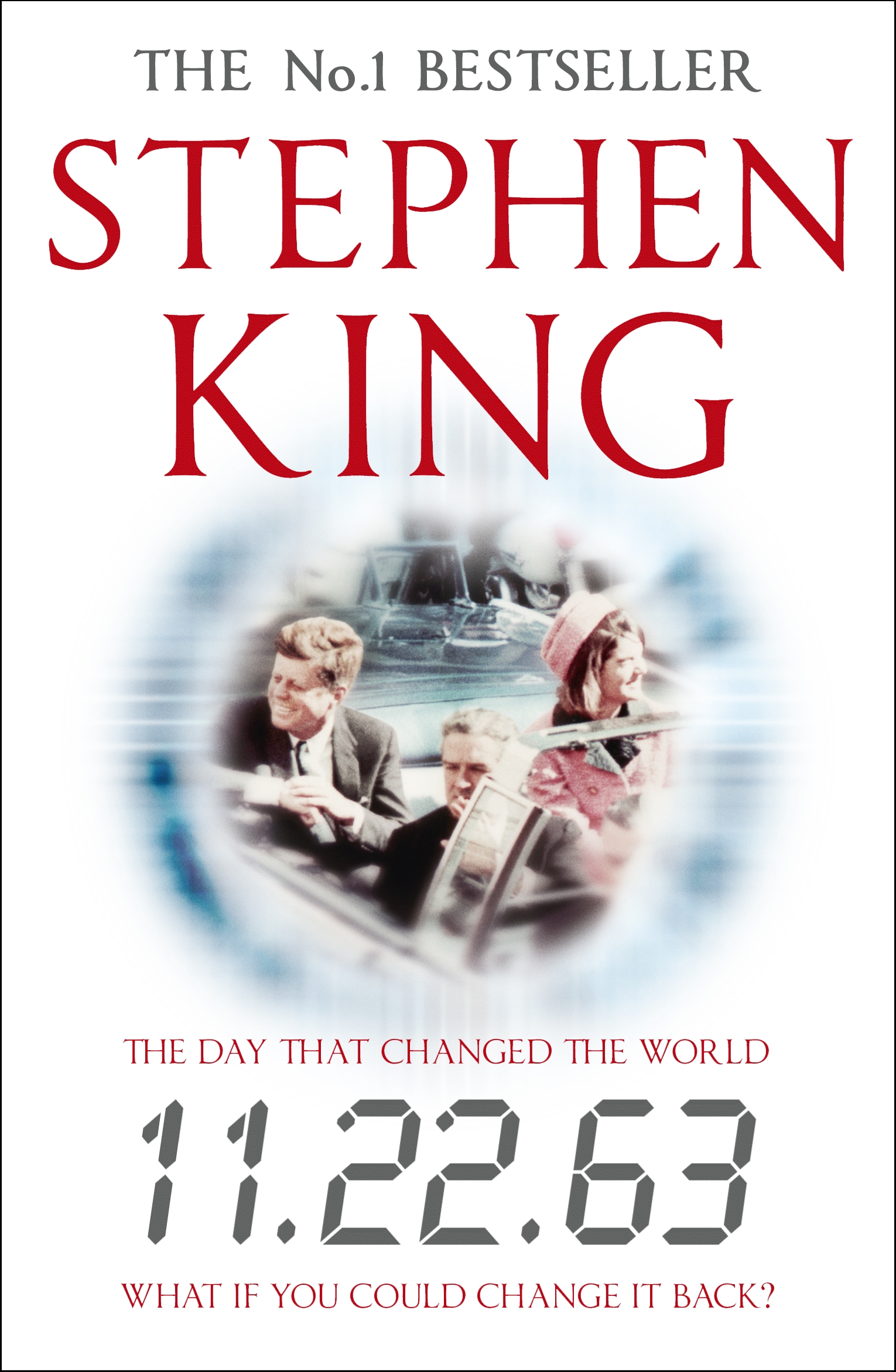
Stephen King’s 2011 novel 11/22/63 is a work of speculative fiction that centers on Jake Epping, a high school English teacher who discovers a portal to 1958 and embarks on a mission to prevent the assassination of President John F. Kennedy. The narrative explores the ethics of temporal interference, the persistence of history, and the intricacies of mid-century American life.
The Premise: The Portal to 1958
The central conceit of 11/22/63 is the "rabbit hole," a pantry in a diner owned by Al Templeton, which serves as a fixed temporal anchor. Every time a person enters this portal, they emerge in the exact same location—Lisbon Falls, Maine—at precisely 11:58 a.m. on September 9, 1958. Regardless of how much time the traveler spends in the past, only two minutes pass in the present. This mechanism establishes a critical constraint for the protagonist: while the past is accessible, it is also reset every time the traveler exits and returns, meaning any changes made during a previous "run" are erased.
Al Templeton, dying of cancer, convinces Jake Epping to take over his mission: wait in the past for five years until November 1963, and stop Lee Harvey Oswald from killing JFK. The novel differentiates itself from traditional time-travel tropes by emphasizing the "obdurate" nature of the past. History is described as having an inherent resistance to being changed; it pushes back against the traveler, often manifesting as bad luck, physical obstacles, or coincidental tragedies designed to maintain the established timeline.
Character Dynamics and Historical Context
The narrative serves as both a high-stakes thriller and a meticulous period piece. Jake Epping, operating under the alias George Amberson, must integrate into the late 1950s and early 1960s. King invests significant page count into the cultural atmosphere of the era, contrasting the perceived simplicity of the period—cheaper prices, social norms, and the state of race relations—with the looming shadow of the Kennedy assassination.
The relationship between Jake and Sadie Dunhill, a librarian in Jodie, Texas, forms the emotional core of the book. As Jake settles into a life in Texas to monitor Oswald, he finds his mission complicated by personal attachments. This creates a conflict between his objective, cold-blooded duty to "save the world" and the human desire for a stable, private life. The tension is amplified by the fact that the more Jake disrupts the timeline, the more volatile and hostile the environment becomes.
The Role of Lee Harvey Oswald
A significant portion of the book focuses on the surveillance of Lee Harvey Oswald. King relied on extensive research into the Warren Commission report and contemporary accounts to construct his version of Oswald. The novel portrays him not as a mastermind, but as an unstable, deeply troubled individual whose actions were driven by a confluence of personality flaws and extreme circumstances.
By tracking Oswald for years, Jake becomes an expert on the man's habits, his wife Marina, and his affiliations with various political factions. This segment of the novel functions as an investigation into the "lone gunman" theory. King carefully navigates the boundary between documented historical fact and the fictional necessity of the narrative, presenting Oswald as a man who could be influenced by his environment but whose destructive path is, in the book's logic, a catalyst for much larger geopolitical consequences.
Comparative Analysis of Time Travel Narratives
11/22/63 differs from other prominent time-travel literature by prioritizing the physical and psychological toll of staying in a past era rather than the mechanics of the time machine itself. The following table highlights the unique positioning of the book within the genre.
| Feature | 11/22/63 (King) | The Time Machine (Wells) | Kindred (Butler) |
|---|---|---|---|
| Primary Goal | Prevent a historical event | Exploration/Survival | Survival/Ancestry |
| Temporal Resistance | The past fights back | Inherent evolution | External social pressure |
| Mechanics | Fixed, repeatable point | Variable machine | Involuntary trauma |
| Focus | Cultural immersion | Social commentary | Historical trauma |
The "Obdurate" Nature of History
In the universe of the novel, time is a living force. When Jake attempts to alter a minor event—such as saving a family from a tragedy—he encounters significant pushback. This concept of the "butterfly effect" is re-imagined as a defensive immune system of the timeline. The more significant the change attempted, the greater the effort required to survive the repercussions.
This serves as a thematic warning regarding the dangers of historical revisionism. King suggests that even if one possesses the technical ability to rewrite history, the consequences of such actions are unpredictable and likely catastrophic. The "best" version of the timeline, even with its inherent tragedies, is often portrayed as the only one capable of sustaining human society without collapsing into total chaos.
Technical and Cultural Accuracy
King’s depiction of 1958–1963 involves substantial detail regarding consumer goods, vehicle models, and regional slang. For readers interested in historical realism, the book provides an immersive look at the American South during the dawn of the civil rights movement. However, readers should note that while King performed diligent research, the book remains a work of fiction. Specifically, the interactions between Jake and the figures surrounding the Kennedy assassination should be treated as creative extrapolation rather than historical record.
For researchers or students studying the era, it is recommended to consult primary sources such as the National Archives' collection of JFK assassination records. 11/22/63 is an excellent entry point for understanding the mood of the country leading up to 1963, but it should be accompanied by verified historical accounts to distinguish between narrative convenience and factual events.
FAQ: Common Questions Regarding 11/22/63
Is the portal in the book based on a real location?
No, the portal is a purely fictional device. The setting of Lisbon Falls, Maine, is a real town, and the diner is a fictional creation used to anchor the story's supernatural element in a mundane, everyday setting.
Does the book support any specific conspiracy theories regarding JFK?
The novel acknowledges various theories but ultimately leans into the "lone gunman" conclusion established by the Warren Commission, while framing it within a speculative context where human free will interacts with the "resistance" of history.
How much historical research did Stephen King conduct for the project?
King spent several years researching the book. He notably consulted the archives of the Warren Commission and biographies of Oswald. While he took liberties with the timeline to serve his story, the depiction of the political climate and the assassination day itself remains grounded in documented chronologies.
Is the ending of the novel considered a "fixed" outcome?
Without providing spoilers, the ending deals with the philosophical implications of the "butterfly effect." The conclusion emphasizes that time-travel logic in the novel creates a closed loop where the past is fundamentally unchangeable without creating a worse future.
Can this book be used as a primary source for historical studies?
No. While it captures the zeitgeist of the era effectively, it is a work of speculative fiction. It should be used for literary or cultural analysis, not as a source of verified historical facts or forensic evidence regarding the Kennedy administration or the assassination.
Recommended Next Steps for Readers
If you are interested in the themes of 11/22/63, your next steps should depend on your specific area of interest. For those drawn to the historical events surrounding November 22, 1963, reviewing the digital archives provided by the John F. Kennedy Presidential Library and Museum is essential. These archives offer original documents, audio recordings, and photographs that provide a stark, factual contrast to the fictionalized narrative of the novel.
If you are more interested in the literary structure of the "what-if" scenario, consider comparing the novel's depiction of time travel to the works of authors like Ray Bradbury or H.G. Wells, who also explored the ethical implications of tampering with the past. For those analyzing the writing craft, examine the "Author's Note" included in the back of most editions of the novel, where King identifies the specific researchers and historical texts he consulted during the writing process.