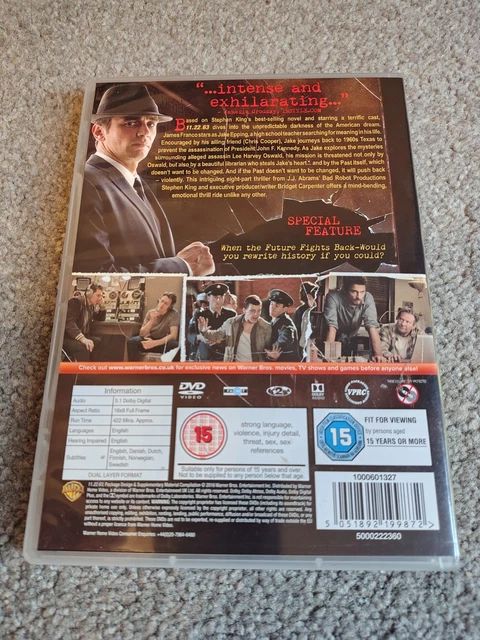
As of 2026, there are no plans or production developments for a second season of the miniseries 11.22.63. The show, which premiered in 2016, was conceptualized, marketed, and executed as a self-contained limited series that fully adapted the original 2011 novel by Stephen King, leaving no narrative loose ends that require continuation.
Origins and Narrative Structure of 11.22.63
The television series 11.22.63 is a high-profile adaptation of Stephen King’s best-selling novel of the same name. Produced by J.J. Abrams’ Bad Robot Productions and distributed through Hulu, the show follows Jake Epping, a high school English teacher who is recruited to travel back in time to prevent the assassination of John F. Kennedy. Unlike traditional procedural dramas or open-ended science fiction series, 11.22.63 was commissioned specifically as a limited, eight-episode run.
The narrative arc is tightly tethered to the constraints of the source material. By the end of the final episode, the primary conflict—the mission to alter history—is resolved. The emotional weight of the story centers on the paradoxical nature of time travel and the "butterfly effect," where attempts to fix the past consistently result in catastrophic consequences. Because the story concludes with the primary objective and the protagonist’s personal character arc reaching a definitive end, there is no structural requirement for a second installment.
Distinguishing Between Limited Series and Procedural Dramas
In the context of streaming television, the distinction between a "limited series" and a "returning series" is critical for viewers evaluating the possibility of future content. A limited series is typically purchased and produced with a set number of episodes and a predetermined conclusion. This format often attracts high-caliber talent—such as James Franco and executive producer J.J. Abrams—who are often unavailable for long-term, multi-year contracts.
When audiences search for a "Season 2" of a show like 11.22.63, it often stems from a high level of engagement with the aesthetic, the genre, or the creative team. However, from a business and creative standpoint, continuing a limited series after its narrative closure often risks undermining the legacy and thematic integrity of the original adaptation. Because the show provided a comprehensive account of the novel’s plot, there is no remaining literary material to adapt.
Analysis of Adaptation and Creative Scope
Stephen King’s novel is a standalone work. In the industry, adapting a standalone novel generally means the production company secures rights for a finite scope. If a production studio were to attempt a "Season 2," they would be forced to create entirely original, non-canonical content that diverges from the author’s vision.
The following table summarizes the key factors contributing to the status of the series as a finished project:
| Feature | Status | Impact on Potential Continuation |
|---|---|---|
| Source Material | Based on single novel | No existing sequels to adapt |
| Series Format | Limited Miniseries | No long-term contracts for cast |
| Narrative Arc | Fully resolved | No cliffhangers or pending plotlines |
| Creative Team | Independent projects | Cast/crew moved to new ventures |
| Production Model | 8-Episode Run | No budgetary allocation for extensions |
The Impact of Time Travel Tropes on Series Longevity
The genre of "temporal displacement" and time travel often leads viewers to speculate on alternate timelines. Because the show deals with the idea of resetting history, fans sometimes wonder if a second season could involve a new protagonist or a different historical event. However, this would constitute a reboot or a spin-off rather than a second season.
The internal logic of the 11.22.63 universe is built upon the specific rules of the "Rabbit Hole"—a temporal portal that always deposits the traveler in the same location and at the same time in 1958. This rigid mechanic serves the plot of the first season but would prove repetitive and structurally limited if applied to a secondary, unrelated narrative. Consequently, the creative team has never expressed interest in expanding the franchise into an anthology format.
Why Viewers Should Not Expect Updates
In the current streaming landscape, official cancellations or renewal announcements are standard. Because 11.22.63 was never officially canceled, but rather completed, there have been no updates, press releases, or trailers concerning a second season in the decade since its release. Industry news outlets, which monitor production slates for major platforms, have classified the series as "concluded" since the mid-2010s.
When evaluating the probability of a revival, one must look at the availability of the original stars and the focus of the production companies. Since 2016, both Bad Robot and the primary cast members have moved on to numerous other television and film projects. There is no historical or industry precedent for a show with this specific profile—a decade-old, single-season literary adaptation—to be revived for a second season.
Alternative Recommendations for Fans
For viewers who enjoyed the tone, tension, and historical exploration of 11.22.63, the best path forward is to explore other works that share similar narrative DNA. If you appreciated the specific blend of historical fiction and suspense, consider these options:
- Other Stephen King Adaptations: Many of King’s works have been adapted into limited series that maintain the same atmospheric dread and character-driven focus.
- Historical Thrillers: Searching for titles within the "alternate history" genre can provide similar satisfaction, as these shows frequently deal with the "what if" scenarios that defined 11.22.63.
- The Original Novel: If you have only watched the series, reading the original novel is the most effective way to experience more depth regarding the protagonist’s internal struggle and the secondary characters, which were necessarily compressed for the eight-episode television format.
Frequently Asked Questions
Is 11.22.63 based on a true story?
No, the series is a work of fiction. While it incorporates real historical figures and the documented events surrounding the assassination of John F. Kennedy, the narrative involving time travel and the protagonist’s mission is entirely invented by Stephen King.
Why do some sources mention a Season 2?
Speculative articles or fan-made content often appear in search results. These are frequently generated by automated algorithms or fan interest sites seeking engagement. There is no official or corroborated source confirming that any production work has occurred for a follow-up season.
Where can I watch the complete series?
The series remains available on various digital platforms, depending on regional licensing agreements. As of 2026, it is typically hosted on streaming services that house the original production’s distribution library. Check your local digital storefronts or subscription services for current availability.
Is there a spin-off or a prequel series in development?
There have been no verified reports from the production company, Bad Robot, or the author’s representatives regarding spin-offs or prequels. The property has remained dormant since the conclusion of the initial run.
Did the showrunners leave the ending open on purpose?
The ending of the show closely mirrors the conclusion of the novel. While it provides a bittersweet resolution, it was intended to close the narrative definitively rather than serve as a setup for a subsequent chapter. The "openness" is stylistic, meant to evoke reflection on the protagonist's journey.
Next Steps for Enthusiasts
If you are seeking further engagement with this story, the most valuable next step is to revisit the source material. The 2011 novel provides significant depth regarding the mechanics of the "past" and the psychological toll on the characters that the series had to simplify. By turning to the original book, you gain access to the complete, unedited vision of the creator, which remains the definitive conclusion to the saga. You may also find value in critical analysis essays or literary reviews of the work, which explore the historical accuracy and narrative choices that made the story an international success.