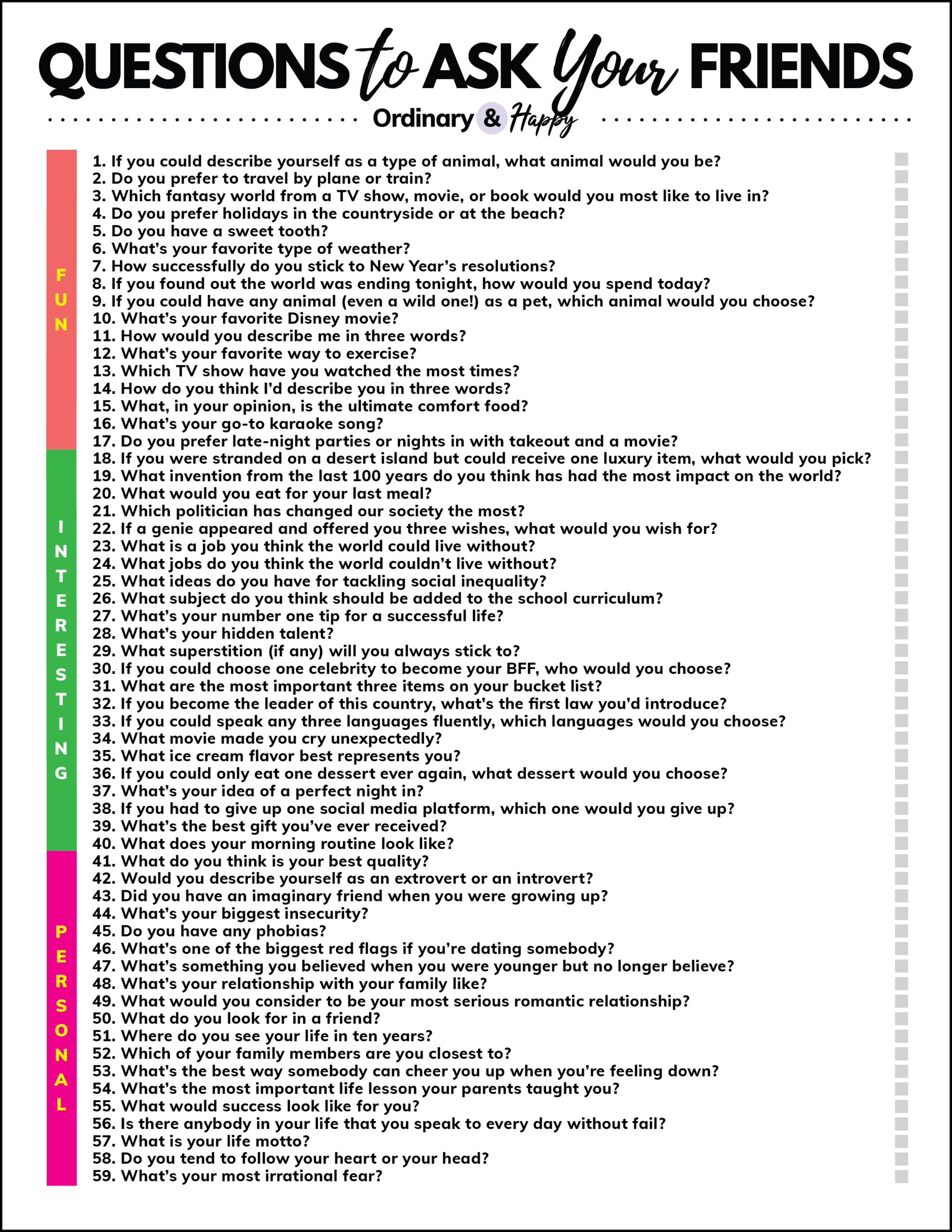
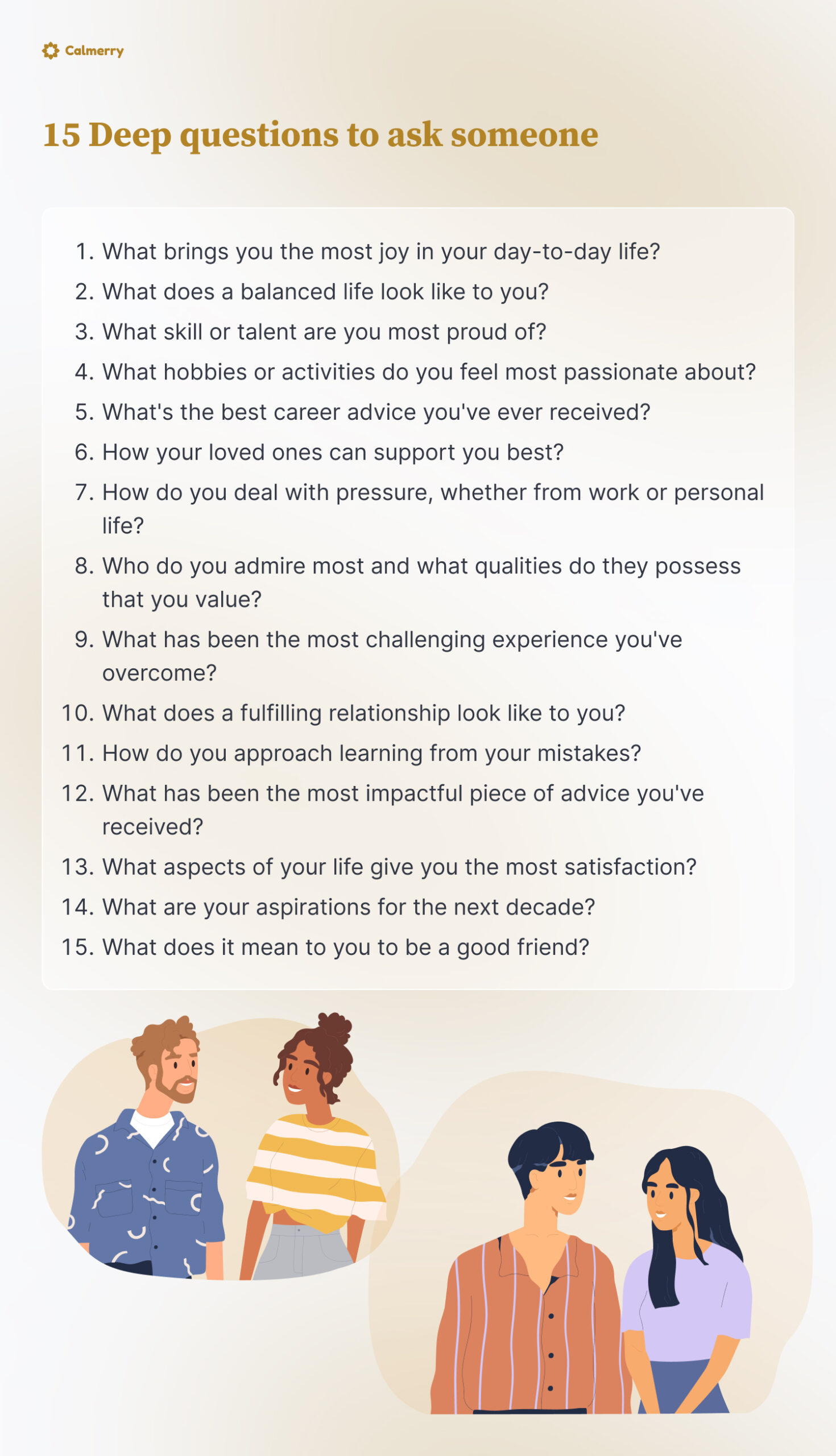
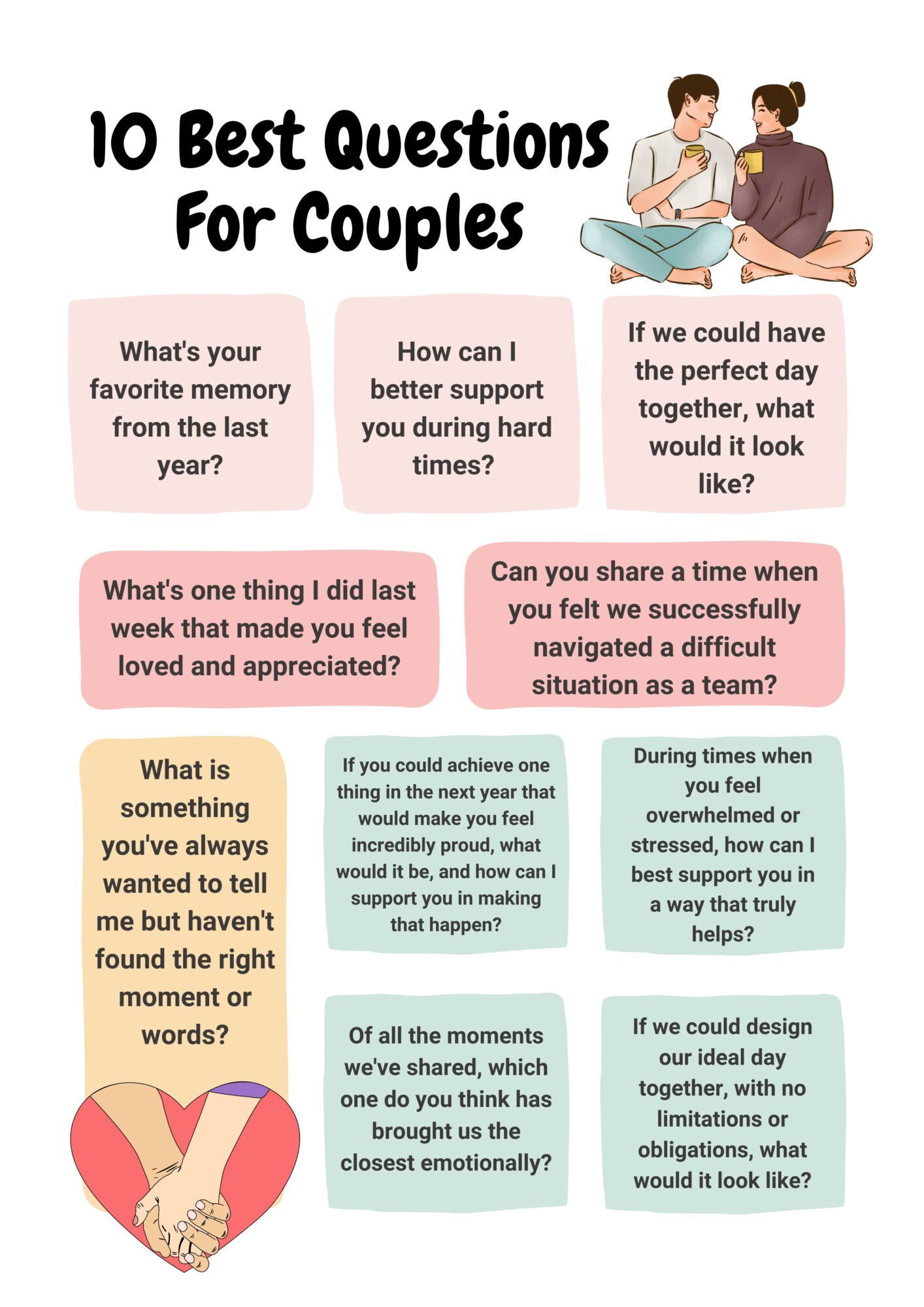
Meaningful friendship is built through intentional communication and the willingness to move beyond small talk. By asking open-ended questions that explore values, memories, and aspirations, you create a psychological space for vulnerability. These 101 questions are designed to help you bypass surface-level interactions and foster authentic, lasting bonds through structured, thoughtful conversation.
The Architecture of Meaningful Conversation
The foundation of a deep connection is not just the content of the conversation, but the environment in which it occurs. When you ask a question, you are inviting the other person to share their internal landscape. To achieve "deeper connection," one must move away from "what" questions—such as "What do you do for a living?"—and transition toward "why" and "how" questions.
The efficacy of these questions relies on active listening. If a friend answers a question, the value lies in your follow-up engagement. A response should not be treated as a checkbox; it is a gateway to further dialogue. If someone shares a childhood memory, ask them how that experience shapes their current decision-making processes. By validating their perspective, you reinforce the trust required for emotional intimacy.
Categorizing Inquiry for Balanced Dialogue
To keep conversations dynamic, it helps to rotate through different thematic areas. A friend who is comfortable discussing their career aspirations might feel guarded when asked about their deepest fears. By categorizing your inquiries, you can gauge the comfort level of your friend and shift topics if the conversation becomes overly intense or remains too superficial.
Foundational Values and Beliefs
These questions explore the principles that guide a person's life, helping you understand their ethical and philosophical framework.
- What is one value you would never compromise, even if it cost you a professional opportunity?
- How has your definition of "success" changed since you were in your early twenties?
- What is a belief you held five years ago that you have since completely abandoned?
- If you could change one systemic issue in our society today, what would you prioritize?
- What role does intuition play in your decision-making process compared to logic?
- What is the most important lesson you learned from a mentor or authority figure?
- How do you define a "well-lived life"?
- Does your perspective on mortality influence how you spend your time today?
- What is a tradition you intend to pass on to the next generation?
- What does forgiveness mean to you in a practical, day-to-day context?
Childhood and Formative Experiences
Understanding a person’s past provides necessary context for their current behaviors and triggers.
- What is the earliest memory you have that still feels vivid today?
- How did your environment as a child shape your personality?
- Who was the person who made you feel most understood during your formative years?
- What was a common point of friction between you and your family when growing up?
- What is a skill you possess today that you were forced to learn as a child?
- How did you handle disappointment or failure as a younger person?
- Is there a specific place from your childhood that you still consider a "safe space"?
- What is a myth you believed about adulthood that turned out to be false?
- How has your relationship with your parents evolved over the last decade?
- What is the most courageous thing you did as a child?
Aspirations and Future Outlook
These inquiries focus on the trajectory of your friend’s life, revealing their inner desires and motivations.
- What is a goal you have suppressed because it seemed too impractical?
- If you could dedicate the next ten years to one singular pursuit, what would it be?
- What legacy do you hope to leave behind for your community?
- How do you balance the desire for security with the need for personal growth?
- What is one experience you are absolutely determined to have before you turn sixty?
- Where do you find the most inspiration for your future plans?
- Does the idea of becoming "settled" excite you or frighten you?
- What is a habit you are trying to cultivate to better reach your long-term goals?
- How do you measure progress when your goals are non-linear or abstract?
- What is one thing you hope to be remembered for by your peers?
Comparative Framework for Conversational Depth
To effectively use these questions, consider the depth and focus of the inquiry. Not all questions are suitable for every setting or relationship stage.
| Question Type | Focus Area | Intended Outcome | Best Setting |
|---|---|---|---|
| Exploratory | Beliefs/Values | Broad understanding | Casual coffee, walking |
| Reflective | Past Experiences | Contextual clarity | Quiet, private space |
| Forward-Looking | Aspirations/Goals | Identifying passions | Collaborative planning |
| Situational | Reactions/Ethics | Character assessment | During a shared activity |
Navigation of Challenging Topics
While the goal is deeper connection, it is vital to respect boundaries. A "deep" question can sometimes touch on trauma or private insecurities. If a friend becomes visibly uncomfortable or withdraws, do not push. Acknowledging their reaction—"I realize that might be a difficult question, we can skip it"—is often a more powerful way to build connection than forcing an answer.
Establishing a "non-judgmental zone" is the most important prerequisite for this exercise. If you are asking someone to open up, you must be prepared to receive their answers with curiosity rather than critique. If a friend reveals an opinion that clashes with your own, view it as an opportunity for perspective-taking rather than a debate.
Frequently Asked Questions
How do I introduce these questions without it feeling like an interview?
The key is integration. Do not pull out a list and start firing questions. Instead, wait for a natural lull in conversation or a topic that bridges into one of these areas. For example, if you are discussing a movie, it is natural to pivot to: "That character made a huge sacrifice—has there ever been a time you had to sacrifice something major for your goals?"
Should I answer the questions I ask?
Yes, this is essential for reciprocity. A relationship is not a one-way street. When you ask a personal question, be ready to share your own answer. Vulnerability is a social currency; when you share, you signal that it is safe for the other person to do the same.
What if my friend is not interested in deep conversations?
Some people prefer to connect through shared activities rather than verbal processing. If you find your attempts at deep conversation are not met with interest, it may be a mismatch in communication styles. Respect their preference and look for "connection" in the work or hobbies you do together.
Are there any questions I should avoid entirely?
Avoid questions that function as thinly veiled critiques or "gotchas." Anything that begins with "Why would you..." often sounds accusatory. Focus on "What" and "How" questions, which are inherently more descriptive and less judgmental.
How often should we have these types of conversations?
There is no fixed schedule. Forced intimacy can feel manufactured. Use these questions as a tool to navigate periods where you feel the friendship has drifted or when you simply want to expand the breadth of your understanding of one another.
Next Steps for Strengthening Bonds
To turn these inquiries into a habit, consider setting a gentle intention. Perhaps once every few gatherings, make a conscious effort to move past the "life updates" phase of your conversation and introduce one of the questions above. Remember that the goal is not to "complete" the list of 101 questions, but to use them as a scaffold to support a richer, more nuanced friendship. Start with the categories that feel most natural to your current dynamic, and watch how the quality of your interactions evolves over time.