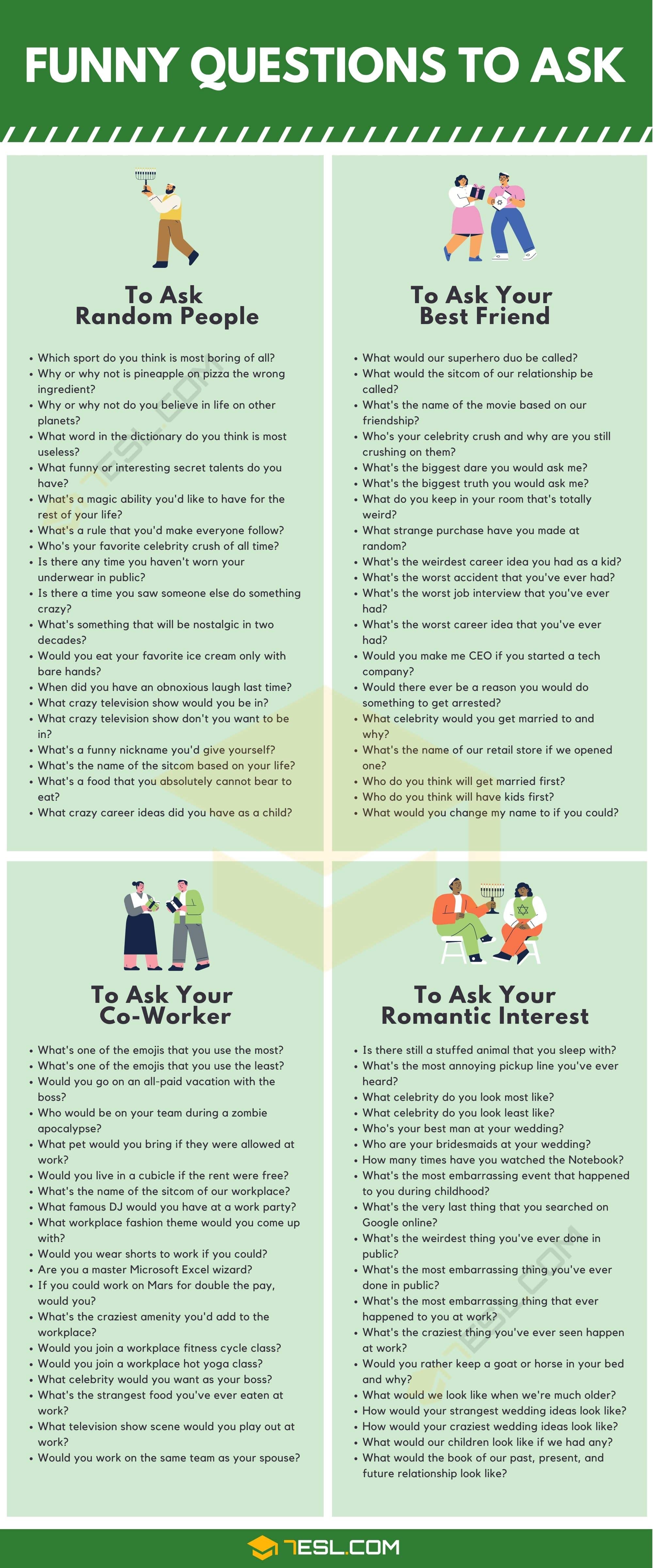
Engaging in meaningful conversation is a foundational element of deepening platonic relationships. By utilizing a structured set of questions, friends can move past surface-level small talk to explore personal histories, hypothetical scenarios, and shared values, ultimately fostering a more profound sense of mutual understanding and emotional connection.
The Role of Structured Conversation in Friendship
Human connection thrives on the exchange of information, yet the pressures of daily life often reduce social interactions to logistical updates or passive media consumption. Structured questioning acts as a catalyst for intimacy. When friends commit to a deliberate conversation, they signal that they value the other person’s internal landscape, thoughts, and opinions. This practice is particularly beneficial for long-term friendships that may have hit a period of stagnation, or for newer connections seeking to establish a baseline of trust and rapport.
The goal of asking "fun" questions is not to conduct an interrogation, but to create a shared space where both participants feel safe to express vulnerability, humor, and creativity. By curating a list of varied prompts, individuals can tailor their interactions to the specific chemistry of their group, ensuring that the dialogue remains balanced and engaging.
Establishing a Framework for Better Dialogue
Before initiating a series of questions, it is important to establish the context of the conversation. High-quality interactions depend on environmental cues and psychological safety. Choosing an environment with minimal distractions allows participants to focus on active listening rather than shifting attention to external noise or tasks.
Consider these prerequisites for a productive session:
- Mutual Consent: Ensure all participants are eager to engage in the conversation. Forced participation often leads to superficial or dismissive answers.
- Non-Judgment: Foster an atmosphere where unconventional opinions or silly answers are celebrated rather than critiqued.
- Balanced Turn-taking: Use the questions to facilitate a dialogue, not a monologue. Ensure everyone has the opportunity to respond to each prompt if they choose to do so.
- The Option to Pass: In any healthy social dynamic, individuals should reserve the right to skip a question if they feel uncomfortable, without needing to justify that decision.
Categorizing Conversation Starters
To maintain momentum during a discussion, it helps to categorize questions based on the desired tone or outcome. Below is a breakdown of how to structure your session to keep the energy dynamic.
Hypothetical and Creative Scenarios
Hypothetical questions challenge the imagination and reveal a person’s problem-solving style, moral compass, and sense of humor. These prompts allow friends to step outside their actual lives and explore "what if" scenarios in a low-stakes environment.
- If you could have any superpower, but it only worked on Tuesdays, what would you choose?
- If you were tasked with building a new society on a different planet, which three books would you take with you?
- If you could switch lives with a fictional character for 24 hours, who would it be and why?
- If you could host a dinner party for any three people, living or dead, who would receive an invite?
- If you had to describe your life’s current trajectory as a movie genre, what would it be?
Personal Growth and Reflection
These questions encourage a deeper dive into the participant's history and future aspirations. They are best utilized when the atmosphere is relaxed and comfortable, as they require a higher degree of introspection.
- What is a small, everyday habit that has significantly improved your quality of life in the last year?
- What was a "failure" you experienced in the past that actually turned out to be a blessing in disguise?
- Which personality trait of yours do you think is your greatest asset?
- If you could give your younger self one piece of advice, what would it be?
- What is something you are currently learning that makes you feel excited or challenged?
Lighthearted and Humorous Prompts
Sometimes the best way to bond is through shared laughter. These questions are designed to keep the mood light and help friends understand each other's quirks, preferences, and sense of the absurd.
- What is the most ridiculous fashion trend you actually participated in?
- If you were a professional athlete, what would your walk-up song be?
- What is a meal you could eat for the rest of your life without getting sick of it?
- If animals could talk, which species do you think would be the most annoying?
- What is a chore you absolutely refuse to do, even if it meant living in chaos?
Comparison of Question Styles
When planning your conversation, use the table below to decide which type of question best suits the current mood of your group.
| Question Type | Primary Goal | Ideal Setting | Depth Level |
|---|---|---|---|
| Hypothetical | Spark creativity | Casual gatherings | Low to Medium |
| Reflective | Deepen trust | Quiet, private settings | High |
| Lighthearted | Facilitate laughter | Dynamic social events | Low |
| Preferences | Identify commonalities | Initial get-togethers | Low |
Managing Potential Friction
While asking questions is generally a positive practice, there are common mistakes to avoid to ensure the experience remains enjoyable for everyone. One common error is "grilling," where one person fires questions at another in rapid succession without contributing their own perspective. Always remember that the exchange of information should be reciprocal.
Another risk involves pushing too hard for "deep" answers. If a friend provides a humorous or brief response, do not force them to elaborate unless they show interest in doing so. Flexibility is key to maintaining a natural flow. If a conversation stalls, do not view it as a failure; simply pivot to a different category or shift the topic entirely.
Frequently Asked Questions
H3: How many questions should we aim to ask in one sitting?
There is no fixed requirement, but aiming for 5 to 10 high-quality questions is often better than rushing through 50. Focus on the depth of the follow-up discussion rather than the sheer number of prompts answered.
H3: What do I do if a question leads to a disagreement?
Disagreements are natural in any long-term friendship. If a prompt leads to a difference of opinion, treat it as an opportunity to understand your friend’s perspective rather than a debate to be won. Use active listening to ensure the relationship remains the priority over the topic.
H3: Is it okay to use these questions with a group rather than just one person?
Yes, using these questions in a group setting can be highly effective. It allows everyone to hear different viewpoints simultaneously, which often leads to more entertaining conversations and unexpected insights about your friends.
H3: Are these questions appropriate for professional colleagues?
While some of the lighter questions may work in a professional setting to build "water-cooler" rapport, avoid deeply personal or highly controversial topics unless you have a well-established, trusting relationship with your colleague.
Next Steps for Enhancing Your Connections
To get the most out of these 101 questions, start by selecting three to five that genuinely interest you. Do not feel obligated to use a list in order. Instead, pick a few that align with the current interests of your friend circle. For your next social outing, try introducing just one "conversation starter" during a lull in the dialogue and observe how the dynamic shifts. The most effective way to strengthen your friendships is to make these intentional conversations a recurring, low-pressure habit rather than a one-time event.