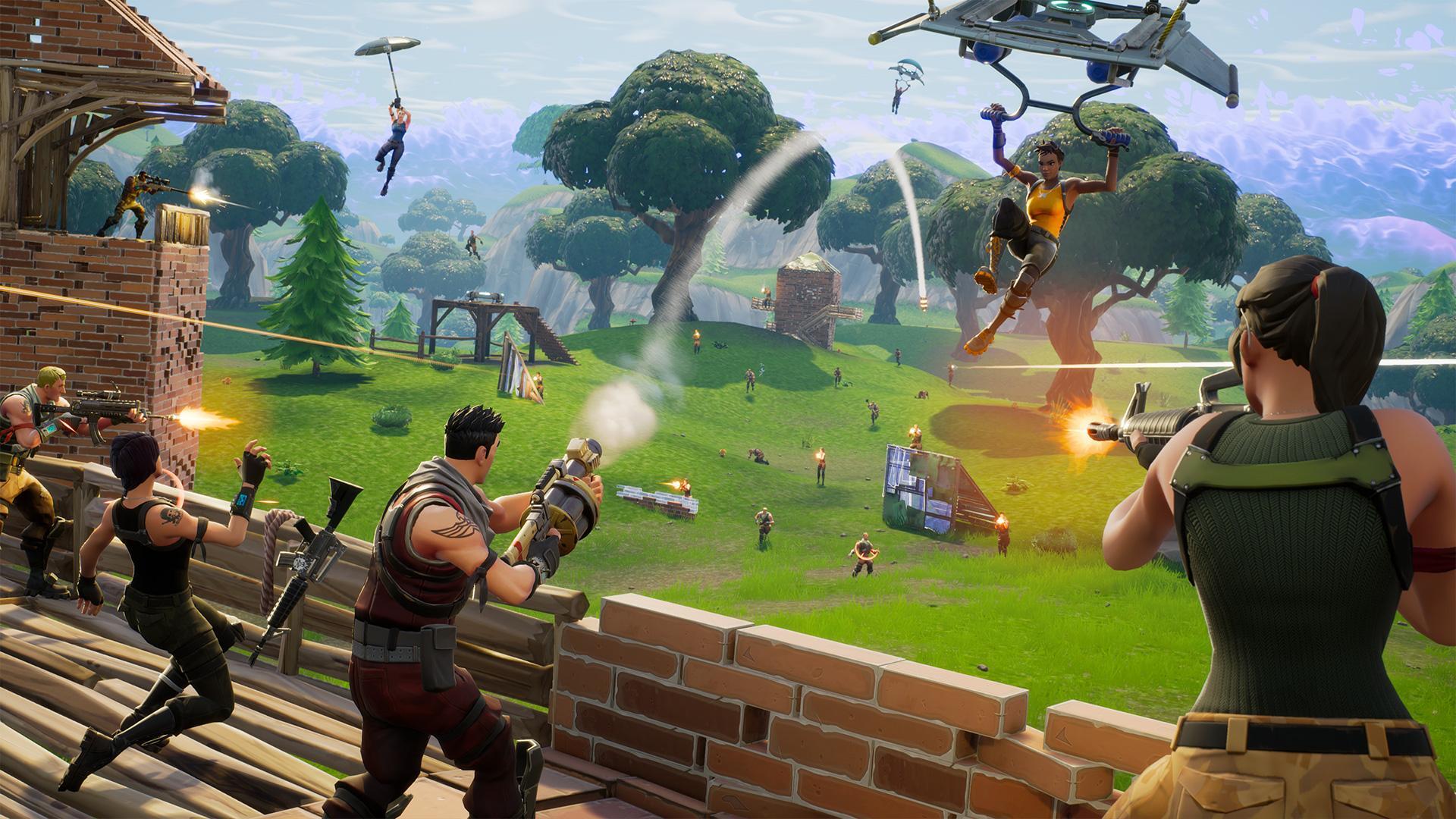
Epic Games' Fortnite transformed from a troubled co-op survival game into a global gaming and pop-culture phenomenon. Spanning engine development breakthroughs, record-breaking live events, groundbreaking monetization models, and complex hidden lore, these 100 verified facts illuminate the history, engineering, and cultural footprint behind one of the most successful video games ever created.
Origins and Development: The Early Years of Fortnite (Facts 1–18)
- Unveiled at the 2011 VGAs: Epic Games first announced Fortnite at the Spike Video Game Awards in December 2011, just three weeks after pitching the concept internally.
- Six-Year Development Cycle: The game spent nearly six years in development before releasing in Early Access in July 2017, suffering multiple shifts in tone, art style, and core mechanics.
- Inspired by Building Sandbox Titles: Original designers cited Minecraft and Terraria as direct inspirations for the building and resource-harvesting systems.
- Dark and Gritty Roots: Early concept art featured a realistic, dark horror aesthetic rather than the bright, stylized Pixar-esque graphics released to the public.
- Save the World Was the Original Game: What players now call Fortnite: Save the World was the initial standalone product; Battle Royale did not exist during early development.
- Built on Unreal Engine 4: Fortnite served as Epic’s primary showcase for the capabilities of Unreal Engine 4, particularly procedural generation and dynamic lighting.
- The Axed Script: Early iterations of Save the World featured a far more traditional, linear campaign script before evolving into a procedural, mission-based structure.
- Designed for Long-Term Live Service: Epic built the core game architecture from day one to support perpetual online updates without requiring full game downloads for minor patches.
- Cliff Bleszinski’s Early Involvement: Veteran game designer Cliff Bleszinski helped pitch and promote the original title before departing Epic Games in 2012.
- Procedural World Generation: Early prototypes relied heavily on procedural terrain creation, though hand-crafted maps eventually replaced random maps for stability.
- The V-Buck Name Origin: "V-Bucks" stands for "Vindertech Bucks," named after Dr. Vinderman, a pivotal central character in Save the World lore.
- The Husks Are Not Zombies: In-game lore establishes that the enemy "Husks" are storm-generated entities wearing human faces like masks, rather than reanimated corpses.
- Durrr Burger’s First Appearance: The iconic Durrr Burger mascot appeared in pre-release 2013 footage years before becoming a landmark on the Battle Royale island.
- Ray Was Voiced by Ashley Burch: The cheerful robot companion Ray in Save the World is voiced by prominent voice actor Ashley Burch.
- The Shift away from Paid Loot Boxes: Save the World originally utilized random "Llama Pinata" loot boxes before Epic transitioned to transparent "X-Ray Llamas" to combat gambling concerns.
- Tencent Acquisition Impact: Chinese tech conglomerate Tencent purchased a 40% stake in Epic Games in 2012, providing the capital necessary to pivot Fortnite into a free-to-play service model.
- Early Engine Stress Testing: Epic developed real-time structural degradation tools specifically for Fortnite to manage performance when thousands of player-built walls collapsed simultaneously.
- The Original Release Date Goal: Epic initially targeted a 2013 commercial release, missing its original target window by four full years.
The Battle Royale Pivot and Economic Explosion (Facts 19–35)
- Created in Only Two Months: Following the explosion of PlayerUnknown's Battlegrounds (PUBG), Epic’s Unreal Tournament team created Fortnite Battle Royale in approximately eight weeks.
- Launch Date: Fortnite Battle Royale launched as a free, standalone game on September 26, 2017.
- Initial Save the World Integration: Battle Royale was originally intended to be a temporary PvP mode locked inside the paid Save the World package before Epic decided to make it free.
- Pioneering the Modern Battle Pass: While not the first game to use a season pass, Fortnite perfected the 100-tier Battle Pass progression model, setting a standard across the gaming industry.
- Cross-Play Breakthrough: Fortnite effectively forced the gaming industry into cross-platform multiplayer, leading Sony to open PlayStation to cross-play with Xbox and Nintendo in late 2018.
- Multi-Billion Dollar Revenue: Fortnite generated over $9 billion in revenue across 2018 and 2019 combined, primarily through cosmetic sales.
- The Famous Accidental Cross-Play Incident: In September 2017, Epic accidentally enabled cross-play between PlayStation 4 and Xbox One for several hours, proving that technological barriers were purely contractual.
- Free-to-Play Accessibility: By keeping Battle Royale free and cosmetic purchases non-pay-to-win, Epic created one of the lowest barriers to entry in competitive gaming.
- Mobile Monetization Success: Within its first 200 days on iOS, the mobile port of Fortnite earned over $300 million in player spending.
- The Fortnite Support-A-Creator Program: Launched in 2018, this initiative allowed content creators to earn a percentage of V-Buck spending when fans entered their creator code.
- Removal from App Stores: In August 2020, Epic intentionally bypassed Apple and Google payment systems, leading to the game’s removal from the iOS App Store and Google Play Store and triggering landmark antitrust lawsuits.
- Battle Pass V-Buck Refundability: Completing a full Battle Pass grants players more V-Bucks (typically 1,500) than the pass costs to purchase (950 V-Bucks), allowing dedicated players to buy future passes for free.
- Physical Retail Bundles: Despite being a free digital game, Warner Bros. Interactive published physical store boxes containing V-Buck download codes and exclusive cosmetic sets.
- Self-Publishing via Epic Games Launcher: The explosive growth of Fortnite on PC gave Epic the direct consumer base needed to launch the Epic Games Store in December 2018.
- The Item Shop Rotation Model: Epic instituted a daily rotating Item Shop utilizing artificial scarcity and FOMO (fear of missing out) to drive cosmetic purchases.
- First Battle Pass Exclusive: The very first Battle Pass (Season 2) featured the "Black Knight" skin as its final tier reward.
- Free Cosmetic Compensation: Epic historically compensated players with free back bling or V-Bucks whenever server outages extended past planned downtime windows.
Live Events, Lore, and In-Game Culture (Facts 36–52)
- The First Live In-Game Event: The "Blast Off" event in June 2018 saw a rocket launch across all active server instances simultaneously, creating the first rift in the sky.
- The Black Hole Incident: At the conclusion of Season X in October 2019, a black hole swallowed the entire island, leaving the game unplayable in real time for over 36 hours.
- Marshmello’s Virtual Concert: In February 2019, EDM artist Marshmello performed the first major virtual in-game concert, attended by over 10.7 million concurrent players.
- Travis Scott’s Astronomical Event: The April 2020 interactive concert featuring Travis Scott drew over 12.3 million concurrent in-game viewers, setting a record at the time.
- The Cube Named "Kevin": When a massive mysterious purple cube appeared on the island in 2018, the Reddit community dubbed it "Kevin," a name Epic later officially embraced in lore and cosmetics.
- Zero Point Lore Anchor: The "Zero Point" is established in lore as the center of the Fortnite multiverse and the energy source that creates the Battle Royale loop.
- The Seven Faction: A enigmatic group of seven characters—led by The Foundation (voiced by and modeled after Dwayne "The Rock" Johnson)—spent years fighting to free the island from the Loop.
- Brie Larson as The Paradigm: Academy Award-winning actress Brie Larson provided the voice and likeness for The Paradigm, one of The Seven.
- The Imagined Order (IO): The primary antagonist faction for the first three chapters, led by Doctor Slone and Genéral Gunnar, who controlled the island from an underground bunker.
- Real-World Alternate Reality Games (ARG): To promote Season 5, Epic placed real-life Durrr Burger statues in the California desert and distributed llama props across major European cities.
- In-Game Movie Screenings: Christopher Nolan debuted a full movie trailer for Tenet inside Fortnite’s Party Royale mode, followed by full screenings of films like Inception.
- Star Wars Episode IX Canon Scene: An exclusive voice transmission from Emperor Palpatine was broadcast inside Fortnite in December 2019, which was explicitly referenced in the opening crawl of Star Wars: The Rise of Skywalker.
- Rift Tour Featuring Ariana Grande: The August 2021 interactive concert featured custom gravity mechanics and led players through multi-dimensional sequences.
- The Monster vs. Mecha Fight: Season 9 concluded with a live, real-time battle between a giant kaiju ("Cattus") and a player-built giant robot ("Doggus").
- The Island Flips Over: The Chapter 2 finale ("The End") ended with the entire island physically flipping upside down in the ocean to reveal the Chapter 3 map beneath it.
- The Butterfly Event: During Season 6, players were transported to a white realm where they interacted with a rift shaped like a butterfly, marking the game's first fully interactive dimensional shift.
- Fortnitemares Annual Tradition: Every October, the map transforms with halloween-themed items, phantom mechanics, and exclusive Halloween boss encounters.
Technical Milestones and Map Eras
To understand how Fortnite evolved technically across its major architectural updates, consider the historical shifts in engine performance and design frameworks:
| Era / Chapter | Primary Engine Version | Major Technical Milestone | Key Map / Gameplay Innovation |
|---|---|---|---|
| Chapter 1 (2017–2019) | Unreal Engine 4 | Synchronized live server events; cross-play standard | Grid building, dynamic map updates, live rocket launch |
| Chapter 2 (2019–2021) | Unreal Engine 4.23+ | Chaos Physics engine integration; swimming physics | Watercraft, fishing, Siphon mechanics, hidden bunkers |
| Chapter 3 (2021–2022) | Unreal Engine 5.0 | Migration to Unreal Engine 5; Nanite & Lumen testbed | Sliding, tactical sprinting, flipping island structure |
| Chapter 4 (2022–2023) | Unreal Engine 5.1 | Full Nanite, Lumen, Virtual Shadow Maps integration | Zero Build integration, Reality Tree, dirt bikes |
| UEFN Era (2023–Present) | Unreal Engine 5+ | Creator Economy 2.0; Verse programming language | User-generated standalone games, procedural landscape editors |
Game Physics, Hidden Mechanics, and Systems (Facts 53–69)
- First Game to Migrate to Unreal Engine 5: In December 2021, Fortnite became the first live shipping game to fully transition its live player base to Unreal Engine 5.
- Nanite and Lumen Integration: Chapter 4 upgraded the visuals using Nanite (geometry rendering million-polygon models) and Lumen (real-time ray-traced global illumination).
- Chaos Physics System: Epic overhauled structural damage by implementing the Chaos Physics system, allowing walls and trees to break into dynamic, physical splinters rather than disappearing instantly.
- Zero Build Mode Created a Second Life: Introduced in March 2022 (Chapter 3, Season 2), Zero Build permanently removed building mechanics from a designated mode, attracting millions of lapsed players.
- The Siphon Controversy: Siphon (which grants health and materials upon eliminating an opponent) was added to core modes in 2019 but removed due to overly aggressive playstyles, remaining restricted to competitive playlists.
- Headshot Multipliers Varied over Time: Sniper headshot damage was tuned extensively over historical updates, fluctuating between 2.0x and 2.5x to balance one-shot eliminations.
- Tactical Sprinting and Hurdling: Chapter 3 introduced stamina-based sprinting and automated parkour vaulting, permanently altering player movement speed.
- Dynamic Weather Systems: Chapter 3 introduced real-time tornadoes and lightning storms that could pick up players, vehicles, and debris across the map.
- Fall Damage Physics Calculations: Fall damage in Fortnite is calculated based on velocity upon impact rather than distance fallen, meaning players launched horizontally at extreme speeds can take fatal fall damage.
- Structure Grid Alignment: All player-built structures align to an invisible 5x5-meter global grid, regardless of terrain angles.
- The Reboot Van System: Inspired by Apex Legends, Epic added Reboot Vans in Season 8 (April 2019), allowing squadmates to revive eliminated teammates using collected reboot cards.
- Supply Drop Physics: Supply drops can be shot out of the sky to drop faster, and their balloons can be attached to player structures.
- Fire Propagation Mechanics: Introduced in Chapter 2, fire can spread across wooden structures, trees, and grass based on wind direction and ambient material types.
- Vehicle Fuel Mechanics: Vehicles initially ran infinitely, but Epic added gasoline mechanics requiring players to refill gas tanks at gas stations or with jerry cans.
- Tent Storage System: In Chapter 3, items could be saved inside collectible Tents and retrieved in entirely different matches.
- Shakedown Ability: Added in Chapter 2, players could pick up downed enemies and perform a "Shakedown" to temporarily reveal the position of all squadmates on the HUD.
- Tilted Towers Was Built to Fix Density: Epic added Tilted Towers in early 2018 to create a high-density urban point of interest, which inadvertently resulted in half the lobby landing in a single location.
Pop Culture Crossovers, Cosmetics, and Secrets (Facts 70–84)
- First Marvel Crossover: Infinity Gauntlet Mode (May 2018) allowed players to pick up the gauntlet and transform into Thanos, marking Fortnite's first major Hollywood studio collaboration.
- The Rarest Cosmetic: The "Renegade Raider" skin (available only to players who reached Level 20 in Season 1 and paid V-Bucks) is widely regarded as one of the ultimate status symbols.
- Exclusive Hardware Skins: Epic partnered with tech manufacturers to lock specific cosmetics behind expensive hardware, including the Galaxy skin (Samsung Galaxy Note 9) and the IKONIK skin (Galaxy S10).
- The Icon Series: Epic created the "Icon Series" cosmetic line specifically to honor real-world creators, starting with top streamer Tyler "Ninja" Blevins in January 2020.
- Over 1,500 Skins: Fortnite features more than 1,500 unique playable character outfits, spanning original designs and licensed IPs.
- DC and Marvel Co-Existence: Fortnite is one of the few media properties where characters from Marvel, DC, Star Wars, Dragon Ball, and Street Fighter can fight on the same team.
- In-Game Comic Books: Marvel published official canon comic storylines (Fortnite x Marvel: Nexus War - Thor) detailing how comic superheroes traveled to the island.
- Secret Battle Pass Skins: Starting with the Visitor in Season 4, Battle Passes introduced hidden outfits unlocked by completing mid-season quest lines (e.g., Deadpool, Wolverine, Indiana Jones).
- Customizable Cosmetics: Season 7 introduced the "Maya" outfit, allowing players to customize individual armor pieces, hairstyle, and tattoos to create a unique outfit out of millions of combinations.
- Emote Legal Disputes: Multiple celebrities and dancers filed copyright lawsuits against Epic Games over emote dances (such as the Carlton Dance), though most cases were dismissed due to choreography copyright limitations.
- Skin Hitboxes Are Identical: Despite structural visual differences (such as bulky robot skins versus slim outfits), all player outfits share the exact same environmental collision hitbox to ensure competitive fairness.
- Back Bling Was Originally Glued to Skins: Early Season 1 skins had backpacks permanently attached; Epic separated them into distinct "Back Bling" slot items in Season 3.
- The First Built-in Emote: The Mecha Team Leader skin featured the first built-in emote that transformed the character's appearance mid-match.
- Real-Life Fashion Partnerships: Luxury fashion houses Balenciaga and Moncler created physical fashion collections paired with matching digital outfits in Fortnite.
- Radio Stations with Real Songs: In-game vehicles feature interactive car radios playing licensed top-40 hits, curated by actual broadcast record labels.
UEFN, Esports Records, and Curiosities (Facts 85–100)
- The 2019 Fortnite World Cup: Epic hosted the 2019 Fortnite World Cup at Arthur Ashe Stadium in New York, offering a record $30 million total prize pool.
- Bugha’s $3 Million Victory: 16-year-old Kyle "Bugha" Giersdorf won the Solo World Cup championship, taking home a $3 million individual payout.
- Largest Twitch Stream Record: Ninja’s March 2018 stream playing Fortnite with hip-hop star Drake, JuJu Smith-Schuster, and Travis Scott broke twitch concurrent viewer records with over 635,000 viewers.
- Unreal Editor for Fortnite (UEFN): Launched in March 2023, UEFN (also known as Creative 2.0) allows creators to use custom Unreal Engine tools, assets, and animations directly inside Fortnite.
- The Verse Programming Language: Epic developed an entirely new, type-safe programming language called Verse explicitly built to power custom gameplay mechanics inside UEFN.
- Creator Economy 2.0: Epic distributes 40% of net item shop revenue directly into an engagement payout pool for community map creators based on playtime and player retention.
- 350+ Million Registered Accounts: By 2020, Fortnite had surpassed 350 million registered player accounts worldwide.
- The Island Map Name Kodename: The Chapter 1 map was codenamed "Athena," Chapter 2 was "Apollo," Chapter 3 was "Artemis," and Chapter 4 was "Asteria."
- First Video Game Featured in the MCU: In Avengers: Endgame (2019), Thor and Korg are seen playing Fortnite Battle Royale in New Asgard.
- The Gnome vs. Teddy Bear Subplot: Throughout Chapter 2, secret unannounced map updates featured a hidden lore storyline about an underground war between garden gnomes and teddy bears.
- The Mythic Goldfish: Added in Chapter 2, the Mythic Goldfish is an extraordinarily rare throwables item (1 in a million spawn chance) that deals 200 instant damage to opponents.
- In-Game Virtual Concert Ticket Sales: Music artists like Dominic Fike and Kid Laroi used custom Fortnite islands as primary launch stages for new studio albums.
- Save the World Was Never Made Free-to-Play: Epic initially intended to make Save the World free-to-play, but officially announced in 2020 that it would remain a paid premium experience.
- Custom Sound Design Tricks: The audio team recorded real-world metallic impacts, closing car doors, and collapsing wooden sheds to create Fortnite's signature harvesting sound effects.
- Fortnite LEGO, Festival, and Rocket Racing: In late 2023, Epic launched three permanent, fully realized games inside Fortnite: LEGO Fortnite (survival crafting), Fortnite Festival (rhythm gaming by Harmonix), and Rocket Racing (arcade racing by Psyonix).
- Guinness World Record Holder: Fortnite holds multiple world records, including the most-viewed gaming event on Twitch and the highest-earning free-to-play game in a single calendar year.
Frequently Asked Questions
Why did Epic Games pivot Fortnite to a Battle Royale format?
Epic Games pivoted to Battle Royale in mid-2017 after witnessing the rapid growth of multiplayer survival shooters like PlayerUnknown's Battlegrounds. Recognizing that their engine could handle 100-player lobbies and building mechanics, Epic adapted their existing assets into a standalone free-to-play mode in just eight weeks.
Is Save the World still playable?
Yes. Fortnite: Save the World remains accessible as a paid game mode. Players can purchase access through specialized starter packs. While it receives fewer updates than the Battle Royale and Creative modes, it continues to maintain an active player base and dedicated storyline.
How does the Fortnite Creator Economy work?
Under Creator Economy 2.0, Epic Games allocates 40% of net revenue from the V-Buck Item Shop into an engagement payout pool. This revenue is distributed monthly to eligible creators who publish custom maps via UEFN and Creative mode, based on player retention, daily active users, and new player attraction.
What is Verse, and how does it relate to Fortnite?
Verse is a programming language created by Epic Games specifically for metaverse scale and high-density real-time simulation. It introduced customized scripting capabilities to UEFN, enabling map developers to code complex game logic, custom UI elements, and unique physics within Fortnite.
Exploring Fortnite's Deep Ecosystem Today
Whether analyzing its history as a game development pivot or studying its transition into an all-in-one ecosystem housing LEGO Fortnite, UEFN, and competitive modes, Fortnite remains one of the most technologically advanced live-service platforms in history.
To explore these hidden mechanics and technical features firsthand:
- Visit the Epic Games Developer Portal to examine how UEFN and Verse allow creators to build standalone titles inside the Unreal Engine ecosystem.
- Check the Fortnite Competitive Hub to monitor historical patch notes, active tournament rulesets, and regional prize distribution formats.
- Jump into Creative Mode via the in-game discovery tab to experience custom user-generated islands powered by modern engine updates like Nanite and Lumen.