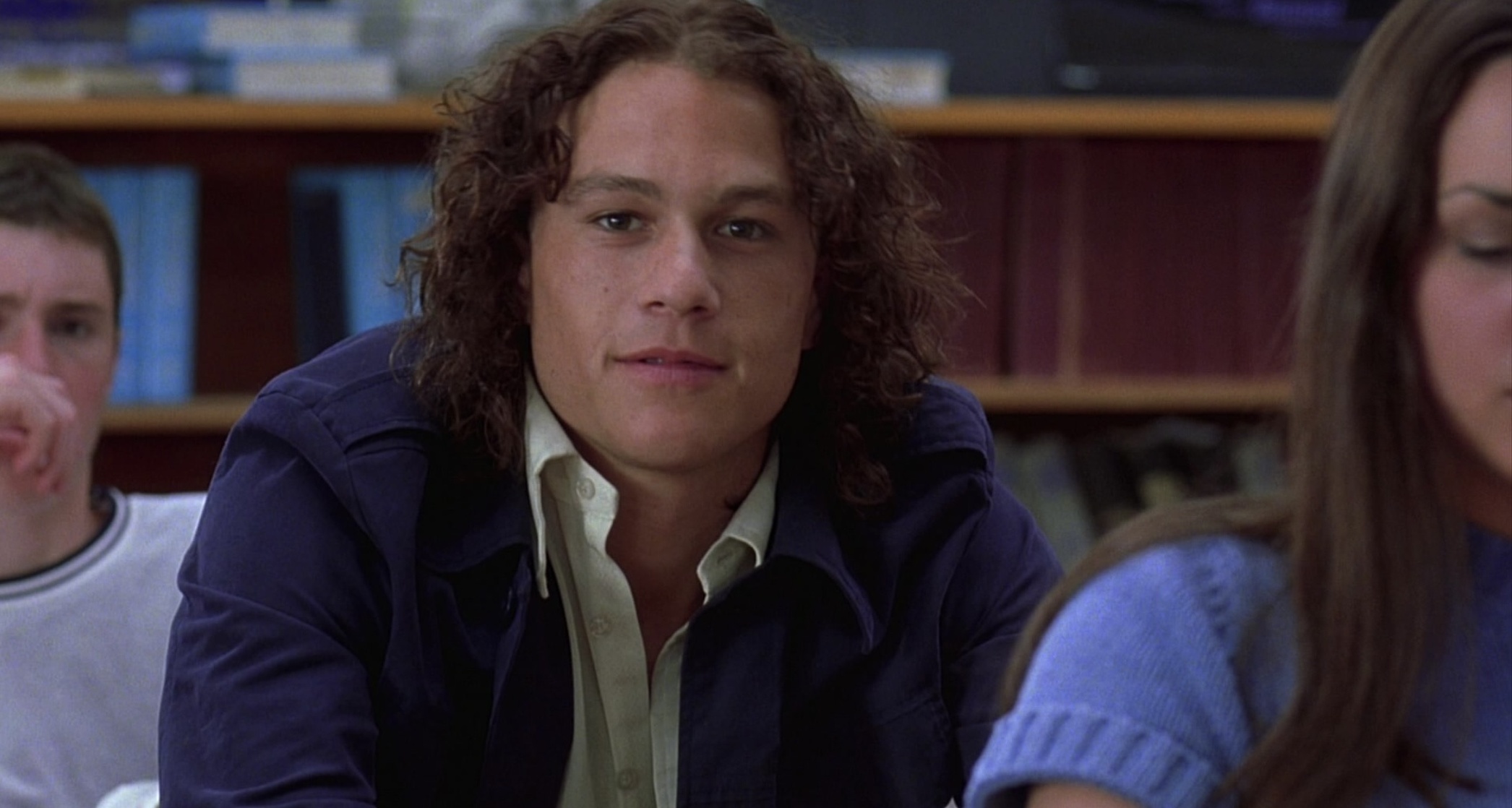
Released in 1999, 10 Things I Hate About You remains a nostalgic pillar of late-90s teen cinema. However, modern rewatches reveal problematic character motivations, unearned romantic redemptions, and outdated tropes inherited from Shakespeare’s The Taming of the Shrew. From financial transactions for affection to normalized boundary erosion, these ten persistent flaws continue to frustrate contemporary viewers.
Retrospective Scrutiny: Adapting Shakespeare for Late-90s Audiences
When director Gil Junger and screenwriters Karen McCullah and Kirsten Smith adapted William Shakespeare’s The Taming of the Shrew into a high school romantic comedy, they crafted a sharp, star-making vehicle for Julia Stiles (Kat Stratford) and Heath Ledger (Patrick Verona). Set against the backdrop of Padua High School in Tacoma, Washington, the film captured the aesthetic peak of late-90s alternative culture, complete with a standout soundtrack featuring Letters to Cleo and Save Ferris.
Despite its sharp dialogue and undisputed charisma, the core narrative relies on structural frameworks that age poorly under modern critical analysis. Shakespeare’s original play is notoriously controversial for its subjection of independent women to male control. While the film attempts to subvert this by giving Kat intellectual agency, it retains patriarchal mechanisms that drive the plot. Examining what makes these plot points so persistent on rewatch requires analyzing character behavior, consent dynamics, and romanticized tropes that would be flagged as red flags today.
Breakdown: 10 Things That Still Annoy Viewers About 10 Things I Hate About You
| THE 10 PERSISTENT FLAWS | |
|---|---|
| 1. Paid Romance & Financial Bribes | 6. The Fender Stratocaster "Forgiveness" |
| 2. Cameron's Entitled "Nice Guy" Arc | 7. The Emotional Surrender in the Poem |
| 3. Extreme Paternal Boundary Violations | 8. Framing Purity as Female Currency |
| 4. Vilification of Female Autonomy | 9. Avoidable Sisterly Miscommunication |
| 5. Unpunished Harassment by Joey Donner | 10. Grand Gestures Replacing Real Consent |
1. The Core Premise: Paying a Guy to Pursue a Woman
The entire narrative engine of 10 Things I Hate About You is built on monetary deception. Joey Donner (Andrew Keegan) pays Patrick Verona to take Kat out so that Joey can date her younger sister, Bianca (Larisa Oleynik). Meanwhile, Cameron James (Joseph Gordon-Levitt) orchestrates the scheme behind the scenes to secure his own access to Bianca.
Treating a young woman’s social life and romantic choices as a paid transaction is fundamentally predatory. While the movie frames Patrick’s escalating price tag—demanding cash for gasoline, clothes, and attendance at parties—as a humorous battle of wits between bad boys, it establishes their entire connection on a commercial bribe. On rewatch, knowing Patrick is accepting cash from a narcissistic bully to hang out with Kat casts a shadow over their early interactions.
2. Cameron’s Entitled "Nice Guy" Tropes
Cameron James is positioned as the sweet, earnest protagonist through whose eyes the audience enters Padua High. However, Cameron’s motivation stems entirely from shallow fixation and entitlement. Upon seeing Bianca for a few seconds during a school tour, he declares his devotion despite knowing nothing about her personality, values, or interests.
Rather than approaching Bianca honestly, Cameron pretends to be a French tutor to isolate her, manipulates his friend Michael (David Krumholtz) to pull off intricate social engineering, and orchestrates Patrick’s paid courtship of Kat. When Bianca initially shows interest in Joey, Cameron exhibits classic "Nice Guy" resentment, acting betrayed because he invested effort into tutoring her. His actions prioritize his desire for a prize over Bianca’s autonomy.
3. Dr. Walter Stratford’s Extreme Boundary Violations
Larry Miller’s performance as Dr. Walter Stratford delivers iconic comedic timing, but his parenting tactics represent extreme institutional paranoia. Overwhelmed by his work as an obstetrician, Walter enforces a draconian rule: Bianca can only date if Kat dates. To enforce abstinence, he subjects his daughters to public humiliation, including forcing Bianca to wear a heavy fake pregnancy belly before leaving the house.
While intended as over-the-top comedy, Walter’s refusal to trust his daughters reflects an oppressive oversight style. He treats both Kat and Bianca as incapable of making responsible choices, weaponizing Kat’s unwillingness to engage in the high school social hierarchy to keep Bianca isolated. The rule directly causes the deception that puts both girls at emotional risk.
4. Vilifying Kat’s Autonomy and Intellectual Interests
In the context of late-90s pop culture, Kat Stratford is branded a "shrew," a "heinous bitch," and anti-social simply because she holds firm personal boundaries, listens to riot grrrl bands like Bikini Kill, and reads feminist literature by Sylvia Plath and Charlotte Brontë.
The film frequently frames Kat’s refusal to conform to high school social norms as a character defect that requires fixing. Her peers view her intellect and assertiveness as hostility. While the movie eventually validates some of her independence, early acts treat her political awareness and self-sufficiency as obstacles to be dismantled by Patrick’s charm.
5. Joey Donner’s Unchecked Sexual Harassment and Predatory Behavior
Joey Donner is designed to be the unlikable antagonist, but his actions cross from high school vanity into unaddressed sexual harassment and predatory behavior. Joey explicitly views women as objects to collect, bragging about his sexual conquests and making graphic bets about sleeping with both Stratford sisters.
When Joey attempts to pressure Bianca into sex after the prom, his behavior is treated primarily as a plot catalyst for Bianca to finally realize he is shallow. Although Bianca punches Joey at the end of the film—a satisfying moment of physical retribution—Joey never faces structural accountability from the school, his peers, or adults for his persistent misconduct.
JOEY DONNER'S INCIDENT TRACKER
- Financial exploitation of Patrick
- Explicit sexual bets on Bianca
- Aggressive prom night coercion
- Zero institutional accountability
6. The Fender Stratocaster as a Shortcut to Forgiveness
After Kat discovers that Patrick was paid to go out with her, she is understandably devastated. The betrayal validates her deepest fear: that opening up to someone leaves her vulnerable to exploitation. Patrick attempts to repair the rupture not through long-term accountability or transparent communication, but by purchasing a vintage Fender Stratocaster guitar using the very money Joey paid him to take her out.
While buying the guitar acknowledges her passion for music, using bribe money to purchase a romantic reconciliation gift creates a logical paradox. Kat’s immediate forgiveness upon seeing the guitar minimizes the severity of the lie. It signals to the audience that systemic deception can be erased by a thoughtful material gesture.
7. The Famous Poem’s Emotional Surrender
The emotional climax of the film occurs when Kat reads her original poem in English class. The poem lists the things she hates about Patrick, culminating in the famous lines: "But mostly I hate the way I don't hate you / Not even a little bit / Not even at all."
While Julia Stiles’ performance in this scene is genuinely moving, the narrative context framing the moment is frustrating on rewatch. Kat is the victim of a calculated conspiracy involving her peers, her sister’s suitor, and her boyfriend. By making Kat deliver the raw, tearful confession of unconditional affection, the film shifts the burden of emotional vulnerability back onto the person who was wronged, requiring her to publicly surrender her anger to achieve romantic resolution.
8. Framing Female Purity and Virginity as Social Currency
The central plot condition—"Bianca can date when Kat dates"—is rooted in preserving female virginity under the guise of parental guidance. Walter’s obsession with avoiding teenage pregnancy creates an environment where female sexuality is treated as a hazard that requires male management.
Throughout the film, a woman's value is constantly evaluated by her sexual status. Joey pursues Bianca because he sees her virginity as a challenge, while Kat’s previous sexual experience with Joey—which she engaged in due to peer pressure before regretting it—is kept as a shame-filled secret. The film struggles to escape the late-90s habit of linking female self-worth directly to sexual availability and parental control.
9. The Avoidable Miscommunication Between Sisters
A major source of tension is the secrecy Kat maintains regarding her past history with Joey Donner. Kat slept with Joey in ninth grade because everyone else was doing it, felt used, and subsequently shut herself off socially. However, Kat hides this crucial context from Bianca for almost the entire movie.
Had Kat clearly explained Joey’s predatory history and emotional manipulation to Bianca earlier, the sisters could have united against the toxic dynamics around them. Instead, Kat relies on vague commands and hostility, allowing Joey to play the sisters against each other. The reliance on miscommunication creates unnecessary conflict that diminishes the potential strength of their bond.
10. Grand Public Gestures Overwriting Personal Boundaries
Patrick’s grand public apology—singing Frankie Valli’s "Can't Take My Eyes Off You" accompanied by the Padua High marching band on the stadium bleachers—is widely considered one of the most iconic romantic comedy scenes of the 1990s.
However, evaluated through the lens of personal boundaries, the gesture is designed to pressure Kat into forgiveness. When Patrick hijacks the school public address system and public grounds, he creates a public spectacle that makes it socially difficult for Kat to reject him without looking like a villain. The scene romanticizes grand, intrusive displays as a substitute for quiet, accountable dialogue.
Comparative Analysis: 1999 Rom-Com Tropes vs. Modern Narrative Standards
To understand how audience expectations have evolved since the film's premiere, it is helpful to compare key narrative choices in 10 Things I Hate About You against contemporary storytelling standards in young adult cinema.
| Narrative Element | 1999 Film Framing | Modern Critical Perspective | Impact on Rewatchability |
|---|---|---|---|
| Financial Bet / Bribe | Playful bad-boy trope; catalyst for true love | Predatory deception and breach of trust | Creates tension during early romantic scenes |
| Feminist Ideology | Defense mechanism; labeled as shrewish behavior | Valid intellectual self-expression | Makes high school peers look unnecessarily hostile |
| Fatherly Rules | Humorous, protective overparenting | Boundary violation and surveillance | Framing of pregnancy belly scene feels coercive |
| Public Apologies | Grand romantic gesture ("Can't Take My Eyes Off You") | Performative pressure overcoming consent | Retains spectacle value but lacks quiet accountability |
| Sisterly Dynamic | Rivalry driven by secret past trauma | Avoidable miscommunication | Weakens early sisterly alliance |
| Gift Reconciliation | Fender Stratocaster resolves conflict | Material bribe using money earned from deception | Softens the impact of Patrick's betrayal too quickly |
Why the Film Maintains Cult Status Despite Its Flaws
Acknowledging these persistent annoyances does not diminish the historical significance or entertainment value of 10 Things I Hate About You. The film remains a staple of modern media consumption for several clear reasons:
- Unmatched Cast Chemistry: Heath Ledger’s effortless charisma and Julia Stiles’ intense emotional groundedness elevate the script beyond standard teen fare. Their screen presence creates authentic romantic tension even within problematic plot setups.
- Sharp Dialogue and Pacing: Screenwriters McCullah and Smith penned one of the most quotable teen comedies of the era, balancing sharp humor with fast-paced comedic structure.
- Definitive 90s Aesthetic: From the ska-punk soundtrack to the costuming (Kat’s slip dresses, Bianca’s two-piece prom outfit), the film serves as a time capsule for late-90s youth culture.
- Subversion of "The Taming": Compared to Shakespeare’s original play—where Katherina is starved and psychologically broken into submission—the film allows Kat to retain her core identity, musical taste, and ambitions (attending Sarah Lawrence College).
Practical Takeaways for Rewatching Late-90s Cinema
Navigating retro film rewatches requires balancing historical context with modern media literacy. Viewers can enjoy classic films while critically evaluating their tropes by applying a few analytical steps:
- Separate Performance from Plot Structure: Appreciate the talent and magnetic performances of actors like Heath Ledger and Julia Stiles without endorsing the narrative choices their characters make.
- Identify Inherited Shakespearean Tropes: Recognize that many problematic elements (paid suitors, disguised identities, transactional marriages) stem directly from 16th-century source material (The Taming of the Shrew).
- Analyze Consent and Deception: Evaluate how plot points involving lies, bets, and public pressure function in romantic storytelling, using them as reference points for how narrative norms have evolved.
- Focus on Character Growth: Look for moments where characters push back against structural limitations—such as Kat maintaining her commitment to Sarah Lawrence or Bianca taking physical action against Joey.
Frequently Asked Questions
Is 10 Things I Hate About You an exact adaptation of Shakespeare’s The Taming of the Shrew?
No, 10 Things I Hate About You is a modernized loose adaptation of The Taming of the Shrew. It updates the setting from Renaissance Italy to a late-90s American high school (Padua High) and alters character names to reflect the source text (e.g., Petruchio becomes Patrick Verona, Katherina becomes Kat Stratford). Crucially, the film alters Shakespeare’s ending so Kat preserves her independence and college ambitions rather than completely submitting to male authority.
Why did Patrick get paid to date Kat in the movie?
Joey Donner wanted to date Kat's younger sister, Bianca. However, their father, Dr. Walter Stratford, established a rule that Bianca could only date if Kat dated. Because Kat had no interest in high school dating, Joey funded a scheme to pay Patrick Verona—the school's notorious bad boy—to take Kat out, thereby freeing Bianca to date Joey.
Why did Kat sleep with Joey Donner in the ninth grade?
Kat reveals to Bianca near the end of the film that she dated Joey Donner during their freshman year. She felt pressured by social expectations to have sex with him because "everyone was doing it." Afterward, Joey dumped her immediately, leaving Kat feeling used and angry. This experience caused Kat to build high emotional walls, distrust high school social dynamics, and reject peer pressure.
Does Kat actually go to Sarah Lawrence College at the end of the film?
Yes. Despite her father’s initial refusal to let her attend an out-of-state college in New York, Dr. Stratford eventually relents after realizing Kat needs to pursue her own path. He shows her that he paid her tuition deposit for Sarah Lawrence College, allowing her to pursue her academic goals away from Padua High.
Critical Framework: Navigating Classic Rom-Com Tropes Today
The best way to engage with 10 Things I Hate About You on modern rewatches is to embrace dual perspectives: enjoying the film as a cultural milestone of 1999 cinema while maintaining a sharp critique of its structural flaws. Recognizing that tropes like paid dating bets, public manipulation, and paternal over-control are red flags rather than ideal romance allows audiences to appreciate the film's sharp comedic timing, incredible soundtrack, and star performances without ignoring how much narrative standards have improved.