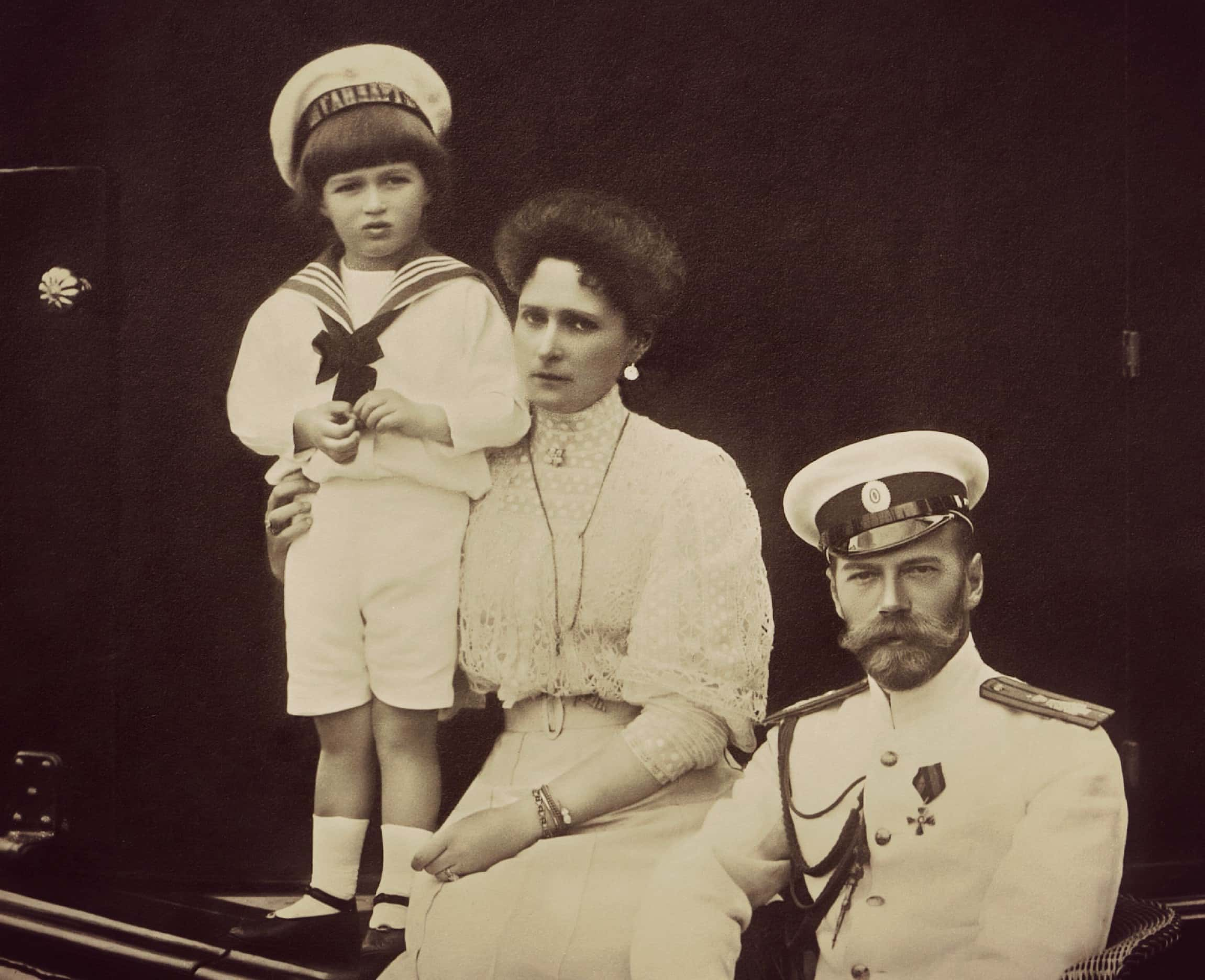
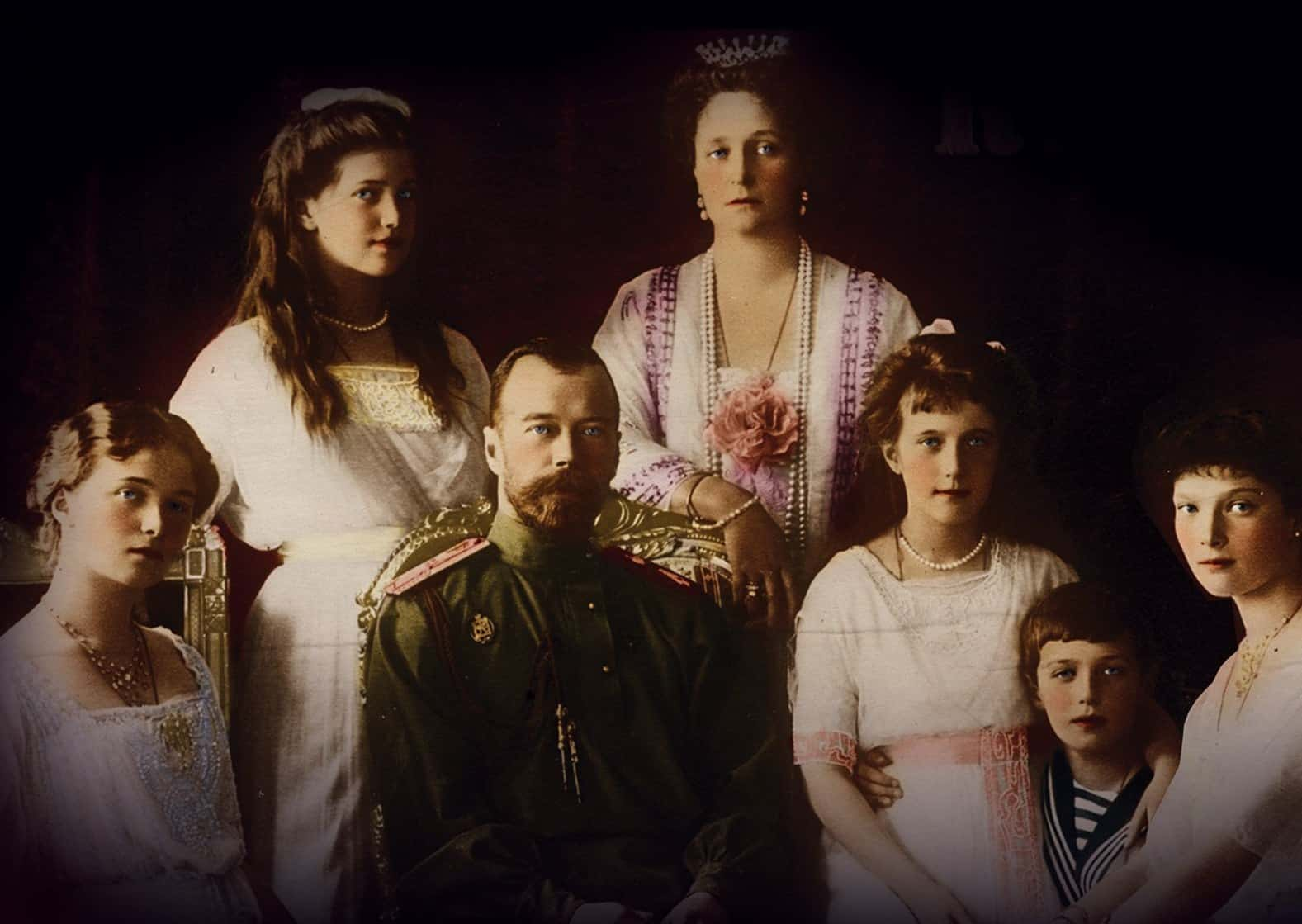
The Romanov family ruled Russia as a continuous dynasty for over 300 years, from 1613 until the 1917 Revolution. Their history is defined by a transition from a medieval Muscovite state to a global empire, characterized by immense wealth, radical modernization, and a tragic, violent end that continues to captivate historians today.
1. The Dynasty Began with a Reluctant 16-Year-Old
The Romanov line did not begin with a powerful conqueror, but with a teenager who initially hid from the responsibility of the crown. Following the "Time of Troubles"—a period of anarchy, famine, and foreign invasion—the Russian nobility (the Zemsky Sobor) elected Michael Romanov as Tsar in 1613.
Michael was found living at the Ipatiev Monastery with his mother. Having seen the fates of previous rulers during the civil wars, he was understandably terrified. His mother initially refused the offer on his behalf, fearing for his life. However, his election provided the stability Russia desperately needed. Under Michael’s reign, the dynasty began the slow process of rebuilding the state’s bureaucracy and military, setting the stage for the absolute autocracy that would define the family for three centuries.
2. Peter the Great Forced Russia into the Modern Era
While Michael Romanov founded the dynasty, Peter I (Peter the Great) transformed it into an empire. Peter was obsessed with Western European technology and culture. In a series of radical reforms, he mandated that Russian nobles shave their long traditional beards or pay a "beard tax." He moved the capital from Moscow to St. Petersburg, a city he built from scratch on a marshy swamp, often called the "Window to the West."
Peter’s reforms weren't just aesthetic; they were structural. He introduced the Table of Ranks, a formal hierarchy that allowed for social mobility based on service to the state rather than mere birthright. This meritocratic shift helped build a professional civil service and a modernized navy, although it came at a high cost of human life during the construction of his new capital.
3. Catherine the Great Was Not Technically a Romanov by Blood
One of the most famous Romanovs, Catherine II, was actually a German princess named Sophie of Anhalt-Zerbst. She married Peter III, the grandson of Peter the Great, but found him incompetent and unstable. In 1762, Catherine orchestrated a coup with the help of the Imperial Guard to depose her husband and declare herself Empress.
Despite her foreign origins, Catherine became a champion of Russian culture and expansion. She added over 200,000 square miles to the Russian Empire, including Crimea and parts of Poland. Catherine was a devotee of the Enlightenment, corresponding with philosophers like Voltaire, though she famously struggled to reconcile democratic ideals with the necessity of maintaining autocratic control over a vast, peasant-majority population.
4. The Family Kept the "Royal Disease" a State Secret
The downfall of the Romanovs was deeply influenced by a medical secret: hemophilia. The last Tsarevich, Alexei, inherited the condition from his mother, Alexandra, who was a granddaughter of Britain’s Queen Victoria. Because hemophilia prevented blood from clotting, a simple bruise or minor cut could cause internal bleeding and life-threatening pain for the young heir.
To protect the image of the dynasty’s strength, Nicholas II and Alexandra kept the illness hidden from the public. This secrecy created a vacuum that was filled by Grigori Rasputin, a Siberian peasant and self-proclaimed holy man. Rasputin appeared to be the only person capable of calming Alexei and stopping his bleeding episodes. The family’s reliance on this controversial figure alienated the Russian nobility and the public, fueling rumors of corruption and occult influence at the heart of the palace.
5. The Romanovs Commissioned the Most Expensive Eggs in History
The Romanovs were synonymous with opulence, best exemplified by the Imperial Fabergé Eggs. The tradition began in 1885 when Tsar Alexander III commissioned Peter Carl Fabergé to create an Easter egg for his wife, Maria Feodorovna. The result was the "Hen Egg," a gold-enameled shell that opened to reveal a golden yolk, which in turn contained a golden hen and a miniature diamond crown.
Nicholas II continued the tradition, commissioning two eggs every year—one for his mother and one for his wife. These eggs were masterpieces of jewelry, often containing intricate "surprises" like mechanical clocks, miniature trains, or portraits. Of the 50 original Imperial eggs delivered to the Romanovs, several were lost or looted during the 1917 Revolution, and they now command tens of millions of dollars at auction.
6. The Abolition of Serfdom Was a Romanov Turning Point
In 1861, Alexander II signed the Emancipation Edict, which freed tens of millions of Russian serfs from their feudal masters. This was a monumental shift in Russian society, aimed at modernizing the economy and preventing a revolution from below. However, the reform was flawed; serfs were forced to pay "redemption payments" for the land they received, often leading to crushing debt and continued poverty.
Alexander II became known as the "Tsar Liberator," but his reforms did not satisfy the radical intelligentsia. Despite his efforts to liberalize the country, he was assassinated by a bomb-throwing revolutionary group called "The People's Will" in 1881. This assassination caused his successors, Alexander III and Nicholas II, to retreat back into harsh authoritarianism, which ultimately contributed to the dynasty's collapse.
7. The Execution of the Family Was Meticulously Planned
The end of the Romanov dynasty was not a spontaneous act of violence but a calculated political execution. After abdicating in 1917, Nicholas II and his family were moved to various locations before being sent to the Ipatiev House in Yekaterinburg. On the night of July 16-17, 1918, the family and four loyal servants were led into a basement under the pretext of being moved for their safety.
A Bolshevik firing squad, led by Yakov Yurovsky, carried out the execution. The process was chaotic; the daughters had sewn jewels into their corsets for safekeeping, which acted as makeshift armor and caused bullets to ricochet, prolonging their suffering. The bodies were subsequently moved to a forest, burned with acid, and buried in hidden pits to prevent their burial site from becoming a shrine for monarchists.
8. The Legend of Anastasia Fueled Decades of Speculation
For much of the 20th century, a popular myth persisted that the youngest daughter, Grand Duchess Anastasia, had survived the execution. This legend was fueled by the fact that the Bolsheviks did not immediately release details of the deaths and the bodies remained missing. The most famous claimant was a woman named Anna Anderson, who emerged in Germany in the 1920s.
Anderson’s claims led to high-profile legal battles and divided the surviving Romanov relatives and the public. It wasn't until the 1990s and 2000s that DNA testing—using samples from the British Royal Family (Prince Philip)—proved that Anderson was an imposter (a Polish factory worker named Franziska Schanzkowska). Further DNA analysis of remains found in 2007 confirmed that all five Romanov children were killed in 1918.
9. The Romanovs Are Now Saints in the Russian Orthodox Church
In a profound historical reversal, the family that was executed as "enemies of the people" in 1918 was canonized as saints in 2000. The Russian Orthodox Church designated Nicholas II, Alexandra, and their five children as "Passion Bearers." This specific rank of sainthood is given to those who face their deaths with Christian resignation and humility, rather than as traditional martyrs who die for their faith.
This canonization reflects the shifting political landscape in post-Soviet Russia, where the Romanovs have been rehabilitated as symbols of national identity and traditional values. Today, the Church on Blood in Yekaterinburg stands on the site of the Ipatiev House, serving as a major pilgrimage site for those honoring the family’s memory.
10. Modern DNA Science Resolved the Final Mystery in 2026
While the main burial site was found in 1991, two children (Alexei and either Maria or Anastasia) were missing from the primary grave. Their remains were located in a separate pit nearby in 2007. However, the Russian Orthodox Church remained skeptical for years, requesting additional forensic evidence before officially recognizing the remains as authentic.
By 2026, exhaustive genetic sequencing and historical cross-referencing have finally reconciled the scientific and religious communities. New advancements in mitochondrial DNA analysis have allowed researchers to match the remains with absolute certainty to the Romanov lineage, leading to the formal internment of the final family members in the Peter and Paul Cathedral in St. Petersburg alongside their parents.
Romanov Dynasty: Key Figures and Milestones
| Figure | Reign | Key Contribution/Event | Legacy |
|---|---|---|---|
| Michael I | 1613–1645 | Ended the Time of Troubles | Founder of the Dynasty |
| Peter I (The Great) | 1682–1725 | Westernization; built St. Petersburg | Established the Russian Empire |
| Catherine II (The Great) | 1762–1796 | Massive territorial expansion | Expanded Enlightenment in Russia |
| Alexander II | 1855–1881 | Emancipation of the Serfs (1861) | Known as the "Tsar Liberator" |
| Nicholas II | 1894–1917 | Russo-Japanese War; WWI | Last Tsar of Russia |
Frequently Asked Questions
Who is the last Tsar of Russia?
The last Tsar was Nicholas II, who ruled from 1894 until his abdication in March 1917. His reign was marked by economic progress but also by military failures in the Russo-Japanese War and World War I. His inability to address the demands for political reform led to the February Revolution and his eventual execution by the Bolsheviks.
Did any of the Romanov children survive the execution?
No, historical evidence and DNA testing have confirmed that all five of the Tsar's children—Olga, Tatiana, Maria, Anastasia, and Alexei—were killed alongside their parents in July 1918. While rumors of survival persisted for decades, forensic discoveries in 1991 and 2007 accounted for all individuals present at the execution.
Why was Rasputin so influential in the Romanov court?
Grigori Rasputin gained influence because of his apparent ability to treat the Tsarevich Alexei’s hemophilia. Empess Alexandra believed Rasputin was sent by God to save her son. This personal dependence allowed Rasputin to offer political advice and influence government appointments, which severely damaged the Romanovs' reputation among the Russian elite.
Where are the Romanovs buried today?
The remains of Nicholas II, Alexandra, and three of their daughters were buried in the Peter and Paul Cathedral in St. Petersburg in 1998. Following years of verification, the remaining two children, Alexei and Maria, were interred with the rest of their family, uniting the household in their final resting place.
Is there still a Romanov heir today?
While the monarchy was abolished in 1917, there are several descendants of the Romanov family who claim the headship of the Imperial House. The two most prominent claimants are Grand Duchess Maria Vladimirovna and Prince Alexis Andreievich Romanov. However, the Russian state does not officially recognize any monarchical authority.
Discovering Romanov History Today
For those interested in exploring the Romanov legacy further, a visit to the State Hermitage Museum in St. Petersburg provides an unparalleled look at the family’s art collections and living quarters. Additionally, the State Historical Museum in Moscow holds extensive archives regarding the 1917 Revolution. If you are researching the genealogical or scientific aspects of the family, the Russian State Archive of Ancient Acts (RGADA) remains the primary repository for imperial documentation. Exploring these resources offers a deeper understanding of how the Romanovs shaped not only Russia but the course of modern world history.